Image theft protection and alerts for every photo you own
Your photos are working for someone else right now, product shots on scam stores, portfolio images on competitor sites, personal photos on profiles you've never seen. Image theft protection and alerts means knowing within hours, not years, and having every theft filed against. Start with a free Exposure Scan of your imagery.
What we remove
- Reverse-image detection across the web
- Product photography theft by competitors and scammers
- Photographer and creator portfolio protection
- Personal photos misused on fake profiles
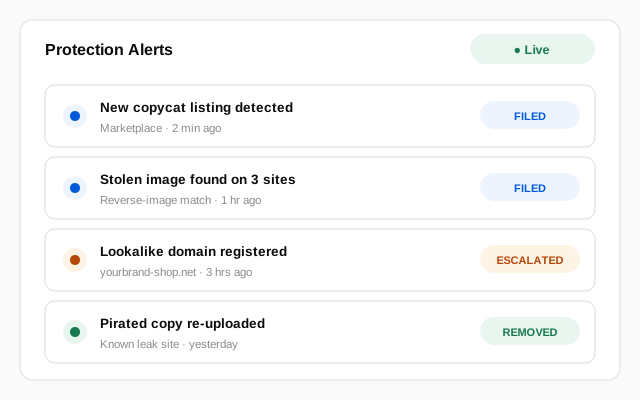
- Alerts with human review, no false-positive noise
- Takedowns filed at scale, tracked to removal
How it works
What clients say

Malala Leides
OnlyFans Creator · Leaked Content Removal
"Someone told me they'd seen my content leaked on various websites. I literally did not know what to do. Content Removal got back to me so quickly and removed the content within 24 hours."
Shauna Smith
Private Image Protection
"All my images & videos were removed in 72 hours. The police said they couldn't help me. Content Removal went above and beyond."
Laurence Thomas
Hey Ewe · Brand Protection
"We had content copied and put online. A couple of other removal companies tried and were unsuccessful, Content Removal got it taken down very, very quickly. Can't recommend them enough;"
Images are the most stolen asset online: because stealing them works
Right-click, save, re-upload: image theft takes four seconds and usually goes unnoticed forever. The uses are rarely harmless. Scam stores build entire catalogues from stolen product photography: your investment in lighting, styling and shooting becomes their storefront, and their defrauded customers become your reputation problem. Competitors lift your visuals to sell against you. Photographers and creators find licensed work republished unlicensed, eroding the market for the real thing, and stolen personal photos power fake profiles, romance scams and impersonation, where the face being borrowed is yours.
Discovery is the choke point. Stolen images don't notify you; they sit on sites you'll never visit, earning for someone else. Most victims find out by accident (a friend's screenshot, a customer's confused email) months or years in. By then the thief has often out-ranked the owner for their own image.
Reverse-image detection that watches, and alerts worth reading
We fingerprint the images you care about (product lines, portfolios, headshots, personal photos) and our detection systems continuously reverse-search them across websites, marketplaces and social platforms. The matching is built for how theft actually looks: cropped, mirrored, filtered, watermark scrubbed, text slapped on top. When a match surfaces, an analyst reviews it before it reaches you, filtering out your own authorised uses, press coverage and licensed placements. So an alert from us means something real was found, not another notification to learn to ignore.
Each alert arrives with context and a recommendation: what the use is, why it matters or doesn't, and which removal ground fits. Some clients want to approve each action; most tell us to file on sight and read about it in the monthly report. Either way, the decision load on you stays near zero, which is the point of paying someone to watch.
Coverage grows with you. New product launches, fresh shoots and updated headshots get fingerprinted as they're released, so the watch always reflects your current library rather than a snapshot from onboarding. Clients typically send us new imagery the day it goes live, the earliest a photo can be protected is the day before it becomes worth stealing.
From alert to takedown, at whatever scale the theft demands
Images carry unusually strong removal grounds. You own the copyright in photos you took or commissioned, platforms prohibit impersonation and misleading imagery, and misused personal photos add privacy grounds on top. Our specialists pick the strongest ground per target and file with the platform, the site's host and image search together, so removed doesn't just mean gone from one page. It means gone from the search results that made the theft profitable. High-volume cases, like a product catalogue scraped across dozens of storefronts, get batch-filed and worked as a docket, with every URL tracked to an outcome.
Thieves re-upload, which is why protection beats cleanup: under a Protection Plan the fingerprint watch keeps running, and a re-appearance of a removed image triggers refiling while it's hours old. Begin with the free Exposure Scan. We'll run your key images through the detection stack and show you on a call exactly where they're being used, what we'd file, and what an ongoing watch would cover. Most people are surprised by what four seconds of right-click theft has grown into. Better to be surprised on a free call.
Frequently asked questions
Do my photos need to be registered or watermarked for you to act? +
Someone is using my personal photos on a fake profile. Is that covered? +
How quickly will I know when a new theft appears? +
Start with a free, confidential Exposure Scan
We'll scan your digital footprint, show you exactly what's exposed, and recommend the fastest path to remove it, or tell you honestly if you don't need us.
Book Your Assessment