A supplement brand and the clone store selling under its name
A UK longevity supplement brand found a full copy of its website live on a hosted commerce platform, selling knock-off product to its own customers. Product pages, FAQs and policies were lifted wholesale. The operator's address was fake. The operator's reply, when reached, was two words.
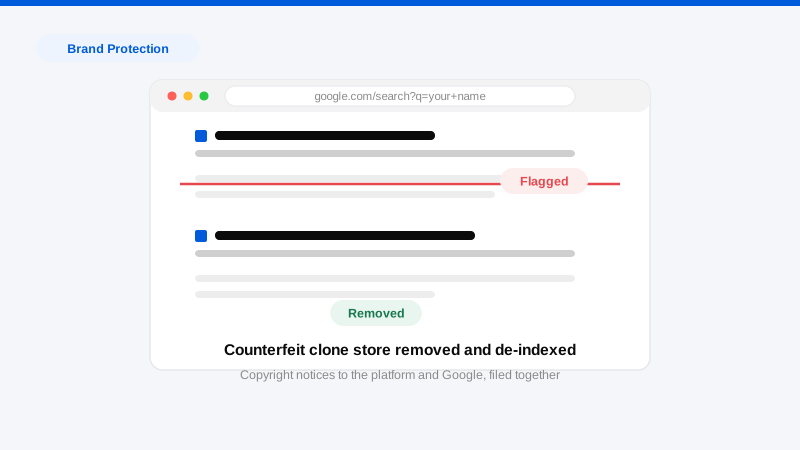
from instruction to the platform confirming removal
de-indexed from Google worldwide on day 9
The situation
This was not a criticism site. It was a business. Someone had cloned the brand's store in full, kept the branding, and was taking orders for unauthorised and potentially harmful goods from customers who believed they were buying the real thing. Some pages carried foreign-language blog content that pointed to where the operator sat. The registered address did not exist.
A supplement brand is a particularly attractive target for this. The products are small, high margin and repeat purchase, the customers are used to buying from a direct-to-consumer website rather than a retailer, and the category carries health claims that customers rely on. A shopper who lands on the clone has no reason to doubt it, because everything they would use to check the site is the brand's own material.
That is what separates a clone from ordinary counterfeiting on a marketplace. There is no marketplace listing to report and no third-party seller profile to escalate. There is a whole storefront that presents itself as the company, complete with policies, contact pages and reassurances, and the only thing distinguishing it from the real one is the address in the browser bar.
Why clone stores appear and how they operate
Cloning a modern store is close to trivial. Product photography, descriptions, FAQ text, shipping and returns policies and even the about page can be copied wholesale in an afternoon, and hosted commerce platforms make standing the result up a matter of hours. The operator does not need to source the brand's product, build a brand or write a word, because all of that has been done for them.
The economics run on speed. A clone does not need to last. It needs enough traffic for long enough to take a run of orders, which is why operators buy ads, seed links and lean on search results for the brand name and its product names. Every day the site is live is inventory to them, which is why response time is the single biggest variable in what a brand loses.
The infrastructure is arranged to slow you down. Domain registration sits behind a privacy proxy, the registered address is invented, and the human being involved is in another country from the customers being served. Foreign-language content left on internal pages, of the kind found here, is a common tell about where the operator actually sits, because clone builders reuse templates from their own market.
What happened
Every image, description and policy page on the clone was the brand's own work, and that ownership gave us a ground the platform could not refuse. Applications went in at once and at more than one layer. The first attempts were bounced and rebuilt. Five days after instruction the platform confirmed the content removed, and confirmed it again four days later. Google confirmed global de-indexing of seven URLs on day nine, and three others had already dropped out.
In parallel we established who was behind it, unmasked the merchant sitting behind a privacy proxy and gave them twenty-four hours. The reply was two words, neither printable. The operator then contested the removal, so the work continued into January, and the intelligence gathered on the operator was packaged and handed to the client in March for their lawyers.
The two-layer result is the part that mattered commercially. The platform removal stopped the orders. The search removal stopped the traffic. Each result was verified, evidenced to the client and monitored afterwards.
Why the obvious arguments were the wrong ones
Trademark is the argument brands reach for first, and it is the slower one. A platform assessing it has to form a view about confusion, about the scope of a registration and about the territory it covers, and it will often ask for detailed submissions before doing so. It is a real route and it belongs in the file. It is not the fastest way to make a live clone go dark.
Defamation has no application here at all. Nobody said anything about the brand. The clone was flattering, because it was the brand's own words.
What moved this in days rather than months was an argument the platform was equipped to answer from documents rather than from judgement.
Why a clone is not finished when it goes dark
The operator contested the removal. That is a procedural move rather than a finding that they were right, and it is common enough to plan for.
It also tells you something useful. An operator who contests has supplied contact details into a formal process and has decided the site is worth defending, which means they are likely to rebuild elsewhere if they are simply ignored. That is why the work here did not stop at the takedown.
For a brand the practical consequence is that the record of who the operator is, and of how the infrastructure was arranged, matters as much as the removal itself. It is what makes the next clone faster to kill, and it is what a litigator needs if the brand decides to pursue the person rather than the site.
How the client worked with us
Fast and low friction. The executive supplied company details within the hour, delegated finance to a colleague and asked for nothing beyond what was needed. The correspondence is administrative, which is how brand protection usually looks when it works.
That speed is not a personality trait, it is a competitive advantage. Because the details, the ownership evidence and the authority to act arrived within hours rather than over a week, the work started while the clone was still taking orders. In a category where the operator is racing a clock, an hour saved at the start of the brand's side of the matter is an hour the clone does not get.
Common mistakes that make it harder
Warning the operator before anything has been filed is the expensive one. An operator who is warned moves hosts, changes domains and takes the material with them, and the brand starts again from nothing.
Assuming the registered address and the contact details are real is the next. In this matter both were invented. Treating a privacy proxy as a dead end is the third, because the trail usually goes further than it first appears. Placing test orders beyond what you need to evidence the site helps nobody.
The two things worth doing immediately are capturing the whole site while it is still up, dated, and telling your customer service and payment teams what to expect, because the first sign for many brands is a complaint about an order the brand never took.
Who makes first contact and what the 15-minute call covers
With clone stores the first message is usually from an executive, a head of ecommerce or a customer service lead who has just fielded a complaint about an order the company never received. Sometimes it comes from the brand's agency. It is almost always urgent, and it should be.
The 15-minute call covers what has been copied, what is demonstrably yours, where the site is hosted, what you have already found about the operator and what your customers are seeing. We say what we think is realistic, how quickly this category usually moves, and what happens if the operator contests it.
The free Exposure Scan that follows maps the clone, its search footprint, any advertising pointing at it and the related properties that usually sit alongside a single clone. It is written down and yours to keep. Confidentiality and an NDA are standard, and the work runs alongside your lawyers, your platform contacts and your payment providers.
What this shows brands
A clone store is an attack on revenue and on customer safety, and the argument that moves it is about ownership rather than about anything anyone said. Speed matters, because every day the clone is live it is taking orders. A contested removal is the operator's last move, and it is why the trail of evidence and the operator's identity matter as much as the takedown.
The two-layer result is the part worth copying. The platform confirmed removal within five days, which stopped the orders. Google confirmed global de-indexing of seven URLs on day nine, which stopped the traffic. Either one alone leaves a hole: a de-indexed clone still converts the customers who reach it directly, and a removed clone can keep pulling searches through a stale listing.
If a copy of your store or product pages is live under your name, see our website takedown and brand protection pages or book the free Exposure Scan.
Facing something similar?
This case was handled through our Website takedown service.
Start with a free, confidential Exposure Scan
We'll scan your digital footprint, show you exactly what's exposed, and recommend the fastest path to remove it, or tell you honestly if you don't need us.
Book Your Assessment