Remove images & videos from the internet
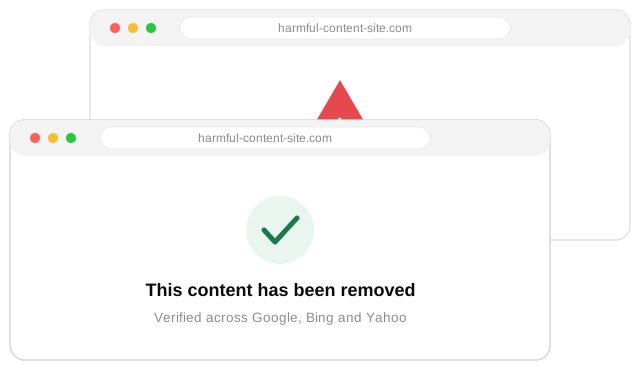
A photo or video can be screenshotted, reposted and re-uploaded in minutes. We take down the originals and the copies — and monitor so re-uploads die fast.
What we remove
- Private or embarrassing images
- Leaked and stolen video content
- Images used without your consent
- Copyright-infringing reposts of your content
- Images appearing in Google Image results
How it works
What clients say

Malala Leides
OnlyFans Creator · Leaked Content Removal
"Someone told me they'd seen my content leaked on various websites — I literally did not know what to do. Content Removal got back to me so quickly and removed the content within 24 hours."
Shauna Smith
Private Image Protection
"All my images & videos were removed in 72 hours. The police said they couldn't help me. Content Removal went above and beyond."
Laurence Thomas
Hey Ewe · Brand Protection
"We had content copied and put online. A couple of other removal companies tried and were unsuccessful — Content Removal got it taken down very, very quickly. Can't recommend them enough;"
How image and video takedowns work
Visual content has some of the strongest removal grounds on the internet: copyright (you took it or own it), privacy and image rights, non-consensual intimate imagery policies, and platform community standards. We identify every copy with reverse-image and hash-matching search, file against each host with the strongest applicable ground, and then de-index stragglers from Google Images so nothing surfaces on a search of your name.
For content that keeps being re-uploaded, hash-based monitoring catches new copies at upload and triggers immediate re-filing — the approach our Protection Plans automate.
The situations we see most often
Image and video cases arrive from every direction: an ex-partner sharing private material, a stranger reposting family photos scraped from an old account, event photos surfacing in contexts that damage a career, a viral clip that captured someone's worst moment, or a creator watching their paid content circulate free on a dozen mirrors. Increasingly we also see manipulated media — real faces composited into fabricated scenes — which carries its own removal routes and its own urgency.
The common thread is loss of control at the moment of first upload. What happens in the following days determines the scale of the cleanup: content addressed while it lives at one or two URLs is a contained case, while content that has been scraped into aggregator networks becomes a sweep. That's the honest reason to act early — not fear, just arithmetic.
What to do — and not do — before we start
Preserve first. Screenshot the content in place, capture the URL and the posting account, and note the date, even though looking at it is the last thing you want to do — this evidence supports takedowns and any later legal step, and it disappears the moment a poster senses attention. Don't contact the uploader: confrontation is the single most common trigger for defensive reposting across new accounts. Don't pay anyone who offers to remove content they appear to control — that's a recognised extortion pattern with dedicated reporting channels of its own.
And don't assume a platform's rejection is final. First-line moderation misreads context constantly, especially for images where the violation depends on facts the reviewer can't see — who took the photo, whether consent existed, who the person is. Escalation with properly framed evidence routinely reverses first-pass rejections.
How completion is verified
At the end of an image or video case you receive a URL-by-URL ledger: where each copy lived, which ground removed it, and verification that it's gone — including from image and video search, where cached thumbnails outlive their source pages. We re-run reverse-image discovery after the takedowns settle, because the sweep that ends a case must be as thorough as the one that opened it.
Whether monitoring continues afterwards is a risk decision, not an upsell. A one-time leak with a known, resolved source often needs nothing more. Content that reached scraper networks, or an uploader with motive to repost, justifies the hash-based watch that Protection Plans run — matching the fingerprint of removed media against new uploads so a re-post is a same-day filing instead of a fresh discovery months later.
Frequently asked questions
Can you remove images someone else posted of me? +
What about sites that ignore takedowns? +
Can deleted images come back? +
Start with a free, confidential Exposure Scan
We'll scan your digital footprint, show you exactly what's exposed, and recommend the fastest path to remove it, or tell you honestly if you don't need us.
Book Your Assessment