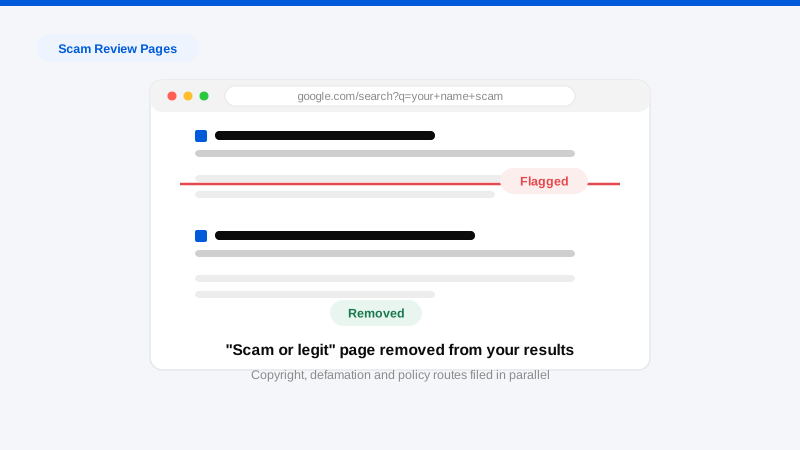
Search your name and somewhere on page one there is a page called “Your Name Review: Scam or Legit?” You did not write it, the person who did has never bought from you, and it is there because the site makes money from the traffic your name sends it. Every prospect who searches you before buying reads it. Some of them walk away, and none of them tell you why.
Why these pages exist
A handful of review blogs publish thousands of near-identical pages about coaches, course creators, agency owners and program founders. The pages are written to rank for “name scam”, “name review” and “name legit”, carry affiliate links to a competing program, and are rarely based on any real purchase. They rank because your name has search volume and nobody else has written about you. The same pattern shows up on forums, on Reddit, and on “consumer complaint” sites that charge to take a post down.
What is realistically removable
- Defamatory statements of fact (a claim you were charged with fraud, that refunds are never paid, that a business is a Ponzi scheme) can be removed at the source or de-indexed on legal grounds, depending on the country of the site and of the searcher.
- Copied material. Many of these pages lift your sales-page copy, photos and video stills. That is a copyright route, and it works.
- Impersonation and fake testimonials attributed to you or your students are policy violations on the platforms hosting them.
- Opinion (“we think this program is overpriced”) is generally not removable. When that is all the page contains, the route is suppression and correction, not removal, and we will say so before you pay anything.
How we handle these cases
- We map every page ranking for your name plus “scam”, “review”, “legit”, “complaints” and “refund”, across Google and Bing, and grade each one: removable, de-indexable, suppress, or leave alone.
- For removable pages we file on every ground at once: copyright for the lifted material, defamation or privacy for the false claims, platform policy for fake reviews, and Google’s legal and personal-content channels for de-indexing.
- Where a page cannot come down, we make sure it no longer sits above your own results: your site, your press, your verified profiles, and the answers AI assistants give when someone asks about you.
- Everything is verified before it is reported as done: source gone, caches cleared, results clean on Google and Bing.
Get a Free, Confidential Exposure Scan
What it costs
Priced per page, in writing, after the free assessment. Most of what you pay is tied to the page actually coming down: see success-based pricing.
Frequently asked questions
Can I just ask the site to remove it?
You can, and some will, for a fee that makes them more money than the page ever would. Paying the site that attacked you is a business model we do not recommend feeding. Talk to us first; a badly framed request can also close the routes that work.
Will suing help?
Sometimes, in the right jurisdiction, and it is expensive and public. We work with counsel when a case needs it and tell you when it does not.
What about Reddit threads calling me a scam?
Different platform, different routes. See remove content from Reddit and our guide to removing a Reddit thread about you.
Will the page come back?
Sites like this republish, and copycats appear. Protection Plan members have their name monitored and re-filed against at member rates when something new ranks.
Does this work for agencies and consultants, not just coaches?
Yes. The same review-blog model targets marketing agencies, financial educators, real-estate programs and SaaS founders. The routes are the same; the evidence differs.