Erase online images from the internet
Need an unwanted photo removed from a website or social account? We assess the image, the publisher and the available routes, then manage the agreed work. Start with a confidential assessment of the source and known copies.
What we remove
- Photos published without permission
- Old images that no longer represent you
- Manipulated or AI-generated fake images
- Images attached to negative articles
- Google Images results for your name
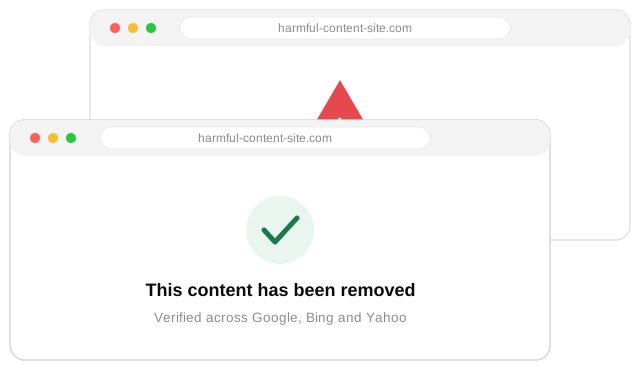
How it works
What clients say
Malala Leides
OnlyFans Creator · Leaked Content Removal
"Someone told me they'd seen my content leaked on various websites. I literally did not know what to do. Content Removal got back to me so quickly and removed the content within 24 hours."
Shauna Smith
Private Image Protection
"All my images & videos were removed in 72 hours. The police said they couldn't help me. Content Removal went above and beyond."
Laurence Thomas
Hey Ewe · Brand Protection
"We had content copied and put online. A couple of other removal companies tried and were unsuccessful, Content Removal got it taken down very, very quickly. Can't recommend them enough;"
Professional removal at the source
Source removal means the image is removed from the website, post or account publishing it. It may still exist at another image-file URL or on a different site. We identify known publication locations and separate the image itself from pages that link to or embed it.
The available route depends on the facts: ownership and licensing, privacy, harassment, intimate imagery or another specific platform rule. We assess the image in its full publication context. Search cleanup follows a different process when the source has changed or a Google policy applies.
The removal grounds for images, in practice
Our assessment considers the original publication, the rights involved and the circumstances in which the image was shared. We distinguish ownership from privacy concerns and identify the evidence relevant to each. You do not need to determine the removal route before speaking with us.
A photo attached to a news article needs a publisher assessment as well as an image assessment. Removing a photograph may leave the article intact. Conversely, removing an article page may leave its image accessible at a separate file address.
Timelines: what moves fast and what doesn't
We explain the expected stages around the host, evidence and known copies. The agreed scope gives you a clear picture of the work, with updates as responses arrive and source changes are verified.
An initial assessment identifies the proposed scope and any evidence gaps. We review known copies and discuss the coverage appropriate to your case, including whether ongoing monitoring would help address repeat exposure.
Staying erased
We verify the agreed source pages and image addresses, then record what changed. Google Images can continue to display an old result after a source changes, so we assess search visibility separately. That gives you a clear account of the outcome and any remaining exposure.
New uploads require a fresh assessment. Any ongoing monitoring scope should identify the platforms covered and how newly discovered copies will be reviewed.
Frequently asked questions
Can images be removed from Google Images?
Can you remove AI-generated images of me?
How do I know it worked?
Start with a free, confidential Exposure Scan
We'll scan your digital footprint, show you exactly what's exposed, and recommend the fastest path to remove it, or tell you honestly if you don't need us.
Book Your Assessment