Leaked content removal is the process of getting stolen paywalled content (OnlyFans sets, Fansly videos, Patreon posts, private snaps resold or reposted without permission) taken down from the sites profiting from it. The good news: leaked creator content is one of the most removable categories on the internet, because you own the copyright in content you created, and US law (the DMCA) obligates hosts to remove infringing copies when properly notified. The hard part is scale and persistence: a single leak propagates to dozens of tube sites, forums, Telegram channels, and “mega folder” link hubs, and it re-uploads after every takedown. Effective removal is therefore a campaign, not a one-off notice. This page explains how that campaign works.
What leaked content qualifies for removal?
Almost all of it, on one of two legal bases. Copyright: if you shot the content, or it was shot for your account under an agreement giving you rights, every unauthorized repost infringes your copyright, and a compliant DMCA notice requires the host to remove it regardless of whether the site is “adult,” offshore-branded, or hostile. Subscriber screen-recordings of your paid content are still copies of your work. Non-consensual intimate image (NCII) rules: where leaked content is intimate and being shared without your consent, most major platforms apply NCII policies that work even faster than copyright claims, and dedicated hashing systems like StopNCII can block re-uploads across participating platforms. Content that does not qualify is rare in this category, essentially only material you neither created nor appear in.
How professional leaked-content removal works
- Full leak mapping. We locate every copy: tube sites, forums, file lockers, Discord and Telegram distribution channels, Google and Bing image results, and the link-aggregator threads that seed new uploads. Removing the copies without killing the distribution hubs is how leaks come back in a week.
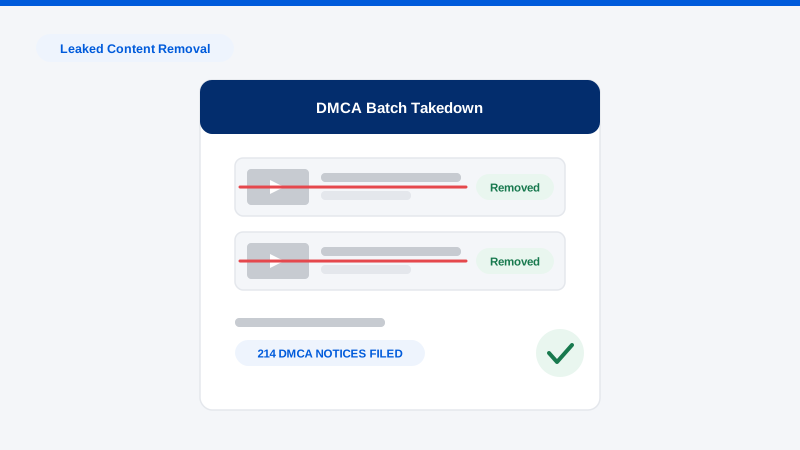
- DMCA takedowns at scale. Each host receives a properly formatted notice (identification of the copyrighted work, the infringing URLs, the sworn statements the statute requires) sent to its registered DMCA agent. Volume matters: a real leak involves hundreds of URLs, and batch-structured notices that a host’s abuse team can process quickly get faster compliance than one-URL emails.
- Tube-site batch removals. The major adult tube sites process copyright and NCII removals through dedicated forms and abuse contacts, and they respond, our Pornhub video removal page walks through the largest one in detail. For verified creators, we also use fingerprinting programs where available so removed videos are blocked from re-upload on that platform.
- Search de-indexing in parallel. While hosts process removals, we file with Google to remove infringing URLs from search results, and use Google’s dedicated NCII form for intimate content. This cuts the traffic, and the resale value, of the leak while source removal completes.
- Non-compliant host escalation. Sites that ignore notices get escalated upstream: to their hosting provider, CDN, domain registrar, and payment processors, each of which has its own infringement policies. Most “untouchable” leak sites are reachable through the companies they depend on.
- Re-upload monitoring. After the sweep, monitoring catches new uploads while they have a handful of views instead of after they rank for your name. This is the difference between removing a leak and staying removed.
Get a Free, Confidential Exposure Scan
Why DIY takedowns fall behind
Creators absolutely can send their own DMCA notices, and for a small leak you should try. The problem is arithmetic. A leak that starts on one forum typically spreads to thirty-plus URLs within days; each host has a different notice channel, format, and response time; and every re-upload restarts the clock while you are creating, filming, and running your actual business. Filing takedowns becomes an unpaid part-time job precisely when the leak is costing you subscription revenue. Our creator clients hand us the whole problem: we run the mapping, notices, escalations, and monitoring continuously, and report what came down and what is pending. The economics usually favor this quickly, leaked content directly cannibalizes paid subscriptions, so every week a full set circulates free is measurable lost income. See our creator services hub and our dedicated OnlyFans page for how this fits into broader account and brand protection, including impersonation and catfish accounts reselling “your” content.
Honest timelines and expectations
Compliant hosts typically remove content within one to seven days of a proper DMCA notice; the large tube sites are usually at the fast end for verified claims. Google de-indexing of reported URLs generally lands within days. Hostile or offshore hosts take longer, two to eight weeks through upstream escalation, and a small minority of sites are effectively unreachable, which is where de-indexing and monitoring carry the load. No honest firm promises a leak-free internet forever: what a well-run campaign delivers is the removal of everything reachable, suppression of the rest from search, and a monitoring net that keeps new uploads from taking root. That combination is durable; a one-time takedown blast is not.
Frequently asked questions
My OnlyFans content was leaked. Can it actually be removed?
Yes, in the large majority of cases. You own the copyright in content you created, so DMCA notices compel removal from compliant hosts, and NCII policies cover intimate content even faster on major platforms. The realistic goal is removal of all reachable copies plus monitoring, not a single permanent erasure event.
How much does leaked content removal cost?
Our removal work is priced per engagement target, quoted in writing once the free scan maps the spread, and active creators with ongoing leak exposure usually fit better into a monthly Protection Plan, scaled to the coverage and takedown capacity involved, that handles continuous takedowns and monitoring. A free scan first tells you the actual scope, so you are not guessing.
Do DMCA notices work on foreign tube sites?
Often, yes. Many nominally offshore sites use US-based CDNs, registrars, or payment processors and comply to protect that infrastructure. Where a host truly ignores notices, upstream escalation and search de-indexing limit the damage instead.
Will removed videos just get re-uploaded?
Some will, which is why monitoring is part of the service, not an add-on. Platform fingerprinting programs block known files from re-upload on participating sites, and fast takedowns of new copies keep any single re-upload from spreading.
Can you remove leaked content without revealing my legal name publicly?
DMCA notices require a rights-holder identity, but we structure claims as your authorized agent so your personal details are not broadcast to leak-site operators, and NCII channels are confidential by design. Discretion is standard in this work.
If your paid content is circulating free, the leak is compounding daily, every takedown now prevents ten later. Start with a free, confidential exposure scan: we will map every copy we can find and show you exactly what removal involves. Our full methodology is on the process page.