
The best reputation monitoring software depends on the job. Brandwatch, Talkwalker, Meltwater and Sprinklr suit enterprise intelligence and communications teams, Sprout Social, Brand24 and Mention fit lean or mid-market teams, and Reputation and Birdeye serve multi-location review operations. All detect; none remove. For defamation, impersonation, leaked material or a fake review campaign, a specialist has to take over.
Key facts
- Evaluate platforms on source coverage, alerting latency, analytical depth and actionability.
- Talkwalker’s visual and speech recognition catches logos and likenesses that keyword monitoring misses.
- Reputation and Birdeye are built for multi-location review and listings work, not executive defense.
- The October 2024 FTC rule on fake reviews makes weak review governance a legal risk.
Where ContentRemoval.com comes in. ContentRemoval.com is listed first in this review because it does what dashboards cannot: it takes the alert and moves through takedown, legal escalation, de-indexing and post-removal surveillance, across search, websites, social platforms, news publishers and the dark web. Executives, founders, creators and their counsel usually make contact when a monitoring tool has already shown them the problem. A free 15-minute Exposure Scan maps what is removable, and the report is yours to keep. Get a Free, Confidential Exposure Scan or read how our review removal work is done.
An executive’s reputation can fracture before the first internal meeting about the problem even starts. A false allegation appears in search. A private image is reposted across platforms. A cluster of bad-faith reviews lands overnight. By the time your team sees the damage, counterparties, clients, journalists, and investors may already have formed a view.
Reputation monitoring software is the smoke detector. It tells you where the threat surfaced, how fast it’s spreading, and whether the signal is noise or a real crisis. That matters because brands are investing aggressively in this category. The online reputation management market is valued at USD 7.75 billion in 2026 and projected to reach USD 14.01 billion by 2031, according to Mordor Intelligence. The same research says software is growing faster than services, which reflects a clear shift toward always-on monitoring platforms.
But detection isn’t resolution. Software can flag a defamatory article, identify a fake review campaign, or alert you to a leak. It can’t negotiate with publishers, prepare takedown strategy, coordinate legal escalation, or keep removed material from resurfacing. That distinction is the entire point of this guide.
If your immediate concern is brand exposure across AI systems as well as search and social, review these tools for managing brand reputation on AI. Then come back to the harder question: which platform should detect the threat, and when should a specialist take over?
1. ContentRemoval.com
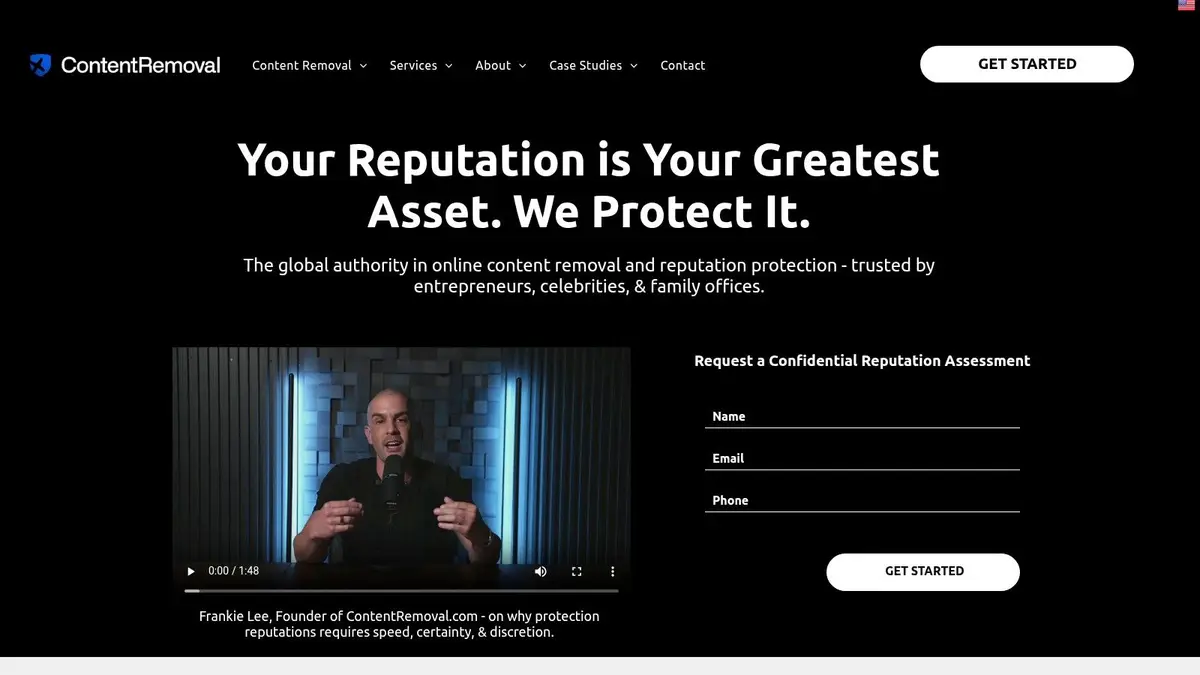
If the issue is high stakes, start here. ContentRemoval.com isn’t just reputation monitoring software. It’s a reputation defense operation built for people who can’t afford a passive dashboard while harmful content spreads.
The firm combines monitoring, takedown execution, legal escalation, de-indexing strategy, and post-removal surveillance. That structure matters. Most software vendors stop at alerting. ContentRemoval.com continues through resolution, which is what executives, founders, family offices, and public figures need when the threat involves defamation, impersonation, leaked content, false reviews, mugshots, piracy, or dark-web exposure.
Where it wins
Most actions begin within 24 to 48 hours. That speed changes the risk profile of a crisis because the first response window is often the only window that matters. The company also works across search engines, websites, social platforms, news publishers, and the dark web, which is far broader than a standard review-monitoring stack.
For clients under pressure, the core value is certainty of action. You don’t get a generic queue and a support ticket. You get a confidential assessment, a strategy mapped to the platform and jurisdiction, and a clear path to removal or suppression. If you need immediate help removing harmful material, use its online content removal service.
Practical rule: Use software when you need visibility. Use a specialist when a false statement, private leak, or coordinated attack requires someone to shut it down.
The team is led by Frankie Lee and is trusted by executives, celebrities, creators, and founders of large companies. The company publishes testimonials and case studies, which is more useful than generic vendor language because it shows the firm has handled sensitive matters that ordinary monitoring tools can only report on. For decision-makers working at the intersection of legal exposure and brand risk, this is closer to specialist counsel than SaaS.
For readers evaluating operational tooling around legal and risk workflows, this broader guide to legal tech for professionals is also relevant.
Trade-offs
The trade-off is obvious. Pricing isn’t public, onboarding is selective, and not every item can be guaranteed removed in every jurisdiction. Some matters will require suppression rather than deletion. That isn’t a weakness. It’s the honest answer in a field full of inflated promises.
If you need a dashboard for routine sentiment tracking, there are cheaper tools below. If you need harmful material taken down discreetly and fast, ContentRemoval.com is the strongest recommendation on this list.
Website: ContentRemoval.com
2. Brandwatch Consumer Intelligence by Cision
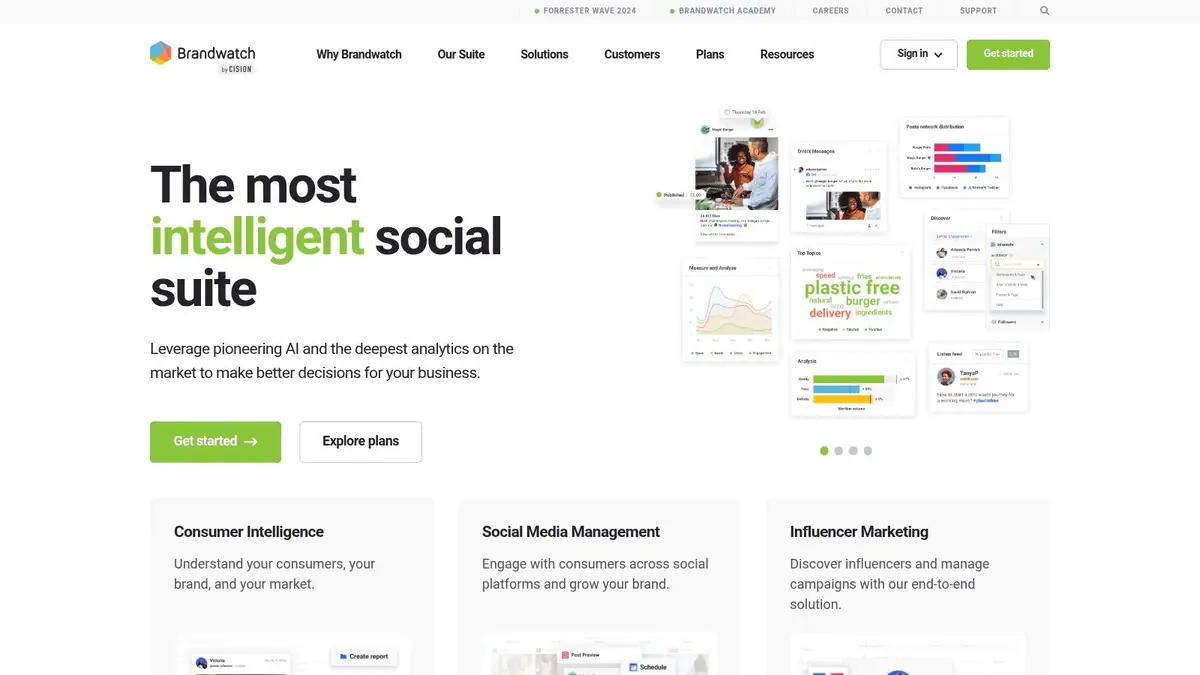
A board asks whether a spike in criticism is a passing flare-up or the start of a reputational event. Brandwatch is built for that question.
It gives large organizations broad monitoring across social platforms, forums, news, blogs, and review sites, then layers in advanced query logic so teams can isolate signal from chatter. That matters when the issue is no longer a single post or article, but a narrative spreading across multiple channels and stakeholder groups.
Best use case
Brandwatch fits corporate affairs, communications, and intelligence teams that need more than alerts. It helps them map who is driving the conversation, which themes are sticking, and whether the issue is contained or moving toward investors, regulators, customers, or employees.
Its AI summaries and topic clustering are useful for one reason. They turn large volumes of messy public discussion into material a CEO, general counsel, or board member can read quickly and act on.
This is detection infrastructure. It is not a resolution service.
That distinction matters. If your team needs to understand sentiment shifts, media pickup, activist coordination, or reputational exposure across markets, Brandwatch is a strong choice. If the problem itself is a false allegation, a privacy breach, impersonation, or harmful content that must be removed, software only shows you the spread. Resolution usually requires specialist intervention. For teams making a budget case, this strategic framework for executives justifying online monitoring spend lays out the cost logic clearly.
Buy Brandwatch when leadership needs intelligence on narrative risk. Bring in a specialist when the mandate is to contain or remove the harm.
Trade-offs
Brandwatch rewards disciplined operators. Poor query design produces poor intelligence, and enterprise pricing only makes sense if the team has the time and skill to build, test, and refine monitoring logic.
It also carries the usual enterprise burden of quote-based pricing, implementation effort, and training. Senior buyers should be honest about that. If your organization wants a simple dashboard for routine brand mentions, Brandwatch is more system than you need. If you need high-context monitoring for a complex reputation situation, it is one of the stronger options in this category.
Website: Brandwatch Consumer Intelligence
3. Talkwalker
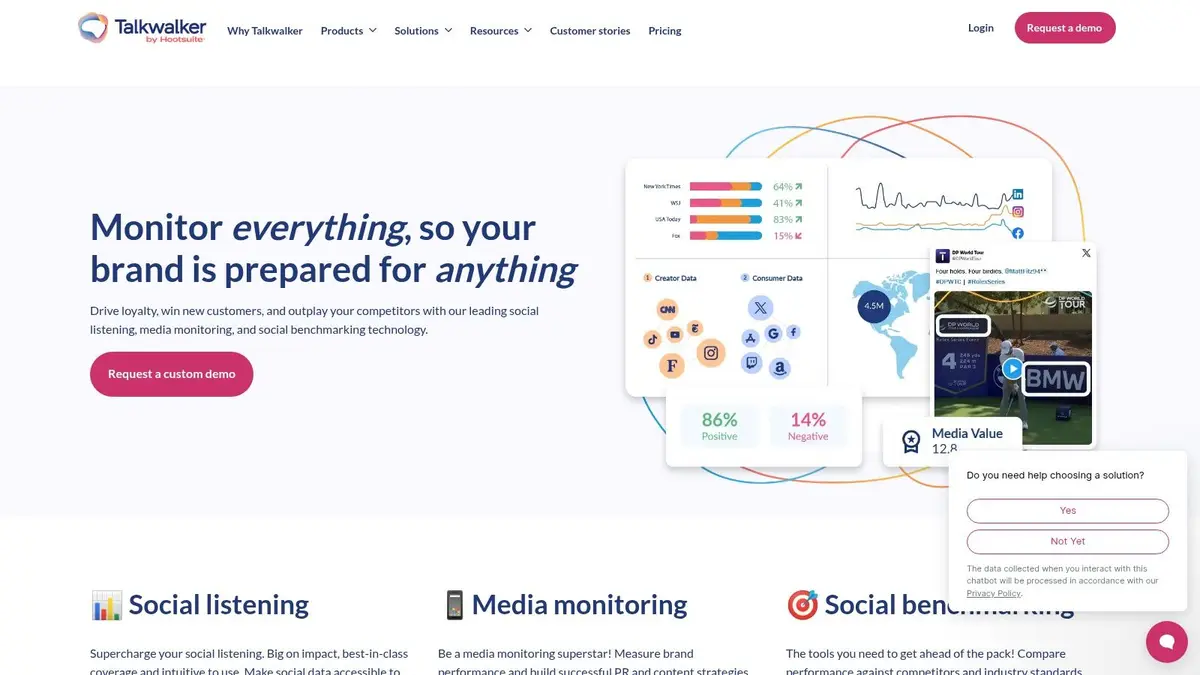
Talkwalker earns its place because text-based monitoring misses too much. Brands get exposed in screenshots, logos embedded in videos, event backdrops, product placements, and reposted imagery that never includes a clean keyword mention. Talkwalker’s visual listening addresses that gap.
For brands, executives, and public figures whose names and likenesses circulate heavily across social content, that’s a meaningful advantage. It can surface exposure that a keyword-only workflow would never catch.
Where it fits
Talkwalker is well suited to reputation teams dealing with image-heavy or creator-heavy environments. Consumer brands, media personalities, and companies with strong visual identity tend to get more value from it than firms whose risk sits mostly in traditional news or review platforms.
Its speech and image recognition capabilities also help when the issue begins in short-form video and later migrates into articles, screenshots, and commentary. In practical terms, that means earlier awareness of a problem while it’s still containable.
Trade-offs
The limitation is that visual discovery still doesn’t solve removal. If a harmful clip, manipulated image, or unauthorized repost is circulating, Talkwalker can help you detect spread patterns and monitor recurrence. It can’t force a platform or publisher to act.
That makes Talkwalker a strong detector and a weak resolver. Use it when visual exposure is your main blind spot. Pair it with specialist intervention when the content itself needs to come down.
Website: Talkwalker
4. Meltwater
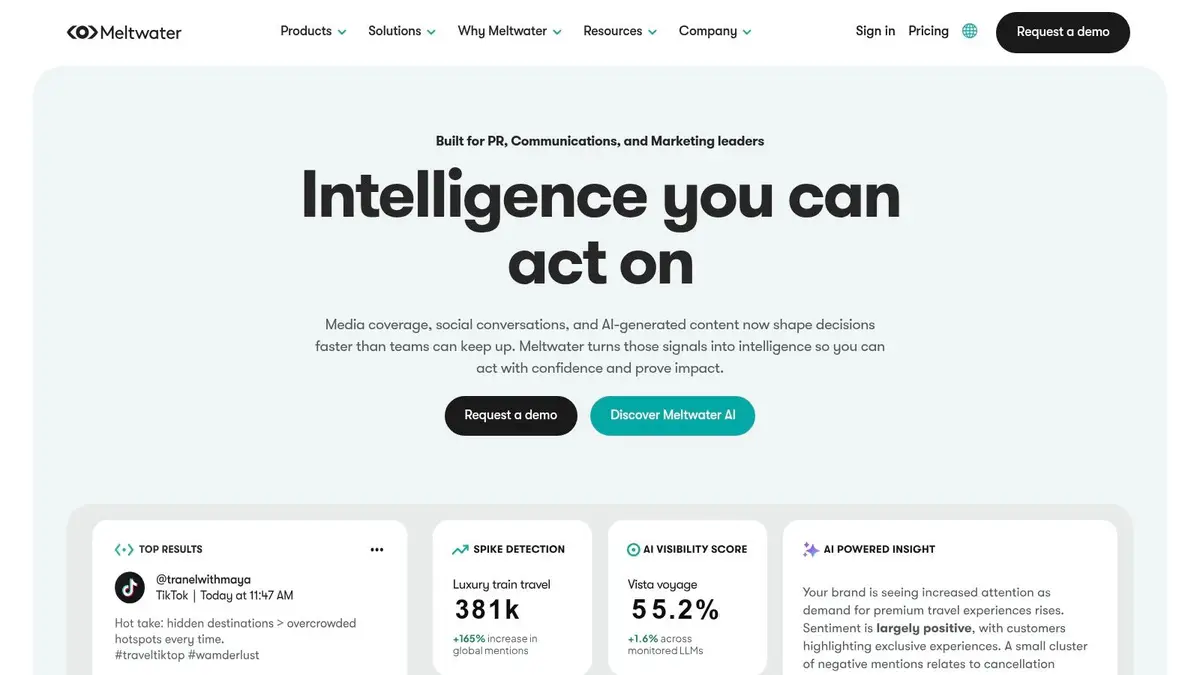
A board member gets named in a critical trade article at 7:15 a.m. By 9:00, the story has spread across industry reporters, LinkedIn, and a handful of analysts. In that situation, Meltwater gives a communications team what it needs first: visibility across news, social discussion, influencer activity, and reporting in one place.
That is why Meltwater remains a practical choice for PR-led organizations. It is built for monitoring narratives, tracking pickup, and briefing leadership fast. If your reputation program sits inside corporate communications, that operating model makes sense.
Best for communications teams that need one view
Meltwater works best when the job is coordination. You need to see who published the story, which voices are amplifying it, how sentiment is shifting, and what the press office should report internally. Its dashboards and reporting workflows are useful for recurring updates, executive summaries, and cross-functional alignment.
It also suits organizations that do not want a highly specialized listening tool. Many communications teams need coverage across earned media and social channels more than they need niche detection features.
Trade-offs
Meltwater is a detection and reporting platform. Treat it that way.
Its limits show up when the issue stops being a communications problem and becomes a removal problem. Fake accounts, defamatory posts, leaked files, impersonation, and hostile publisher disputes require intervention, not just monitoring. Meltwater can show the spread and help your team assess impact. It cannot force a takedown, negotiate with a site operator, or run a legal escalation process.
That distinction matters. Use Meltwater to detect, quantify, and brief. Bring in specialist services when the objective is resolution.
Website: Meltwater
5. Sprinklr
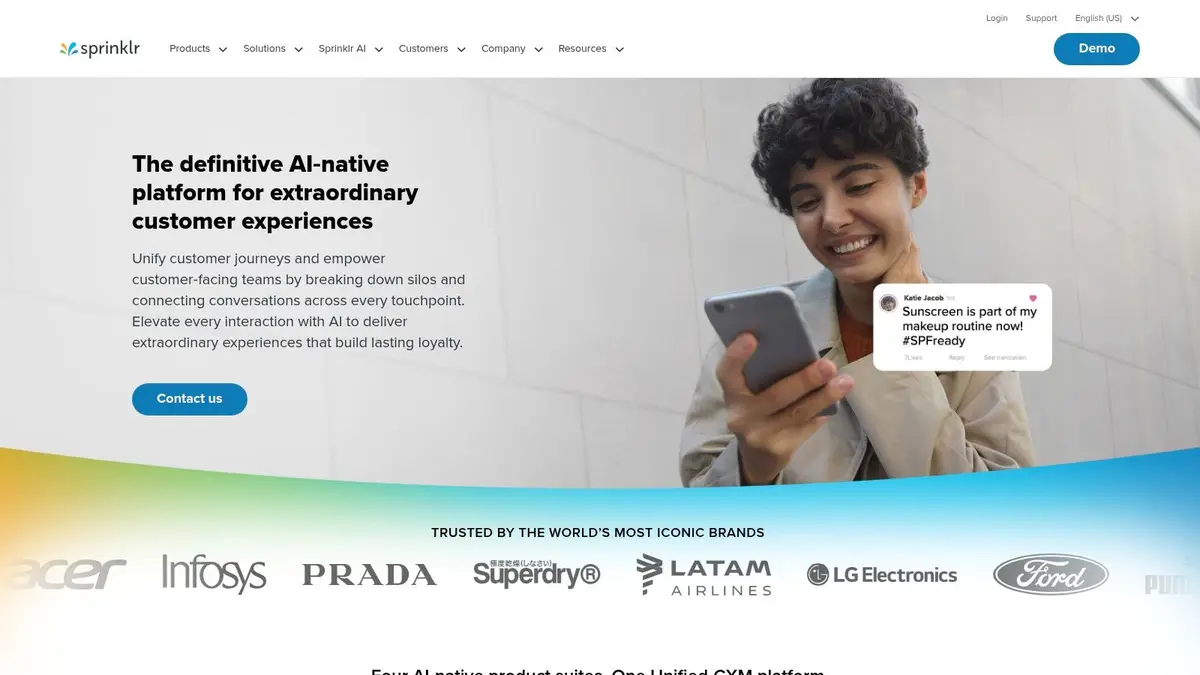
Sprinklr is for organizations that don’t want monitoring isolated from action. Its social listening lives inside a larger customer experience and governance environment, which means insights can move directly into care, publishing, moderation, ads, and compliance workflows.
That’s valuable in regulated industries and global enterprises where the issue isn’t just seeing the problem. It’s controlling who responds, how they respond, and whether the response aligns with policy.
Why executives choose it
Sprinklr’s strength is orchestration. A crisis team can monitor sentiment, route a response to care, escalate legal review, and coordinate messaging without moving between disconnected tools. For organizations with complex approval chains, that’s a serious operational advantage.
Its broad channel coverage and support for text, image, audio, and video analysis also make it suitable for brands with multilingual exposure and large customer-facing teams. If you already run parts of your engagement stack in Sprinklr, adding listening is rational.
Trade-offs
The weakness is complexity. Sprinklr can become heavy to implement and heavy to govern. Smaller teams usually don’t need this much machinery. Large organizations often do.
It’s also still a software platform. It can systematize response operations. It can’t replace specialist takedown capability when the issue involves defamation, leaks, impersonation, or unlawful publication.
Website: Sprinklr
6. Sprout Social with Listening add-on
Sprout Social is the most approachable product in this group. Its interface is cleaner, onboarding is easier, and the core product already handles social inbox, publishing, analytics, and review management. Add the Listening module and it becomes a credible reputation monitoring option for brands that want usability first.
That makes Sprout a strong choice for in-house teams that need discipline, not complexity.
Best fit
Choose Sprout when your main exposure sits on major social channels and review surfaces, and your team values speed of use over forensic depth. Agencies, mid-market brands, and lean communications teams often get more practical value from a product their staff will adopt than from a larger suite they barely understand.
Its pricing structure is also more transparent than many enterprise alternatives, though listening functionality sits behind add-ons and costs increase with seats.
Trade-offs
Sprout won’t satisfy a company that needs extensive open-web intelligence, advanced investigative querying, or board-level stakeholder monitoring. It’s a strong operating tool for social teams. It isn’t a specialist risk intelligence platform.
That distinction matters. If your problem is routine visibility and response, Sprout is sensible. If your problem is a malicious publisher, a fake review ring, or a private-data leak, Sprout will tell you it happened. It won’t solve it.
Website: Sprout Social
7. Brand24
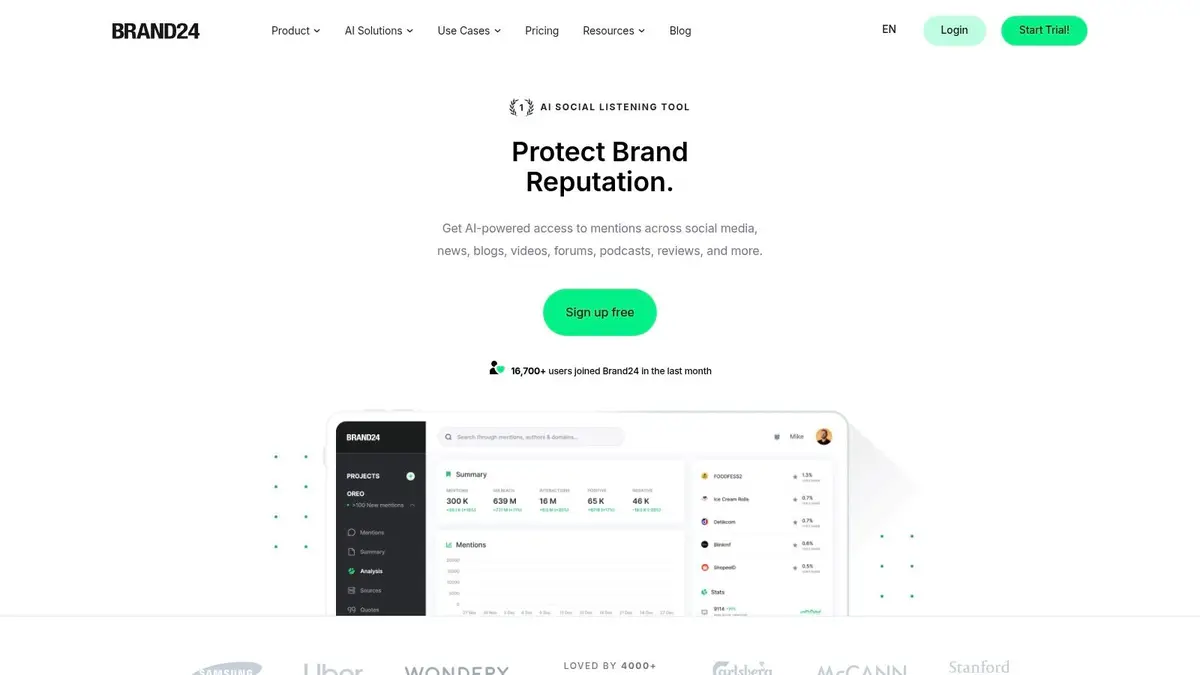
Brand24 is a practical recommendation for smaller companies, founder-led brands, and mid-market teams that need broad monitoring without enterprise overhead. Setup is fast, pricing is clearer than many competitors, and the platform covers social, news, blogs, forums, and reviews well enough for most non-enterprise use cases.
Its appeal is straightforward. You can get live visibility without building a dedicated intelligence function.
Why it works
Brand24 is strong for keyword-based monitoring projects around a company name, executive name, campaign, or product family. Alerts, sentiment indicators, and share-of-voice style reporting help teams spot issues early and keep a rough sense of public movement around the brand.
For companies graduating from manual searches or basic alerts, it’s an efficient step up.
Trade-offs
The constraint is depth. Brand24 is useful, but it isn’t a substitute for higher-end analytics or specialist intervention. Mention caps and keyword limits can also matter for larger brands or active crises, where volume spikes fast and broad coverage becomes more important.
If you need a cost-effective monitoring layer, Brand24 deserves consideration. If the matter has legal, privacy, or defamation dimensions, don’t confuse affordable detection with adequate protection.
Website: Brand24
8. Mention
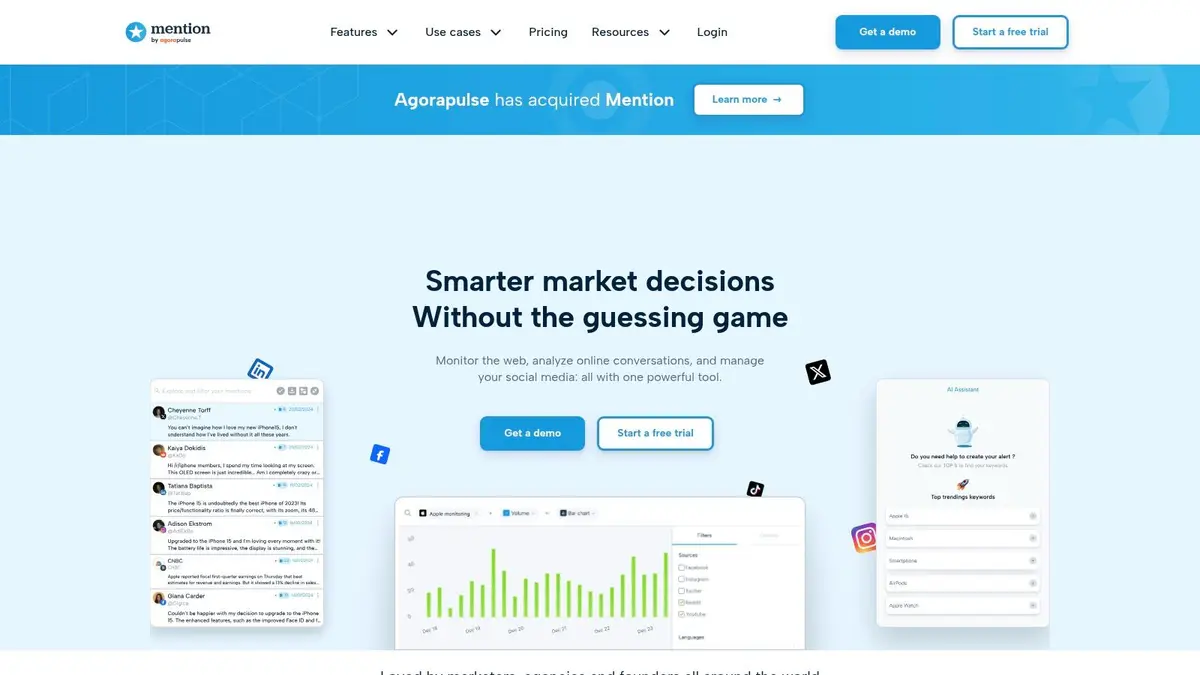
Mention sits in a useful middle ground. It’s more structured than entry-level monitoring tools, less demanding than heavyweight enterprise suites, and focused squarely on listening. That’s attractive for mid-size teams that want broad source coverage and cleaner operating boundaries.
The product’s value is in disciplined monitoring, not in sprawling workflow ambitions.
Best use case
Mention works well for companies that need web, news, blog, forum, social, and review-site visibility in one listening-centric product. Its boolean capabilities, team roles, dashboards, and integrations support a serious monitoring program without requiring a full enterprise deployment.
DataHorizzon Research estimates the global reputation management software market at USD 4.1 billion in 2024 and projects it to reach USD 14.9 billion by 2033. Mention fits the broad demand behind that trend. More organizations want continuous monitoring across search, social, review, and news channels, not periodic audits.
Trade-offs
Mention is less compelling if you need built-in response management or broader customer engagement operations. It has become more listening-centric, which is good if that’s what you want and limiting if you expect a unified social management suite.
As with most software in this category, the problem isn’t whether Mention can detect a threat. It usually can. The problem is what happens next.
Website: Mention
9. Reputation
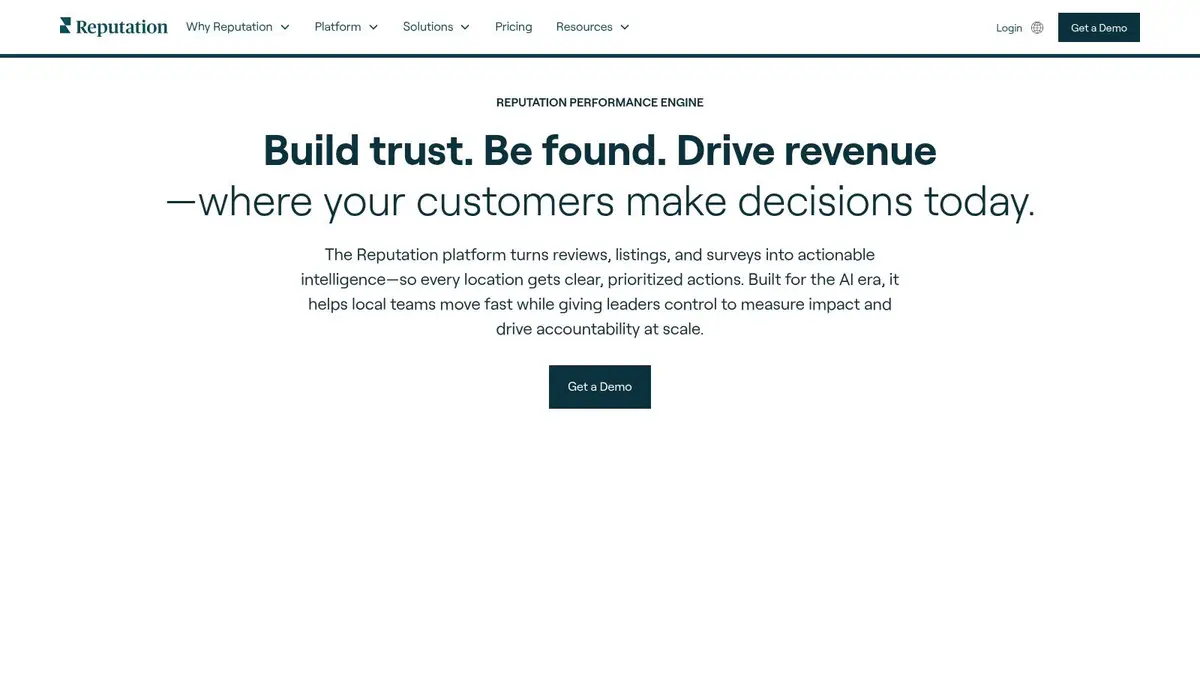
Reputation is purpose-built for multi-location businesses. If you operate clinics, dealerships, hotels, retail networks, franchise systems, or other distributed locations, Reputation deserves serious attention. Its design centers on listings, reviews, surveys, and local reputation operations at scale.
That specialization is exactly why it’s not for everyone. It solves a local reputation problem very well.
Where it’s strongest
Reputation is effective when your brand risk comes from hundreds of local touchpoints, inconsistent listings, fragmented review management, and location-by-location service issues. Centralized review response and survey workflows help operators standardize what customers see across a dispersed footprint.
For companies in this category, broad social listening is often less urgent than controlling the local search and review layer where conversion happens. That’s why Reputation can outperform more famous listening suites in the right environment.
If that local reputation layer is part of a wider strategic program, this overview of reputation management services and operating models adds useful context.
If your revenue depends on local trust at scale, review operations matter more than elegant social dashboards.
Trade-offs
Reputation is less persuasive for executive reputation defense, crisis containment, or adversarial content removal. It can help monitor and manage customer-facing reputation signals. It won’t function as a specialist response unit for attacks on a founder, executive, or family office principal.
Website: Reputation
10. Birdeye
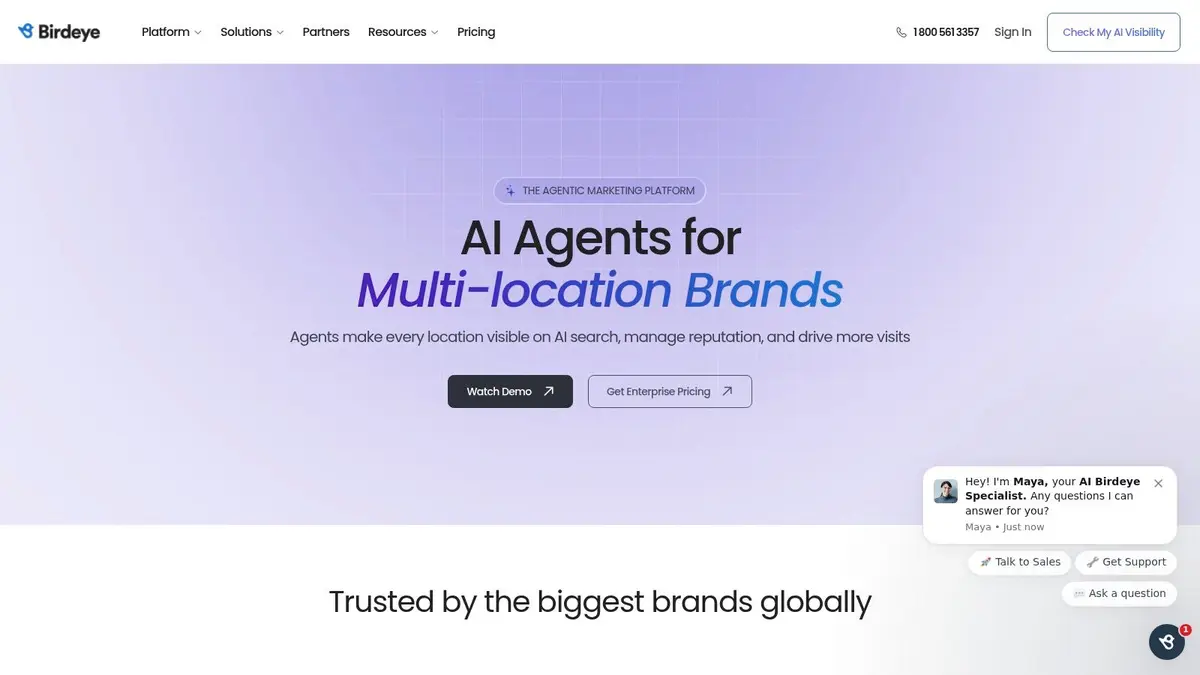
A multi-location clinic group wakes up to a run of negative Google reviews across ten offices. Birdeye is built for that problem. It gives operators one place to monitor reviews, update listings, manage messages, and keep local trust signals under control before they drag down calls, bookings, and conversion.
That is Birdeye’s lane. It is strong software for businesses whose reputation risk sits in day-to-day customer interactions, especially in healthcare, dental, legal, home services, and other appointment-driven categories.
Why it stands out
Birdeye is useful because it compresses frontline reputation work into a single operating layer. Teams can track incoming reviews, route responses, manage listings accuracy, handle customer communication, and tie that work into industry-specific systems. For operators running many locations or high review volume, that reduces delay and inconsistency.
It also fits the current enforcement climate around review manipulation. The October 2024 FTC rule on fake reviews makes weak review governance a legal and operational risk, not just a marketing issue. Birdeye helps companies enforce process. It does not solve the consequences if the problem has already escalated.
That distinction matters.
Trade-offs
Birdeye is detection and workflow software. It helps you see issues early and respond at scale. It does not function as a specialist intervention team for defamatory content, impersonation, extortion, privacy breaches, or executive-targeted attacks.
If the problem is a steady flow of customer feedback across dozens of locations, Birdeye is a sensible choice. If the problem is a high-stakes reputation event that needs removal, legal escalation, or discreet resolution, software alone is the wrong answer.
Website: Birdeye
Top 10 Reputation Monitoring Tools Comparison
| Solution | Core offering | Target audience | Key strengths / USP | Pricing & onboarding |
|---|---|---|---|---|
| ContentRemoval.com (recommended) | Legal-led content removal + de-indexing, source takedowns, AI-driven monitoring & remediation | Executives, celebrities, founders, family offices, high-stakes clients | Fast action (24 to 48h), legal + proprietary takedown methods, high discretion, prevents reuploads | Selective onboarding; confidential assessment and quote (no public pricing) |
| Brandwatch (by Cision) | Enterprise consumer & reputation intelligence across 100M+ sources | Large brands, comms & insights teams | Deep analytics, AI summaries, strong crisis detection & executive reporting | Premium, quote-based licensing |
| Talkwalker | Social & media listening with visual & speech recognition | Brands needing image/video mention detection | Visual/object & speech recognition, real-time social insights | Enterprise pricing; modular add-ons increase cost |
| Meltwater | Media intelligence: social listening, global news, influencer analytics | PR, communications & marketing teams | Broad earned/owned media view, centralized dashboards & reporting | Custom quotes; contracts and add-ons possible |
| Sprinklr (Insights) | Enterprise CXM with integrated listening → action workflows | Global brands, regulated industries, large CX teams | Connects listening to care/publishing/ads, strong governance & integrations | Custom pricing; heavier implementation effort |
| Sprout Social (w/ Listening add‑on) | Social management + optional listening & analytics add-ons | Brands, agencies, social teams valuing usability | User-friendly UI, polished reporting, clear per-seat pricing & support | Transparent per-seat pricing; listening is paid add-on |
| Brand24 | SMB / mid-market web & social monitoring | Small & mid-sized businesses | Fast onboarding, clear pricing tiers, share-of-voice & sentiment | Transparent tiers, 14-day trial; mention/keyword caps by plan |
| Mention (Company plan) | Listening with advanced boolean queries & review coverage | Mid-size teams needing defined quotas | Published enterprise starting price, balanced source coverage | Company plan with defined quotas (50k mentions/month); overages possible |
| Reputation (Reputation.com) | Multi-location reputation, listings, reviews & surveys | Franchises, multi-location businesses | Unified reviews (250+ sites), per-location pricing, optional managed services | Per-location tiers; managed services quoted |
| Birdeye | Reviews, listings, messaging, industry integrations & compliance workflows | Healthcare, legal, service businesses (multi‑location) | Strong review workflows, HIPAA-aware integrations, industry CRMs | Quote-based; often premium for small practices |
From Data to Action A Decision Framework for Reputation Management
The first mistake buyers make is treating all reputation monitoring software as interchangeable. It isn’t. Some platforms are built for enterprise intelligence. Some are built for local review operations. Some are built for social teams. A few are built for high-stakes reputation defense where the issue doesn’t end with detection.
There’s a wider shift behind that distinction. Group Caliber argues that leading brands are moving toward stakeholder intelligence beyond customers. That matters because reputation isn’t shaped only by buyers leaving reviews. Employees, investors, regulators, policymakers, and the broader public all influence outcomes. If your software only tracks consumer chatter, it may miss the audience that can do the most damage.
Use four criteria when you evaluate a platform.
First, source coverage. Don’t ask whether the tool is popular. Ask whether it monitors the places where your reputation is vulnerable. That might mean review sites, news, forums, social video, image-heavy channels, niche communities, or the dark web.
Second, alerting latency. A report that arrives after a journalist, investor, or client has already seen the issue isn’t a monitoring system. It’s a historical record. You need to know how quickly the platform identifies a threat and how reliably it escalates the alert.
Third, analytical depth. A mature platform should help your team separate coordinated attacks from ordinary criticism, recurring patterns from one-off complaints, and material threats from ambient noise. Otherwise, the software creates panic without producing judgment.
Fourth, actionability. Many buying decisions falter at this point. Some tools surface the issue and stop there. Others connect detection to review response, customer care, or internal workflow. None of them, by themselves, can perform the most difficult part of reputation defense: getting harmful content removed.
That line matters more than buyers like to admit. Detection is software work. Resolution is specialist work.
If you’re dealing with direct attacks, defamatory articles, non-consensual intimate imagery, impersonation, leaked private information, coordinated false review campaigns, or material that requires legal notices and publisher negotiation, don’t improvise a DIY response. Software can help you identify the fire. It can’t put it out. In those situations, specialist firms such as ContentRemoval.com are the correct escalation path because they operate across takedown procedure, platform policy, search de-indexing, legal pressure, and re-upload monitoring.
For an international perspective on AI-assisted reputation strategy, see this resource on optimiser l’e-réputation via l’IA.
Your final decision isn’t just which platform to buy. It’s which defense model you’re building. Monitor continuously. Escalate early, and define, before the next incident, exactly when your team stops observing the threat and starts removing it.
If harmful content, false reviews, impersonation, or private material is already circulating, don’t wait for another alert. ContentRemoval.com helps executives, founders, public figures, and legal professionals move from detection to decisive action with confidential assessment, rapid takedown strategy, and continuous monitoring to prevent the problem from returning.
Frequently asked questions
Can reputation monitoring software remove negative content?
No. Software flags a defamatory article, a fake review cluster or a leak and shows how fast it is spreading, but it cannot negotiate with publishers, prepare takedown strategy, coordinate legal escalation or stop removed material from resurfacing. Detection is software work; resolution is specialist work.
Which reputation monitoring tool is best for a small business?
Brand24 and Mention are the practical picks for smaller and mid-market teams: fast setup, clearer pricing and coverage of social, news, blogs, forums and reviews. Sprout Social with the Listening add-on suits teams that value usability. Multi-location businesses should look at Reputation or Birdeye instead.
How do I choose between Brandwatch, Meltwater and Talkwalker?
Brandwatch is for corporate affairs and intelligence teams that need deep query logic and narrative mapping. Meltwater fits PR-led organizations that want news, social and influencer coverage in one view for briefing leadership. Talkwalker earns its place where exposure sits in images, video and screenshots rather than text mentions.