
Dark web monitoring open source tools work best assembled by function rather than as one product: deepdarkCTI catalogs sources, Ahmia and OnionSearch discover them, Fresh Onions TorScraper, TorBot and AIL Framework collect and enrich, ONIOFF and Onionprobe test availability, SpiderFoot correlates and OnionScan audits. None establishes attribution, preserves evidence or removes material; those steps need human judgment and legal review.
Key facts
- AIL Framework is the broadest analyst workbench, covering Tor, I2P, clearnet and chat sources, with MISP export.
- A reachability result proves a service responds, not that an allegation, leak or attribution is true.
- SpiderFoot’s advanced dark web features sit in the commercial HX edition, not the community version.
- Record onion address, retrieval time, tool version and analyst interpretation separately; never overwrite raw observations.
Where ContentRemoval.com comes in. Once an open source stack surfaces a live exposure, ContentRemoval.com handles the part no crawler does: confidential assessment, source removal strategy, de-indexing and rechecks after remediation, with restraint on attribution and evidence handled for legal review. Security leads, general counsel and family office CISOs usually make contact after the first validated hit. A free 15-minute Exposure Scan maps what is circulating and removable, and the report is yours to keep. Get a Free, Confidential Exposure Scan or read how our personal data removal work is done.
An executive learns that credentials, a company reference, or leaked media has appeared on an unstable onion service. The page may disappear before anyone can review it, the address may change, and a search result alone may not establish who published the material, whether it’s authentic, or what legal remedy is available. Under that pressure, a list of dark web monitoring open source tools can create false confidence if it treats collection as the whole job.
The strongest stack is assembled by function, not selected as a single turnkey product. One component discovers sources, another crawls them, another tests availability, and others enrich, correlate, preserve, and escalate findings. The response then moves beyond technical detection into attribution limits, evidence handling, privacy obligations, legal review, takedown, de-indexing, and rechecks.
The comparison below focuses on coverage, operational burden, output quality, integration potential, and suitability for confidential remediation workflows. It also distinguishes a useful alert from an actionable case. That distinction matters for executives, family offices, legal professionals, and public figures, where an indiscriminate crawl can expose sensitive material to more people without producing a defensible response.
1. AIL Framework
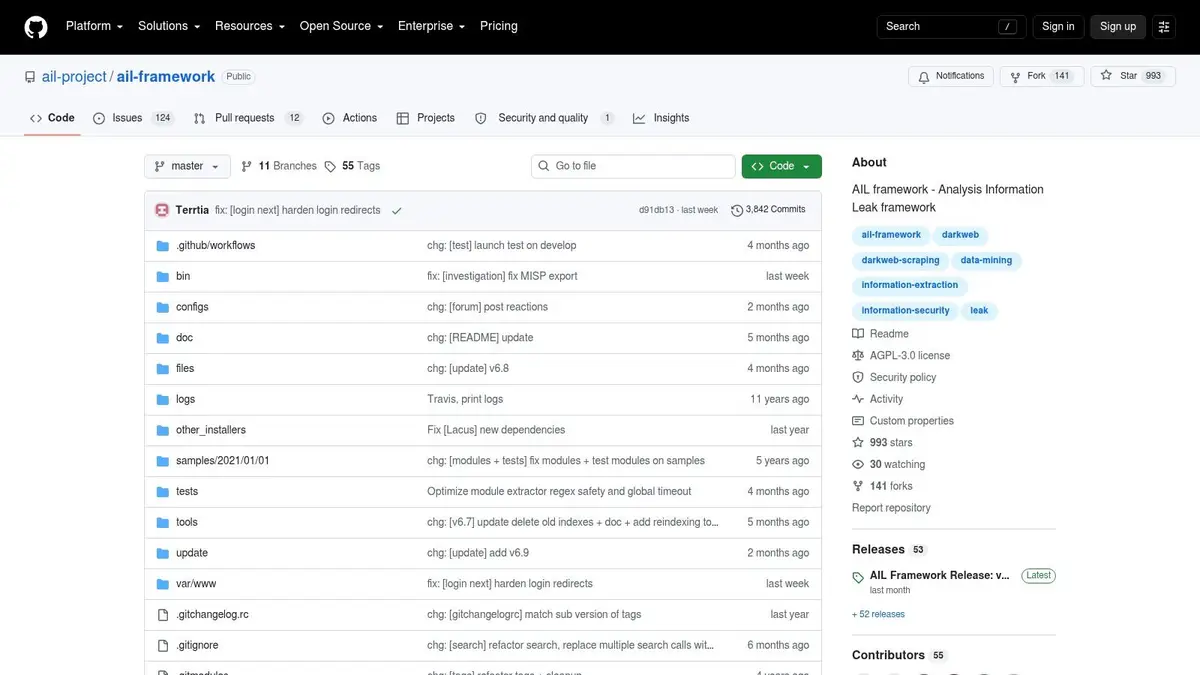
AIL Framework is the broadest analyst workbench in this list. It collects, crawls, processes, detects, correlates, and exports intelligence from Tor, I2P, clearnet sources, feeds, and chat-oriented sources. That scope supports a continuous monitoring pipeline rather than a one-off onion search.
Its value lies in separating pipeline roles. Collectors and crawlers supply material to trackers and retro-hunts based on keywords, regular expressions, and YARA. Enrichment can add OCR, QR and PDF metadata, email and cryptocurrency artifacts, plus PGP or SSH key indicators. Analysts can search and correlate entities, work in investigation spaces, and export relevant intelligence to MISP.
The trade-off is deployment weight. A defensible implementation requires choices about collection scope, queueing, storage, access control, alert routing, and retention. Teams checking only whether a known onion address responds may accept substantial operational overhead for capabilities they do not need.
Practical rule: Treat AIL output as an investigative lead until an analyst validates the source, records retrieval context, and confirms that the material is relevant and lawfully retainable.
AIL fits organizations with established threat-intelligence or SOC processes. It can carry a case from discovery toward escalation, while preservation, legal review, takedown decisions, and scheduled rechecks still require separate procedures. It also cannot establish authorship, prove that a named executive is the person referenced, or guarantee removal from the originating service.
2. SpiderFoot Community Edition
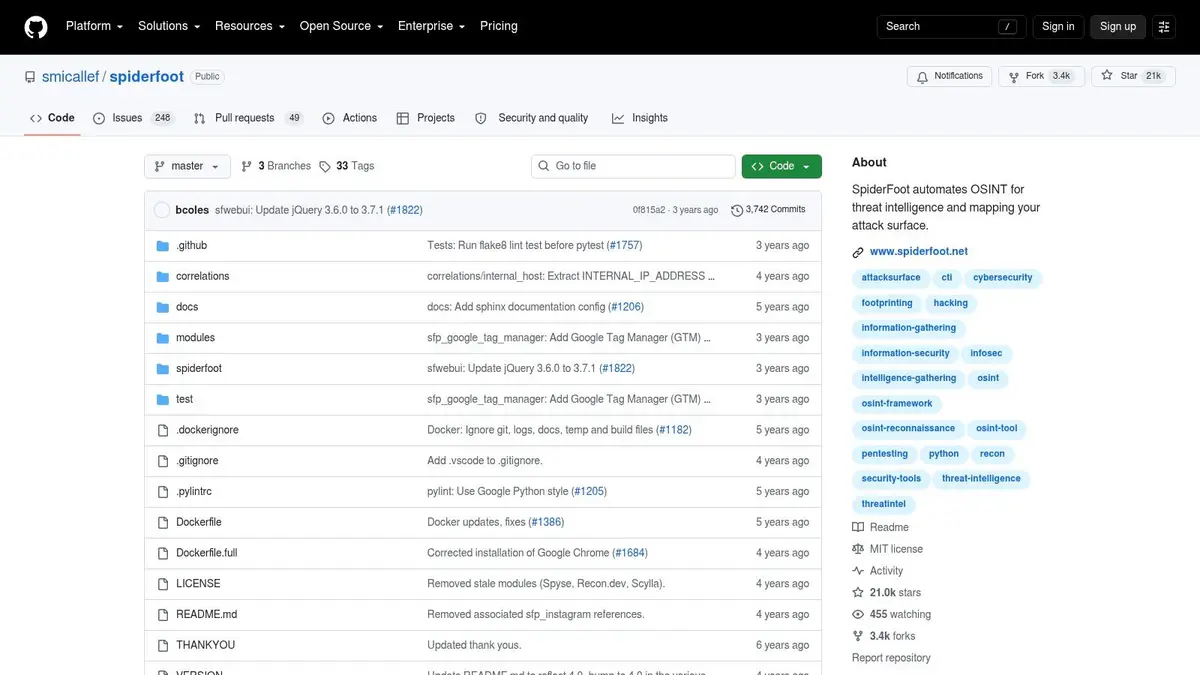
SpiderFoot takes a different route. It’s an open-source OSINT automation platform with a web interface, command-line operation, a broad module architecture, correlation rules, and export options including CSV, JSON, and GEXF. With Tor configured, it can support dark web queries while also linking findings across surface-web and hidden-network sources.
That makes it useful for entity discovery and relationship mapping. A team can investigate a domain, executive email address, cryptocurrency address, or other indicator, then allow modules to identify related infrastructure and references. Dockerized deployment can simplify installation, but it doesn’t eliminate the need to configure Tor, review module behavior, manage credentials for any external services, and control what data enters the system.
SpiderFoot is a sensible starting point for teams that want a general OSINT platform with dark web reach. It’s less suitable as the sole engine for a confidential remediation program. The community edition requires hands-on configuration, and deeper dark web functions, including advanced screenshotting, are associated with the commercial HX edition rather than the open-source version.
Where it fits in a remediation case
Use SpiderFoot for initial discovery, correlation, and reporting, then pass validated leads to a case-management or legal workflow. It can help answer whether a reference is connected to a known domain or identity, but correlation isn’t attribution. Similar names, reused handles, copied text, and third-party reposts can all produce misleading relationships.
For a broader explanation of the distinction between detection and response, see this guide to dark web monitoring. The operational lesson is simple: SpiderFoot can expand the investigation surface, but a human still has to decide what deserves preservation, escalation, or removal.
3. Onionprobe
Onionprobe is not a content crawler, and that limitation is its value. The Tor Project’s Onionprobe is built to test onion-service availability and performance from the outside. It probes status, latency, and error conditions, and can operate as a monitoring node with visualization options, command-line packaging, container support, documentation, and an API.
For a remediation workflow, availability testing answers a narrow but consequential question: can the identified service be reached now? That helps investigators distinguish a stale reference from a live endpoint and helps teams schedule rechecks after a reported removal. It can also support an internal dashboard showing whether a source remains available without repeatedly exposing analysts to the content itself.
Onionprobe won’t extract names, detect leaked documents, identify cloned pages, or build an entity graph. It also won’t tell you whether a service operator has complied with a legal request. A healthy endpoint may host no relevant material, while an unavailable endpoint may return later under a different address.
A reachability result is evidence about service availability, not evidence that the underlying allegation, leak, or attribution is true.
That distinction keeps technical monitoring separate from legal conclusions. In a confidential case, the best use is often to pair Onionprobe with a crawler or search source, then route only validated changes to an analyst. It’s a low-risk component for status checks, but it cannot replace source collection or content preservation.
4. Fresh Onions TorScraper
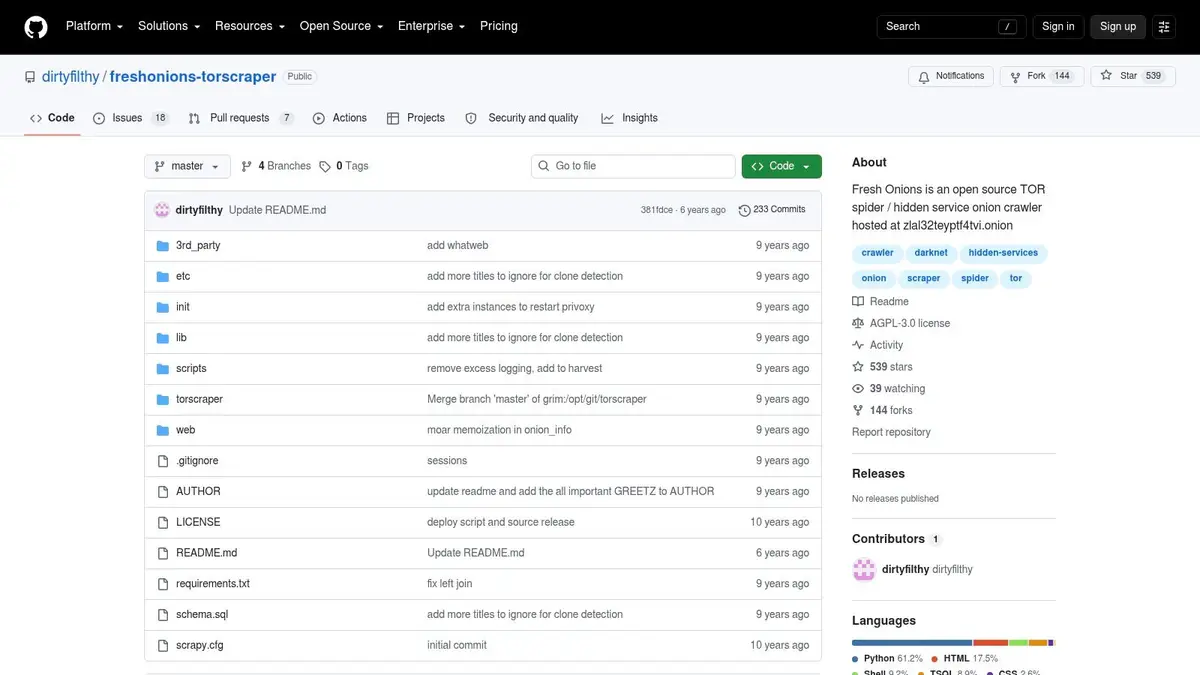
Fresh Onions TorScraper is designed for teams that need a living corpus of onion services rather than a narrow watchlist. It crawls and discovers hidden services, builds link graphs, checks whether services are alive, fingerprints infrastructure, detects language, and can extract artifacts such as email addresses and Bitcoin addresses. Optional Elasticsearch integration adds full-text search and indexing.
The architecture is capable, but it demands operational discipline. Scaling requires database and Elasticsearch planning, multiple Tor instances, storage controls, crawl scheduling, and careful treatment of the traffic generated by the collector. The project also includes scripts that can harvest known sources, including paste sites, to seed crawls. That can improve discovery, but every seed source introduces questions about provenance, duplication, hostile content, and lawful handling.
Fresh Onions works best as the collection and normalization layer in a larger pipeline. Its link graph can reveal related services, while clone detection can help identify repeated material. Neither function proves that the original publisher is responsible for every linked site. A copied document may have moved through several unrelated operators, and an extracted address may belong to a victim, researcher, or unrelated third party.
Operational boundaries
Teams should define crawl limits before deployment. Tor-friendly practices are not a courtesy added after launch. They affect service stability, investigative safety, and the organization’s ability to explain how it gathered material.
The tool isn’t a complete alerting, legal review, or takedown system. Analysts still need enrichment, confidence scoring, evidence preservation, and a controlled escalation path. For large-source discovery, however, it offers more depth than a simple URL checker.
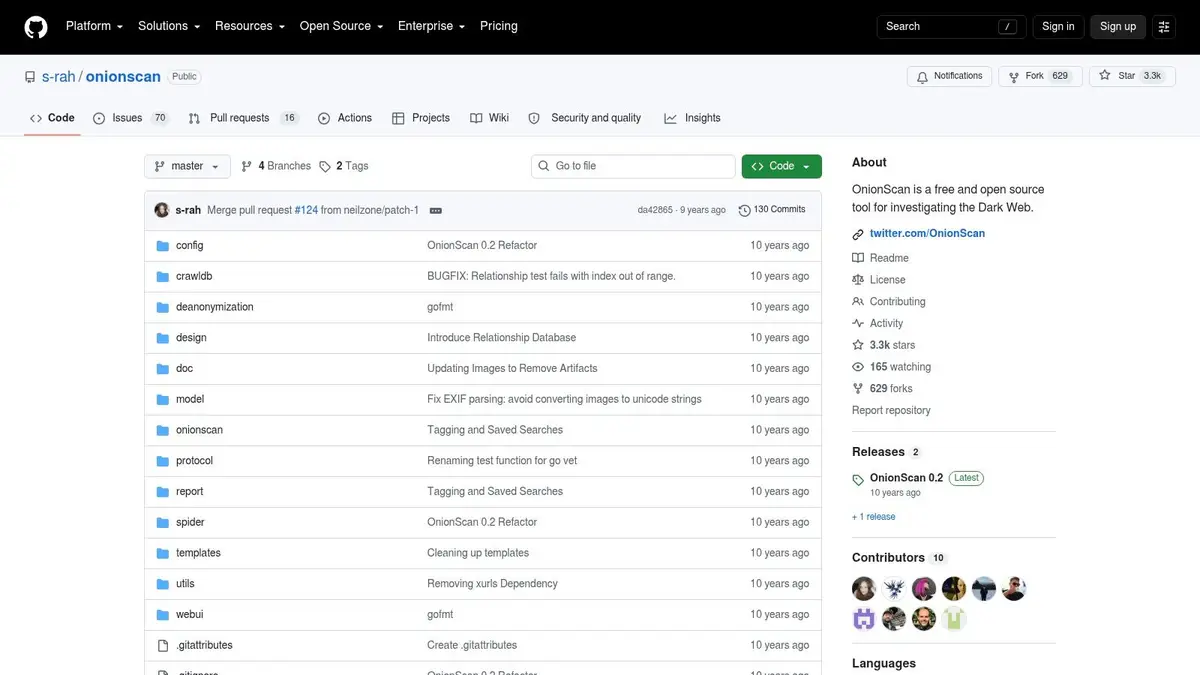
5. OnionScan
OnionScan is an auditing tool rather than a general-purpose intelligence platform. Its focus is the onion service itself, including potential operational-security leaks and configuration clues. It can inspect HTTP behavior, produce verbose or machine-readable JSON output, examine headers and linked resources, identify EXIF metadata, and correlate related services and artifacts.
That focus makes it useful in two different situations. A security team can assess an organization-controlled onion service for information leakage. An investigator can use it for triage when examining whether several services share infrastructure, metadata, or other observable characteristics. JSON output also makes it straightforward to feed findings into scripts, dashboards, or a broader case record.
The evidentiary limits are substantial. A shared header, image artifact, open port, or linked resource may support a lead, but it doesn’t establish legal attribution. Infrastructure can be reused, compromised, copied, or deliberately planted. OnionScan findings should therefore be preserved as technical observations, not presented as conclusive identification.
The original project also predates some current v3 onion-service conditions. Compatibility may vary, and teams should test forks, dependencies, and current endpoint behavior before relying on the results. A tool that runs successfully can still produce incomplete coverage if its assumptions no longer match the target environment.
Evidence discipline: Save the raw output, collection time, target address, tool version, and analyst interpretation separately. Don’t overwrite an original observation with a later conclusion.
For organizations dealing with exposed private material, technical scanning is only one part of leaked content removal. Removal requests, privacy analysis, and platform escalation require a different record of facts and a different standard of review.
6. Ahmia
Ahmia is best understood as a discovery and seeding resource. It provides a public search service for onion content and publishes documentation and open-source components for its crawler, index, and frontend. Its known-onion and banned lists can help teams build an initial source inventory while applying filtering before a crawler or analyst reaches a target.
That makes Ahmia valuable early in a monitoring pipeline. A team can use it to identify publicly indexed services, compare known addresses, and seed a controlled watchlist. The open components, including those built around Django, Elasticsearch, and Scrapy, can also support organizations that want to inspect or adapt the indexing layer rather than rely entirely on an external service.
Coverage is not equivalent to complete visibility. Search-engine results reflect what has been discovered and indexed, and onion services can change, disappear, restrict access, or move. A search result is also a point-in-time representation. It may not preserve the underlying page, attachments, or context needed for later legal review.
Appropriate use
Ahmia complements collectors and analysis tools. It doesn’t replace a monitoring platform, a private-source capability, or a controlled evidence store. It’s particularly useful when investigators need a lower-complexity first pass before committing resources to broader crawling.
Organizations should also separate source discovery from source approval. A listed address still needs validation, classification, and access controls. That’s especially important when the target involves executive privacy, leaked media, or content that could itself create legal and safeguarding concerns.
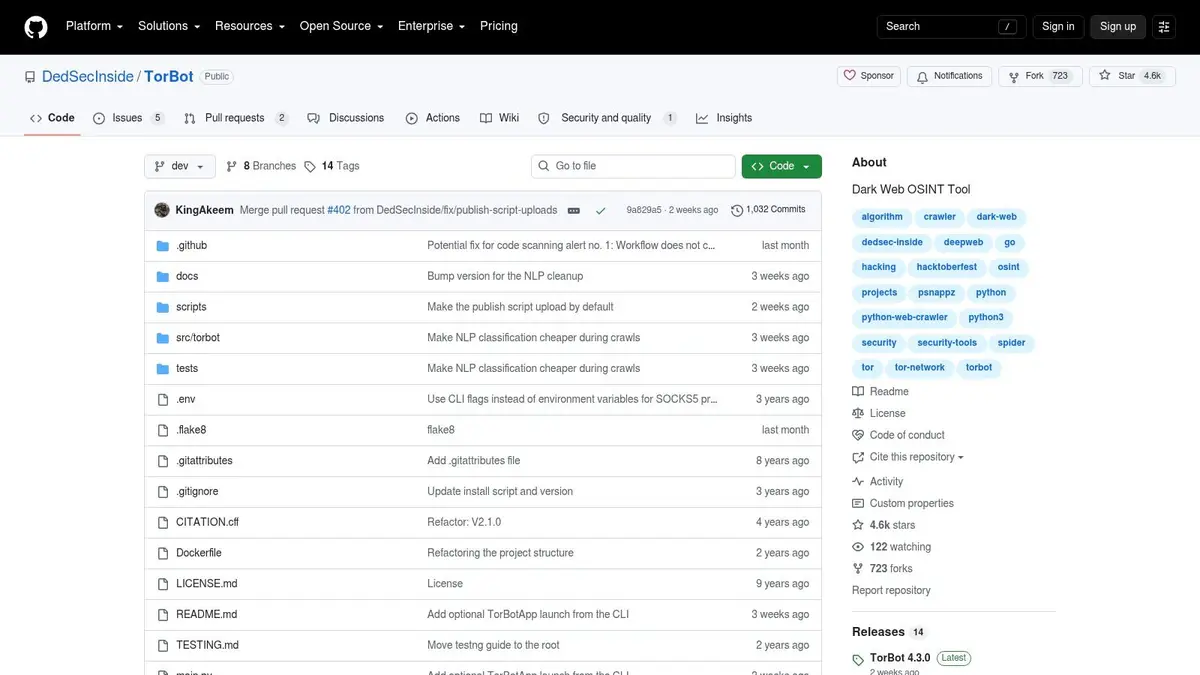
7. TorBot
TorBot is a Python-based crawler for targeted dark web OSINT. It supports onion crawling through Tor or SOCKS5, provides link-graph visualization, and can save or export link trees. Docker support and a command-line interface make it approachable for focused collection tasks where the analyst already knows the starting address or wants to follow a limited set of relationships.
Its strongest role is relationship discovery. The crawler can help map how one onion service links to another, identify repeated references, and build a navigable tree for an investigation. That can be useful when a company name, executive alias, brand asset, or leaked-file reference appears in several locations.
TorBot isn’t a turnkey continuous-monitoring platform. It lacks the built-in correlation, alerting, enrichment, and case-management depth required for an always-on remediation workflow. Teams can add those functions with scripts, queues, storage, and notification services, but that work becomes part of the maintenance burden.
The tool’s mechanics also don’t remove the need for safe collection procedures. Analysts should use isolated environments, minimize interaction with hostile pages, restrict downloaded material, and record exactly what the crawler retrieved. A link graph demonstrates relationships observed by the crawler. It doesn’t prove common ownership or intent.
Use TorBot for a defined investigative question. Don’t mistake a successful crawl for continuous coverage.
For a confidential matter, TorBot is most effective when an analyst uses it to expand a validated lead, then sends selected artifacts into a restricted review process. It’s a practical building block, not a complete answer to monitoring, attribution, or removal.
8. ONIOFF
ONIOFF, or Onion URL Inspector, does one job with useful clarity. It checks individual or batch .onion URLs, reports whether services respond, records active addresses, and supports Tor proxy configuration through a simple command-line workflow. That makes it a good hygiene layer for lists that otherwise become stale and misleading.
A monitoring pipeline can use ONIOFF before deeper collection. The inspector can remove unreachable targets from an immediate crawl queue, write responsive addresses to structured output files, and support scheduled checks of known endpoints. Those results can then feed a crawler, an availability dashboard, or an analyst queue.
Its narrow scope is also its hard limit. ONIOFF doesn’t perform deep content crawling, extract entities, compare page changes, preserve evidentiary context, or issue meaningful alerts about a person or organization. An active endpoint says only that the service responded to the check. It says nothing about whether relevant content is present, authentic, unlawful, or removable.
This tool works best when the team treats liveness as a routing signal. Responsive services may merit collection. Unresponsive services may merit later rechecking, because hidden services can return or move. Neither outcome should close a case automatically.
A sensible pipeline role
Use ONIOFF for availability hygiene, not intelligence judgment. Its low setup burden makes it suitable for scripts and scheduled jobs, while its limited output keeps the tool easy to understand. The surrounding system still needs timestamps, target-list provenance, retention rules, and an escalation policy for material that appears to involve personal data or confidential business information.
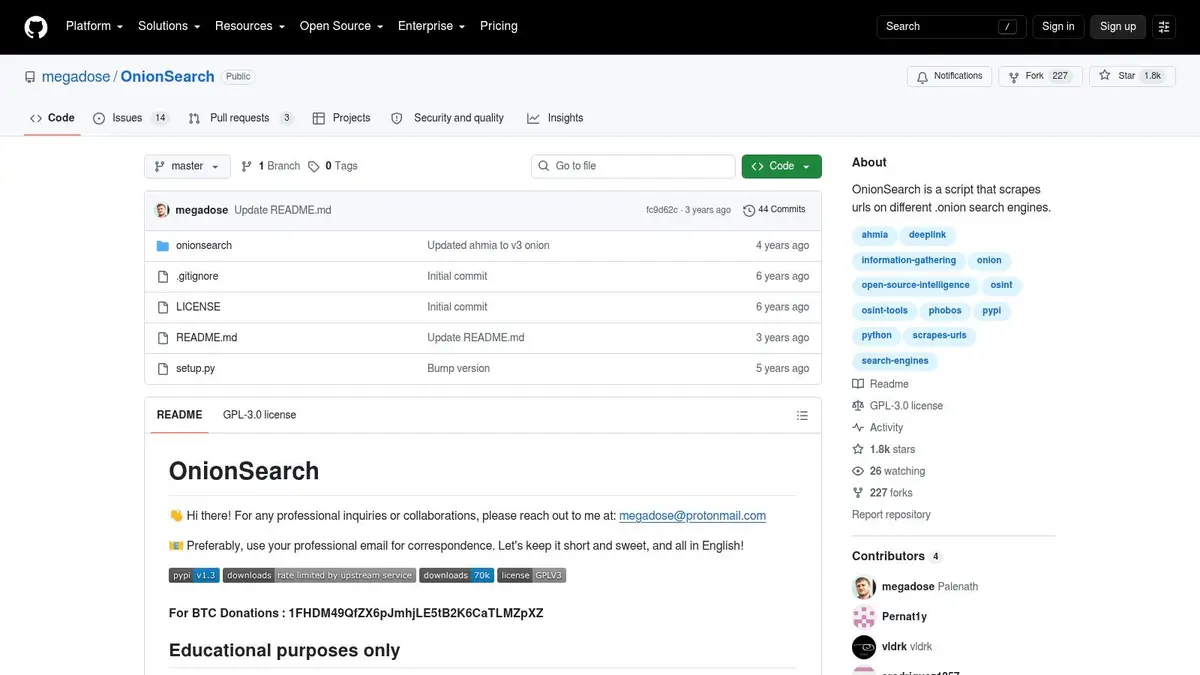
9. OnionSearch
OnionSearch is a discovery utility that queries multiple onion search engines in parallel and exports results. It supports engine inclusion and exclusion, configurable fields, CSV output, multiprocessing, and Tor proxy use. For an analyst investigating a new name, domain, brand, or reference, that makes it faster to compare what separate indexes expose.
The value is breadth at the discovery stage, not authority. Each search engine has its own uptime, indexing behavior, filtering, and data freshness. A result that appears across engines may still be duplicated from one underlying source, while a missing result may reflect indexing limitations rather than absence.
OnionSearch can be scripted into watchlists, but continuous monitoring requires more than repeating the same query. The workflow needs deduplication, change detection, source validation, alert thresholds, and a way to distinguish a new mention from a reindexed page. Without those controls, parallel querying can create a high-volume queue that analysts cannot review confidentially or consistently.
What the output can and can’t establish
The exported fields are useful for triage and source discovery. They aren’t a substitute for preserving the underlying page, recording retrieval conditions, or reviewing the material in context. Search snippets can omit qualifiers, reproduce hostile claims, or expose personal information without proving its accuracy.
Use OnionSearch when the question is, “Where should we look next?” Use a crawler, evidence process, and legal or removal workflow when the question becomes, “What happened, who is affected, and what action is available?”
10. deepdarkCTI
deepdarkCTI is a source catalog, not a crawler. Its community-maintained directory covers dark and deep web forums, leak sites, markets, search engines, ransomware pages, Telegram channels, and other intelligence sources. That scope matters because a Tor-only plan can miss relevant exposure outside onion services, including fast-moving social and messaging channels.
The catalog’s practical role is tasking. An intelligence team can use it to define monitoring scope, identify collectors to build or configure, and review whether a watchlist still reflects the organization’s risk profile. For an executive, brand, or family office, that may include impersonation, stolen content, leaked media, and reputational abuse, not only credentials or breach claims.
The limitation is structural. A directory doesn’t verify every address in real time, collect the content, establish access, or generate a validated alert. Teams still need availability tests, crawlers, parsers, enrichment, scoring, and human review. They also need a process for excluding sources that create unnecessary exposure or exceed the organization’s lawful purpose.
Coverage is a scope decision before it’s a tooling decision. A catalog can show where monitoring might occur, but it can’t decide what your organization should collect.
deepdarkCTI is therefore a strong starting point for source discovery and gap analysis. It becomes useful operationally only after the team connects listed sources to collectors, assigns ownership, and defines how a finding moves from detection to preservation, legal review, removal, and recheck. For executives weighing service options, affordable reputation management should still be assessed by process quality and confidentiality, not by a source-count claim.
Top 10 Open-Source Dark Web Monitoring Tools, Comparison
| Tool | Primary use / value proposition | Key features | Target audience | Unique strength / USP | Limitations |
|---|---|---|---|---|---|
| AIL Framework (Analysis Information Leak) | Full‑stack dark/deep‑web monitoring and intel pipeline for continuous collection & alerting | Modular Tor/I2P collectors, trackers/retro‑hunts, OCR/crypto enrichment, correlation graphs, MISP export | Enterprise analysts, SOC/CTI teams | Comprehensive end‑to‑end pipeline with rich enrichment and enterprise integrations | Complex deployment, steep learning curve |
| SpiderFoot (Community Edition) | OSINT automation and entity discovery across surface & dark web | Web UI/CLI, 200+ modules, Tor routing, correlation rules, CSV/JSON exports, Docker | OSINT researchers, SMEs, incident responders | Mature, extensible platform with wide module library and Dockerized install | Community edition needs manual Tor/setup; advanced dark‑web features in paid edition |
| Onionprobe | Availability/health monitoring for .onion services (uptime/SLA) | Probes service status, latency, errors; CLI/Docker; API and visualizations | Operators, uptime teams, service owners | Tor Project‑backed, reliable uptime/latency checks suitable for dashboards | Focused on availability only, not for content harvesting or OSINT |
| Fresh Onions TorScraper | Large‑scale hidden‑service crawling and living .onion corpus creation | Hidden‑service crawler, link graphs, ES full‑text indexing (optional), fingerprinting, artifact extraction | Research teams, monitoring programs needing large corpora | Scalable design for multi‑Tor instance crawling and harvesting known sources | Operationally intensive (DB/ES, many Tor instances); must follow Tor crawling etiquette |
| OnionScan | Security & OPSEC auditing of onion services to find leaks/misconfigurations | HTTP onion scanning, metadata (EXIF) and header detection, JSON output, correlation lab | Security auditors, investigators, triage teams | Quick privacy/security checks with machine‑readable output for automation | Some v3 compatibility issues; community forks may require validation |
| Ahmia | Tor onion‑search engine and dataset source for seeding monitoring stacks | Public lists/APIs (known/banned onions), open crawler/index, self‑hostable components | Monitoring teams needing seed lists, researchers | Longstanding index and curated banned/known lists to reduce risk exposure | Coverage and uptime vary; not a full OSINT suite by itself |
| TorBot | Targeted onion crawling with link‑graph visualization | Tor/SOCKS5 crawler, link‑graph export, CLI with optional UI, Docker support | Targeted researchers and analysts doing focused crawls | Active development, simple CLI for targeted tasks and visualization | Not turnkey for continuous monitoring, lacks built‑in correlation/alerting |
| ONIOFF (Onion URL Inspector) | Lightweight liveness validation for .onion link lists | Batch/individual URL checks, Tor proxy support, writes active links to files | Ops engineers, automation pipelines, list maintainers | Extremely easy to run and integrate into scripts/pipelines | No deep crawling or entity extraction, best as a hygiene tool |
| OnionSearch | Fast multi‑engine sweeps across onion search engines for discovery | Parallel queries, include/exclude engine lists, CSV export, Tor proxy support | Rapid reconnaissance, watchlist builders, triage teams | Fast, multi‑engine discovery useful for initial hunting | Dependent on third‑party engines’ uptime and scraping stability |
| deepdarkCTI | Curated catalog of dark/deep‑web CTI sources for seeding collectors | Maintained lists of forums, markets, leak sites, Telegram channels, frequent updates | Teams building or expanding monitoring coverage and CTI feeds | Speeds source discovery and scope definition for collectors | Directory only, requires collectors/crawlers to operationalize sources |
From Detection to a Defensible Response
A useful alert identifies a possible match. An actionable case answers harder questions: What exactly was found? Is the source live and authentic? Who is affected? What evidence can be retained lawfully? Which party has authority to act? What remedy is available, and how will the team verify it?
Open-source tooling can support each stage, but no individual project covers the entire path. Source catalogs such as deepdarkCTI help define scope. Ahmia and OnionSearch can assist discovery. Fresh Onions TorScraper, TorBot, and AIL can collect and enrich material. ONIOFF and Onionprobe can test whether an endpoint responds. SpiderFoot can support broader OSINT correlation, while OnionScan can surface technical artifacts. Those outputs still require disciplined human judgment.
Start by validating the source. Record the onion address, retrieval timestamp, relevant page context, and the tool and environment used. Preserve only evidence that the organization is permitted to retain, and keep raw material separate from analyst notes. Don’t circulate sensitive content through ordinary email or broad internal channels. Restrict access according to the material’s sensitivity, especially when it includes credentials, personal data, intimate imagery, confidential documents, or information about family members.
Next, classify the exposure. A stolen credential may require account protection and incident response. A leaked corporate document may require breach counsel, contractual analysis, and preservation. A false allegation may call for source removal, platform reporting, or defamation review. Impersonation and stolen media can involve multiple hosts, search engines, social platforms, and jurisdictions, so the remedy may need coordinated requests rather than a single technical action.
Attribution requires restraint. Technical indicators, reused content, and link relationships can support investigation, but they don’t automatically identify a publisher or establish liability. Legal counsel should assess jurisdiction, privacy obligations, evidence requirements, and platform rules before the organization contacts a suspected operator or republishes the material internally.
The same discipline applies to general household and executive privacy controls. This data security guidance for home users can help reduce avoidable exposure around accounts and devices, but it won’t replace professional handling of already published material.
ContentRemoval.com can support a confidential assessment, dark web monitoring, source-removal strategy, de-indexing, and continued checks after remediation. Its role should be evaluated as part of a controlled response process, not as a promise that any open-source tool can guarantee removal or attribution. The practical objective is to reduce exposure, preserve what matters, route the matter to appropriate legal or specialist review, and verify whether the material returns.
If an executive, public figure, family office, or legal team has already found sensitive material, don’t begin by sending the link widely or confronting the publisher. Preserve the relevant facts securely, identify the affected people and assets, and obtain advice on the most defensible next action.
ContentRemoval.com provides confidential assessment, dark web exposure monitoring, source removal, and search de-indexing for executives, public figures, brands, and families dealing with leaked or abusive material. Visit ContentRemoval.com to discuss the exposure and receive a focused action plan for remediation and continued monitoring.
Frequently asked questions
Which open source tool is best for dark web monitoring?
No single project covers the path from discovery to response. AIL Framework is the most complete pipeline for teams with SOC processes; SpiderFoot suits OSINT correlation; Fresh Onions and TorBot crawl; ONIOFF and Onionprobe check liveness; Ahmia, OnionSearch and deepdarkCTI seed sources.
Can open source tools tell me who leaked my data on the dark web?
No. Shared headers, reused content and link graphs support leads, but infrastructure can be reused, compromised or planted. Technical indicators do not establish legal attribution, and counsel should assess jurisdiction and evidence rules before anyone contacts a suspected operator.
What should I do after finding sensitive material on an onion service?
Do not send the link widely or confront the publisher. Record the address, timestamp, context and tool used, preserve only what you may lawfully retain, restrict access to the material, classify the exposure, and get advice on removal, platform reporting or legal review.