
The best dark web monitoring services split into two categories: passive tools such as Recorded Future, DarkOwl and SpyCloud that alert you to exposure, and active remediation providers that remove, suppress and pressure the sources. For executives, family offices and public figures, an alert without a response is a delay, so pair a monitoring platform with a retained removal specialist.
Key facts
- ZeroFox ties dark web monitoring to impersonation, phishing and social platform takedowns across Facebook, X, Instagram, LinkedIn and TikTok.
- SpyCloud focuses on exposed credentials, session cookies and stealer-log data for account takeover prevention.
- DarkOwl and Cybersixgill are investigator-grade data platforms that assume trained analysts on the client side.
- Most enterprise tools on the list use quote-based pricing and require a companion response plan.
Where ContentRemoval.com comes in. ContentRemoval.com is the escalation layer once a dark web alert involves a person rather than a server: leaked private images, deal documents, impersonation kits or family records that are about to spill into indexed websites and social platforms. Family offices, security leads and general counsel usually engage the firm to handle source removal, de-indexing and repost monitoring. A free 15-minute Exposure Scan maps what is removable, and the report is yours to keep. Get a Free, Confidential Exposure Scan or read how our personal data removal work is done.
The alert arrives without ceremony. A corporate credential. A private family image. A confidential deal document. Something tied to you or your principal has surfaced on a dark web forum, leak site, or criminal marketplace.
For an executive, celebrity, or family office, that isn’t a technical nuisance. It’s a live threat. Financial fraud can follow. Extortion can follow. Reputational damage can spread faster than legal counsel can draft a letter. The first mistake is assuming every dark web monitoring vendor solves the same problem. They don’t.
The market splits into two categories. Passive monitoring tells you exposure exists. Active remediation works to contain, remove, suppress, and pressure the infrastructure around that exposure. One gives you an alert. The other gives you a response.
That distinction matters more than feature lists. A CISO may want broad threat intelligence and SIEM integrations. A public figure may need a leaked image removed before it propagates into indexed websites and social platforms. A family office may care less about malware telemetry and more about stopping impersonation, wire fraud setup, and the circulation of private documents.
The best dark web monitoring services are not interchangeable because the consequences aren’t interchangeable. If the exposure is a stale credential tied to a retired system, an alert and password reset may be enough. If the exposure is active session data, personal media, litigation material, medical information, or anything that can be weaponized against a principal, monitoring alone is inadequate.
Use the list below with one question in mind. When your alert turns into a crisis, who acts?
1. Online Content Removal & Privacy Protection
ContentRemoval.com is the strongest choice when the threat is personal, reputational, or legally sensitive. It doesn’t stop at detection. It pairs dark web monitoring with removal strategy, legal escalation, source pressure, and follow-up surveillance to limit reappearance.
That matters because the biggest gap in this market is post-detection action. Reviews of mainstream tools largely focus on alerts, identity theft features, or enterprise telemetry, while leaving remediation underdeveloped, a gap highlighted in this comparison of dark web monitoring services. For principals and family offices, that omission is unacceptable.
Why it leads for high-stakes cases
ContentRemoval.com is built for clients who can’t treat exposure as an internal IT ticket. If leaked material involves non-consensual intimate imagery, impersonation, private records, defamatory files, or pirated assets, the firm moves on containment and removal, not just notification.
The operating model is simple. Detect quickly. Verify the source. Start action fast. The company states that most actions begin within 24 to 48 hours as part of its confidential assessment and response process. That speed is decisive when copied material begins spreading into adjacent clear-web channels.
Practical rule: If the exposure can trigger extortion, market harm, stalking, family risk, or media amplification, skip alert-only vendors and retain a remediation specialist immediately.
Its advantage is breadth of enforcement. The team handles dark web discovery, source removal efforts, legal takedown campaigns, de-indexing where content spills into search results, and continuing monitoring to catch reposts. That makes it materially different from vendors that detect a problem and then leave the rest to your counsel or security team.
A useful starting point for executives dealing with broader privacy exposure is this guide to internet privacy protection services for executives.
Where it fits best
Use ContentRemoval.com when the asset at risk is your name, image, family, reputation, or transaction security. It’s also the right call when confidentiality matters as much as speed.
Pros:
- Acts after the alert: The team pursues removal, suppression, and ongoing enforcement rather than stopping at detection.
- Handles sensitive exposure types: NCII, impersonation, leaked documents, and brand abuse sit squarely inside its remit.
- Works discreetly: The service is structured for executives, public figures, legal teams, and family offices.
- Keeps watching after action: Follow-up monitoring helps catch reposts and spillover.
Cons:
- No absolute removal guarantee: No provider can guarantee full deletion across every anonymous service or hostile jurisdiction.
- Complex cases take commitment: Broad, repeated, or multi-jurisdiction leaks can require sustained effort.
2. ZeroFox
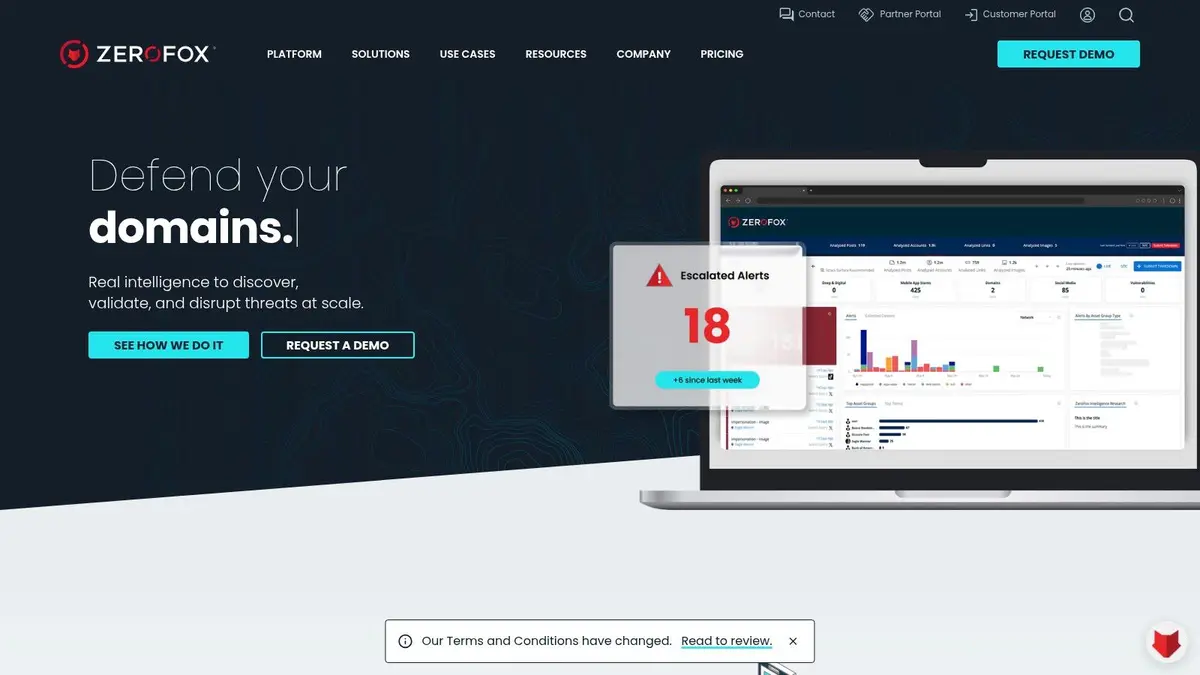
ZeroFox is the cleanest recommendation for clients who need dark web monitoring tied directly to brand abuse, impersonation, phishing, and executive exposure. It isn’t just watching Tor. It’s built for the broader attack surface where reputation attacks usually spread.
Panda Security’s market overview notes that ZeroFox combines dark web monitoring with protection modules across major social platforms including Facebook, X, Instagram, LinkedIn, and TikTok, plus disruption services for takedowns in higher-risk cases (Panda Security overview of dark web monitoring tools). That combination matters if your problem starts on a forum but migrates into fake accounts, phishing pages, or extortion infrastructure.
Best use case
ZeroFox is strongest when the principal is visible and impersonation is the likely next step. Think board members, founders, entertainers, and family office executives whose identities can be cloned for fraud or public manipulation.
It also suits teams that want one vendor managing dark web collection, analyst investigation, and takedown workflows inside a unified digital risk platform.
A good dark web alert loses value fast if nobody tracks the fake domain, the cloned social account, and the phishing campaign built from the same leak.
Tradeoffs
ZeroFox is enterprise-focused. That usually means a heavier onboarding process and more tuning than a consumer-grade tool. For a small office with narrow needs, that can feel like too much platform.
Still, if the risk is coordinated digital abuse rather than a single credential leak, ZeroFox earns its place near the top.
Pros:
- Strong beyond-dark-web coverage: It connects dark web intelligence to social, domain, and impersonation risks.
- Has disruption capability: Takedown support is part of the operating model.
- Useful for executive protection: Better fit for VIP and brand-centric threats than pure credential tools.
Cons:
- Quote-based pricing: You’ll need a sales process.
- Needs tuning: Broad collection can create noise if your scope isn’t defined tightly.
3. Recorded Future
Recorded Future is the enterprise intelligence leader on this list. If your office already has a security team, outside SOC support, or a mature investigation function, this platform gives them enormous range.
Huntress describes Recorded Future and similar enterprise platforms as tracking over 20 billion leaked credentials, more than 100 million stealer logs, and over 18 million new threat events daily across more than 190 cybercrime forums and over 95 ransomware groups (Huntress analysis of dark web monitoring platforms). Those numbers explain why large organizations choose it. The scale is industrial.
When to choose it
Choose Recorded Future if you need dark web monitoring fused with broader threat intelligence, risk scoring, malware context, and integration into existing security operations. It’s well suited to a principal’s office that sits inside a large company or family enterprise with established cyber operations.
It is not the first choice for a private client who needs sensitive content contained and removed. Recorded Future tells you more, faster, and at larger scale than most competitors. It doesn’t replace a remediation specialist.
Practical fit
For family offices with internal security resources, it can serve as the upstream signal engine. It’s especially useful where credential theft, stealer-log exposure, or attack chatter may precede fraud against treasury staff, executive assistants, or deal teams.
Pros:
- Exceptional intelligence scale: Strong coverage across credentials, forums, stealer logs, and ransomware ecosystems.
- Mature integrations: A serious option for SOC and workflow automation.
- Useful prioritization: Risk scoring helps triage large alert volumes.
Cons:
- Not built for non-technical principals: The platform assumes operational security maturity.
- Separate remediation still required: Detection and intelligence aren’t the same as removal.
4. Flashpoint
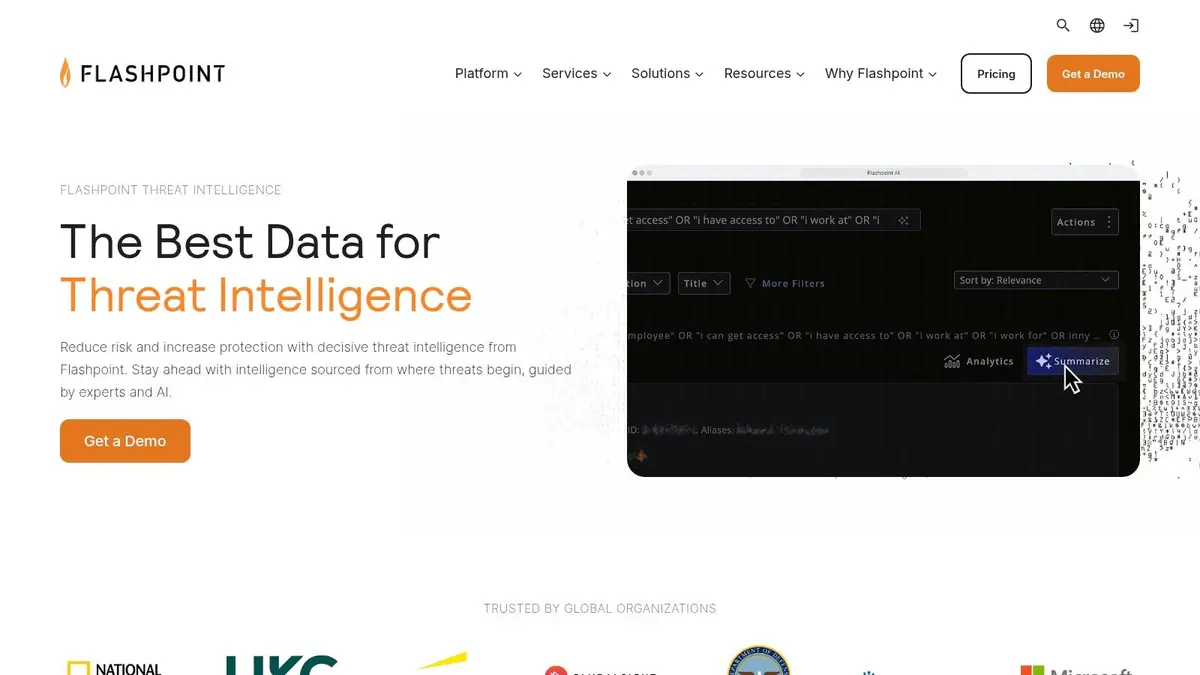
Flashpoint is a strong option when your threat picture extends beyond credentials into fraud, vulnerabilities, criminal communities, and physical security implications. It’s built for organizations that want analyst-informed access to difficult spaces, not just automated alerts.
What makes it different
Some platforms are broad but shallow. Flashpoint’s reputation comes from getting into harder-to-reach communities and turning that access into finished intelligence. That’s valuable if your office faces targeted fraud, industry-specific adversaries, or a higher likelihood of coordinated attacks around deals, travel, or public events.
This is one of the better choices for principals who face blended risk. Not just cyber, but also personal, operational, and reputational.
Who should buy it
Flashpoint fits large enterprises, financial institutions, and protective intelligence teams that want underground visibility paired with analyst expertise. If your concern is a single domain leak or a basic identity monitoring package, it’s too much platform.
Use it when you need context around who is talking, what they are selling, and whether that activity points to a larger campaign against your people or assets.
Pros:
- Strong human-led collection: Better suited to serious investigative work than lightweight monitors.
- Broader intelligence picture: Useful where fraud and physical risk intersect with digital exposure.
- API and analyst workflow support: Good fit for security programs that can absorb and act on intel.
Cons:
- Enterprise purchasing model: Expect a formal sales cycle.
- Overbuilt for narrow needs: If all you want is a few credential alerts, look elsewhere.
5. ReliaQuest Digital Shadows SearchLight
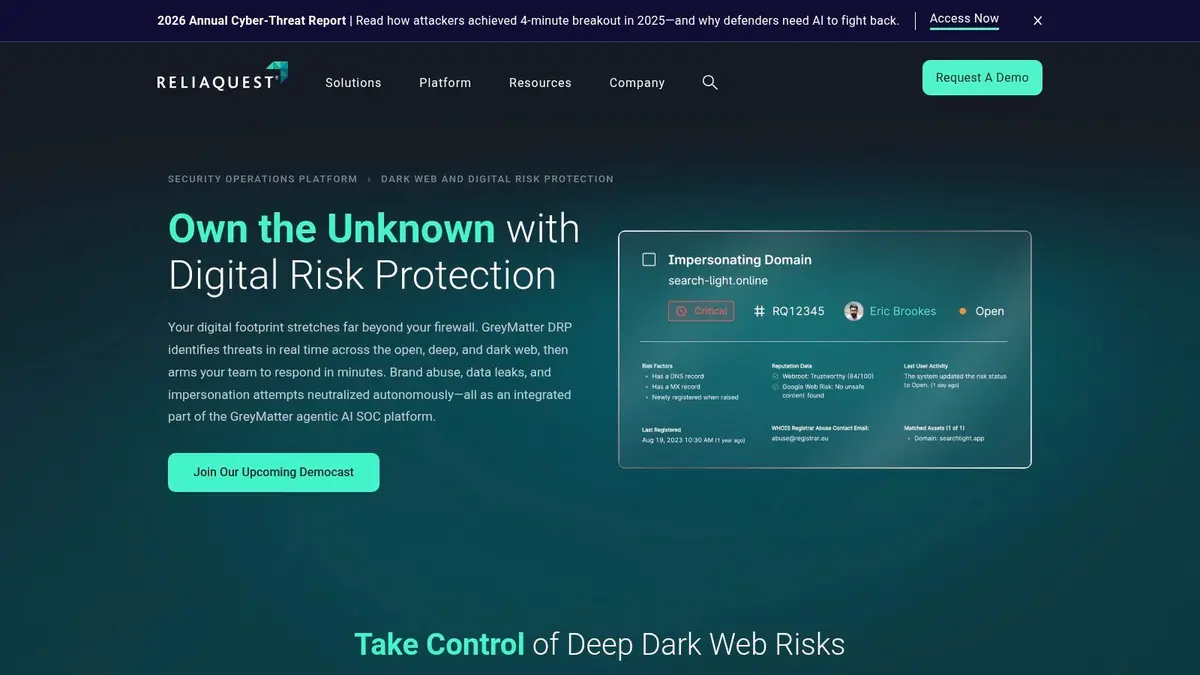
ReliaQuest Digital Shadows is one of the more disciplined choices for asset-driven monitoring. Instead of flooding your team with every possible mention, it maps monitoring to your digital footprint and delivers more targeted alerts.
That matters because false positives are a real operational problem. Security.org’s comparison notes that large archives can overwhelm non-technical teams, and many executives still face blind spots around emerging threats that consumer products don’t handle well (Security.org review of dark web monitoring tools). SearchLight’s asset-based approach is better suited to clients who want signal, not noise.
Why executives like it
SearchLight works well when the target set is defined: executive names, domains, brands, privileged accounts, leaked datasets, and exposed infrastructure. It’s less about endless searching and more about precision against known risk.
That makes it a sensible fit for family offices and legal teams supporting a principal with a clearly bounded digital footprint.
If a confirmed leak needs to move from detection to removal, pair that workflow with a specialist service for removing harmful online content.
Bottom line
SearchLight is a strong middle position between sprawling threat-intel platforms and simplistic identity alerting products. It won’t replace legal or reputational response, but it does a better job than many tools at surfacing relevant exposures without exhausting the people reading the alerts.
Pros:
- Higher signal quality: Asset-focused monitoring reduces irrelevant hits.
- Good executive and brand fit: Useful where names, domains, and leaked data matter more than malware detail.
- Enterprise support model: Strong option for teams that want validation and managed support.
Cons:
- Still an enterprise tool: Pricing and deployment aren’t consumer-friendly.
- Best with process around it: You’ll get more value if counsel or security staff can act on the findings.
6. Rapid7 Threat Command
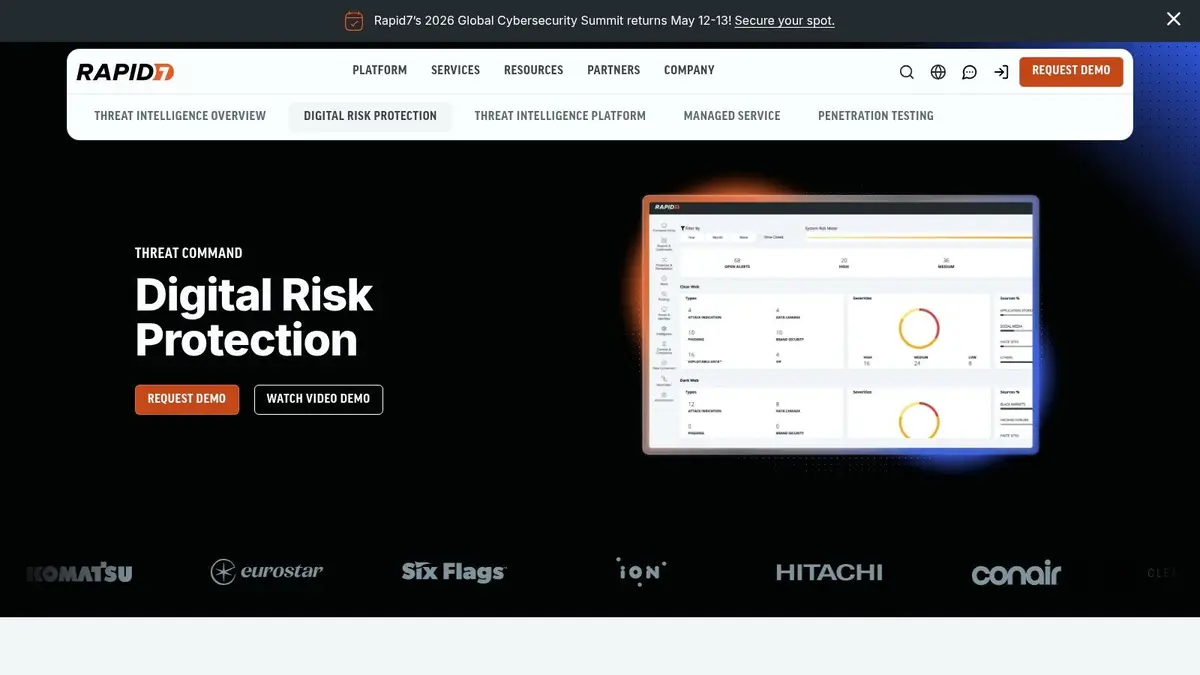
Rapid7 Threat Command is a pragmatic buy for organizations that want monitoring and optional remediation inside a familiar enterprise security stack. It watches for leaked credentials, phishing kits, impersonation, and hostile chatter, then pushes that intelligence into a response workflow.
Where it earns its place
Threat Command is most compelling if you already use Rapid7 or you want one platform covering digital risk protection alongside broader security operations. It’s less elegant than a boutique executive-protection service, but more action-oriented than alert-only products.
The analyst support and remediation options matter. They let an internal team escalate without immediately building a separate vendor chain.
Client fit
For a principal’s office supported by corporate security, this can work well. For a celebrity, litigator, or family office dealing with intimate media, defamatory leaks, or highly personal material, it still won’t replace a specialist removal firm. But it can surface the issue and move it toward action faster than a passive monitor.
Pros:
- Useful for existing Rapid7 environments: Easier procurement and workflow alignment.
- Includes remediation paths: Better than products that end at alerting.
- Good for phishing and impersonation monitoring: Relevant to fraud-heavy threat models.
Cons:
- Not purpose-built for personal reputation crises: Response options exist, but that’s not the center of gravity.
- Likely more product than a small office needs: Better suited to structured security teams.
7. Cybersixgill
Cybersixgill is designed for speed. Its value is real-time collection from deep and dark web sources, including restricted spaces, with translation and investigative tooling that help analysts move quickly.
Best for active hunting
If your team is investigating threats across languages, watching closed communities, or trying to understand whether a leak is isolated or part of a broader criminal pattern, Cybersixgill is attractive. It’s built for hunting and triage, not for hand-holding.
That makes it a better fit for enterprise security teams, outside intelligence providers, and firms that need to interrogate raw underground activity directly.
Use Cybersixgill when timing matters and your analysts can exploit the speed advantage. If nobody is staffed to investigate alerts, fast collection won’t save you.
Limits
Like several products in this tier, it assumes a capable operator on the client side. If the reader is a principal, spouse, attorney, or chief of staff looking for a private solution, this won’t be comfortable to run as a standalone answer.
Pros:
- Fast underground visibility: Strong for real-time investigations.
- Good multilingual support: Helpful when threat discussions move across regions.
- Built for analyst workflows: Useful portal and investigative tooling.
Cons:
- Operationally demanding: It assumes trained users.
- No standalone reputational remedy: Detection doesn’t equal containment.
8. SpyCloud
SpyCloud is one of the best dark web monitoring services for identity-centric risk. If your priority is account takeover prevention, exposed credentials, malware-sourced session data, and personal information tied to executives or staff, SpyCloud deserves serious consideration.
Huntress notes that platforms like SpyCloud are valuable for detecting exposed emails, SSNs, and session tokens early, particularly where malware-sourced data can create pre-compromise warning signals. That matters for principals because attackers often don’t start with public defamation. They start with access.
What it does well
SpyCloud is strongest when you need to answer a direct question: Which identities are compromised, what data is exposed, and what should be reset or revoked now?
That focus makes it useful for executive assistants, chiefs of staff, family office finance teams, and anyone handling travel, payments, or privileged communications.
If you’re dealing with broader exposure of personal identifiers, this companion guide on personal information removal for executives and founders is a practical next step.
Where it stops
SpyCloud doesn’t try to be a full digital risk protection suite. It’s less compelling for brand abuse, public impersonation campaigns, or dark web content removal. In other words, it’s excellent at identity exposure and limited at reputational enforcement.
Pros:
- Identity-first intelligence: Very useful for account takeover and post-infection response.
- Actionable data: Better than generic “your email was found” consumer alerts.
- Appropriate for executive protection programs: Especially where assistants and finance staff are in scope.
Cons:
- Not a takedown platform: You’ll need another provider for removal and suppression.
- Less useful for public-facing abuse: Brand and impersonation enforcement require complementary tools.
9. DarkOwl
DarkOwl is the strongest darknet-first data platform in this group. If your investigators want raw access, historical depth, and flexible search capability, DarkOwl is hard to ignore.
BreachSense’s 2026 comparison states that DarkOwl maintains one of the world’s largest dark web data archives, with 99% of its coverage extending beyond surface-level landing pages and 60% derived from authenticated sources (BreachSense comparison of top dark web tools). That profile tells you exactly what DarkOwl is: A data platform first.
Why investigators buy it
DarkOwl is built for people who need to search thoroughly, correlate records, and conduct historical investigations. Huntress also highlights the Vision interface, with Boolean and regex-supported searches plus DarkINT scoring in its 2026 review, which reinforces the platform’s utility for researchers and investigative teams. That’s excellent if you have analysts.
It’s less useful if you want a finished answer delivered to a principal in plain language.
Recommendation
Choose DarkOwl when your office needs raw visibility into dark web ecosystems and has the expertise to operationalize it. Don’t choose it expecting a full-service response program. It isn’t one.
Pros:
- Exceptional data depth: Particularly strong for historical and investigative use.
- Flexible delivery: Vision and APIs support custom workflows.
- Research-grade search: Good fit for fusion centers and specialist analysts.
Cons:
- Requires in-house expertise: The platform assumes technical fluency.
- No built-in takedown answer: You’ll need separate remediation capability.
10. Constella Intelligence
Constella Intelligence is well suited to executive protection programs that prioritize exposed personal data, identity-linked risk, and monitoring tied to real people rather than just domains or infrastructure.
Why it belongs on this list
Some family offices don’t need a full threat-intel apparatus. They need to know whether a principal’s email, home address, financial identifiers, or associated accounts are circulating in places that support fraud, stalking, impersonation, or extortion. Constella is credible in that lane.
It also scales well for organizations that want executive, employee, and brand protection under one SaaS umbrella. That makes it a practical choice for firms protecting a small number of high-value people plus a broader staff population.
Buying view
Constella is a better fit than many consumer identity products because it aligns more naturally with executive risk. It’s still a monitoring platform, though. If the threat moves from exposed data to distributed content, impersonation pages, or crisis-level reputational harm, another firm needs to take over the enforcement side.
Pros:
- Executive-oriented identity monitoring: Strong fit for principal and board-level exposure.
- Scalable portal and API options: Useful for firms managing multiple protected individuals.
- Good for fraud-sensitive environments: Especially where personal identifiers create downstream risk.
Cons:
- Quote-based pricing: Expect a sales discussion.
- Needs a companion response plan: Monitoring alone won’t solve content abuse or removal.
Top 10 Dark Web Monitoring Comparison
| Product | Core focus | Key capabilities | Response & remediation | Ideal customers & pricing |
|---|---|---|---|---|
| ContentRemoval.com: Dark Web Content Monitoring | Full-service reputation & privacy removal focused on dark web leaks | Continuous AI-driven scanning; NCII, impersonation, leaked documents; jurisdictional strategies | Active legal takedowns & source removal; actions typically start within 24 to 48 hours; ongoing reupload prevention | High-profile individuals, brands, founders; confidential assessment; custom pricing based on scope |
| ZeroFox: Dark Web Intelligence & DRP | External threat and brand protection platform with dark ops | Tor/Telegram/closed groups coverage; analyst-led collection; phishing/impersonation detection | Integrated investigations with takedown workflows and vendor-led response | Enterprises wanting unified monitoring + response; enterprise pricing/quote |
| Recorded Future: Intelligence Cloud | Threat intelligence platform fusing dark web signals with broader TI | Automated collection across sources; risk scoring & enrichment; Insikt Group reports; SOAR/SIEM integrations | Prioritized, finished intel to drive remediation via integrations and workflows | Teams needing large-scale TI & vendor risk analysis; enterprise pricing |
| Flashpoint: Ignite Threat Intelligence | Human-led underground access plus automated collection | Access to closed criminal forums/markets; fraud & vulnerability intel; analyst services | Analyst-driven reporting and APIs; investigative support (takedowns via services) | Enterprises requiring analyst access to underground communities; subscription pricing |
| ReliaQuest: Digital Shadows SearchLight | Asset-driven external risk monitoring with noise reduction | Monitoring customized to assets; analyst validation; brand, domain & credential monitoring; SOC integrations | Analyst validation and integrations for SOC response; professional services for complex cases | Organizations prioritizing brand/executive protection; quote-based enterprise pricing |
| Rapid7: Threat Command | DRP integrated into Rapid7 security platform | Monitoring for credentials, phishing, impersonation; asset mapping; analyst support | Remediation options including takedowns and validation; unified console workflows | Rapid7 customers or teams wanting integrated DRP + remediation; add-on subscription pricing |
| Cybersixgill: Deep & Dark Web Intelligence | Real-time underground collection with investigative UI | Covert automated collection; real-time alerts; translation; generative-AI summaries | Alerts + investigative portal; APIs for workflows (takedowns via integrations) | Fast-hunting security teams and analysts; enterprise pricing/quote |
| SpyCloud: Identity Exposure Protection | Identity-first exposure detection from stealer/breach data | Detection of credentials, session cookies, PII; identity correlation; automation integrations | Automatable mitigations (password resets, account remediations); investigative console | Executive protection, ATO prevention; tiered packaging with quote for exact pricing |
| DarkOwl: Darknet Data Platform (Vision & APIs) | Darknet-native dataset and developer APIs for raw intelligence | Massive structured darknet corpus; Vision UI; Search & Stream APIs; entity extraction | Data delivery for investigations; not a takedown service (supports analyst workflows) | Teams needing raw darknet data and custom analytics; quote-based pricing; requires in-house expertise |
| Constella Intelligence: Identity & Executive DRP | Identity-first digital risk protection for executives | Continuous monitoring of identities/brands; executive & employee modules; breach dataset; SaaS/API | Alerting and workflows for response; takedowns often require add-ons or partners | High-net-worth and executive protection programs; per-seat/asset pricing by quote |
The Response Protocol When Monitoring Is Not Enough
A monitoring service gives you the signal. It does not resolve the threat.
That distinction is manageable in ordinary corporate security. An employee credential appears in a breach corpus. You reset passwords, revoke sessions, review logs, and move on. High-stakes personal exposure is different. If the material involves private images, sensitive family information, deal documents, litigation strategy, blackmail potential, or defamatory content tied to a principal’s name, the problem doesn’t end when the alert lands. It starts there.
The correct response is disciplined and fast.
First, verify the alert against source data. Don’t let assistants, PR teams, or general counsel speculate in email. Confirm what was exposed, where it appeared, whether it’s current, and whether it has already migrated into adjacent channels such as indexed websites, messaging groups, fake accounts, or search results. A weak or secondhand description wastes time and leads to the wrong response.
Second, assess immediate risk in three buckets: Personal safety, financial exposure, and reputational amplification. Those are the categories that matter to high-net-worth clients and principals. A leaked personal image creates one set of pressures. Session data tied to an executive assistant creates another. A board packet, home address, or family record creates a more serious compound risk because it can drive fraud, harassment, and media escalation at once.
Third, cut internal chatter. The instinct to forward the alert around the office is understandable and dangerous. The more people who discuss it casually, the more likely you are to create discoverable records, misstate facts, or widen awareness before containment begins. Keep communications narrow. Move the matter to specialist counsel or a retained protective advisor.
Many monitoring vendors stop being useful at this point. They can identify exposure. They often can’t dismantle it.
A specialist remediation firm handles the next layer. That means pursuing source removal where possible, pressuring hosting and infrastructure around the content, coordinating legal takedowns, managing de-indexing once content spills into clear-web search, and maintaining follow-up monitoring to catch reposts and mirrors. In a crisis, those are not optional extras. They are the actual work.
ContentRemoval.com is best understood in that context. It is not just another monitoring name in a crowded market. It is the escalation path when the matter involves a person, a reputation, a family, or a brand that can’t absorb public drift while vendors debate severity. The firm’s role is to act quickly, discreetly, and across jurisdictions with legal and technical tools that ordinary alerting services don’t provide.
That is the right architecture for high-stakes defense. Pair a serious monitoring platform with a retained remediation specialist. Let the monitoring layer identify exposure early. Let the remediation layer contain, remove, suppress, and keep watching. If you rely on alerts alone, you’re buying awareness without resolution. For principals and family offices, that’s not a strategy. It’s a delay.
If you need more than an alert, engage ContentRemoval.com for a confidential assessment. The firm works with executives, family offices, public figures, and legal teams to detect dark web exposure, begin action quickly, and pursue removal, de-indexing, and ongoing enforcement with strict discretion.
Frequently asked questions
What should I do after a dark web monitoring alert about my personal data?
Verify the alert against source data first, then assess risk across personal safety, financial exposure and reputational amplification. Keep internal communication narrow to avoid discoverable speculation, and move the matter to specialist counsel or a retained remediation firm rather than forwarding it around the office.
Can dark web monitoring services remove leaked content?
Most cannot. Platforms like Recorded Future, DarkOwl, SpyCloud and Constella detect and score exposure but leave removal to your counsel or security team. Vendors with takedown workflows, such as ZeroFox and Rapid7 Threat Command, help with impersonation and phishing infrastructure, while sensitive personal material still needs a dedicated removal specialist.
Which dark web monitoring tool is best for a family office?
It depends on internal resources. Constella Intelligence and ReliaQuest SearchLight suit offices that want identity-focused, low-noise monitoring of a few principals, while Recorded Future or Flashpoint fit offices with an established security team. In every case the article recommends pairing monitoring with a remediation specialist.