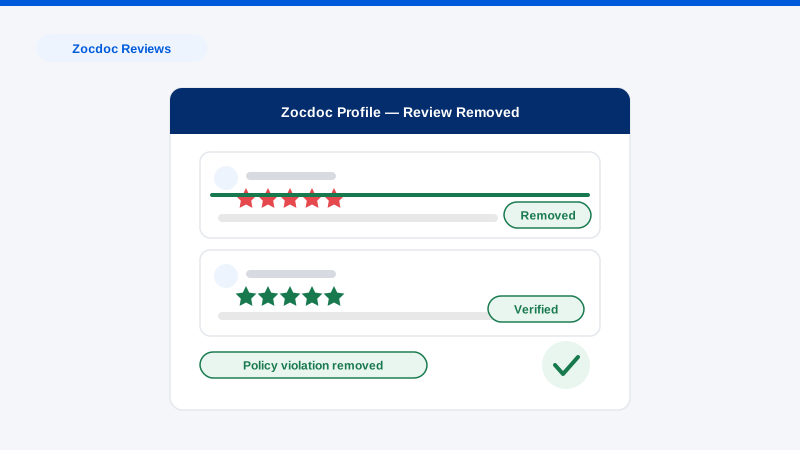
Zocdoc removes reviews that violate its content policies (profanity, hate speech, privacy violations, reviews commenting on clinical judgment rather than experience, and feedback that can’t be tied to a verified appointment) but it does not remove reviews for being negative. Zocdoc’s system is unusual among review platforms: only patients who booked and attended an appointment through Zocdoc can leave a review, which means the fake-review problem that plagues Google barely exists here, and the removal question is almost always about policy violations within genuine patient feedback. That verified-patient structure changes the playbook, and the HIPAA constraints on how you respond change it further.
What qualifies for removal on Zocdoc?
Zocdoc’s review guidelines, and its verified-appointment architecture, produce a specific set of removable categories:
- Reviews without a verified appointment. If a review somehow appears from someone who no-showed, cancelled, or was never your patient through the platform, that breaks Zocdoc’s core rule and is the cleanest removal case.
- Profanity, hate speech, and threats. Standard content violations, actioned reliably.
- Privacy violations. Reviews exposing other patients’ information, or staff members’ personal details.
- Clinical-judgment disputes framed as fact. Zocdoc’s guidelines steer reviews toward experience (wait times, bedside manner, office staff) and away from adjudicating medical correctness. Reviews alleging misdiagnosis or malpractice as fact sit in a gray zone worth flagging, particularly when framed as a factual medical claim rather than a feeling.
- Wrong-provider reviews. Multi-provider practices regularly receive reviews attached to the wrong clinician, a mistaken-identity case Zocdoc will correct.
- False statements of fact. Provably false claims (billing fraud that didn’t happen, being seen by someone who never saw them) support escalation beyond the standard flag, into the defamation removal track in serious cases.
What stays up: authentic negative experiences (long waits, brusque interactions, billing frustration) expressed within the rules. No professional service can remove those, and any vendor promising it is misrepresenting the platform.
Step-by-step: the removal and response protocol
- Document the review. Screenshot it with the date, star breakdown, and any response window shown. If you believe the reviewer was never seen, pull your appointment records for the relevant period before memory fades.
- Verify the appointment linkage. Cross-reference the review date against your Zocdoc bookings. A review you can’t match to a completed appointment is your strongest argument. Make it precisely.
- Report through your Zocdoc provider dashboard. Use the review-dispute flow (or provider support) to flag the review, citing the specific guideline violated and attaching your evidence. One accurate policy citation outperforms a general objection that the review is unfair.
- Never breach HIPAA in your response. This is the trap that turns a bad review into a federal problem. You cannot confirm the reviewer was your patient, mention their diagnosis, treatment, appointment, or billing, even though they discussed it publicly. OCR has fined practices for exactly this. Safe pattern: a general statement of practice standards, an invitation to discuss offline, no patient-specific content. “We take all feedback seriously and invite anyone with concerns to contact our office” is fully compliant; “Your infection required that medication” is a reportable breach.
- Respond once, generically, if the review stands. Prospective patients read responses as a sample of your bedside manner. Calm and brief wins; defensive and detailed loses, and clinical detail is prohibited anyway.
- Escalate falsity carefully. For provably false factual claims, escalate with Zocdoc support with documentation (mindful that even your evidence submission must respect PHI rules, HIPAA permits disclosures for certain business purposes but the safest route is having compliance-experienced professionals frame the submission).
- Build review volume. Zocdoc surfaces recent feedback prominently, and because every patient who books through the platform is invited to review, consistent volume dilutes any single outlier quickly, faster than on Google, where solicitation is your job.
Get a Free, Confidential Exposure Scan
Timelines and honest expectations
Zocdoc dispute reviews typically resolve in one to three weeks. Clear violations (unverifiable reviewers, wrong-provider attributions, profanity, privacy breaches) are removed dependably. Authentic negative experiences within the guidelines are not removable, and the realistic goal shifts to response quality and volume dilution. False-fact escalations run longer, four to eight weeks, and succeed in proportion to the documentation.
For medical practices, Zocdoc is rarely the whole problem: the same patient often posts across Healthgrades, Google, Vitals, and Yelp, each with different rules and different removal odds. Our Healthgrades removal guide covers the closest sibling platform, and our physician reputation practice manages the full surface, because a removed Zocdoc review accomplishes little if the identical Google review ranks first for your name.
Frequently asked questions
Can Zocdoc reviews be fake, and does that help removal?
Far less than on other platforms, Zocdoc only invites reviews after a verified, attended appointment booked through it. That cuts both ways: almost no competitor-fake problem, but also no “this reviewer was never a patient” argument unless something genuinely misfired in their system. When it did misfire, that’s your cleanest removal.
Can I respond to a Zocdoc review by explaining what actually happened medically?
No. HIPAA prohibits disclosing any patient information, including confirming they were a patient at all, regardless of what the reviewer revealed about themselves. Practices have faced OCR penalties for review responses. Respond generically, invite offline contact, and put the specifics into the platform dispute instead, carefully framed.
A review criticizes my medical judgment and it’s clinically wrong. Removable?
Worth flagging. Zocdoc’s guidelines orient reviews toward patient experience rather than clinical adjudication, and factual medical claims that are demonstrably false are stronger candidates than “I felt dismissed,” which is protected experience feedback. Frame the dispute around the factual claim, not your disagreement with their sentiment.
The review is about my front desk, billing, or another provider entirely. Does that matter?
Misattributed reviews, wrong clinician in a group practice, are correctable through Zocdoc support and worth disputing immediately. Reviews about staff and billing, though, are legitimate experience feedback under the guidelines; the fix there is operational and response-based, not removal.
Should I stop using Zocdoc to avoid reviews?
Leaving removes future reviews but not existing ones, and it sacrifices the booking pipeline. The stronger position for most practices is volume: Zocdoc’s every-appointment review invitation means good operations generate a protective review stream automatically, the opposite of Google, where unhappy patients self-select.
If a Zocdoc review is misrepresenting your practice, get an expert read before you respond at all, the response risks often exceed the review’s damage. Request a free, confidential Exposure Scan and we’ll assess the review, every removal angle, and your full cross-platform exposure through our process.