Stolen data has surfaced. Reduce where it spreads.
Dark web takedown services assess published stolen data and work to remove the sources and copies that expose your business. We assess dark-web sources individually, with particular focus on open-web mirrors, forums, channels and search results that make a leak easier to find.
- Clearnet mirrors of dark-web leak pages
- Customer and employee database downloads
- Paste sites carrying credentials dumps
Free assessment · Covered by NDA · Reply within 8 to 12 hours













How our dark web takedown service works
Map the exposure
We review the links, identify copies and agree priorities with your response team.
Remove and verify
We work the agreed content, with source removal and search removal recorded separately.
Watch for copies
Optional Protection Plans monitor for resurfacing content and new exposure.
Reply within 8 to 12 hours. Removal times depend on the source and scope; your assessment sets out realistic estimates for the links in your case.
Why us?
Removal at the source
We go after the page where it lives, not just its listing, so it stops resurfacing.
One specialist, start to finish
A dedicated specialist runs your case from assessment to final verification and keeps you updated.
Verified results
Each outcome checked across Google, Bing and the source site before we call it done.
Confidential by default
Discretion from the first call. We never disclose client relationships.
- Clearnet mirrors of dark-web leak pagesAssess
- Customer and employee database downloadsAssess
- Paste sites carrying credentials dumpsAssess
- File-host links to stolen archivesAssess
- Telegram and Discord channels distributing filesAssess
- Forum threads exposing executives and staffAssess
- Phishing clones built around stolen informationAssess
- Search results pointing to leak copiesAssess
Gone where it lives, not just hidden
Source removal takes the page down from the site hosting it. De-indexing clears it from search when the host will not act. We assess both for every link and tell you which is realistic before any work starts.
Can dark web takedown solutions reduce real exposure?
A mention on a leak site and a searchable download page are different problems. A copy on the open web can reach customers, journalists, employees and criminals without access to the original source. Removing those copies cuts accessible paths to the material.
We do not sell a blanket promise to erase the dark web. We assess the original source, reachable copies and search visibility separately, then set out the work we can undertake and the limits that matter to your team.
What is the difference between monitoring and removal?
Monitoring tells you that information has surfaced. Removal acts on the pages, files and search results distributing it. If your security provider has already found stolen data, we can review that exposure without replacing its monitoring or technical response.
The useful outcome is not another alert. It is a verified record of which copies are down, which listings have been removed from search and which sources remain accessible. For broader coordination, see data breach removal.
Who is this service built for?
Businesses, founders, executives and family offices facing a material leak, not shoppers comparing low-cost consumer privacy tools. We assess exposed customer records, business secrets and personal details that create a direct risk to leadership or staff.
A leak can also produce impersonation or fraud pages. We can include impersonation removal and Telegram content removal where they form part of the same exposure.
How do we work with your breach response team?
Your incident response firm contains the intrusion and investigates what happened. Breach counsel directs legal decisions and notification duties. Your insurer manages coverage decisions. We work alongside them on the published content, agreeing priorities, evidence handling and updates with your designated lead.
We do not provide incident response, forensics, malware removal, decryption, ransom negotiation, legal advice or insurance. Removal of a page does not secure a compromised system or make stolen credentials safe. Preserve evidence and involve your incident response provider and counsel. Do not pay or contact attackers without counsel.
How is the engagement kept confidential?
Every engagement is covered by NDA. We agree who can instruct us and receive updates, so your leadership team, counsel and response partners have a clear point of contact. We do not disclose client relationships or publish details of the exposure.
Start with the affected links and a short description through our confidential assessment. Do not send stolen databases, live credentials or sensitive records through an initial enquiry. We agree appropriate evidence handling before reviewing sensitive material. A senior specialist replies within 8 to 12 hours.
What happens when the content reappears?
A cleared link is not the same as a closed incident. Copies can surface after the initial response, including renamed archives, new forum threads and fresh search listings. Our Protection Plans provide ongoing monitoring with removal support for new exposure within the agreed scope.
You receive a clear record of source removal, search removal, links still being worked and sources outside the agreed scope. Monitoring helps find what resurfaces; it does not mean every private copy can be discovered.
Frequently asked questions
Can you remove data from the dark web?
Is dark web data removal the same as a monitoring subscription?
Can you remove personal data from dark-web mirrors?
Will taking a result out of Google delete the stolen file?
Do you contact or negotiate with ransomware attackers?
How soon can we discuss an active leak?
Can you keep checking after the first removals?
Ready to take it down?
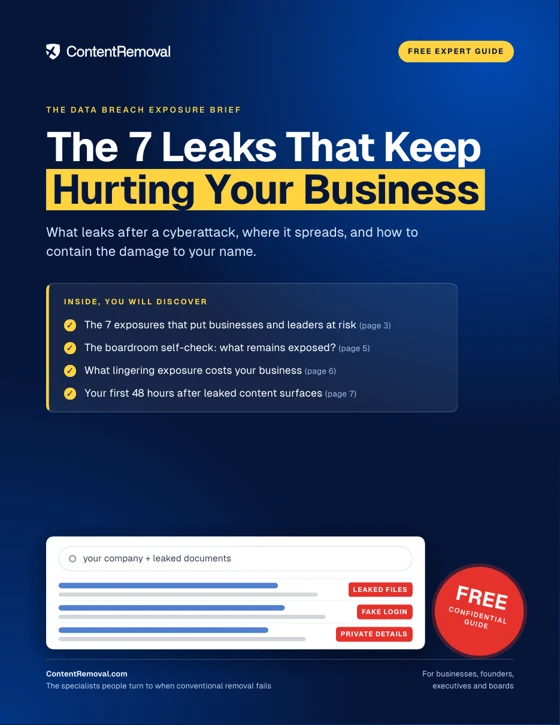
Free brief for businesses and leaders
The 7 Leaks That Keep Hurting Your Business
Inside the free guide:
- The 7 exposures that put businesses and leaders at risk
- The boardroom self-check: what remains exposed?
- Your first 48 hours after leaked content surfaces
Guide on its way
Check your inbox,
We have emailed you the guide. You can also download it right now.
Already dealing with something? A senior specialist will tell you honestly what can be removed.