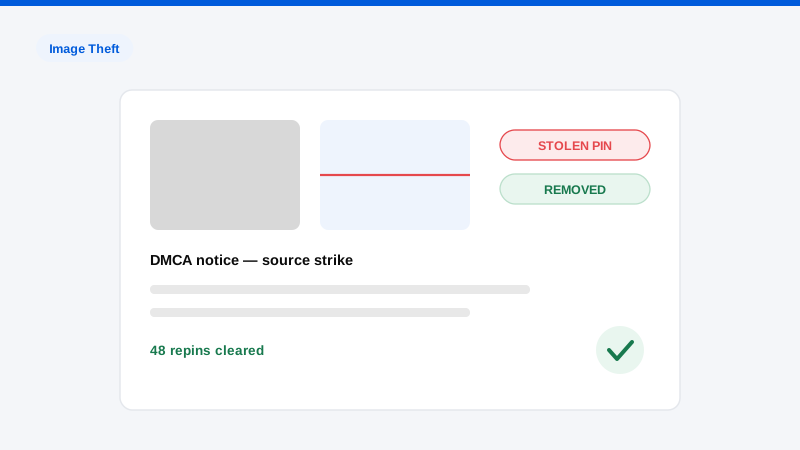
You can get a Pinterest pin removed even though you didn’t post it. The route depends on why it should come down. If the pin uses your photo or artwork without permission, Pinterest’s copyright (DMCA) form is the fastest and most reliable path, typically resolving in days. If the pin exposes private information, impersonates you, or shows you in an image you never consented to share, Pinterest’s in-app reporting and privacy channels apply instead. This guide covers each route step by step, what to do about the repin problem, the Pinterest-specific twist that makes one takedown into fifty, and when professional handling earns its keep.
What qualifies for removal on Pinterest?
Pinterest removes pins under several distinct policies, and choosing the right one determines whether your report succeeds:
- Copyright infringement. Your photograph, artwork, product image, or design pinned without authorization. You do not need a registered copyright, authorship is enough to file a DMCA notice. This is the dominant category: Pinterest is one of the largest engines of image redistribution on the internet, and stolen creative work is the platform’s most common takedown.
- Your image, without consent. Photos of you posted by someone else can be reported under privacy grounds; Pinterest also maintains explicit policy against non-consensual intimate imagery, which is removed on report. If intimate images are involved, our intimate image removal practice should be your next stop after this page.
- Private information. Pins exposing addresses, phone numbers, or documents fall under Pinterest’s privacy and personal-information rules.
- Impersonation. Boards or accounts posing as you or your brand, a problem that scales into brand protection territory when the impersonator is monetizing.
- Trademark misuse. Pins or accounts trading on your registered marks, filed through Pinterest’s separate trademark form.
What does not qualify: pins you simply dislike, unflattering-but-lawful images, and fair-use commentary. Reporting those wastes your credibility for the reports that matter.
How to remove a pin, step by step
- Document before reporting. Copy the pin URL, the board URL, and the pinner’s username; screenshot everything. Takedowns delete the evidence, and you may need it for repeat-infringer escalation or parallel filings elsewhere.
- Use the in-app report for policy violations. On any pin, the three-dot menu offers “Report Pin,” with categories including privacy violations, harassment, and intimate imagery. Reports route to Pinterest’s moderation queue; straightforward violations typically resolve within days.
- File the DMCA form for stolen images. Pinterest’s copyright-infringement form asks for identification of your original work (a URL to the source, or the original file), the infringing pin URLs, your contact details, and the statutory good-faith statements. Precision matters: list every infringing pin URL individually, because Pinterest removes what you cite, not what you imply. Our DMCA takedown service exists because malformed notices are the leading cause of stalled valid claims.
- Address the repins. Here is Pinterest’s structural quirk: a popular pin is copied across dozens or hundreds of boards, and each repin is a separate URL. Pinterest’s copyright process includes a “strike at the source” option that can propagate removal to copies of the same image, request it explicitly. Then search Pinterest for the image and your keywords to catch independently re-uploaded copies, which need their own citations.
- Clean up search. Removed pins can linger in Google Images for weeks. Once takedowns land, the stale results clear through Google’s outdated-content mechanics, the finishing step covered across our image removal work.
Get a Free, Confidential Exposure Scan
Honest timelines and expectations
Pinterest is, by platform standards, responsive: properly filed DMCA notices commonly resolve in two to seven days, and clear policy violations on similar clocks. The realistic friction points are three. Repins multiply the work, a single stolen image can require dozens of cited URLs, refreshed as new copies appear. Gray-zone reports (your face in a lawful photo, an unflattering image) depend on moderator judgment and fail more often than copyright claims, which is why we route around to the strongest available claim rather than the most emotionally obvious one. And Pinterest, like every platform, makes its own final decisions, no outside party can guarantee a removal, only maximize its probability and speed. When a pinner re-uploads after removal, Pinterest’s repeat-infringer policy becomes your lever: documented strikes lead to account termination, which ends the whack-a-mole at the source.
When professional handling makes sense
One pin, one clear claim, one filing. Do it yourself; the steps above are the complete playbook. The cases that land on our desk look different: a photographer or creator whose entire catalog is spread across hundreds of boards; a person whose image keeps resurfacing from an account that regenerates under new names; theft that spans Pinterest, Instagram, and a scraper site simultaneously, where sequencing the takedowns wrong lets the content circulate for extra weeks. Professional work brings bulk filing, source-strike escalation, cross-platform coordination, and monitoring that catches re-uploads while they are one report away from gone, the standing infrastructure behind our image theft protection service. For creators whose stolen work feeds pirated product listings, the same machinery extends into e-commerce protection.
Frequently asked questions
Can I remove a Pinterest pin if I don’t have a Pinterest account?
Yes for copyright: Pinterest’s DMCA form is a public web form requiring no account. In-app reporting does require login, so for privacy or harassment reports, either create a minimal account or have an authorized representative file on your behalf, something we do for clients daily.
Someone pinned my photo without permission. Is that copyright infringement?
If you took the photo, yes. You own the copyright from the moment of creation, registration or not, and the DMCA form is your remedy. If someone else took a photo of you, the photographer owns the copyright, and your claim runs through privacy and consent policies instead. Getting this distinction right is the difference between a two-day removal and a rejection.
How do I deal with hundreds of repins of the same image?
File the DMCA notice against the source pin and explicitly request removal of copies of the same image, Pinterest’s process can propagate a source strike. Then sweep for independently uploaded duplicates, which need separate citations. At catalog scale this is exactly the bulk work professional services are built for.
How long does Pinterest take to remove a reported pin?
Clear copyright claims typically resolve within two to seven days; policy reports within days for unambiguous violations, longer for judgment calls. If a valid report stalls past two weeks, refile with tightened evidence rather than waiting, stalled queues respond to better-framed requests, not to patience.
The pin was removed but still shows in Google Images. What now?
Search indexes lag deletions. The cached result clears on its own eventually, or within days if you push it through Google’s outdated-content removal flow. If the image also migrated to sites beyond Pinterest, each host needs its own takedown, which is the point where a coordinated campaign beats sequential DIY.
Whether it is one stolen photo or a catalog scattered across a thousand boards, the fix starts with knowing the full spread. A free, confidential Exposure Scan maps every copy of your images across Pinterest and beyond, with an honest read on what comes down and how fast. Our process page shows how a takedown campaign runs from first filing to final confirmation.