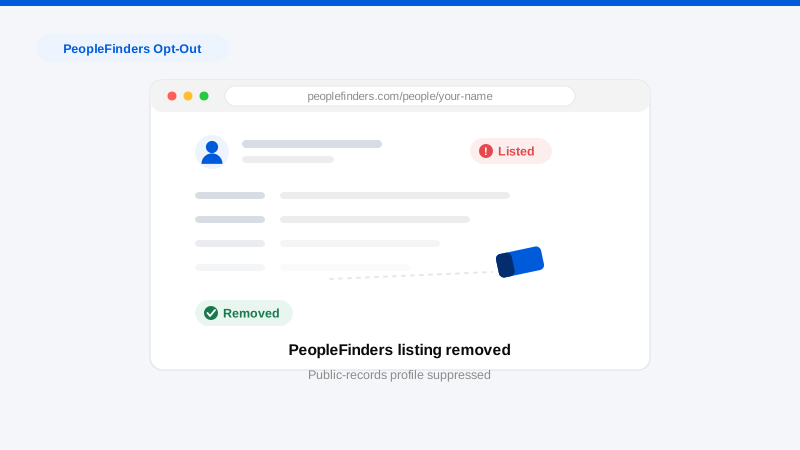
You can remove your listing from PeopleFinders for free using its official opt-out at peoplefinders.com/opt-out. The flow: search for your record on the opt-out page, select the listing that’s yours, submit an email address, and click the verification link PeopleFinders sends. Requests are typically processed within a few business days, though allow up to a week before you judge it. PeopleFinders is one of the older names in the people-search business, and its records, assembled from public records and commercial data, also surface through sister sites run by the same operator, each with its own opt-out. As with every data broker, removal here is real but local: one listing, one site, until new data arrives. Here’s the full process and what to do after.
What does PeopleFinders publish about you?
A PeopleFinders profile typically lists your full name and aliases, age, current and previous addresses, phone numbers, email addresses, relatives and associates, and, in paid reports, criminal and civil court records, property data, and background-check details. None of it originates with PeopleFinders; the site aggregates public records (property, courts, voter data) with commercially traded contact data. Two practical consequences: your listing exists without your consent or knowledge, and removing it doesn’t touch the sources, which keep supplying PeopleFinders and every competitor: Intelius, BeenVerified, Spokeo, Whitepages, and the long tail of free clones.
Anyone may opt out their own listing at no cost and without stating a reason. Residents of California and other states with comprehensive privacy laws can go further with a formal deletion request under those statutes, but for most people the standard opt-out is the fastest path.
How to opt out of PeopleFinders, step by step
- Go to peoplefinders.com/opt-out. Use the dedicated opt-out page rather than the main search. It walks you through record selection directly.
- Search your name and location. Enter your first and last name, city, and state. Also run prior cities, maiden names, and nicknames, multiple records for one person are the norm in this industry.
- Select the record that’s yours. Confirm the age, address history, and relatives match you before proceeding. You can only opt out your own records.
- Submit your email and confirm. Enter an email address (a masked or dedicated address is fine), complete any CAPTCHA, and click the verification link in the email PeopleFinders sends. The request isn’t active until verified.
- Repeat for each additional record. Every distinct listing needs its own submission.
- Verify after a week, and check the sister sites. The same operator runs additional people-search brands (sites like PublicRecordsNow and PrivateEye have long been associated with PeopleFinders’ parent company), and those listings do not disappear when your PeopleFinders record does, search yourself on them and opt out separately.
- Calendar a 60 to 90 day re-check. New source data can rebuild your profile; catching it early keeps your name out of search results.
How long does PeopleFinders removal take?
Expect the listing to leave PeopleFinders within a few business days of email verification, up to a week at the outside. As with every broker removal, Google lags: cached copies of the listing can keep appearing in results until Google re-crawls the dead page, which can take days to weeks. Submitting the removed URL through Google’s Refresh Outdated Content tool accelerates it. End to end, plan on two to four weeks before the listing is gone from both PeopleFinders and search.
Get a Free, Confidential Exposure Scan
Why do PeopleFinders listings come back?
Because opt-out is suppression, not deletion at the source. PeopleFinders keeps ingesting public records and purchased data; when new information arrives (a move, a new phone number, a court filing, a name change) it can assemble a fresh profile your previous opt-out doesn’t cover. Name variants persist as separate records, and the operator’s other brands, plus the dozens of unrelated brokers drawing on the same record supply, continue publishing in parallel. This isn’t a flaw in your technique; it’s the industry’s architecture. One-site opt-outs are worth doing, but lasting results come from suppressing the whole ecosystem and re-checking on a schedule, the approach we outline in our guide to removing personal data from the internet.
Or we handle 100+ brokers for you
If you enjoy process, the DIY route is entirely doable: a hundred-plus sites, each with its own form and verification step, then a standing quarterly re-sweep. Most of our clients tried that once. Our data broker removal service runs the complete sweep, locating every listing under every name variant, filing and verifying removals, and re-monitoring continuously so reappearing records are caught and suppressed again. For people whose exposure is ongoing (executives, physicians, attorneys, anyone dealing with harassment) continuous broker suppression comes built into our Protection Plans alongside monitoring and content-removal coverage.
Frequently asked questions
Is the PeopleFinders opt-out free?
Yes. The official opt-out at peoplefinders.com/opt-out costs nothing, and no legitimate process requires payment for a single-site removal. Paid services are for scale (the whole broker ecosystem, maintained over time) not for one form.
Do I have to create an account or upload ID?
No. PeopleFinders’ standard opt-out requires only selecting your record and verifying an email address. That puts it in the easier tier of broker opt-outs, unlike Radaris, which demands account creation and phone verification.
Does opting out of PeopleFinders remove me from its sister sites?
No. Brands associated with the same operator maintain separate listings and separate opt-out flows, and your PeopleFinders suppression doesn’t propagate to them. Search yourself on each and opt out individually, or have a managed sweep cover all of them at once.
Why is PeopleFinders showing my old addresses and relatives?
Its profiles are assembled from decades of public records (property transactions, voter registrations, court records) plus commercial data. Address history and family associations are standard fields. That historical depth is why these listings matter: they map where you’ve lived and who you’re connected to.
My listing reappeared months after I opted out. What now?
Opt out again: the new listing is technically a new record built from newer data, so the process is the same. If you don’t want to own that maintenance cycle permanently, continuous re-monitoring and re-suppression is exactly what our managed service does.
Can PeopleFinders data be used to screen me for a job or apartment?
Not lawfully. People-search sites are not FCRA-compliant consumer reporting agencies, and their terms prohibit employment, tenant, and credit screening. That doesn’t stop informal Googling, which is why suppressing the listings still matters.
Your PeopleFinders opt-out takes ten minutes; start it now. Keeping your records suppressed across every broker that republishes them is the ongoing work, and it’s what we do. Request a free, confidential Exposure Scan to see everywhere your name is currently listed, or read about our process first.