
The best online privacy protection services fall into two tiers. Automated broker removal tools such as Optery, DeleteMe, OneRep, Incogni and Kanary reduce passive exposure on people-search sites, while concierge options like PrivacyDuck and ReputationDefender add human review. When a hostile actor is publishing false content, leaked media or impersonation, escalate to a specialist removal firm instead.
Key facts
- Security.org ranked Incogni best overall in 2026, covering 420 or more data brokers and people-search sites.
- Optery provides screenshots and linked findings as proof of removal, useful when work must be documented for counsel.
- Consumer Reports found automated deletion does not achieve total removal and some vendors underperform badly.
- By 2025, over 140 countries had data protection laws in force, per Usercentrics.
Where ContentRemoval.com comes in. ContentRemoval.com sits in the escalation tier of this list, for the moment a board candidate, founder or family finds a fake allegation, copied mugshot page or impersonation profile that no opt-out subscription can touch. The individual, an executive assistant who has run out of exceptions, or the family’s lawyer usually makes the call. A free 15-minute Exposure Scan maps what is removable, and the report is yours to keep. Get a Free, Confidential Exposure Scan or read how our personal data removal work is done.
Your home address is on a people-search site. A search for your name exposes old phone numbers, relatives, prior residences, and enough context for a determined stranger to map your routines. If you’re an executive, investor, public figure, or advisor to one, that isn’t an annoyance. It’s an operational risk.
The best online privacy protection services solve different problems, and most buyers make a costly mistake at the start. They treat routine data-broker exposure, active harassment, and reputational attack as if they require the same tool. They don’t. One category handles broad, recurring cleanup across broker networks. Another is built for adversarial situations, where someone is publishing, amplifying, or weaponizing content against you.
That distinction matters more now because privacy obligations are no longer confined to a handful of jurisdictions. By 2025, over 140 countries had data protection laws in force, and one benchmark reports 179 out of 240 jurisdictions now have data protection frameworks covering approximately 80% of the world’s population, according to Usercentrics’ global privacy statistics roundup. Privacy services have responded by moving beyond simple browser tools into consent handling, data request workflows, monitoring, and takedowns.
If your issue is broad exposure, use automation. If your issue is a hostile actor, false content, leaked material, impersonation, or doxxing, escalate immediately. That is the framework behind this list.
1. Optery
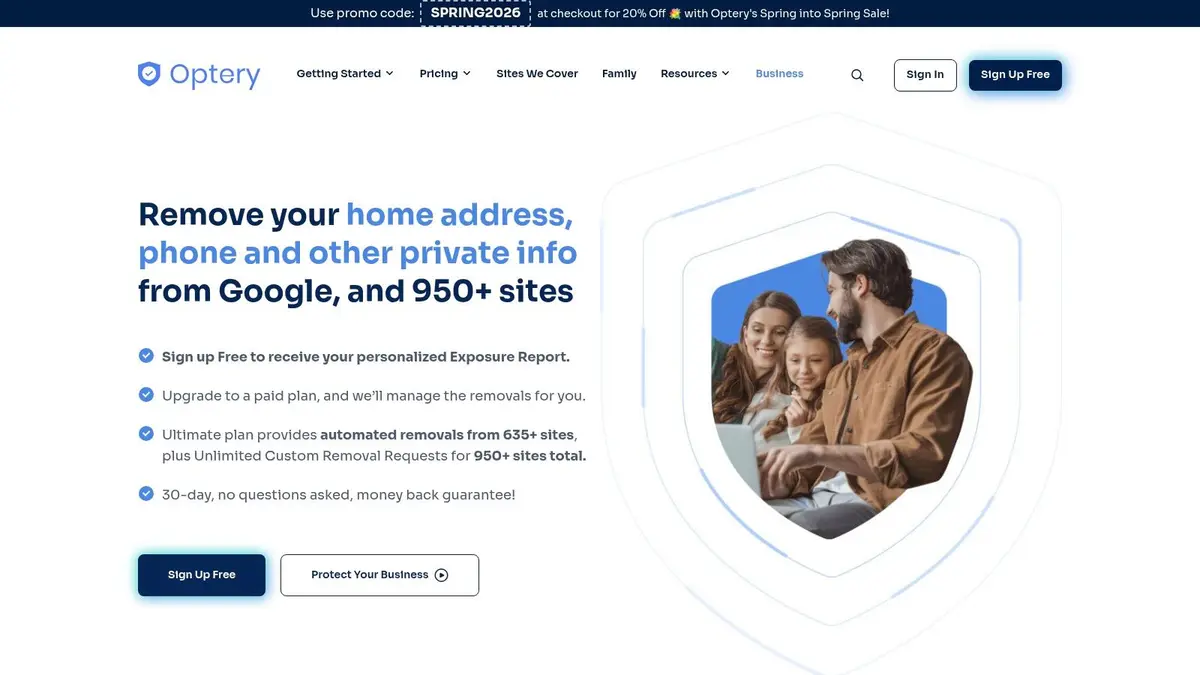
Optery is one of the strongest choices for broad broker cleanup when you want evidence, not vague assurances. Its value is transparency. You can see what was found, where it appeared, and what’s been removed, which matters when privacy work has to be documented for counsel, security teams, or family office staff.
Its structure suits readers who don’t want to spend weekends filing manual opt-outs. The free exposure report is useful for reconnaissance, and the paid tiers move into automated removals with higher coverage and more hands-on support.
Why Optery stands out
Optery is best for disciplined privacy hygiene. If your goal is to reduce discoverability across a wide broker footprint and maintain a record of that work, it’s hard to fault.
- Broad broker coverage: The service is built around large-scale scans and removals across people-search and broker sites.
- Visible proof of work: Screenshots and linked findings make the process easier to verify.
- Human assistance on higher plans: That becomes valuable once the easy opt-outs are gone and edge cases start consuming time.
For a clean explanation of the underlying problem, read this guide to what data brokers are and why they expose executive privacy.
Practical rule: Choose Optery if you want broad automated removal with audit-friendly reporting. Choose a specialist firm instead if the issue involves defamatory pages, leaked media, or impersonation.
The main limitation is scope. If a harmful page sits outside its covered broker universe, you’ll need a custom removal path. Visit Optery.
2. DeleteMe (by Abine)
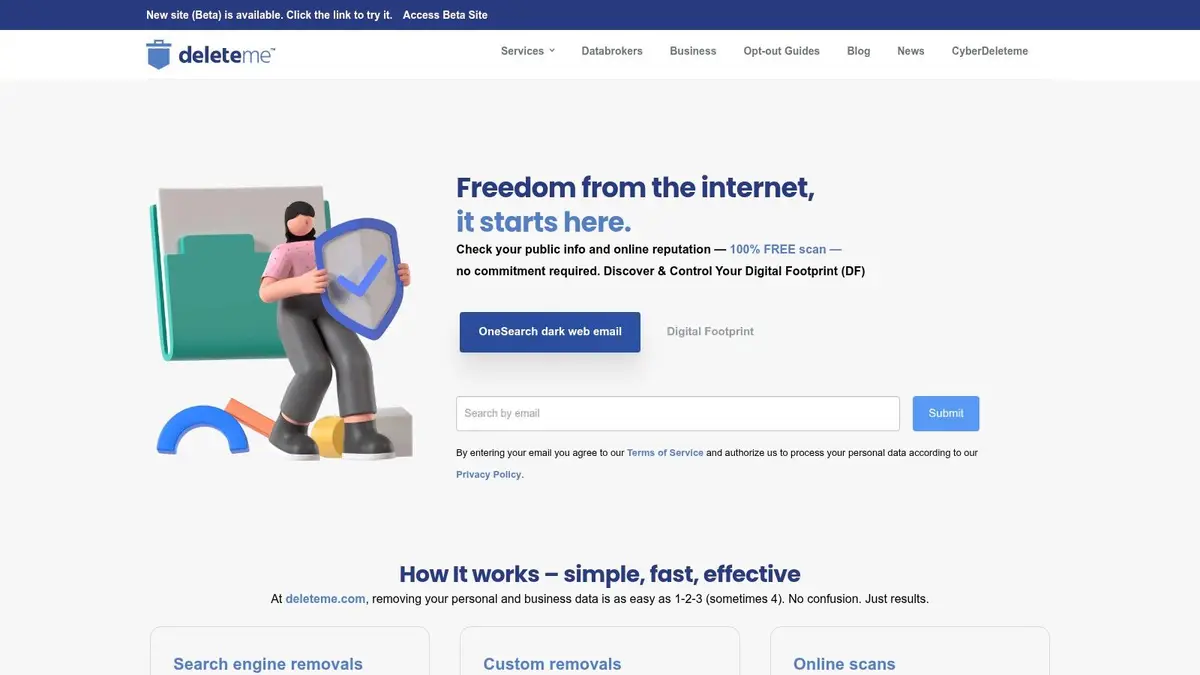
DeleteMe remains a sensible recommendation for buyers who value maturity over novelty. It has been in this category long enough to understand the tedious reality of privacy maintenance. Data reappears. Broker records mutate. Old aliases and addresses have a habit of resurfacing.
That’s why DeleteMe’s recurring scans and periodic reports still matter. It isn’t trying to be an all-in-one cyber bundle. It’s focused on a familiar service model: detect, opt out, recheck, repeat.
Best for established, hands-off removal
DeleteMe works well for busy professionals who want a known provider and a process that feels managed rather than experimental. The reporting cadence and human review are reassuring, especially if an assistant, legal team, or spouse needs visibility without becoming involved in the work itself.
Its weaknesses are predictable. It can cost more than leaner competitors, and some high-coverage rivals cast a wider net.
If your priority is a practical removal workflow rather than chasing the broadest marketing claim, DeleteMe is still a safe pick. This is also a good companion resource on how to remove your personal data from websites when you need to understand where automated service ends and manual escalation begins.
For direct service details, use DeleteMe.
3. OneRep
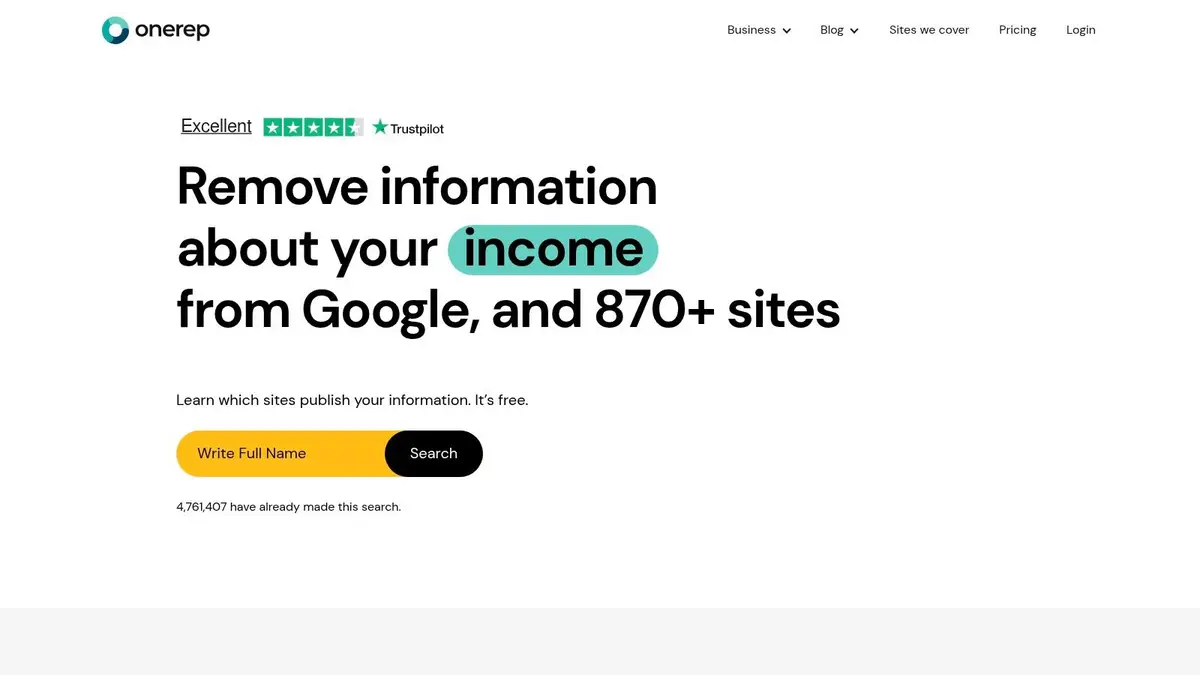
OneRep is a practical choice for households. Many privacy tools are built around one person with one threat profile. That’s rarely how exposure works in real life. Family members become the weak point. Spouses, adult children, and even older records tied to relatives can reopen a privacy problem you thought was closed.
OneRep is strongest when you want ongoing cleanup without premium concierge pricing. It automates monthly rescans and removals across a large list of public people-search sites and offers family coverage, which makes it easier to treat privacy as a household control rather than an individual subscription.
Where OneRep fits
This service is well suited to:
- Families: One account can cover multiple people, which is more realistic than managing separate plans.
- Busy individuals: Status tracking is straightforward, and paid users get direct support.
- Users who want continuous maintenance: Re-removal matters because old records often come back.
Its limitations are also clear. OneRep has historically been strongest on public people-search sites, so if your concern is hostile content, copied documents, fake profiles, or website-level attacks, this isn’t the right instrument.
Use OneRep when the problem is exposure through searchable databases. Don’t use it as a substitute for legal, platform, or reputation intervention.
4. Incogni (by Surfshark)
Incogni has become a prominent consumer-facing option because it makes broker removal feel accessible. If you already use Surfshark products, it’s an easy service to add. That convenience matters. Users often do not fail at privacy because they reject it. They fail because the workflow is tedious.
Security.org ranked Incogni best overall for comprehensive protection in its 2026 evaluation of data-removal services, and noted that it can remove details from 420+ data brokers and people-search sites. That gives it serious relevance for general exposure reduction.
Best for consumer-scale automation
Incogni is a strong choice if your objective is straightforward broker suppression with a progress dashboard and family options. It’s competitively positioned and simple enough for non-technical users to maintain.
Automated deletion helps, but it doesn’t solve every privacy problem. Broker removal reduces exposure. It doesn’t erase defamatory posts, fake profiles, or leaked files hosted elsewhere.
The caution is simple. Even strong automated services have limits. The same Security.org review highlighted a broader issue from Consumer Reports: automated deletion doesn’t achieve total removal, and some vendors underperform badly. That’s why I recommend Incogni for passive exposure, not for adversarial incidents.
Use Incogni if you want broad consumer automation at a reasonable level of effort.
5. Kanary
Kanary deserves attention because it addresses a real gap in this market. Many people need help before they’re ready to buy a premium managed service. They may be creators, journalists, activists, or professionals dealing with targeted exposure risk but not yet facing a full reputational crisis.
Kanary’s appeal is flexibility. It offers a free entry point, then lets users move into more managed protection as the situation becomes more serious.
A good option for rising-risk users
Kanary is especially useful if your threat profile is shifting. That includes someone who has started receiving harassment, someone whose address has become easier to find, or someone who needs additional help around removals tied to discoverability.
A few differentiators make it notable:
- Free community access: Rare in this category, and useful for initial exposure checks.
- Escalation paths: Higher tiers move beyond simple scanning into more hands-on support.
- Useful for doxxing-adjacent concerns: Features like address confidentiality support are more serious than the average consumer privacy pitch.
Consumer behavior also supports this kind of layered model. A 2026 roundup reports that 7 in 10 adults globally have taken steps to boost their online privacy, while fewer than 20% use encrypted email, encrypted messaging, or paid VPN services. In practice, that means many users are assembling partial defenses and need one service that closes obvious gaps.
Use Kanary if you want a bridge between basic broker cleanup and higher-touch privacy support.
6. PrivacyDuck

PrivacyDuck sits closer to concierge privacy management than mass-market subscription tooling. That distinction matters. Once you’re dealing with executive schedules, household staff, real estate records, family exposure, or public visibility, cheap automation stops being the main question. The actual question becomes whether a service can manage edge cases with human judgment.
PrivacyDuck combines automation with analyst involvement, which is exactly what higher-risk clients often need. Someone has to review the findings, chase the difficult removals, and think beyond the standard broker list.
Better for executives and public-facing families
If you’re a principal, founder, physician, attorney, or public figure, PrivacyDuck is more aligned with your reality than a bargain tool. Its onboarding and direct support model are built for people who don’t want to manage the process themselves.
That said, concierge services deserve scrutiny. You should ask about scope, international handling, turnaround expectations, and what happens when a harmful result sits outside ordinary people-search ecosystems.
If your assistant can solve the problem with a low-cost broker tool, use one. If your assistant keeps escalating exceptions, move to concierge support before small exposures become security incidents.
Visit PrivacyDuck if you want managed privacy work with more human oversight than typical consumer services.
7. ReputationDefender Active Privacy
ReputationDefender’s Active Privacy product is for buyers who want a white-glove relationship, not just a dashboard. That has value. Some executives and families won’t log into a portal regularly, won’t track opt-out status, and won’t distinguish between people-search exposure and broader reputation management. They want one provider to own the task.
This service blends automated and manual removals under the supervision of a privacy concierge. For the right buyer, that model is more useful than chasing maximum broker counts.
When service matters more than raw coverage
Active Privacy is appropriate if you want regular reporting, ongoing surveillance, and a clear point of contact. It’s less compelling if your sole objective is the largest possible removal footprint at the lowest price.
ReputationDefender is also a reminder that online privacy now intersects with broader governance and compliance functions. Enterprise buyers increasingly expect AI-powered data discovery, automated governance, unified consent handling, and end-to-end rights request fulfillment, as described in Ketch’s review of leading privacy software. Consumer and executive privacy services sit in a different part of the stack, but the direction is the same. Buyers want one operating model, not fragmented tools.
Use ReputationDefender Active Privacy if you prefer concierge oversight and don’t need the most aggressive broker coverage in the category.
8. Aura
Aura isn’t the best choice if your only concern is removing your details from the broadest possible set of data brokers. It is a strong choice if your household wants several protections under one roof. That includes identity monitoring, device security, password management, scam-call filtering, and some level of broker removal.
Security.org’s 2026 evaluation identified Aura as the value winner because identity monitoring and additional cybersecurity features are bundled into the subscription. That’s a sensible reason to buy it. It’s a suite, not a specialist scalpel.
Best for households that want one subscription
Aura works when convenience matters more than customization. If you’re protecting teenagers, aging parents, or a household that won’t maintain separate privacy and security subscriptions, the bundling is attractive.
Its tradeoff is precision. Specialist removal providers usually offer deeper broker focus, and specialist reputation firms handle the kinds of takedowns Aura isn’t designed for.
- Choose Aura if: You want privacy cleanup plus identity and device protections together.
- Skip Aura if: You need custom removals, adversarial takedowns, or high-touch case management.
Use Aura if your risk is broad and household-based rather than targeted and reputational.
9. IDX
IDX fits buyers who still think in identity-protection terms but have started to understand that privacy exposure fuels identity risk. That’s the right direction. The market has often blurred identity theft protection and actual data-removal hygiene, even though those are not the same thing.
IDX’s ForgetMe removal capability adds continuous scanning and deletion requests on top of a broader identity offering. It’s not the deepest removal product in this list, but it gives consumers an easier bridge between privacy cleanup and identity safeguards.
Good for identity-first buyers
This is a practical option if you want clear consumer pricing and a recognizable provider. It’s also reasonable for users who already know they need more than credit alerts but don’t yet need a reputation intervention team.
For executives, this issue is larger than fraud. Searchable personal data can expose family members, travel patterns, and residence histories. This framework for protecting your online identity as an executive is useful if you need to connect personal privacy work to broader security planning.
IDX is credible, but it’s still best treated as a consumer privacy-and-identity service. If your problem involves a hostile publisher, fake review campaign, or search result defamation, skip straight past this tier. Visit IDX.
10. ContentRemoval.com
A board candidate searches their name before an interview and finds a fake allegation, a copied mugshot page, and an impersonation profile. At that point, a data-broker opt-out subscription is no longer the right tool. The problem is active, public, and escalating.
That is why ContentRemoval.com belongs in a separate tier from the consumer services above. Those products handle general exposure: people-search listings, broker records, and recurring opt-out requests. ContentRemoval.com handles targeted attacks and high-risk incidents: defamation, doxxing, leaked or stolen media, non-consensual intimate content, fake reviews, impersonation, piracy, and harmful search results that need source-level action.
Use this distinction as your decision rule. Stay with automated privacy services when your issue is broad exposure across broker sites. Escalate to a specialist firm when a specific actor, post, page, profile, or campaign is causing reputational, legal, commercial, or family risk.
When to escalate immediately
Bring in a specialist firm when any of the following is true:
- A hostile actor is involved: Someone is posting, reposting, threatening, or coordinating distribution of harmful material.
- The threat is public and identifiable: The problem sits on a website, social platform, search result, forum, or marketplace listing that requires direct intervention.
- You need source removal: Suppression alone will not fix a fake account, stolen image set, defamatory article, or exposed intimate content.
- Delay increases the harm: The longer content stays live, the more likely it is to rank, spread, and reappear elsewhere.
ContentRemoval.com’s service model reflects that reality. The firm handles takedowns across search, web, and social, along with de-indexing, fake-account removal, defamation matters, NCII cases, mugshot and arrest-record removal, piracy remediation, and monitoring to catch reposts. The company states that most actions begin within 24 to 48 hours. That speed matters because harmful content gets harder to contain once it is copied, quoted, or indexed across multiple platforms.
High-stakes privacy problems are incident response, not routine account maintenance.
The strongest reason to hire a firm like this is judgment. Automated tools are built for repeatable opt-outs. Specialist removal work depends on choosing the right pressure point for each case: platform policy, search-engine procedures, publisher contact, legal notice, evidence preservation, or strategies specific to each jurisdiction. That is a different discipline.
There are tradeoffs. Pricing is not public, and no serious firm should promise easy wins in every case. Some publishers are stubborn. Some platforms are slow. Some content can be suppressed faster than it can be removed at the source. Still, if your problem has moved from exposure to attack, this is the tier to use.
Use ContentRemoval.com when the issue is no longer “my data is out there.” Use it when the actual problem is “someone is using that exposure to harm me.”
Top 10 Online Privacy Services Comparison
| Service | Core coverage & scope | Service model & speed | Monitoring & durability | Best for / Price signal |
|---|---|---|---|---|
| Optery | Data‑broker & people‑search removal (≈365 to 640+ sites) | Automated opt‑outs; paid tiers add human help | Ongoing monitoring on paid plans; removal screenshots/proof | Broad broker coverage; transparent evidence; mid‑range/complex tiers |
| DeleteMe (Abine) | People‑search & broker removals with periodic re‑scans | Human‑reviewed opt‑outs; hands‑off recurring service | Rechecks with screenshots & timestamps | Established, easy process; pricier than some competitors |
| OneRep | Monthly removals from ~316+ people‑search sites; family plans | Automated monthly rescans; phone support for paid subs | SOC 2 Type II; status tracking; free trial | Good value for individuals/families; approachable pricing |
| Incogni (Surfshark) | Automated broker opt‑outs (standard vs Unlimited) | Automated requests + progress dashboard; Surfshark integration | Dashboard tracking; family options; tier limits | Competitive annual pricing; fits Surfshark users |
| Kanary | Free Community scans/removals + paid Professional/Advanced | Self‑guided or managed; expedited Google options | Free tier limited coverage; paid tiers add escalations | Good for creators/activists; uncommon free tier; low‑cost plans |
| PrivacyDuck | Concierge‑style deep scrubbing + automation | High‑touch onboarding with human analysts | Durable removals via expert review; multi‑person plans | Suited to executives & public figures; premium fees |
| ReputationDefender, Active Privacy | Managed privacy + automated & manual opt‑outs | Dedicated privacy concierge; ongoing surveillance | Regular reports & compliance scans | White‑glove for households/executives; published pricing ($49/mo) |
| Aura (Digital Security Suite) | Broker removal (200+) plus VPN, AV, credit monitoring | Bundled security/privacy suite | Family plans; integrated protections | All‑in‑one for families; less customizable removal; evaluate disclosures |
| IDX (IDX Privacy) | ForgetMe scans (≈100+ brokers) with identity add‑ons | Continuous automated deletion requests | Privacy add‑ons (password manager, score) | Clear consumer pricing; lower broker coverage than specialists |
| ContentRemoval.com | Comprehensive takedowns: search engines, websites, social, news, dark web; NCII, defamation, impersonation, piracy | Rapid, confidential, legal + proprietary takedowns, most matters begin within 24 to 48 hours | AI‑driven continuous monitoring to prevent reuploads; tailored jurisdictional strategies | Recommended for high‑profile executives, brands, celebrities; bespoke premium service; free confidential assessment |
Your Action Plan for Digital Sovereignty
A major challenge for individuals is navigating an overabundance of privacy tools when they really just need a specific type of solution. If your personal data is scattered across people-search sites, the first move is straightforward. Hire one strong automated removal service and keep it running. Optery, DeleteMe, OneRep, Incogni, and Kanary all fit that role, with differences in transparency, household coverage, and service intensity.
If your concern is broader household resilience, Aura or IDX can make sense because they combine privacy cleanup with identity and device protections. That’s useful when the problem is diffuse and no one in the family wants to manage separate subscriptions. For executives and public-facing households that need more human handling, PrivacyDuck and ReputationDefender offer a more managed layer.
But the dividing line is this. Automated broker removal addresses passive exposure. It does not neutralize active harm.
If someone has published false allegations, copied confidential material, created impersonation profiles, leaked intimate content, posted your address with hostile intent, or used search visibility to damage your name, stop treating it as a hygiene issue. That is now a live incident. Consumer privacy services were not built for legal positioning, evidence handling, source outreach, search de-indexing strategy, platform escalation, or reupload prevention.
That distinction also reflects how privacy has evolved operationally. Usercentrics’ 2026 comparison of privacy tools shows a market segmented by use case and budget, from consent tools starting at EUR 7/month, USD 10/month, and USD 150/month, to DSAR automation starting at USD 9/month and WordPress-focused cookie tools starting at EUR 59/month. The lesson for buyers is simple. Privacy is no longer one tool. It is a stack. The mistake is using the wrong layer for the wrong threat.
Your action plan should be blunt. If the issue is noise, automate. If the issue is a searchable vulnerability, reduce exposure across broker networks and monitor for reappearance. If the issue is a targeted attack, engage a specialist firm immediately and preserve evidence before the content spreads further.
That is how you regain control. Start with the least complex effective response, but don’t confuse thrift with strategy. When the threat turns personal, reputational, or adversarial, your job is to safeguard your personal data and shut down the attack at the source.
If your exposure has moved beyond data brokers and into defamation, impersonation, leaks, fake reviews, or doxxing, ContentRemoval.com is the right escalation point. The firm starts with a confidential assessment, acts quickly, and builds a removal strategy around the actual threat, the relevant platforms, and the jurisdictions involved.
Frequently asked questions
Which privacy service is best for removing my information from people-search sites?
For broad automated cleanup the article points to Optery for transparent proof of work, DeleteMe for a mature managed process, OneRep for households, and Incogni for consumer-scale automation. Kanary offers a free entry tier for people whose risk is rising but not yet a crisis.
When is a data broker removal service not enough?
When a hostile actor is involved, the threat sits on an identifiable website, profile or search result, you need source removal rather than suppression, or delay is increasing the harm. Consumer privacy tools were not built for evidence handling, publisher outreach, de-indexing strategy or reupload prevention.
Is an identity protection suite like Aura the same as a privacy removal service?
No. Aura and IDX bundle identity monitoring, device security and some broker removal into one subscription, which suits households wanting convenience. Specialist removal providers offer deeper broker coverage, and specialist reputation firms handle takedowns those suites are not designed for.