
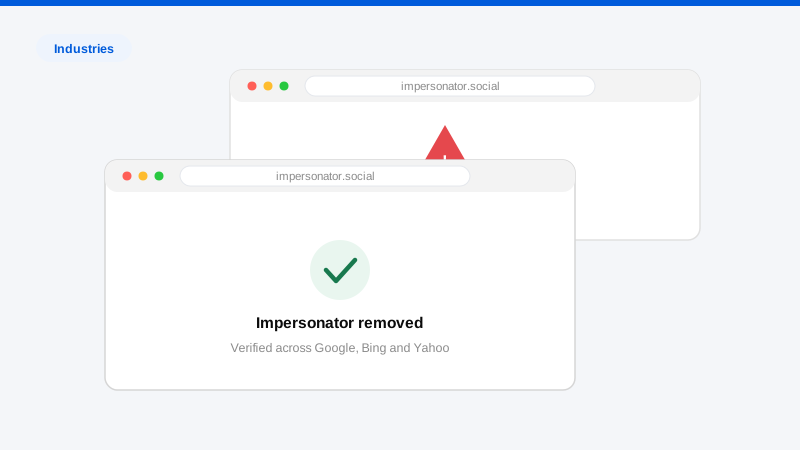
Reputation management for Instagram influencers is the discipline of locating and removing the content that quietly undermines an influencer’s business, impersonation accounts running scams in your name, gossip-forum threads dissecting your life, stolen photos repurposed on dating sites and ad creatives, and search results that surface all of it to every brand that vets you. It is removal work first: getting harmful accounts and content taken down at the source, then monitoring so the next incident is caught in hours rather than months.
Instagram influencers occupy a uniquely exposed position because the product they sell is trust in a person. A brand doesn’t pay for reach alone; it pays for the credibility transfer that happens when a trusted face recommends something. That makes an influencer’s reputation the actual asset of the business, and it makes the attacks aimed at influencers unusually damaging, because they target trust directly. A scammer impersonating you doesn’t just annoy your followers; they teach your audience that messages from “you” might be fraud. A gossip thread doesn’t just insult you; it becomes a permanent, searchable dossier that brands find during diligence.
This guide covers how the threat landscape works for Instagram influencers specifically (who targets you, through which mechanisms, and why) what is actually at stake for your income and safety, and what professional, removal-first protection looks like when it’s done properly.
What reputation management for Instagram influencers covers
The work divides into four connected fronts, and a professional firm runs all of them simultaneously.
Impersonation takedowns. Fake accounts using your name, photos, and bio (to scam your followers, run fake giveaways, sell counterfeit products, or catfish) are removed through platform impersonation and identity-verification pathways, on Instagram and everywhere the fakes spread: TikTok, Facebook, Telegram, dating apps, and lookalike domains.
Content and imagery removal. Stolen photos, manipulated images, and content reposted without consent are pursued through copyright, privacy, and platform-policy mechanisms. Professional image and video removal covers not just Instagram but the ecosystem your imagery leaks into: scraper sites, ad networks, forums, and image boards.
Gossip and harassment response. Threads on gossip forums, subreddits, and comment-section pile-ons are assessed item by item: what qualifies for removal under defamation, privacy, or harassment pathways; what requires host-level or search-engine escalation; and what is best handled through suppression.
Standing monitoring. Because impersonation and image theft recur by nature, continuous reputation monitoring (of your name, handle, and imagery itself) is what converts one-off cleanups into durable protection.
Why Instagram influencers are targeted
Influencers are targeted more heavily than almost any other category of public figure, for reasons built into how the platform and its surrounding economy work.
Your audience is a monetizable asset, for scammers
An influencer with an engaged following has done the hard part of a scammer’s job: assembled a group of people who trust a specific face and name. Impersonation accounts exploit that trust directly: cloning your profile, following your followers, and sliding into DMs with fake giveaways, crypto schemes, “exclusive content” offers, or requests for money. The scam doesn’t need to fool many people to be profitable, and every victim it does fool associates the experience with you. Impersonation is not a nuisance category; it is the single most industrialized attack influencers face, because it pays.
Gossip forums turn your life into a standing topic
A tier of gossip forums exists specifically to discuss influencers: long-running threads, sometimes hundreds of pages deep, dedicated to individual creators. The format matters: unlike a nasty comment that scrolls away, a forum thread is cumulative, searchable, and often ranks for your name. Threads mix legitimate criticism with speculation about your relationships, finances, surgeries, parenting, and health; they archive your deleted posts; they crowdsource identification of your home, gym, and children’s school. Because the thread’s participants experience it as a community pastime, it never ends. It simply accumulates, and search engines index all of it.
Your imagery is raw material for other people’s businesses
Influencers publish a continuous stream of high-quality photos of themselves, which makes them the most-scraped faces on the internet. Stolen imagery resurfaces as dating-app profiles, “girlfriend” catfish personas, weight-loss and skincare ad creatives you never approved, merchandise, and, increasingly, AI-manipulated derivatives. Each stolen use is a separate incident on a separate platform with a separate removal pathway, which is why image theft overwhelms creators who try to chase it manually.
Brands vet you, and they vet you shallowly
Brand-deal diligence has become standard: marketing teams and agencies search your name, scan the first pages of results, check gossip-forum sentiment, and run brand-safety screening before contracts are signed, and often re-run it before renewal. The critical detail is that this diligence is shallow by design. Nobody investigates whether the thread claiming you faked a sponsorship is accurate. They register that controversy exists, price the risk, and move on. Influencer income is therefore governed not by what’s true about you, but by what surfaces about you.
See what's spreading about you right now.Free confidential Exposure Scan: live results on a 15-minute call, yours to keep either way.
Book Your Free ScanWhat’s at stake
The consequences of unmanaged exposure for an Instagram influencer arrive through several mechanisms, most of them silent.
Brand deals evaporate without explanation. Diligence failures don’t generate feedback. A brand that finds a gossip thread or an impersonation scam during vetting simply doesn’t proceed. The influencer sees a pipeline that mysteriously slows, rates that soften, and agencies that stop pitching them, with no visible cause. Because renewal-stage diligence is also common, existing partnerships are exposed too.
Follower trust erodes from scams you didn’t run. Every follower who gets a fraudulent DM from a fake “you”, and every one who loses money to it, becomes warier of everything you post. Engagement, DM response, and link-click behavior all depend on the assumption that messages from your handle are really you. Industrial impersonation attacks that assumption at scale.
Gossip threads become your permanent search record. Forum threads rank well because they’re text-rich, frequently updated, and heavily interlinked. Once a thread establishes itself in results for your name, it greets every brand, journalist, prospective employer, and new follower indefinitely, a compounding liability that grows every day it stands.
Harassment crosses into physical safety. Gossip-forum crowdsourcing of locations, real-time story analysis, and address identification move reputational harm into personal-safety territory. Content that exposes where you live or where your children go to school is a category of cyber abuse with urgent removal pathways, provided someone invokes them correctly and quickly.
Stolen imagery multiplies faster than manual response. An influencer’s photos, once scraped, propagate through networks of scam pages and ad accounts. Each successful takedown without systematic follow-through is replaced by re-uploads elsewhere; only monitored, repeated, correctly-targeted enforcement changes the economics for the people stealing.
Key takeaway: Influencer income is decided by shallow diligence: brands act on what surfaces for your name, not on what’s true. Controlling what surfaces is not vanity; it is revenue protection.
What professional protection looks like
A removal-first firm working with Instagram influencers runs a defined operation rather than a scattershot of reports.
Exposure mapping before action. The first step is a complete inventory: every impersonation account across platforms, every gossip thread and where it ranks, every detected use of your stolen imagery, everything indexed against your name in search. Influencers are routinely startled by the scan. Most know about a fraction of their actual exposure, because the worst of it lives on platforms they don’t use.
Impersonation removal at network scale. Fake accounts are filed through identity and impersonation pathways with the verification evidence platforms require to act quickly, and, critically, they are handled as networks rather than one-offs. Scam operations run clusters of accounts; removing one while its siblings persist accomplishes little. Professional work maps the cluster, files against all of it, and monitors for regeneration.
The right mechanism for each item. Stolen imagery goes through copyright enforcement; private information and manipulated images through privacy pathways; scam pages through fraud policies; defamatory forum posts through host-level and legal-basis requests; qualifying content through search-engine removal so it stops ranking even where the source site won’t cooperate. Choosing the correct mechanism per item, and preparing the evidence each one demands, is the difference between action and auto-rejection.
Escalation when frontline reporting fails. Gossip forums in particular ignore ordinary complaints; that’s their business model. Effective work against resistant sites runs through hosting providers, registrars, search deindexing for qualifying content, and formal notices with a stated legal basis, unglamorous procedural channels that exist precisely for the sites that won’t self-police.
Standing protection, not episodic cleanup. For a working influencer, the durable configuration is a Protection Plan: continuous monitoring of your name, handle, and imagery, with takedowns executed as new impersonations, thread posts, and stolen uses appear. The strategic difference is timing, a fake account removed in its first day scams almost no one; the same account after three months has worked through much of your follower list.
Key takeaway: Impersonation and image theft are recurring, networked attacks. One-time cleanup treats the symptom; monitoring plus rapid removal treats the pattern, and the value of removal is highest in the first hours after content appears.
Why DIY reputation management for Instagram influencers breaks down
Nearly every influencer tries self-service first: reporting fakes in-app, asking followers to mass-report, replying in gossip threads. The failure modes are consistent.
In-app reporting is a lottery without evidence framing. Impersonation reports succeed when they arrive through the right flow with identity verification attached; casual reports frequently return “doesn’t violate our guidelines” for accounts that plainly do. Worse, a failed report can make the same complaint harder to win on refile.
Engaging with gossip forums feeds them. Replying in your own thread, sending complaints the forum publishes, or having friends defend you all generate the thing the thread runs on: fresh material. Threads about influencers who engage grow faster than threads about influencers who go quiet and remove strategically. This is a domain where the satisfying move and the effective move are opposites.
Image theft outpaces any individual. Finding your stolen photos requires reverse-image tooling, ad-library sweeps, and platform coverage far beyond what one person can sustain alongside a content schedule. Influencers typically discover stolen uses only when a victim of the scam contacts them, months into the damage.
You are the worst-positioned person to make judgment calls about yourself. Deciding which thread posts are removable defamation versus protected opinion, whether responding publicly helps or hurts, and which fights are worth escalation requires detachment that no one has about their own name. Specialists supply both the pathways and the distance.
Know exactly what brands find when they vet you.The free Exposure Scan surfaces every fake account, thread, and stolen image tied to your name, walked through live in 15 minutes.
Book Your Free ScanWhy Instagram influencers choose Content Removal
Content Removal is a removal-first firm: our core competency is getting harmful content and accounts taken down, and keeping them down, not publishing puff pieces to paper over problems. For Instagram influencers, that focus maps directly onto the threats that matter: we work daily inside the impersonation, privacy, copyright, and harassment pathways of Instagram and every adjacent platform your name and imagery spread to, and we maintain the escalation routes (host, registrar, and search-engine level) that resistant gossip sites require.
Our creator practice is built around the recurring nature of influencer attacks. Impersonation networks regenerate; gossip threads accumulate; stolen imagery re-propagates. So the engagements that work are structured as standing protection, monitoring plus rapid removal, rather than a single sweep that decays. We are equally direct about limits: we are not a law firm, no outcome can be guaranteed by anyone honest, and part of our job is telling you which content is removable, which is suppressible, and which is best left alone. That candor starts at the first call, which is grounded in a real scan of your exposure rather than a sales script.
Frequently asked questions
Can fake Instagram accounts using my photos actually be shut down?
Yes, in the significant majority of cases, impersonation is among the more tractable removal categories when reports are filed through the correct identity-verification pathway with proper evidence. The operational challenge is scale and recurrence: scam operations run account clusters and rebuild removed ones. Effective protection treats impersonation as a monitored, ongoing enforcement program rather than a single report.
Can a gossip forum thread about me be removed?
Sometimes in whole, more often in part. Forums that profit from influencer gossip rarely honor ordinary requests, so results come from targeted pathways: privacy and doxxing violations, host- and registrar-level escalation, defamation-basis notices, and search-engine removal or deindexing for qualifying content, which can end a thread’s practical impact even when the page technically survives. An honest assessment of a specific thread requires seeing it; that’s part of the exposure scan.
Will pursuing removals make the gossip worse, the “Streisand effect”?
It can if done loudly, which is why professional work is quiet and procedural. Removal requests filed through platform, host, and search channels are not visible to forum participants the way a public complaint or an in-thread response is. The Streisand risk attaches mostly to public reactions; disciplined removal work is designed to leave no story to tell.
A brand paused a deal over something posted about me. Can that be fixed?
The content side often can be addressed, removal or suppression of the material that triggered the concern, and doing so quickly matters, because diligence gets re-run. What no one can promise is the commercial outcome with that specific brand; we don’t promise results, and you should be skeptical of anyone who does. What removal-first work restores is the clean diligence surface on which future deals depend.
Your name and your face are the assets your entire business runs on, and right now you may not know everything that’s attached to them. A free, confidential Exposure Scan answers that in one 15-minute call: every fake account, gossip thread, and stolen image we can surface, what’s removable and what isn’t, and a clear picture you keep whether or not we ever work together.