
Brand monitoring online is the systematic scanning of the surface web, social platforms, deep web and dark web for mentions of your name or brand, run as a defensive intelligence operation rather than marketing. For executives and family offices it pairs continuous detection with a triage and escalation workflow, measured by time to detection, time to resolution and risk score.
Key facts
- Four spheres to cover: surface web, social platforms, the deep web of closed groups, and dark web marketplaces.
- Time to Detection and Time to Resolution are the two foundational KPIs; mention counts are a distraction.
- A Content Risk Score weighs source authority, content type and virality potential to prioritize threats.
- Monitoring that collects personal data must comply with GDPR and CCPA principles of data minimization and lawful basis.
Where ContentRemoval.com comes in. ContentRemoval.com closes the gap between an alert and a resolved threat: when monitoring surfaces an impersonation account, a leaked document or a defamatory post, the firm preserves evidence, builds the case file and pursues removal at the platform or host. Family office managers, general counsel and executive protection teams usually engage the firm to sit behind their monitoring program. A free 15-minute Exposure Scan maps what is removable, and the report is yours to keep. Get a Free, Confidential Exposure Scan or read how our content removal work is done.
Online brand monitoring is the practice of systematically scanning the digital landscape for mentions of your name, brand, or other key identifiers. For high-profile individuals and organizations, this is not a marketing exercise. It is a critical defensive intelligence operation designed to identify and neutralize threats before they inflict irreparable harm.
Beyond Social Listening: An Introduction To Proactive Monitoring

For an executive, a family office, or a public figure, the internet is an active operational theater. A single piece of adverse content (a defamatory post, a leaked document, or a convincing impersonation account) can inflict immediate and catastrophic damage to your reputation, finances, and personal safety. To ignore the digital environment is a fundamental failure of risk management.
Many confuse standard social listening with true brand monitoring. Social listening is a passive activity focused on consumer sentiment and marketing trends, akin to reviewing a weather report. Proactive brand monitoring online, conversely, is an active defense system. It functions as a digital security detail, tasked with identifying and assessing threats as they emerge in real time.
The Immediate Dangers of an Unmonitored Presence
An unmonitored digital footprint exposes you to clear and present dangers that a marketing dashboard cannot address. Information propagates with exceptional speed; by the time a threat becomes self-evident, the damage is already sustained.
The challenge is rooted in the immense trust placed in user-generated content (UGC). What others say about you online drives 90% of consumer trust, far outweighing any polished corporate message due to its perceived authenticity. This dynamic makes an unmanaged online presence profoundly dangerous. A single negative narrative, amplified through countless online interactions, can quickly dismantle a lifetime of credibility.
A professionally managed monitoring program is engineered to cut through this digital chaos and convert it into actionable intelligence. It establishes a necessary shield against a range of specific risks. A disciplined, operational process for threat detection and triage provides the intelligence needed to launch a decisive countermeasure, whether that involves legal intervention, content removal, or a strategic communications plan. This process mitigates threats such as defamation and libel by documenting malicious statements before they gain traction; it detects fraudulent social media profiles or websites created to mislead associates; it scans for exposed personal information and confidential documents across the web; and it identifies direct or veiled threats requiring escalation to law enforcement. This is not about tracking vanity metrics. Our approach to comprehensive reputation monitoring details how this protective layer functions in high-stakes environments.
Building a High-Stakes Defensive Monitoring Program
Protecting a high-profile individual requires more than purchasing software. Effective online monitoring is the construction of a dedicated intelligence operation with a single objective: to find and neutralize digital threats before they cause material damage. A generic, off-the-shelf approach is insufficient. What is required is a disciplined process that operates with the gravity of a specialist legal or security team.
An effective program moves far beyond a simple Google search. It necessitates establishing surveillance across different layers of the internet, as each presents unique risks and requires specialized methodologies. Overlooking one creates a blind spot where a crisis can develop undetected.
The Four Spheres of Digital Monitoring
For a comprehensive defense, your program must systematically cover four distinct digital spheres. Viewing these as different fronts in a single campaign provides the complete intelligence picture required to preempt threats.
The first sphere is The Surface Web, comprising everything indexed by standard search engines: public websites, news articles, blogs, and forums. The challenge here is not discovery, but the overwhelming volume of noise. A sophisticated system is required to sift through thousands of irrelevant mentions to isolate the one that constitutes a genuine threat, such as a defamatory post on a small but influential blog demanding immediate action.
Second, Social Media Platforms are the primary battlegrounds for rapid reputational attacks. Monitoring here must transcend keyword tracking. It involves using image recognition to detect unauthorized use of a person’s likeness, identifying impersonation accounts, and analyzing sentiment velocity to spot negative commentary poised to become viral.
Third, The Deep Web primarily consists of private online spaces: closed social media groups, password-protected forums, and encrypted chat applications. Gaining visibility into these areas is complex, often requiring a blend of technical methods and human intelligence (HUMINT) to access the closed communities where damaging information is frequently first disseminated.
Finally, The Dark Web is the segment of the internet known for anonymous marketplaces and illicit activities. A serious monitoring program must scan these hidden sites for leaked credentials, stolen financial records, sensitive personal data being sold, or direct threats made against a client.
This screenshot confirms the transactional nature of the dark web, where personal data is packaged and sold as a commodity. Discovering your information here signifies a severe breach requiring an immediate, coordinated response.
From Alerting to Action: The Triage and Escalation Workflow
An alert is merely the beginning. The core engine of a professional brand monitoring program is its triage and escalation workflow. This is a pre-defined protocol for analyzing alerts, assessing their severity, and routing them to the appropriate decision-makers with speed. Without this process, alerts are simply more digital noise, and the window to contain a threat closes.
The objective is to convert raw data into actionable intelligence. An alert is not the end of the process; it is the starting point for a response that determines, within minutes, whether a threat requires a lawyer, a cybersecurity team, or a content removal specialist.
The workflow operates like a funnel. Every incoming alert is reviewed by a trained analyst, whose function is to rapidly gauge its credibility and potential impact. Most mentions are noise and are filtered out. Credible threats are categorized based on a pre-agreed risk matrix. For instance, a negative comment on a blog might be a low-priority issue. An impersonation account on Instagram, however, constitutes a high-level risk that is escalated to a content removal team immediately. The discovery of personal data on a dark web forum triggers an instant escalation to both legal counsel and a cybersecurity incident response team. This disciplined system ensures that the most significant threats receive immediate attention and that resources are focused where they are most needed.
Measuring What Matters: Actionable KPIs For Reputation Defense
In high-stakes environments, vanity metrics like mention counts and follower growth are a dangerous distraction. For executives, high-net-worth individuals, and enterprises, the only valid measure of an online brand monitoring program is its effectiveness in reducing tangible risk. This requires a shift from counting mentions to measuring the speed and efficiency of the defensive response.
A successful program is not measured by the volume of data it collects, but by the number of threats it neutralizes. This demands a focus on a few critical Key Performance Indicators (KPIs) that provide an unvarnished assessment of your team’s real-world capabilities. Without them, you are merely observing data, not managing risk.
Core Metrics: The Imperative for Speed
At the core of any serious monitoring effort are two foundational KPIs: Time to Detection (TTD) and Time to Resolution (TTR).
Time to Detection (TTD) measures the interval from the moment negative or defamatory content is published online to the moment your system flags it. In an environment where a single post can achieve virality in minutes, reducing TTD from hours to moments is the primary operational goal.
Time to Resolution (TTR) measures the duration from initial detection until the threat is neutralized, whether the content is removed, a legal response is initiated, or another form of remediation is completed. A low TTR is evidence of a decisive and efficient operational apparatus capable of preventing a minor issue from escalating into a full-blown crisis.
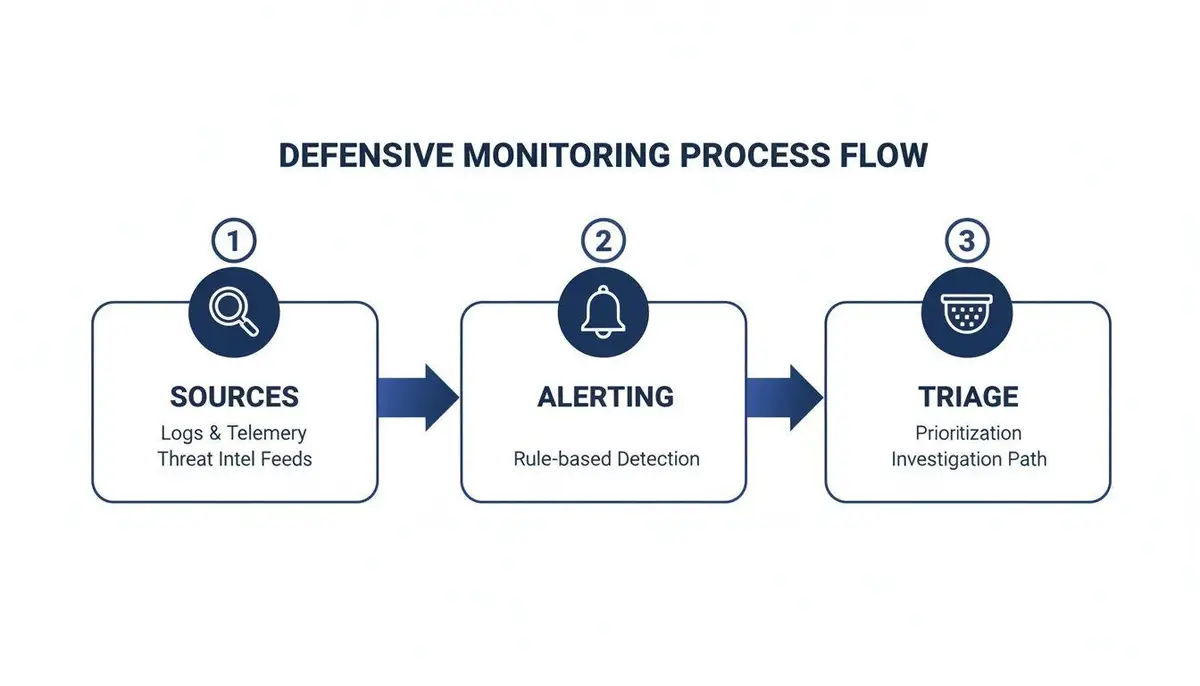
This process is a continuous cycle of scanning sources, which feeds an immediate alerting system and allows for instant triage. This is the mechanism for maintaining a proactive posture.
Advanced Analytics for Surgical Precision
With TTD and TTR mastered, more sophisticated, qualitative metrics can be layered on. Instead of static snapshots of positive versus negative mentions, we track sentiment velocity. This metric reveals how quickly negative sentiment is spreading and accelerating across different platforms, a far more insightful indicator of an impending crisis.
Another vital metric is the reach of defamatory content. A malicious comment on an obscure forum is an entirely different class of threat from a false accusation published by a major news outlet. Analyzing the audience size and influence of the source is essential for accurate threat assessment.
The objective is to transition from tracking data points to assessing threats with surgical precision. This is achieved by assigning a Content Risk Score (CRS) to every negative mention, a weighted metric that quantifies a threat’s severity based on source authority, content type, and its potential for virality.
This scoring system allows your team to prioritize what matters most, immediately. Research from social listening trend reports highlights that while approximately 84% of brands report a positive ROI from social media, many cannot explain why their reputations suddenly decline. This is because they conflate long-term sentiment tracking with immediate threat monitoring, two distinct disciplines.
Critical KPIs For Reputation Defense Monitoring
This table outlines essential Key Performance Indicators (KPIs) for evaluating a high-stakes online brand monitoring program, focusing on risk mitigation and operational efficiency.
| KPI | Description | Importance For High-Profile Clients |
|---|---|---|
| Time to Detection (TTD) | The time between when content is published online and when your team is alerted. | Faster detection provides more strategic options. A low TTD prevents a threat from gaining unstoppable momentum. |
| Time to Resolution (TTR) | The time between the initial alert and when the threat is neutralized (e.g., content removed, legal action taken). | This measures the efficiency of your entire response workflow. A low TTR demonstrates the ability to contain damage effectively. |
| Content Risk Score (CRS) | A proprietary score assigned to each threat based on source authority, virality potential, and content type. | Allows for instant, data-driven prioritization. Ensures the team focuses on the most significant threats first, not the loudest. |
| Sentiment Velocity | The rate at which negative sentiment is spreading or accelerating across platforms. | Acts as an early warning system. A spike in velocity can predict a major reputational event before it fully unfolds. |
| Reach of Defamatory Content | The potential audience size and influence of the platform or account publishing the negative content. | Provides crucial context. It helps distinguish between a minor annoyance and a critical, high-impact threat. |
| Takedown Success Rate | The percentage of removal requests that result in the successful takedown of harmful content. | A direct measure of remediation effectiveness and relationships with platforms. Essential for demonstrating ROI. |
Focusing on these KPIs establishes a reporting framework that demonstrates real, tangible value. The success of your brand monitoring online is not found in a chart of rising mentions, but in the documented record of crises averted, assets protected, and reputational threats neutralized before they became public knowledge.
Establishing Governance And Confidentiality For Your Program
For executives, public figures, and family offices, confidentiality is not a preference; it is a prerequisite. A program for brand monitoring online is counterproductive if the act of monitoring introduces new security vulnerabilities. The entire operation must be built upon a foundation of absolute discretion, operating with the rigor of a specialist law firm rather than a marketing agency.
This begins with a disciplined governance structure defining exactly how sensitive information is handled, who has access to it, and how critical decisions are made. Without this framework, you have a noisy collection of alerts, not a secure intelligence function. The objective is to ensure your defenses do not become your greatest vulnerability.
Building A Secure Operational Framework
First, communications must be secured. Standard email and messaging applications are unsuitable for sharing sensitive alerts or discussing strategy. All communication must occur within encrypted, access-controlled environments to preserve attorney-client privilege and prevent unauthorized disclosure.
Equally critical are strict, need-to-know access controls. Not every member of your team, or your partner firm, requires access to every piece of intelligence. Access to the monitoring platform, alerts, and raw data must be segmented by role. An analyst triaging incoming alerts should not have the same clearance as the lawyer deciding on legal action.
The guiding principle is minimal privilege. Individuals are granted access only to the information and tools essential to their function. This compartmentalization ensures that a compromise in one area does not compromise the entire program.
Establishing clear governance and confidentiality rules is what distinguishes professional-grade monitoring from off-the-shelf software. It draws upon the same principles found in strong governance frameworks used in data management, providing a structure that can withstand intense scrutiny.
Defining Roles, Responsibilities, And Legal Compliance
When a serious threat emerges, a clear chain of command is necessary for a swift, decisive response. The roles and responsibilities for all involved parties, from internal stakeholders like a family office manager or general counsel to your external reputation firm, must be explicitly defined. When a critical alert is triggered at 2 AM, there must be zero ambiguity about who makes the call.
This governance structure must also navigate a complex landscape of legal and data privacy regulations. Any monitoring that collects personal information is subject to laws such as Europe’s GDPR (General Data Protection Regulation) and the CCPA (California Consumer Privacy Act). A compliance failure can result in significant fines and legal challenges, transforming a defensive program into a major liability.
Your program’s protocols must be architected with these legal constraints in mind, particularly when monitoring across different jurisdictions. Key principles to embed in your process are: data minimization, purpose limitation, data security, and ensuring a lawful basis for processing any personal data.
Ultimately, strong governance is about building an operational fortress around your digital life. For anyone tasked with protecting a high-profile individual, our guide to protecting your online identity offers a strategic framework that works in concert with these principles. It is the blueprint that ensures your brand monitoring program is a shield, not a liability.
Pairing Monitoring With Legal and Remediation Action

A monitoring program that only identifies threats without acting on them is analogous to an alarm system with no locks on the doors. It is an incomplete strategy that generates anxiety rather than security. To be effective, brand monitoring online must serve as the intelligence-gathering arm for a decisive response team, bridging the critical gap between detection and action.
The data collected is not for spreadsheets; it is evidence. This evidence provides the leverage required to compel action from platforms, publishers, and anonymous attackers. Without this connection, monitoring is an expensive and futile exercise.
From Threat Identification to Neutralization
The true value of a professional monitoring system lies in its ability to create a direct line from threat detection to removal. This is not about reacting after the damage is done; it is a planned, rehearsed protocol designed for speed.
Consider a sophisticated impersonation account. A premier monitoring system will detect the new profile within minutes of its creation, flagging it based on a combination of your name, images, and characteristic activity. An alert is issued, and a specialist team immediately moves to validate the threat.
The objective is to compress the timeline between detection and takedown to near zero. The intelligence from monitoring, such as the server location of a data leak or the digital trail of a defamer, is what makes that speed possible. It is the difference between requesting a removal and demanding one with irrefutable proof.
This intelligence fuels the takedown process. Instead of filing a generic complaint that is lost in a support queue, our team delivers a detailed case file to the hosting provider or a platform’s legal department. It contains timestamps, IP data where available, and specific proof of fraudulent activity. This level of documentation elevates a standard user report to an urgent legal matter, dramatically increasing the probability of a successful takedown. This is precisely how we remove unwanted online content.
This integrated approach follows a methodical and repeatable sequence to turn abstract data into tangible results. It begins with immediate detection of a new threat. A specialist team then collects and preserves all evidence before it can be destroyed. Armed with this evidence, the remediation team engages the platform’s trust and safety or legal department directly, often using established back-channels to bypass standard procedures. Following a takedown, the monitoring system is updated to watch for the same content reappearing elsewhere, converting a one-time fix into a persistent solution.
This mirrors the structured approach of modern GRC risk management strategies, where identifying a risk is merely the first step in a complete mitigation plan.
Deploying Your Proactive Digital Shield
The strategies, metrics, and workflows discussed all point to a single conclusion: brand monitoring online is not a marketing initiative. It is a core function of modern risk management, as critical as legal counsel or physical security. In an environment where digital threats can materialize and inflict devastating harm with shocking speed, a reactive posture is a failure to prepare.
A Synthesis of Strategy
An effective program is built on non-negotiable pillars. It must begin with comprehensive monitoring that extends beyond social media to the deep and dark web, where significant threats often originate. This data requires a rapid, disciplined triage process to distinguish credible dangers from background noise, ensuring a swift and correctly scaled response.
Meaningful KPIs like Time to Detection (TTD) and a weighted Content Risk Score (CRS) are essential to convert abstract data into a clear operational picture. The entire program must be enveloped in strict governance to ensure that the act of monitoring does not introduce new vulnerabilities. Confidentiality and a clear chain of command are paramount.
Finally, intelligence is worthless without action. The power of a monitoring program is its ability to arm you with the evidence needed to execute takedowns, support legal action, and neutralize threats before they escalate.
When your reputation can be destroyed in hours, professional, specialized assistance is not a luxury. It is a fundamental requirement for protecting your name, your privacy, and your financial well-being from anonymous actors who leverage speed and chaos.
Treating online brand monitoring with this level of gravity is the first step toward building a proactive digital shield. It marks the transition from reactive damage control to proactive defense, empowering you to control your narrative rather than ceding it to online aggressors.
The digital world does not wait. The threats are already in motion. The only remaining question is whether your defenses are prepared. The process begins with a confidential assessment to map your specific risks and design the necessary shield. Do not wait for an attack to reveal your vulnerabilities. Build your defenses now.
Common Questions About Professional Brand Monitoring
For a defensive strategy to be effective, clarity is essential. Here are answers to the most urgent questions we receive from executives, family offices, and their legal teams regarding professional brand monitoring online.
What Is The Difference Between Brand Monitoring And Social Listening?
The two are frequently confused but serve entirely different functions. Social listening is a marketing tool used to gauge public opinion, track market trends, or gather product feedback. It is a useful, but passive, market intelligence activity, not a security function.
Professional brand monitoring is a focused intelligence and security operation. The objective is not to measure brand awareness but to actively hunt for specific, high-stakes threats (defamation, impersonation, data leaks, and physical risks) across the entire web. The sole purpose is to find and neutralize these threats with speed.
How Quickly Can A Monitoring Program Find A Threat?
With a properly configured program, detection is nearly instantaneous. The critical metric is Time to Detection (TTD): the interval between content appearing online and your team receiving an alert.
For a high-risk mention on a major social network or news site, detection can occur within minutes. This speed is your greatest strategic advantage. It provides the opportunity to assess and act before a negative narrative achieves virality, effectively neutralizing a threat before it becomes a public crisis.
Is It Possible To Monitor Private Groups Or Messaging Apps?
Yes, although it is more complex than scraping public websites. Directly monitoring end-to-end encrypted applications is not technically feasible. However, a robust monitoring program employs a multi-faceted approach.
Visibility into these closed environments is achieved through a combination of credentialed access to private communities, human intelligence sources (HUMINT), and specialized tools that scan closed forums on the deep web. For uncovering sophisticated threats deliberately concealed from public view, this capability is non-negotiable.
This level of access allows us to identify coordinated smear campaigns, data leaks, or other hostile actions that originate in private digital spaces before they emerge publicly.
How Do You Maintain Confidentiality In The Monitoring Process?
Absolute confidentiality is the bedrock of our operations. We structure our firm like a specialist legal practice, where privacy and discretion are paramount. All data and communications are managed through secure, encrypted channels to protect sensitive information and maintain attorney-client privilege when counsel is involved.
Access is governed by a strict need-to-know principle, ensuring only essential personnel view any specific alert or piece of data. All team members are bound by ironclad non-disclosure agreements (NDAs). This disciplined framework ensures the act of monitoring never introduces a new risk.
At ContentRemoval.com, we build proactive digital shields for the world’s most discerning clients. If your reputation is your most valuable asset, don’t leave its protection to chance. Contact us for a confidential assessment to understand and neutralize your digital risks. Learn more at ContentRemoval.com.
Frequently asked questions
Is brand monitoring the same as social listening?
No. Social listening is a passive marketing tool for gauging sentiment and trends. Professional brand monitoring is a security and intelligence function that hunts for specific threats such as defamation, impersonation, data leaks and physical risks across the whole web, then routes them for action.
Can you monitor private groups and encrypted messaging apps for threats?
End-to-end encrypted apps cannot be read directly, but the article describes gaining visibility into closed communities through credentialed access, human intelligence sources and specialized deep web tools. That is how coordinated smear campaigns are often spotted before they surface publicly.
What happens after a monitoring alert is triggered?
A trained analyst assesses credibility and impact, filters out noise and categorizes credible threats against a pre-agreed risk matrix. An impersonation account goes straight to a removal team, while personal data found on a dark web forum escalates to counsel and a cybersecurity incident response team at the same time.