
Reputation management for sports professionals treats an athlete’s name as an asset under attack and follows a sequence: build a digital fortress before any incident, lock down communication in the first 24 hours, remove or de-index harmful material through technical and legal routes, run a disciplined narrative counter-offensive through credible third parties, and rebuild with structural changes sponsors can trust.
Key facts
- Map risk into three classes: performance, conduct and digital, each with its own controls.
- Leaked photos you own suit a copyright takedown; non-consensual intimate imagery calls for emergency platform reporting.
- The inner circle, not the press, is usually the leak point, so impose a communication lockdown on day one.
- Old posts, juvenile records and archived local coverage resurface during contract talks and sponsor vetting.
Where ContentRemoval.com comes in. ContentRemoval.com handles the removal layer for athletes and their representatives: leaked images and video, false allegations, manipulated clips, impersonation accounts and stale articles taken down at source or de-indexed, with evidence preserved first and reposts tracked afterward. The first call usually comes from the agent, the athlete’s lawyer or the club’s communications lead. A free 15-minute Exposure Scan maps what is removable across search and social, and the report is yours to keep. Get a Free, Confidential Exposure Scan or read how our reputation management work is done.
You are not dealing with a bad headline. You are dealing with an asset under attack.
For a high-profile athlete, reputation is contract value, sponsor confidence, locker room authority, search visibility, and long-term earning power compressed into one fragile public record. A false allegation, a leaked video, a reckless old post, or a badly handled statement can move faster than your legal team, your agent, and your coach.
Most advice on reputation management for sports professionals is too soft to be useful. “Be authentic” is not a strategy. “Tell your story” is not a containment plan. When a crisis breaks, you need a hard sequence: identify the threat, stop amplification, remove what can be removed, contain what cannot, and rebuild on terms you control.
That is how professionals handle this. Not with panic. Not with denial. With systems.
The Preemptive Strike Building an Impenetrable Digital Brand
If you are waiting for a scandal to start managing your name, you are already late.
The strongest reputation management for sports professionals starts before the incident. You build a digital fortress so that when pressure arrives, your team is not improvising. The point is not to look polished. The point is to reduce attack surface.

Audit everything that can be weaponized
Start with a complete footprint review. Not a social media glance. A real audit.
That means old posts, tagged images, fan pages, forum mentions, archived interviews, podcasts, youth sports coverage, college-era commentary, business filings, public records, stale biographies, and image search results. The athletes who get blindsided deal with old material they forgot existed.
The most neglected risk is private information exposure. Home addresses, family details, travel patterns, and personal contact data invite harassment and make a reputational incident harder to contain. If your household details are easy to find, fix that first through a celebrity privacy protection strategy.
Build your reputation defense like venue security. You do not wait for the first breach to decide where the doors are.
Use a strict risk map, not instinct
A disciplined framework beats gut feeling. One useful model is MECE, which segments public perception risk into performance, conduct, and digital categories. In one benchmark cited by Numinal Agency, that approach produced a 70-85% improvement in endorsement stability, and the same source states AI monitoring can suppress 80% of false narratives before they go viral in major sports markets (Numinal Agency on managing public perception and reputation for athletes).
That matters because athletes overprotect one category and ignore another. They obsess over game performance while neglecting digital exposure. Or they hire a social media manager but never define conduct boundaries for friends, family, trainers, and hangers-on who appear in public with them.
A useful internal map looks like this:
| Risk class | Typical threat | Required control |
|---|---|---|
| Performance | doping allegations, injury misinformation, contract disputes | verified statement chain, coach and agent alignment |
| Conduct | nightlife incidents, interpersonal accusations, politically charged clips | response protocol, witness preservation, media discipline |
| Digital | leaks, impersonation, edited videos, old posts resurfacing | monitoring, takedown workflow, archival audit |
Create a personal code that sponsors can trust
Every elite athlete needs a written code of conduct. Not for the press. For internal use.
It should cover off-camera behavior, travel rules, guest policies, posting rules, dating and privacy boundaries, live-streaming restrictions, and who approves reactive statements. If a decision does not fit the code, it does not happen.
This protects more than image. It protects consistency. Sponsors do not just buy popularity. They buy predictability.
Train for the hostile interview, not the friendly one
Most media training is too theatrical. You do not need more smile coaching. You need pressure rehearsal.
Drill for ambush questions, mic-hot moments, mixed-zone confrontation, tunnel walks, and social media bait. Practice saying less. Practice declining traps without sounding evasive. Practice ending an exchange without escalating it.
Use a red-line rule for personal posting. If content is emotional, reactive, sarcastic, or written after conflict, it does not go live.
Monitor continuously or get surprised publicly
A proper monitoring setup does three jobs. It spots early narrative shifts, identifies repeat amplifiers, and flags manipulated content before it hardens into accepted truth.
At minimum, track search changes, social mentions, impersonation accounts, image misuse, and sudden recirculation of old material. What you are looking for is not noise. It is pattern.
Preemption is not glamorous. It is operational discipline. Athletes who treat it that way are harder to damage and faster to defend.
The First 24 Hours Crisis Triage and Strategic Containment
When the story breaks, your first job is not persuasion. It is control.
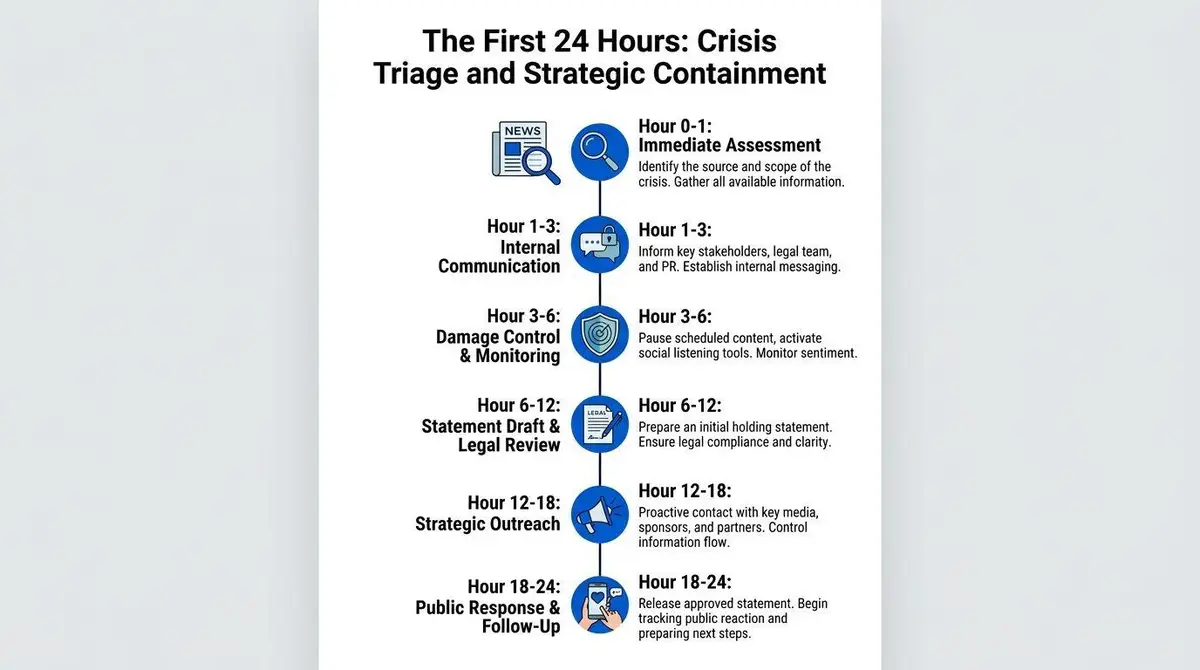
In the first hour, I do not want the athlete posting. I do not want a sibling commenting. I do not want an assistant texting reporters off the record. I do not want the agent freelancing. I want a closed room, one verified fact stream, and one chain of authority.
That is how containment starts.
What the war room looks like
A serious incident creates three simultaneous problems. Facts are incomplete. Emotions are high. Other people are speaking for you.
The war room exists to stop all three from getting worse. One person collects evidence. One person manages legal review. One person handles media and sponsor coordination. Everyone else stays quiet unless asked.
If the crisis is false or manipulated, speed matters even more because digital repetition can outrun truth. If the crisis is partly true, speed still matters because silence without structure looks like collapse.
The historical lesson is clear. The 2007 Mitchell Report named 89 players, and the fallout included endorsement losses worth millions plus a 20-30% drop in fan trust, which helped establish the rapid-response model now standard in professional sports (ETSU analysis of the Mitchell Report and its fallout). Uncontained scandal does not remain a headline. It becomes a reputation architecture problem.
The first decisions that matter
You need answers to five questions immediately:
- What exactly exists?
Is it a video, article, post, lawsuit, rumor thread, leaked image, police item, or edited clip? - Who published first?
The original source matters because source removal and search de-indexing are different tracks. - Is the content true, false, misleading, or unlawfully published?
That classification determines whether you respond publicly, legally, technically, or all three. - Who must be informed before the public response?
League, club, agent, sponsor, legal counsel, family office, and key brand partners. - Should you issue a holding statement or stay silent?
Not every crisis deserves immediate public prose. Some deserve immediate legal action.
Silence is not weakness
A disciplined pause outperforms a rushed apology or angry denial.
If facts are unclear, issue a holding statement only when necessary. Keep it narrow. Confirm awareness, note review, state that further comment will follow through counsel or authorized representatives. Do not improvise motive, blame, or timelines.
If active defamation or social media slander is involved, your team should move quickly on evidence capture, platform reporting, and escalation. A useful reference point is this guide on what to do if someone is slandering you on social media.
In the first 24 hours, every unnecessary word creates future legal and reputational cleanup.
The inner circle is usually the leak point
Most athletes assume the press is the main threat, though this is not always true.
The bigger problem is loose internal communication. A friend “defending” you online. A trainer texting a blogger. A family member liking posts that imply guilt or attack an accuser. Those actions fracture the message and create second-order stories.
Impose a communication lockdown. No one speaks publicly without clearance. No one posts subtweets. No one shares screenshots. Preserve evidence. Do not alter devices. Do not delete material blindly if counsel has instructed preservation.
Sponsor management starts before the public statement
Sponsors do not like surprises. Contact major partners early with a controlled briefing. Give them the minimum they need, not your entire theory of the case.
The objective is practical. Stop them from learning everything through headlines and social chatter. A sponsor that feels informed is less likely to panic.
Containment beats explanation
Athletes want to explain themselves immediately. That instinct is understandable and usually wrong.
In the opening phase, your team is not trying to win the argument. Your team is trying to prevent expansion. That means pausing scheduled content, tightening account security, identifying impersonation, preserving records, preparing legal notices, and deciding whether the threat calls for direct removal action.
The first day sets the shape of every day after it. If you lose control here, recovery gets more expensive, slower, and more public.
Executing the Takedown Technical and Legal Removal Strategies
Most sports PR advice collapses at this point. It tells athletes how to talk. It does not tell them how to remove.
You cannot “out-message” every harmful asset. Some content must be challenged, some must be buried, and some must be taken down at the source. Reputation management for sports professionals now requires technical and legal mechanics, not just public positioning.
Know the difference between source removal and de-indexing
These are separate tools.
Source removal targets the original publication. That means the website, platform, uploader, forum, or account hosting the material. If successful, the content is deleted or disabled where it lives.
De-indexing targets search visibility. The content may still exist somewhere online, but search engines stop surfacing it prominently. That matters because most commercial and reputational damage happens at the search layer. Agents, sponsors, journalists, and league staff search your name before they call you.
This distinction matters because athletes often demand deletion where deletion is not immediately realistic. In many cases, search suppression is the fastest way to reduce damage while source removal proceeds.
The gap in current advice is obvious. Many athletes hit what has been described as the Crisis Prevention-to-Removal Transition Gap, where standard PR fails against harassment, leaks, or false allegations, and technical processes such as de-indexing may begin within 24-48 hours to remove harmful material from search results (analysis of the crisis prevention-to-removal gap for athletes).
Removal is not an admission
Athletes hesitate here for the wrong reason. They think takedown action looks defensive.
It does not. It looks competent.
If private material was leaked, remove it. If a false accusation is being amplified, challenge it. If a manipulated clip is spreading, document the edits and force platform review. If intimate imagery was posted without consent, treat it as an emergency. If a tabloid article is stale, misleading, and needlessly harmful, assess de-indexing and suppression options immediately.
What looks weak is allowing unlawful or false material to dominate search results because you are worried someone might say you are trying to hide something.
Match the tactic to the content
Different assets require different removal grounds.
| Scenario | Best initial route | Why it works |
|---|---|---|
| Leaked photos or video you own | copyright-based takedown | ownership creates a direct enforcement path |
| False factual allegation | defamation notice and evidentiary package | platforms and publishers need specific falsity claims |
| Non-consensual intimate imagery | emergency platform reporting and legal escalation | privacy and safety rules are usually stronger here |
| Impersonation account | platform identity complaint | strongest when you provide verified identity proof |
| Old harmful article surfacing in search | de-indexing, suppression, publisher outreach | search visibility often causes most of the damage |
Draft like counsel, not like a fan
Most failed takedown requests share the same flaw. They sound emotional.
Platforms and publishers respond better to clear legal and factual framing. Identify the content precisely. State why it violates policy or law. Attach the needed proof. Ask for the remedy directly. Do not rant.
Here is a practical drafting model:
| Scenario | Template Language (Draft) |
|---|---|
| False allegation post | “We represent the individual identified in this post. The statement published at [URL] is false and defamatory. It asserts verifiable facts that are inaccurate and unsupported. We request immediate removal, preservation of relevant account records, and confirmation of action taken.” |
| Leaked private image | “This content was published without authorization and violates privacy rights. The individual depicted did not consent to distribution. Remove the content immediately, disable further sharing, and confirm all associated URLs and copies have been addressed.” |
| Impersonation profile | “This account falsely represents our client and is likely to mislead the public. Attached are identity materials confirming the impersonation. Please suspend the account and remove associated content that creates confusion as to source or identity.” |
| Search result de-indexing request | “The material appearing for this name-based search is inaccurate, outdated, or unlawfully published, and its continued indexing creates disproportionate reputational harm. We request review for de-indexing under applicable platform and jurisdictional standards.” |
If you need the legal framework itself, start with a specialist resource on legal content removal.
The best takedown request does not perform outrage. It establishes grounds.
Preserve evidence before you push removal
This is the step amateurs miss.
Capture screenshots, URLs, timestamps, account identifiers, publication dates, and visible engagement before removal efforts begin. If litigation becomes necessary, you will need a clean evidentiary record. If a platform refuses action, your documentation becomes the basis for escalation.
Think in layers, not single wins
The correct strategy is simultaneous. Remove the source if possible. De-index search visibility where available. Report duplicates. Watch for reposts. Update press handling so your public response does not undermine your legal position.
That is why this work belongs in the same room as counsel and crisis communications. Removal is not separate from strategy. It is strategy.
The Narrative Counter-Offensive PR and Social Media Warfare
Once containment is in place and removal actions are underway, you shift from defense to controlled offense.
That does not mean flooding social media with inspiration quotes and workout footage. It means replacing uncertainty with a coherent public record. Your goal is to make the strongest available version of reality easier to find, easier to repeat, and harder to distort.
Accountability works. Performance theater does not
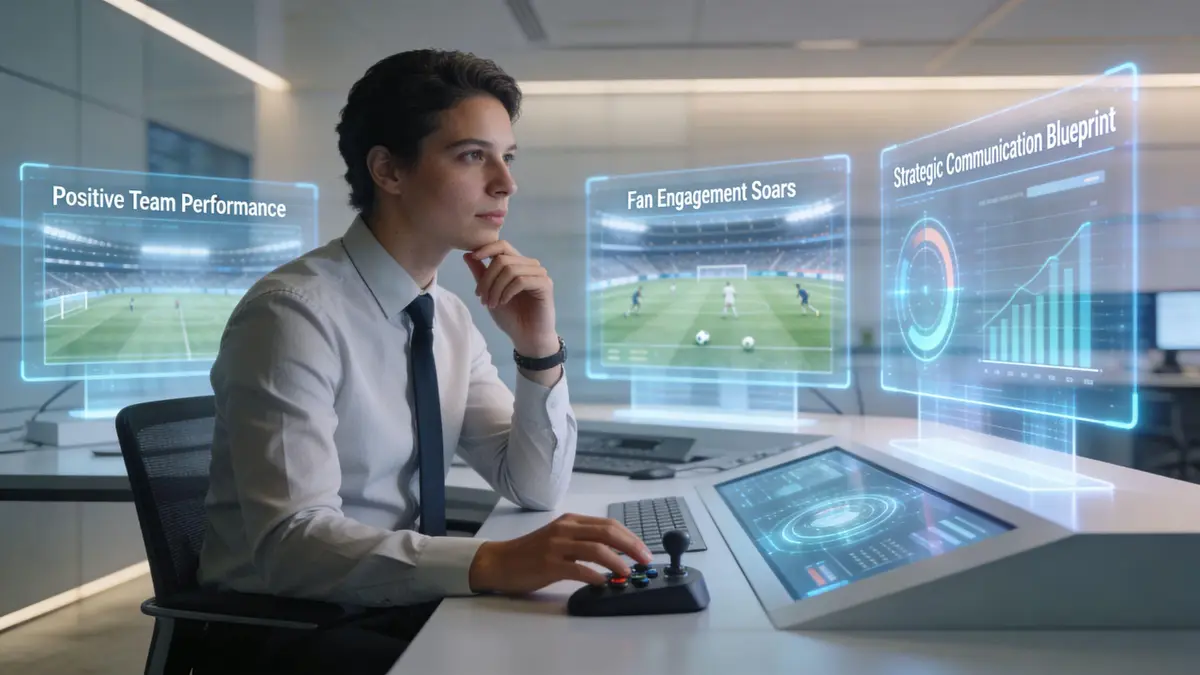
Case analysis of athlete scandals points to a reliable formula. Immediate accountability within 24-48 hours, concrete commitments to change, and sustained honest media engagement produce better recovery outcomes. In those cases, athletes who followed the formula achieved sponsor retention above 80%, while those who denied or deflected fell into the 20-30% range (Cal Poly analysis of athlete reputation rebuilding methods).
The lesson is not “apologize quickly” in some generic sense. The lesson is narrower.
A public statement must do one of three things. Accept responsibility where responsibility exists. Correct a false record where falsity can be shown. Or reserve detailed comment while legal action proceeds. Anything outside those lanes backfires.
Build validators around the athlete
A damaged reputation rarely recovers through first-person posting alone.
The strongest narrative counter-offensive uses credible third parties. That can include a coach, former teammate, nonprofit partner, agent, league-side contact, or journalist with a reputation for fairness. The public trusts corroboration more than self-description.
Use those relationships carefully. Do not send surrogates out to attack critics. Use them to establish context, character, and facts. One disciplined comment from a credible source is worth more than a week of emotional posting.
A short visual briefing can help align the team before external outreach:
Social media is an instrument, not a diary
Athletes misuse social platforms during recovery because they confuse visibility with persuasion.
Do not narrate every feeling. Do not spar with anonymous accounts. Do not quote-tweet critics. Do not post vague messages that invite speculation. Use platforms with intent.
A disciplined social channel after a crisis should do the following:
- Confirm the official record: Link followers toward your formal statement, verified interview, or authorized update.
- Demonstrate consistency: Show work, training, community activity, and stable routine without overexplaining.
- Avoid emotional drift: No sarcasm, no cryptic captions, no late-night corrections.
- Support search displacement: Publish accurate, high-quality content tied to your name and professional identity.
Search is part of PR now
Public relations teams still act as if the article is the final product. It is not. The search result is the final product.
If the first page for your name is dominated by one allegation, one leak, or one old controversy, then your PR campaign has not finished its job. That is why every media appearance, official post, biography update, interview transcript, and positive coverage item should be built with discoverability in mind.
If your side of the story is hard to find, it does not have enough distribution.
The athlete who recovers fastest is not the one who talks the most. It is the one whose team builds a disciplined public record that journalists, sponsors, and fans can verify quickly.
Rebuilding and Fortifying After the Storm
The crisis is not over when the headlines cool down. It is over when the incident stops defining your commercial identity.
That takes sustained proof. Not a redemption speech. Not one charity appearance. Not one strong performance. Real rebuilding in reputation management for sports professionals happens when behavior, search results, sponsorship conversations, and internal controls all start telling the same story again.

Use time as evidence
The strongest recovery pattern is boring. That is why it works.
You show up. You keep your commitments. You stop generating secondary incidents. You do the interview you agreed to do. You avoid the performative comeback tour. You let consistency do the heavy lifting.
In the rebuilding phase, your inner circle must become smaller and more professional. Athletes return to old habits too quickly because the public pressure eases. That is when a second incident lands.
Repair sponsor confidence with structure
Brands do not need emotional reassurance. They need a risk-managed counterpart.
When re-engaging sponsors, come prepared with specific operational changes. Revised posting controls. media gatekeeping. Updated event protocols. Family privacy protections. Security around recordings and backstage access. If the original incident exposed a systems failure, show that the system has changed.
A useful sponsor conversation has three parts:
| Sponsor concern | What your team should show |
|---|---|
| “Will this happen again?” | revised controls, defined approval process, documented safeguards |
| “Will we be pulled into future controversy?” | cleaner search profile, disciplined public messaging, reduced volatility |
| “Can this athlete still represent us credibly?” | consistent conduct, stable media appearances, aligned values in action |
Solve the permanent record problem
Many athletes do an acceptable job handling a live scandal and a terrible job handling old material.
That is a mistake. The Permanent Record Problem affects emerging and mid-career athletes when old posts, juvenile records, or archived news items reappear during contract talks and sponsorship vetting (Market In Life on reputation strategies in sports). Those liabilities are less dramatic than a scandal and more destructive over time because they keep resurfacing.
The fix is not glamorous, but it is decisive:
- Run historical audits: Review old usernames, tagged photos, inactive channels, forum accounts, and early local coverage.
- Prioritize removable liabilities: Mugshots, inaccurate biographies, false claims, invasive images, and obsolete articles should be assessed one by one.
- Monitor for reuploads: Removed material returns through copies, screenshots, mirrors, or fan reposts.
- Clean the ecosystem: Update official bios, image libraries, athlete profiles, and verified links so stale material loses prominence.
An athlete with a repaired present and an unmanaged past is still exposed.
Build the post-crisis operating model
A crisis should leave behind permanent upgrades.
That means stronger account security, fewer unsupervised public touchpoints, better legal escalation thresholds, stricter content approvals, and regular digital audits. It also means deciding what kind of public figure you are going forward.
The strongest post-crisis brands are not merely cleaned up. They are more deliberate. The athlete becomes easier for sponsors to back, harder for bad actors to target, and less vulnerable to surprise.
That is the primary objective. Not surviving one scandal. Preventing the next one from defining the career.
Your Reputation Is Your Most Valuable Asset
Elite athletes spend heavily to protect their bodies, their contracts, and their performance. They should treat reputation with the same seriousness.
A modern reputation threat is not just negative coverage. It is a stack of searchable assets, screenshots, reposts, impersonations, stale articles, and manipulated narratives that can distort how sponsors, clubs, leagues, journalists, and the public assess your value. That is why effective reputation management for sports professionals requires more than PR polish.
It requires preemptive fortification, fast crisis containment, technical and legal removal, and disciplined rebuilding. Miss one layer and the other three carry unnecessary weight.
Athletes who try to handle this casually make the same errors. They post too soon, explain too much, preserve too little, and wait too long to remove harmful material. Then they discover that search results have a longer memory than the news cycle.
If your name, likeness, privacy, or marketability is under pressure, do not improvise. Build a serious response with specialists who understand legal takedowns, de-indexing, platform enforcement, and long-horizon reputation recovery.
If you need discreet, high-level help, start with a confidential assessment at ContentRemoval.com. The right team can move quickly, coordinate legal and technical action, and give you a precise plan to protect your name before temporary damage becomes permanent record.
Frequently asked questions
Should an athlete respond immediately to a scandal on social media?
No. In the first hour the athlete, family, assistants and agent should all stay silent while one person collects evidence, one manages legal review and one handles media and sponsors. A narrow holding statement is issued only if necessary, confirming awareness and review without improvising motive, blame or timelines.
Does removing content make an athlete look guilty?
It looks competent, not defensive. If private material was leaked, a false accusation is being amplified, a clip has been manipulated or intimate imagery was posted without consent, the weak position is letting that material dominate search results out of concern that someone will say you are hiding something.
How do athletes rebuild sponsor confidence after a crisis?
Brands need a risk-managed counterpart rather than emotional reassurance. Come prepared with specific operational changes: revised posting controls, media gatekeeping, updated event protocols, family privacy protections and security around recordings. Then let consistent conduct over time do the heavy lifting.