
Reputation management in public relations is the deliberate shaping of how stakeholders perceive an organization through consistent messaging, relationship building and trust, distinct from marketing’s focus on promotion. It rests on stakeholder mapping, a message architecture used across every channel, search and social monitoring, crisis preparedness with trained spokespeople, and measurement through sentiment, share of voice and trust indices.
Key facts
- Organizational reputation has five components: competence, integrity, authenticity, responsibility and resilience.
- Crisis preparation needs a named team, spokesperson training, pre-approved messaging, monitoring, contact databases and documentation.
- Reputation metrics include media sentiment, share of voice, Net Promoter Score, a trust index and search visibility.
- Fake reviews, astroturfing and undisclosed sponsorships cause severe damage when discovered, outweighing any short-term gain.
Where ContentRemoval.com comes in. Where PR shapes perception, ContentRemoval.com removes the specific pages that undermine it: defamatory articles, privacy violations, fake profiles and damaging search results taken down or de-indexed so the communications program is not fighting a hostile first page. PR agencies and in-house communications leads often bring the firm in alongside their own work. A free 15-minute Exposure Scan maps which results are removable, and the report is yours to keep. Get a Free, Confidential Exposure Scan or read how our reputation management work is done.
Reputation management in public relations has evolved from a reactive discipline into a strategic imperative that defines organizational success in 2026. With digital platforms amplifying both praise and criticism at unprecedented speeds, protecting and enhancing reputation requires sophisticated coordination between communications strategy, stakeholder engagement, and crisis preparedness. Organizations face constant scrutiny from customers, investors, employees, and media outlets, making reputation their most valuable yet vulnerable asset. Understanding how public relations professionals build, monitor, and defend reputation provides essential insights for anyone navigating today’s complex information ecosystem.
The Strategic Foundation of Reputation Management
Reputation management in public relations centers on deliberately shaping how stakeholders perceive an organization through consistent messaging, relationship building, and trust cultivation. Unlike marketing, which focuses on promotion, reputation management within PR emphasizes credibility, transparency, and long-term relationship maintenance across all touchpoints.
This strategic approach requires comprehensive understanding of stakeholder expectations and organizational values. Public relations professionals analyze how different audiences interpret corporate actions, then craft narratives that align perception with reality. The process involves continuous assessment of reputation drivers, including product quality, corporate citizenship, leadership effectiveness, and crisis response capabilities.
Defining Reputation in Organizational Context
Reputation represents the collective judgments stakeholders make about an organization based on direct experiences, media coverage, peer opinions, and observable behaviors. It functions as both an asset and a liability, influencing customer loyalty, investor confidence, employee retention, and regulatory relationships.
Key components of organizational reputation include:
- Competence: Ability to deliver on promises and maintain quality standards
- Integrity: Ethical conduct and transparent business practices
- Authenticity: Consistency between stated values and actual behaviors
- Responsibility: Commitment to social, environmental, and stakeholder obligations
- Resilience: Capacity to handle crises and recover from setbacks
Research shows that reputation significantly impacts organizational success, affecting everything from stock prices to talent acquisition. Organizations with strong reputations command price premiums, weather crises more effectively, and maintain competitive advantages that purely operational improvements cannot replicate.
Building Proactive Reputation Strategies
Effective reputation management in public relations requires proactive strategies that build goodwill before crises emerge. Organizations that invest in reputation building create reservoirs of trust that protect them when challenges inevitably arise.
Strategic reputation building begins with authentic storytelling that connects organizational actions to stakeholder values. Public relations professionals identify compelling narratives about innovation, community impact, employee culture, or industry leadership, then amplify these stories through appropriate channels.
Stakeholder Mapping and Engagement
Understanding who influences reputation and how they form opinions enables targeted engagement strategies. Stakeholder mapping identifies priority audiences, their information sources, concerns, and influence levels.
| Stakeholder Group | Primary Concerns | Influence Level | Engagement Approach |
|---|---|---|---|
| Customers | Product quality, service, value | High | Direct communication, feedback loops |
| Investors | Financial performance, governance | High | Transparency, regular updates |
| Employees | Culture, leadership, opportunities | Medium-High | Internal communications, town halls |
| Media | Newsworthy developments, access | High | Press releases, briefings, interviews |
| Regulators | Compliance, industry standards | Medium | Formal reporting, dialogue |
Engagement strategies must match stakeholder preferences and information-seeking behaviors. Institutional investors require detailed financial disclosures and governance updates, while customers respond better to social media engagement and experiential marketing.
Message Architecture and Consistency
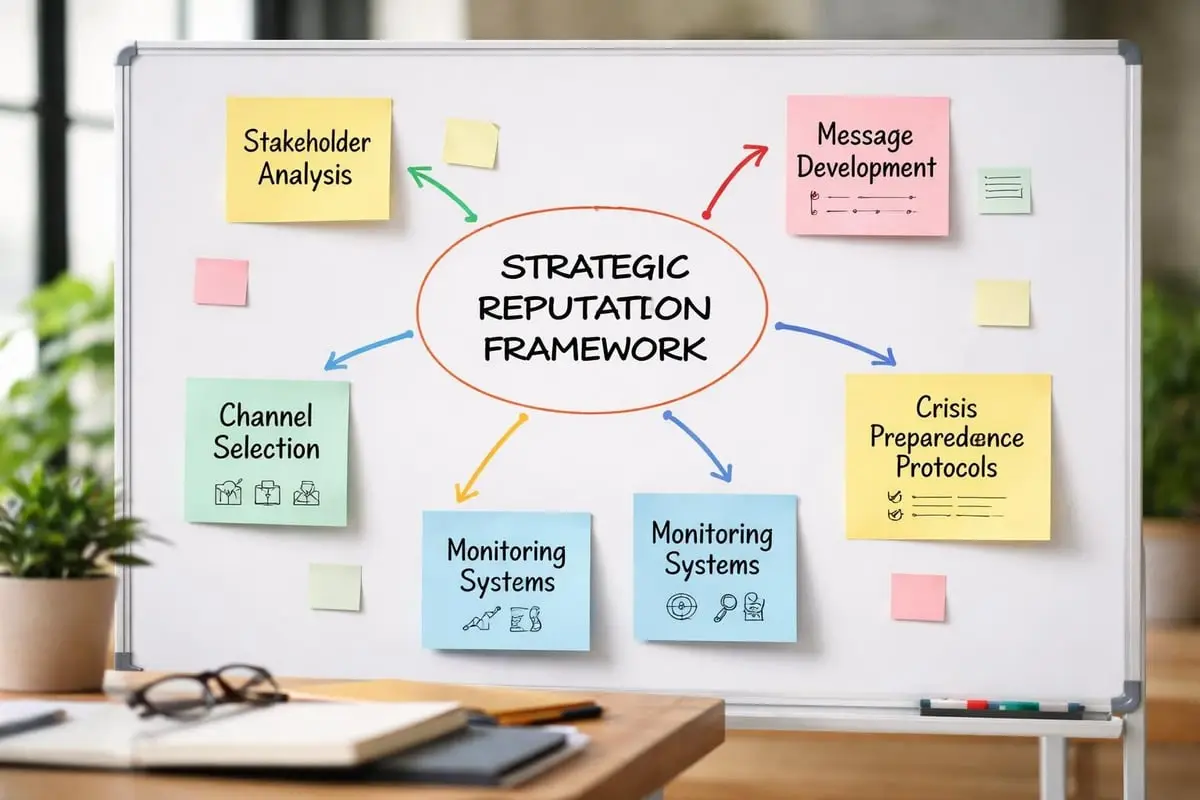
Reputation suffers when organizations communicate inconsistently across channels or contexts. Message architecture establishes core narratives, supporting proof points, and approved language that ensure every spokesperson reinforces the same reputation themes.
This framework includes positioning statements that define what the organization stands for, key messages tailored to specific stakeholder groups, and response protocols for common questions or concerns. Effective public relations strategies maintain this consistency while allowing flexibility to address emerging issues.
Digital Reputation Management Challenges
The digital transformation of media has fundamentally altered reputation dynamics, creating both opportunities and vulnerabilities that public relations professionals must navigate skillfully.
Search Engine Reputation Control
Search results shape first impressions for potential customers, investors, partners, and employees researching organizations online. Negative content appearing on the first page of search results can undermine years of reputation building, making search engine reputation management critical.
Organizations face challenges when third-party websites publish critical content that ranks prominently for brand-related searches. This content might include unfavorable reviews, critical news articles, complaint forum posts, or outdated information that no longer reflects current reality.
Strategic approaches include creating authoritative owned content that ranks well for brand terms, engaging in digital footprint cleanup to address harmful material, and leveraging technical SEO to ensure positive content achieves visibility. Some situations require working with specialists who can remove harmful search results through legal or technical takedown strategies.
Social Media Amplification Dynamics
Social platforms accelerate both reputation building and reputation damage, creating environments where single incidents can trigger viral reactions. The speed and scale of social media require real-time monitoring systems and rapid response capabilities.
Critical social media reputation factors:
- Monitoring coverage: Track mentions, sentiment, and emerging issues across platforms
- Response speed: Address concerns before narratives solidify and spread
- Authenticity: Maintain genuine voice rather than corporate-speak
- Transparency: Acknowledge mistakes and explain corrective actions
- Community building: Cultivate advocates who defend reputation organically
Social listening tools identify reputation threats early, but human judgment remains essential for interpreting context and determining appropriate responses. Not every negative mention warrants engagement, and poorly calibrated responses sometimes amplify minor issues into major controversies.
Crisis Communication and Reputation Recovery
Despite proactive reputation management efforts, crises inevitably occur. How organizations respond during critical moments often defines their reputation more powerfully than years of positive work.
Crisis Preparedness Planning
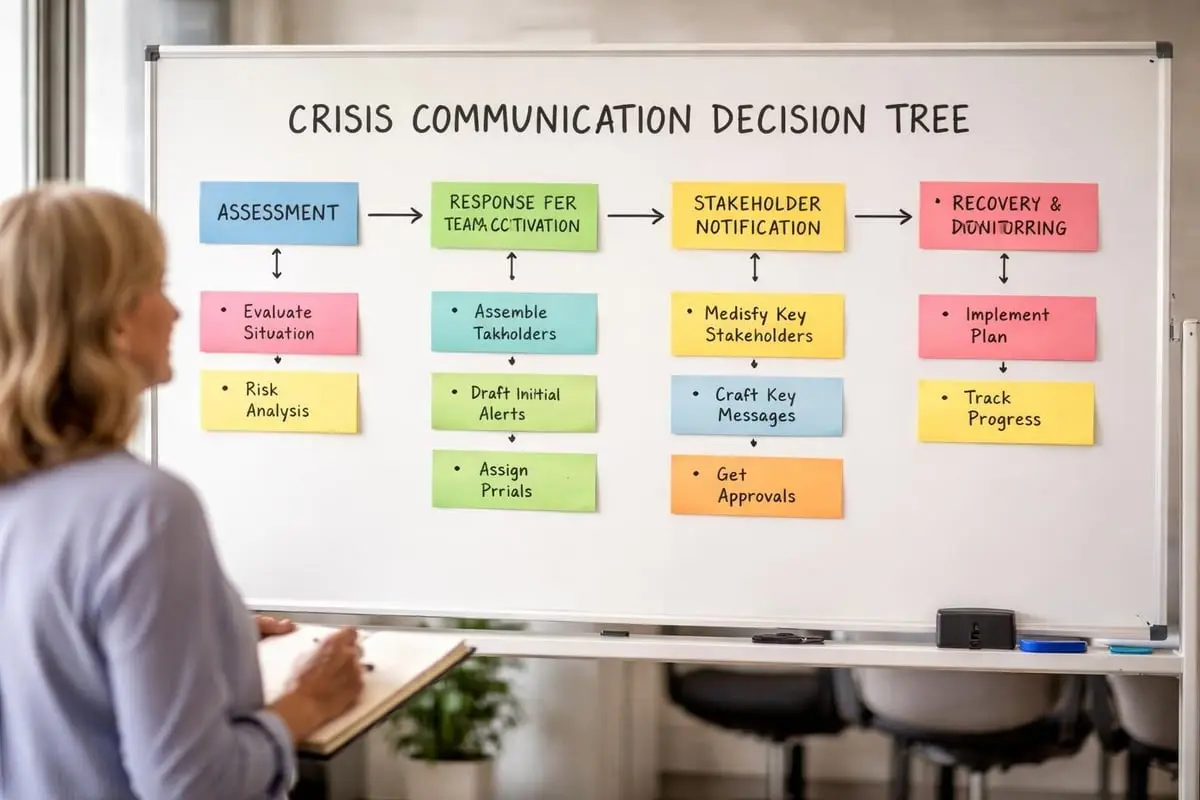
Organizations that manage crises successfully prepare extensively before problems emerge. Crisis preparedness includes identifying potential scenarios, establishing response protocols, training spokespeople, and creating communication templates that can be rapidly customized.
Scenario planning examines vulnerabilities across operations, considering product failures, leadership scandals, data breaches, workplace incidents, environmental problems, and regulatory violations. For each scenario, teams develop response frameworks that outline notification procedures, stakeholder communication sequences, and decision authorities.
Essential crisis preparation elements:
- Crisis communication team with clear roles and contact information
- Spokesperson training for media interviews and public statements
- Pre-approved messaging frameworks for common scenarios
- Monitoring systems that detect emerging issues early
- Stakeholder contact databases for rapid notification
- Documentation protocols that support accurate information sharing
Regular simulation exercises test these systems under realistic conditions, revealing gaps and building muscle memory that enables faster, more effective responses when actual crises strike.
Response Protocols and Recovery
Initial crisis responses set trajectories that determine whether situations escalate or stabilize. The role of reputation management in PR becomes most visible during these critical moments when stakeholders judge organizational character.
Effective crisis communication follows established principles: respond quickly with accurate information, demonstrate empathy for those affected, explain corrective actions clearly, and maintain consistent messaging across all channels. Silence or defensive responses typically worsen reputation damage.
Recovery phases extend beyond immediate crisis management to include reputation repair initiatives. These might involve third-party validation from respected voices, demonstration of meaningful changes to prevent recurrence, and sustained engagement with affected stakeholders to rebuild trust gradually.
Measurement and Reputation Analytics
Reputation management in public relations requires rigorous measurement to assess effectiveness, justify investments, and guide strategy refinement. Unlike awareness or reach, reputation involves qualitative perceptions that demand sophisticated assessment methods.
Reputation Metrics and Tracking
Organizations employ multiple measurement approaches to capture different reputation dimensions. Media analysis tracks volume, sentiment, and key message penetration across earned coverage. Social listening monitors online conversations, identifying themes and sentiment shifts. Stakeholder surveys measure trust, favorability, and reputation attributes directly.
| Metric Type | What It Measures | Collection Method | Frequency |
|---|---|---|---|
| Media sentiment | Tone of coverage | Content analysis | Continuous |
| Share of voice | Visibility vs. competitors | Media monitoring | Monthly |
| Net Promoter Score | Recommendation likelihood | Customer surveys | Quarterly |
| Trust index | Stakeholder confidence | Perception surveys | Annually |
| Search visibility | Online reputation presence | SEO analysis | Monthly |
Advanced organizations integrate these metrics into reputation dashboards that provide real-time visibility into reputation health. These systems enable early warning detection when metrics indicate emerging problems, allowing intervention before minor issues escalate.
Attribution and ROI Challenges
Measuring reputation management ROI presents challenges because reputation influences multiple business outcomes indirectly. Strong reputation might contribute to customer acquisition, pricing power, employee retention, and crisis resilience, but isolating specific contributions requires sophisticated analysis.
Research on reputation management adoption reveals that organizations struggle with defining consistent measurement frameworks, though they recognize reputation’s strategic importance. Leading practitioners combine quantitative metrics with qualitative assessments, tracking both perception scores and business outcomes potentially influenced by reputation.
Industry-Specific Reputation Considerations
Different sectors face unique reputation dynamics that require tailored management approaches. Understanding industry-specific reputation drivers enables more effective strategy development.
Professional Services and Personal Brands
For professional services firms, individual practitioners, and personal brands, reputation management in public relations often focuses on thought leadership, expertise demonstration, and trust building. These entities depend heavily on reputation because prospects cannot easily evaluate service quality before purchase.
Strategies emphasize content creation that demonstrates knowledge, speaking engagements that build visibility, media commentary that establishes authority, and client testimonials that provide social proof. Managing individual digital footprints becomes critical, as personal online presence directly influences professional credibility.
Privacy concerns also intensify for individuals whose personal information or content appears online without consent. Addressing these situations might require working with specialists who understand content removal services and can navigate the technical and legal processes for eliminating harmful material from search engines and websites.
Technology and Innovation Sectors
Technology companies navigate reputation challenges related to data privacy, security, ethical AI development, and rapid innovation cycles. Their stakeholders include technical communities, regulators, investors, and mass-market users with varying sophistication levels.
Reputation strategies must balance transparency about capabilities and limitations with competitive positioning. Overpromising technological capabilities damages credibility, while excessive caution might suggest competitive weakness. Technical accuracy in communications builds trust with expert audiences who can detect exaggeration or misinformation.

Healthcare and Regulated Industries
Healthcare organizations, pharmaceutical companies, and other heavily regulated entities face intense scrutiny regarding safety, efficacy, and ethical conduct. Regulatory requirements constrain communications, while stakeholder expectations demand transparency.
These organizations invest heavily in scientific credibility, regulatory compliance communications, and patient safety narratives. Reputation depends significantly on third-party validation from regulators, medical professionals, and patient advocacy groups. Crisis scenarios often involve technical complexities that require careful translation for general audiences without oversimplifying or misleading.
Integrating Reputation Management Across Functions
Reputation management in public relations cannot function in isolation. Effective programs integrate across organizational functions, ensuring every stakeholder touchpoint reinforces consistent reputation themes.
Cross-Functional Coordination
Marketing, customer service, human resources, operations, and legal functions all influence reputation through their stakeholder interactions. Public relations teams coordinate messaging and response protocols across these functions to maintain consistency.
Integration touchpoints include:
- Product launches: Coordinating marketing promotions with media relations and stakeholder communications
- Customer issues: Aligning customer service responses with public statements about service quality
- Employee matters: Ensuring internal communications support external employer brand messaging
- Legal matters: Coordinating litigation communications with broader reputation strategies
- Regulatory compliance: Translating compliance activities into reputation-building narratives
Regular cross-functional meetings establish shared understanding of reputation priorities and ensure different departments don’t inadvertently create conflicting narratives.
Leadership Communication and Reputation
Executive visibility significantly influences organizational reputation. CEOs and senior leaders serve as reputation embodiments, and their public communications carry amplified weight compared to corporate channels.
Effective leadership communication requires balancing accessibility with message discipline. Leaders must appear authentic and approachable while consistently reinforcing strategic reputation themes. Media training, speech coaching, and communication planning help executives navigate high-stakes situations effectively.
Social media presence creates both opportunities and risks for executive reputation. Active engagement can humanize leadership and build direct stakeholder relationships, but ill-considered posts can trigger crises. Many organizations establish executive social media guidelines and review processes that protect reputation while enabling authentic engagement.
Ethical Considerations and Best Practices
Reputation management effectiveness depends fundamentally on ethical practice. Short-term manipulation tactics might temporarily influence perceptions but ultimately undermine credibility when exposed.
Transparency and Authenticity Standards
The PRSA study guide on reputation management emphasizes ethical practices as foundational to maintaining organizational credibility. Ethical reputation management involves representing organizational actions accurately, acknowledging mistakes transparently, and avoiding deceptive practices.
This includes clearly identifying sponsored content, disclosing material relationships with influencers or advocates, and refraining from creating fake reviews or astroturfing campaigns. While these tactics might seem effective initially, discovery typically causes severe reputation damage that far outweighs any temporary gains.
Balancing Privacy and Transparency
Organizations must balance stakeholder demands for transparency with legitimate privacy considerations for employees, customers, and partners. Not all information should be publicly disclosed, but determining appropriate boundaries requires careful judgment.
Privacy concerns extend to how organizations handle personal data, respond to information requests, and manage confidential situations. Establishing clear policies and decision frameworks prevents inconsistent responses that damage reputation through perceived hypocrisy or unfair treatment.
For individuals facing harmful content online, managing privacy violations often requires specialized intervention. Reputation management services can help remove privacy-violating content while navigating the complex technical and legal landscape of internet content removal.
Technology and Tools for Reputation Management
Modern reputation management in public relations leverages sophisticated technology platforms that enable monitoring, analysis, and response at scale.
Monitoring and Listening Systems
Comprehensive monitoring tracks traditional media, social platforms, review sites, forums, blogs, and search results for reputation-relevant content. Advanced systems employ natural language processing to assess sentiment, identify themes, and detect emerging issues automatically.
Key monitoring capabilities include:
- Real-time alerts for high-priority mentions or sentiment changes
- Historical trending to identify reputation trajectory
- Competitive benchmarking against peer organizations
- Influencer identification to understand who shapes perceptions
- Geographic and demographic segmentation for targeted insights
These systems generate enormous data volumes, requiring skilled analysts who can distinguish meaningful signals from noise and translate insights into actionable recommendations.
Response Management Platforms
Response management tools help teams coordinate communications across channels, maintain message consistency, and track engagement effectiveness. These platforms integrate with monitoring systems to create seamless workflows from issue detection through response deployment.
Centralized platforms prevent duplicate responses, ensure appropriate approval processes, and maintain historical records that inform future strategy. They also enable A/B testing of messaging approaches and performance tracking across different channels and stakeholder segments.
Future Trends Shaping Reputation Management
The reputation management landscape continues evolving as technology, media, and stakeholder expectations shift. Understanding emerging trends enables proactive strategy adaptation.
Artificial Intelligence and Deepfakes
AI-generated content, including deepfakes and synthetic media, creates new reputation vulnerabilities. Malicious actors can create convincing fake videos, audio recordings, or documents that appear to show executives making controversial statements or organizations engaging in unethical practices.
Defending against these threats requires authentication systems, rapid response capabilities, and proactive stakeholder education about synthetic media risks. Organizations may need to maintain verified content repositories that enable quick verification when questioned about suspicious material.
Stakeholder Activism and Purpose-Driven Reputation
Stakeholders increasingly expect organizations to take positions on social, environmental, and political issues. Remaining neutral often proves impossible, as silence gets interpreted as implicit positioning.
This trend complicates reputation management in public relations because stances that resonate with some stakeholders inevitably alienate others. Organizations must carefully consider their authentic values, stakeholder composition, and risk tolerance when deciding which issues warrant public positioning.
Decentralization and Platform Fragmentation
Media consumption continues fragmenting across platforms, making comprehensive monitoring and consistent messaging more challenging. Stakeholders increasingly inhabit distinct information ecosystems with limited overlap, requiring tailored approaches rather than broadcast strategies.
Emerging platforms like decentralized social networks and blockchain-based content systems may further complicate reputation management by creating spaces beyond traditional monitoring reach or content removal processes.
Building Reputation Resilience
Long-term reputation success requires building resilience that enables organizations to withstand inevitable challenges while maintaining stakeholder trust.
Continuous Improvement Culture
Organizations with strong reputations embed feedback loops that continuously improve performance based on stakeholder input. They view reputation monitoring not merely as defensive surveillance but as valuable intelligence that guides operational improvements.
This approach transforms reputation management from communications function into organizational learning system. Customer complaints inform product development, employee feedback shapes culture initiatives, and investor concerns drive governance enhancements.
Crisis Inoculation Through Transparency
Organizations that communicate transparently about challenges, limitations, and mistakes build credibility that protects them during crises. Stakeholders who view organizations as generally trustworthy interpret ambiguous situations more favorably and extend benefit of the doubt.
This “reputational capital” accumulates slowly through consistent ethical behavior and transparent communication but depletes rapidly when organizations violate stakeholder trust. Maintaining this capital requires ongoing investment in reputation monitoring and stakeholder engagement rather than episodic crisis management.
Reputation management in public relations demands strategic integration of proactive relationship building, continuous monitoring, rapid crisis response, and ethical stakeholder engagement across increasingly complex digital and traditional media environments. Organizations that invest in comprehensive reputation strategies, supported by robust measurement systems and cross-functional coordination, build resilience that protects them during inevitable challenges while creating competitive advantages that purely operational improvements cannot replicate. When harmful content threatens hard-earned reputation, Content Removal provides specialized expertise in removing defamatory articles, privacy violations, and damaging search results through direct takedown strategies, helping individuals and organizations protect their most valuable asset in the digital age.
Frequently asked questions
What is the difference between reputation management and marketing in PR?
Marketing focuses on promotion. Reputation management within PR emphasizes credibility, transparency and long-term relationship maintenance across every stakeholder touchpoint, aligning perception with the organization’s actual conduct rather than selling a product.
How do PR teams measure reputation?
They combine media sentiment analysis, share of voice against competitors, Net Promoter Score from customer surveys, an annual trust index from perception surveys and monthly search visibility analysis. Attribution stays difficult because reputation influences acquisition, pricing power and retention indirectly, so practitioners pair perception scores with business outcomes.
Can a PR firm remove negative search results?
Typically not by itself. PR can create authoritative owned content that ranks for brand terms, but critical articles, complaint forum posts and privacy-violating pages that rank prominently often need a specialist using legal or technical takedown routes to remove or de-index them.