
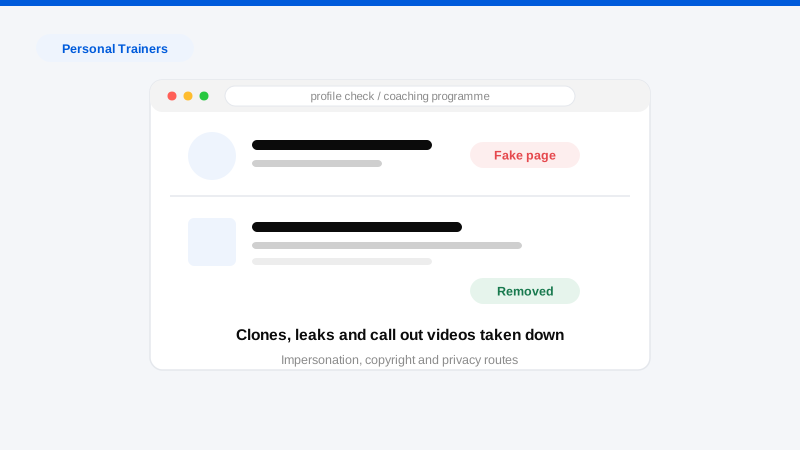
Reputation management for personal trainers is the work of removing the content that stands between a trainer’s name and a sale: fake pages selling their programmes, leaked coaching material, client dispute posts, hostile reviews and call-out videos. For an online coach the name is the entire funnel, so anything attached to it converts or costs directly.
A personal trainer with an online client base occupies an unusual position. The business has the exposure of a consumer brand, since anyone can find you, buy from you and post about you, but none of the infrastructure. There is no legal department, no comms team and no agency on retainer. There is you, a phone, and a search results page that decides whether the person who found your Instagram this morning becomes a client this afternoon.
This guide covers what actually goes wrong for trainers and online coaches, what each type of content responds to, and how a removal engagement is structured when the person paying is also the person doing the coaching.
What is reputation management for personal trainers?
Reputation management for a personal trainer is removal-first protection of a named individual whose income depends on strangers trusting them enough to pay in advance. It is closer to protecting a public figure than to protecting a business, because there is no separation between the person and the offer.
Three things make the trainer’s situation specific. Your marketing assets are also the attacker’s assets: transformation photos, programme screenshots and video demos are exactly what scammers need to run a convincing fake. Your buyers are impulsive and mobile, so a single hostile result on the first screen kills a sale that would have closed in a DM. And your disputes are personal. When a client relationship goes wrong, the post that follows names you, not a company.
The objective is straightforward. Remove what breaks a law or a platform policy, reduce the search visibility of what stands, and keep watching, because the same problems return in waves after every launch.
What content damages a personal trainer?
Fake pages and cloned accounts selling your programmes. Someone copies your profile photo, your bio and your before and after images, sets up a page under a near-identical handle, and takes payments for a programme they will never deliver. Your clients blame you for the missing money, and they are not wrong to be confused. Impersonation breaches every major platform policy, which makes these among the more reachable removals when the filing is built properly. See removing a fake Facebook page.
Leaked programmes and coaching content. Your PDFs, video library and check-in templates end up in Telegram channels, course dump sites and cloud drive links. Every copy is a client who did not pay, and the leaks compound because dump sites index each other.
Transformation photos reused by scammers. Your client results appear in someone else’s ad, usually a supplement seller or a fake coaching offer. This is a double problem. You lose control of images you paid to produce, and your clients see their own bodies used to sell something they have never heard of.
Client dispute posts. A refund argument, a programme that did not suit someone, a coaching relationship that ended badly. These land in Facebook groups, on Reddit, in Instagram comments and on review sites, and they are written in the language of warning rather than criticism.
Trustpilot and review site pile-ons. Trainers with a paid app or a subscription usually pick up a Trustpilot profile they never asked for, and it fills with reviews from people who churned, plus a share from people who were never customers at all. Non-customer reviews breach Trustpilot’s own rules, which is the strongest ground you have.
YouTube call-out videos. The fitness call-out format is its own genre. Someone reviews your programme, calls it a scam, uses your footage throughout, and the video ranks for your name within days. The clips then travel to Shorts and TikTok. Our page on removing a YouTube exposé video covers what these respond to.
Which route reaches which problem?
Every item is different, and the honest answer for a cloned account is not the honest answer for a client’s post about a refund. What is worth knowing before you spend anything is that these categories are not equally hard. Impersonation is banned outright by every major platform, so a fake page selling your programme is among the more reachable problems in this whole business. Material you created and paid for is yours, which matters a great deal when someone else is distributing it or using it in an advertisement. A review from somebody who was never your client breaks the review site’s own rules. Those are strong positions, and most trainers do not realise they are holding them.
The weaker positions matter just as much, because knowing them saves you money. Honest opinion from a real customer usually stands. Commentary on a product somebody actually bought is normally lawful. A single negative review that reflects a real experience is rarely worth attacking, and attacking it is how it becomes the story instead of a line nobody read.
Which of those your situation is, item by item, is what the Exposure Scan establishes. Timelines depend on the platform, the volume and the evidence, and they come to you in writing after the scan. Platforms decide their own cases, so nothing here is a commitment and we do not promise outcomes.
Get a Free, Confidential Exposure Scan
How does the work run for a solo coach?
You send whatever you have. Screenshots and handles are fine if you do not have URLs, and if you have not gathered anything at all, the search terms are enough for us to start. Nobody expects a trainer to arrive with a documented file.
Then we map your name and your programme name across search, social, video, review sites, leak channels and the answers AI assistants are giving about you. You get the findings on a 15-minute call, and the written report is yours to keep whether or not you go ahead. It tells you what exists, what is genuinely reachable, what will only ever be a visibility problem, and what is better left alone.
From there we work every ground that applies, at the source and in the search results, at the same time rather than one thing at a time. The items causing active financial harm to your clients come first, because somebody is being defrauded while everyone deliberates. Results are verified, evidenced to you and monitored afterwards, and the monitoring is not an upsell in this sector. Fake accounts come back under new handles and leaked files reappear on new hosts, so the point is that the next wave is caught when it appears rather than when a client asks you about it.
Who normally makes first contact?
Usually the trainer, often within an hour of finding the problem. Where a coach is represented, it is the manager or agency who calls, and we work behind them without contacting the client directly. That arrangement is described in more detail on our page for talent managers and influencer agencies, and it is the same model whether the roster is one person or forty.
Confidentiality is standard, we never disclose client names, and we work alongside a lawyer or a PR adviser where one is already involved. Nothing about an engagement is made public.
Why does replying to it not work?
Public replies keep hostile content alive, and they hand it an update. A well-argued response under a one star review gives that review fresh visibility and a longer thread for a prospective client to read. A comment under a call-out video counts as engagement, and the platform treats engagement as a reason to show the video to more people.
The second failure is scale. One takedown filed by hand against an operator who runs dozens of fake accounts is maintenance, not protection. The people cloning fitness coaches do it as a business, in batches, and they relist the moment a page disappears. Effective work maps the operator rather than the single page.
The third is that content marketing does not compete for the query that matters. Nobody searches “is [your name] a good coach” and reads your blog. They search your name plus one word they were already given, and they read whatever ranks for that.
Does this connect to the brand side?
Yes, and usually the same engagement covers both. If you have an app, a supplement line or a programme sold under its own name, the brand’s problems and yours feed each other. That overlap is covered in reputation management for fitness brands, and where a coach has grown into a founder with press coverage attached to their name, the work looks like reputation management for wellness founders.
Frequently asked questions
Someone made a fake page and is taking money from my followers. How fast can it come down?
Impersonation is one of the faster categories, because every major platform bans it outright and the evidence is simple: your genuine account, your original images, and the copied profile side by side. The important part is what happens afterwards. These operators relist under a new handle within days, so a single takedown on its own solves very little, and the work is aimed at the operator rather than the one page.
My programme is being given away in a Telegram channel. Is there anything to do about it?
Yes. Your videos, PDFs and workbooks are your property, and that is a much stronger position than most coaches think they are in. Volume is the real issue rather than difficulty, because dump sites copy each other. The aim is to make a leak unprofitable to maintain rather than to win one round of it.
A client posted about a refund dispute and it is showing up when people search me. What are my options?
It depends on what the post says. An honest account of their own experience usually stands, and we will tell you that rather than file something that will fail and irritate the poster. Where it contains false statements of fact, private information, confidential material from your coaching agreement, or was posted under a false identity, there are routes. Where the post stands, the work shifts to reducing its visibility for searches of your name.
Can Trustpilot reviews from people who were never my clients be removed?
Those are the strongest cases on that platform, because reviews from non-customers breach Trustpilot’s own rules directly. The work is evidentiary rather than argumentative, which is good news: it turns on records rather than on how strongly you feel. Blanket removal of genuine reviews is not something anyone can honestly offer, and we will say so before you spend anything.
A YouTuber made a video calling my programme a scam. What can be done?
We look at the video in parts rather than as a whole, because a call-out video is rarely one thing. Some of it is your material. Some of it is stated as fact and is either true or it is not. Some of it is opinion, and opinion generally stands. The reuploads and the short-form clips are part of the same job, because those usually reach more people than the original ever did.
What does this cost for one person rather than a company?
You get a written quote after the free Exposure Scan, once we have seen what is actually there. Nothing is quoted before that, because one fake page and a two year leak problem across a dozen hosts are different pieces of work. The structure is explained on the 15-minute call and confirmed in writing afterwards.
If your name is currently returning something that costs you clients, the useful first step is a clear picture of what exists and which parts of it are actually reachable. Book a free, confidential Exposure Scan. A specialist walks you through the findings on a 15-minute call, the report is yours to keep either way, and our full process is set out before anything is filed.