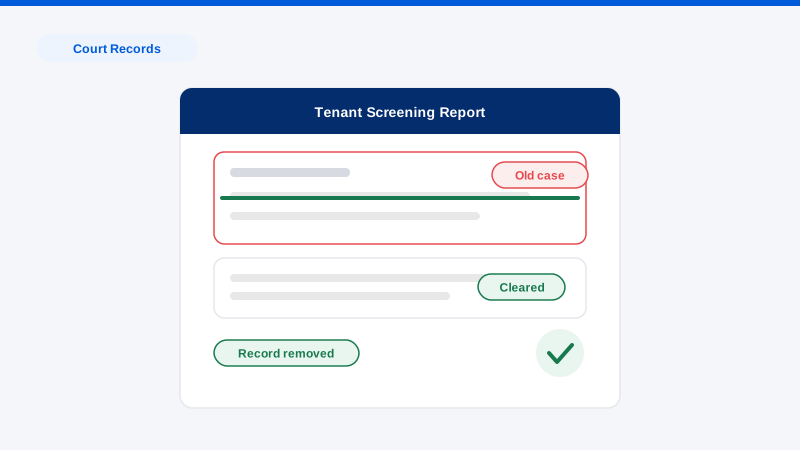
An old lawsuit can affect your ability to rent an apartment, but usually not the way people fear. Formal tenant-screening reports are governed by the Fair Credit Reporting Act, which limits how long most civil records can be reported (generally seven years for civil suits and judgments). The bigger risk in practice is informal screening: a landlord or property manager typing your name into Google and finding the case on a court-record aggregator like UniCourt, Trellis, or Justia, where nothing ever expires. This guide explains what each screening path actually reveals, and what you can do about records that keep surfacing.
What do landlords actually see when they screen you?
There are two very different screening channels, and they follow different rules.
Formal tenant-screening reports. Services like TransUnion SmartMove, RentPrep, and AppFolio Screening pull credit data, eviction records, and sometimes civil-court records. Because these are consumer reports under the FCRA:
- Civil suits and judgments generally cannot be reported after seven years.
- Eviction records are the exception landlords care most about: an old eviction filing, even one you won or that was dismissed, can appear within that window and is heavily weighted.
- You have the right to know if you were denied because of a report, to get a free copy, and to dispute inaccurate or obsolete entries directly with the screening company, which must investigate within 30 days.
Informal Google screening. Smaller landlords: who own the majority of U.S. rental units, often skip paid screening and simply search your name. Here the FCRA’s time limits do not apply. Court-record aggregators republish dockets indefinitely, and a 15-year-old dispute can sit on page one of your results forever. This is where most of the real damage happens, and it’s the problem our court record removal practice exists to solve.
What kind of lawsuit matters. Landlords weight records differently: prior landlord-tenant disputes and evictions are near-disqualifying for many; a business contract dispute or a case you filed as plaintiff usually raises questions rather than rejections; dismissed cases and settlements read very differently once explained. The record rarely tells the favorable part of the story. That’s your job, or your removal strategy’s.
Step-by-step: reducing the impact of an old lawsuit
- Search yourself the way a landlord would. Google your name, name plus city, and name plus “lawsuit.” Note every aggregator, news article, and docket page that appears in the first three pages. This map determines everything that follows.
- Pull your tenant-screening file. Request your file from TransUnion SmartMove and other major screeners (they must provide it free once a year). Check for obsolete records past the seven-year window and for cases that aren’t yours, mixed files from name matches are common.
- Dispute obsolete or inaccurate entries. File FCRA disputes in writing with each screening company reporting a stale or wrong record. Cite the specific entry and the reporting-limit violation. They have 30 days to verify or delete.
- Address the court record at the source. If the case qualifies, pursue expungement or record sealing in the court that heard it, eligibility varies by state and case type. A sealed record gives aggregators no lawful source and gives you a powerful removal lever, as we detail in our guide to removing public court records from Google.
- Request removal from aggregators. Many court-data sites have opt-out or removal request processes, especially for dismissed cases, sealed records, and records containing personal identifiers. Success varies widely by site; persistence and correctly framed requests matter.
- De-index what won’t come down. Where a record contains personal data, Google’s removal policies and its “Results about you” tool can remove the result from searches for your name even if the page stays up. Suppression through reputation management fills the remaining gap.
- Prepare a disclosure narrative. For formal applications, a short, factual explanation with documentation, especially for dismissed or settled cases, often neutralizes a record a landlord was going to find anyway.
Get a Free, Confidential Exposure Scan
Honest timelines and expectations
FCRA disputes resolve within 30 days and reliably remove obsolete or inaccurate entries from screening reports. Court sealing or expungement takes two to six months depending on the state and docket. Aggregator removals range from days (sites with clean opt-out flows) to never (sites that refuse everything short of a court order). De-indexing requests to Google typically resolve in one to three weeks when the content qualifies under its policies.
What no one can promise: erasing a public court record that a court declines to seal, or forcing every aggregator to comply. A realistic outcome for most clients is a screening file that’s clean and accurate, the worst aggregator pages removed or de-indexed, and search results where the lawsuit no longer defines page one. That combination is what actually changes rental outcomes. Our work on removing personal data and full digital footprint cleanup extends the same approach beyond the lawsuit itself.
Frequently asked questions
How long does a lawsuit stay on a tenant-screening report?
Under the FCRA, civil suits and judgments generally can’t be reported more than seven years after filing. Eviction records follow the same window. If a screener reports an older record, that’s a violation you can dispute, and disputes over obsolete records succeed routinely.
Can a landlord reject me for a lawsuit they found on Google?
In most states, yes, informal searches aren’t consumer reports, so FCRA protections don’t apply. A few jurisdictions restrict using certain records in housing decisions, but practically, the only reliable fix is making the record harder to find: source removal, de-indexing, and suppression.
The lawsuit was dismissed. Why does it still show up?
Dockets record filings, not vindication, aggregators republish the case caption regardless of outcome. Dismissed cases are the strongest candidates for sealing, aggregator removal requests, and de-indexing, precisely because the record is misleading without the outcome.
Do eviction filings hurt even if I won the case?
They can. Screening products flag the existence of an eviction filing, and many landlords never read past the flag. Dispute the entry with the screening company if the outcome isn’t reported accurately, and pursue sealing where your state allows it, several states now seal dismissed eviction cases automatically.
Should I just explain the lawsuit to landlords upfront?
If a formal screening will surface it anyway, a brief factual explanation with documents usually beats letting the record speak alone. If it only exists on aggregators and search results, removal is often achievable. Check what’s actually visible before volunteering anything. See our guide to handling a negative search result in a background check for the employment-side version of the same decision.
If an old case keeps surfacing when landlords search your name, find out exactly what’s removable before your next application. Request a free, confidential Exposure Scan. We’ll map every docket, aggregator, and search result tied to your name and show you the realistic removal path through our process.