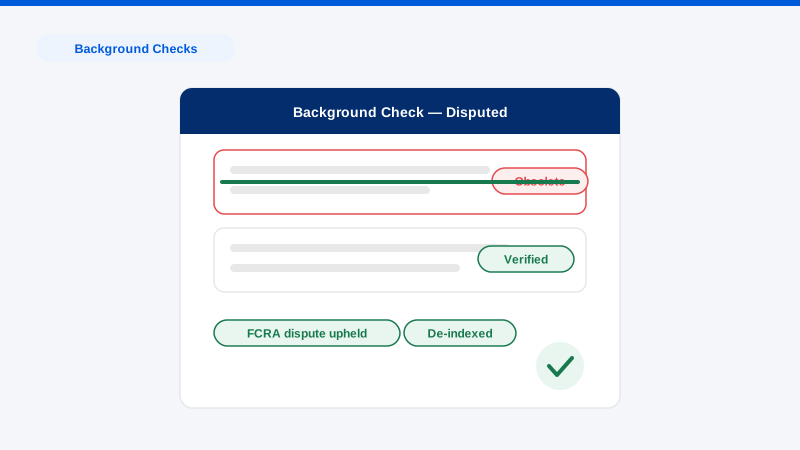
A negative search result in a background check is handled differently depending on which “background check” found it. If a formal screening company reported it, federal law gives you dispute rights with hard deadlines: the FCRA requires accuracy, limits most negative records to seven years, and obligates the screener to investigate disputes within 30 days. If a hiring manager found it by Googling you, which happens far more often and with no legal guardrails, the fix is removing or suppressing the content itself. Most people fight the wrong battle. This guide shows you which one you’re in, and the playbook for each.
What shows up in a background check versus a Google search?
Formal background checks (FCRA-regulated). Companies like Checkr, Sterling, and HireRight compile criminal records, civil judgments, credit history (where permitted), employment and education verification, and driving records. The FCRA constrains them: most negative information can’t be reported after seven years (criminal convictions are exempt from the limit under federal law, though several states cap them too), records must be accurate and current, you must consent to the check, and an employer taking adverse action must give you the report and a chance to respond before finalizing, the “pre-adverse action” window most people waste.
Informal Google screening. No consent, no time limits, no accuracy requirement, no notice. Surveys of hiring practices consistently find a large majority of employers search candidates online, and what they find (news articles, court-record aggregators, mugshot sites, social media, forum threads) influences decisions no one documents. A dismissed charge from twelve years ago that could never lawfully appear in a screening report can sit at position one of your Google results indefinitely.
Why the distinction decides your strategy. FCRA disputes are fast, free, and legally backed, but only bind screening companies. Google results require content-level work: source removal, de-indexing, or suppression. Most damaging situations involve both, and the sequencing matters: clean the regulated report first (it’s quick and certain), then address the open web.
The response playbook, step by step
- Get the actual report. If an employer signals concern, invoke your right to a copy. During pre-adverse action you typically have five business days to respond. Use them. Also pull your own file from major screeners in advance of any job search; you’re entitled to it.
- Dispute everything inaccurate or obsolete. File written disputes with the screening company for: records past the reporting window, records that aren’t yours (name-match errors plague common names), dismissed charges reported as pending, and missing dispositions. Screeners must reinvestigate within 30 days and delete what they can’t verify. These disputes succeed constantly because screening databases are stale by design.
- Map your Google exposure separately. Search your name the way a recruiter would, with your city, employer, and profession. Inventory every negative result: what it is, where it’s hosted, and whether the underlying record still exists.
- Remove records at the source where possible. Expungement or sealing eliminates the lawful source for criminal records; our court record removal and arrest record removal practices cover the aggregator cleanup that must follow, because sealed records don’t self-delete from third-party sites.
- De-index qualifying content. Google’s policies remove results exposing personal information, mugshots on exploitative pay-for-removal sites, and content violating other removal policies, delisting the result from your name searches even when the page persists.
- Suppress what can’t be removed. Truthful news coverage and stubborn records respond to suppression: authoritative profiles and content that outrank the negative for your name. Paired with a full digital footprint cleanup, this is what makes informal screening survivable.
- Prepare your narrative for what remains. If something will be found, a brief, factual, documented explanation delivered during the pre-adverse-action window, or proactively for the Google-visible item, beats hoping it goes unnoticed.
Get a Free, Confidential Exposure Scan
Timelines and honest expectations
FCRA disputes: resolved within 30 days, with obsolete and inaccurate entries removed reliably. Expungement: two to six months, state-dependent. Aggregator and mugshot-site removals: days to eight weeks per site, varying with each site’s posture. Google policy de-indexing: one to three weeks for qualifying content. Suppression: three to nine months for durable page-one change.
What’s not achievable: forcing screeners to omit accurate, reportable convictions; erasing truthful journalism; or any “guaranteed clean background check.” A realistic, regularly achieved outcome is a screening file that’s accurate and time-limited, source records sealed where eligible, aggregators cleared, and a first page of Google that reflects who you are now. For rental-specific versions of this problem, our guide on whether an old lawsuit affects renting an apartment covers the tenant-screening variant.
Frequently asked questions
Can an employer reject me for something they found on Google instead of the official check?
In most states, yes, informal searches sit outside the FCRA entirely, and the employer has no duty to tell you what they found. That’s why content-level removal and suppression matter as much as the formal dispute process: you can’t invoke rights against a search result, only make it disappear or outrank it.
The background check shows a charge that was dismissed. What do I do?
Dispute it with the screening company immediately, reporting an arrest or charge without its disposition is an accuracy failure, and dismissed matters older than seven years shouldn’t appear at all. Then pursue sealing (many states seal dismissals easily or automatically) and clean the aggregators, so the next screener and the next Google search come up empty.
How do I know what a background check will say before an employer sees it?
Order your own reports from the major screeners. You have a statutory right to your file, free at least annually. Pair that with a disciplined Google audit of your name. Doing both before a job search converts surprises into fixable items on your timeline, not the employer’s.
Criminal convictions have no federal time limit. Is anything possible?
Often, yes. State law may cap conviction reporting or bar its use, expungement may be available (eligibility has expanded dramatically in recent years), and the web copies (aggregators, mugshot sites, old news items) are frequently removable or de-indexable even when the conviction itself is reportable. The record and its visibility are separate problems.
What’s the difference between what you do and what a lawyer does?
Complementary work. A lawyer handles expungement petitions and FCRA litigation; we handle the internet: the aggregators, mugshot sites, search results, and suppression that legal process doesn’t reach. Sealed-then-scrubbed is the complete outcome, and we regularly work alongside counsel to deliver it.
If a background check, formal or Googled, is costing you opportunities, start by finding out exactly what’s visible and what’s removable. Request a free, confidential Exposure Scan and we’ll audit both layers and map the fix through our process.