

Getting a mugshot off Google means removing it from the websites that publish it first, because Google only indexes what other sites host. Audit every URL, identify the primary source such as a sheriff’s site or news blotter, then send takedown notices citing state mugshot laws and expungement orders. Once the source is gone, use Google’s Remove Outdated Content tool.
Key facts
- Expungement clears the court record but does not notify or bind private mugshot websites.
- Florida, Texas and Georgia have laws making it illegal to charge a fee for mugshot removal.
- If the source remains live, scraper sites will keep republishing the image after each removal.
- Google’s Remove Outdated Content tool rejects requests filed before the image is verifiably gone.
Where ContentRemoval.com comes in. ContentRemoval.com handles mugshot removal across the whole syndication chain, from the sheriff’s page and news blotter to the offshore scraper networks that ignore ordinary requests, then clears the search results and watches for republication. Executives, physicians and their attorneys usually make contact ahead of a funding round, board vote or licensing review. A free, confidential 15-minute Exposure Scan maps every copy and which are removable, and the report is yours to keep. Get a Free, Confidential Exposure Scan or read how our mugshot removal work is done.
The only way to permanently get mugshots off Google is to attack the problem at its source. A common misconception is that Google hosts these damaging images; it does not. Google’s search engine only indexes and displays what other websites publish.
Therefore, the removal of the mugshot from the original website is the prerequisite for any action with Google. Only after the source content is eliminated can you compel Google to de-index a link that now leads to a non-existent page.
The High Stakes of a Lingering Digital Record

For an executive, board member, or any individual in a position of public trust, an arrest record surfacing online is not a personal inconvenience. It is a direct threat to professional standing, corporate reputation, and shareholder value.
A single search result can disrupt a funding round, provide leverage to competitors in a negotiation, or trigger a crisis of confidence with a board of directors. This is not a matter of personal embarrassment; it is a digital liability with material financial consequences.
This guide provides a precise, tactical framework for neutralizing this specific risk. It will deconstruct how search engines amplify a single, often misleading, past event, making it the defining element of your public profile.
The Problem of Digital Permanence
The core challenge is the internet’s indelible memory. While a case may be dismissed or a record legally expunged, the web operates under a different set of rules. Mugshot websites and data brokers have constructed a profitable business model around the publication of public records.
These entities have no commercial incentive to voluntarily remove your information. Their business model is predicated on its continued availability.
A critical misconception is that legal expungement automatically purges the internet of the related record. It does not. The burden of locating and compelling the removal of every online copy of that mugshot falls entirely on the affected individual.
Our methodology is one of surgical precision. The objective is not merely to remove an image but to reclaim your digital narrative, ensuring it reflects your professional achievements rather than a single past event. This requires a methodical, multi-front strategy against every site hosting the damaging content. The following sections provide the operational playbook.
Mapping the Damage: The Initial Digital Audit
Before any removal action can be initiated, a comprehensive audit is required to identify every online instance of the mugshot. This is not a cursory Google search; it is a deep forensic investigation into your digital footprint to ascertain the full scope of the problem. You cannot neutralize a threat you cannot fully see.
Begin with methodical searches using your full name, any known aliases, middle names, and common misspellings. This must be conducted within a private or incognito browser session to prevent personalized search results from skewing the data. The objective is to see the raw, unbiased public view. Maintain a precise log of every URL where the image appears, regardless of the site’s apparent legitimacy.
Identify the Source to Stop Proliferation
With a complete list of URLs, the next critical step is to differentiate between the primary source and the derivative scraper sites. The primary source is the initial point of publication, often a county sheriff’s office or a local news outlet’s police blotter.
All other instances are typically copies. Scraper sites are automated platforms that crawl the internet, harvest arrest data from primary sources, and republish it, frequently across extensive networks.
The most common strategic error is targeting scraper sites while the original source remains active. This is an inefficient and ultimately futile exercise. While one copy may be removed, another scraper will inevitably find the live source and republish the data, perpetuating the cycle.
The entire campaign must be architected to neutralize the primary source first. Once the root of the problem is eliminated, addressing the syndicated copies becomes a manageable, logistical task.
Categorize and Analyze Each Target
Not all websites are created equal; each requires a tailored removal strategy. Your audit must categorize each URL to inform the subsequent tactical approach.
A precise categorization of each website is essential. Government and law enforcement sites are typically the original publishers and, while authoritative, are not commercially motivated. They often have established, formal procedures for removal requests, particularly when a case has been dismissed or expunged. Legitimate news media organizations are protected by First Amendment principles and are resistant to content removal. A successful request will likely require a compelling legal argument, such as a material factual inaccuracy. Predatory mugshot sites are commercial entities whose business model is predicated on extorting fees for removal. State-level legislation often provides powerful legal leverage against these operators. Finally, data broker networks are large, automated databases of public records that are not malicious, but indifferent. Removal requires navigating their specific, often deliberately complex, opt-out procedures.
This audit serves as your strategic battle plan. It identifies the high-priority targets and dictates the appropriate tools and legal arguments for each. This is not a singular event; new scraper sites can emerge at any time, which is why ongoing reputation monitoring is essential to ensure a permanent resolution.
Executing Source Removal: A Direct Action Playbook
Once the digital audit is complete, the mission transitions from intelligence gathering to direct action. This phase requires a systematic, professional campaign to compel removal from the websites hosting the image. Success is a function of precision, persistence, and the correct application of leverage.
Every action must be based on the intelligence gathered. Uncovering, categorizing, and prioritizing each source is the foundation upon which the entire removal campaign is built.
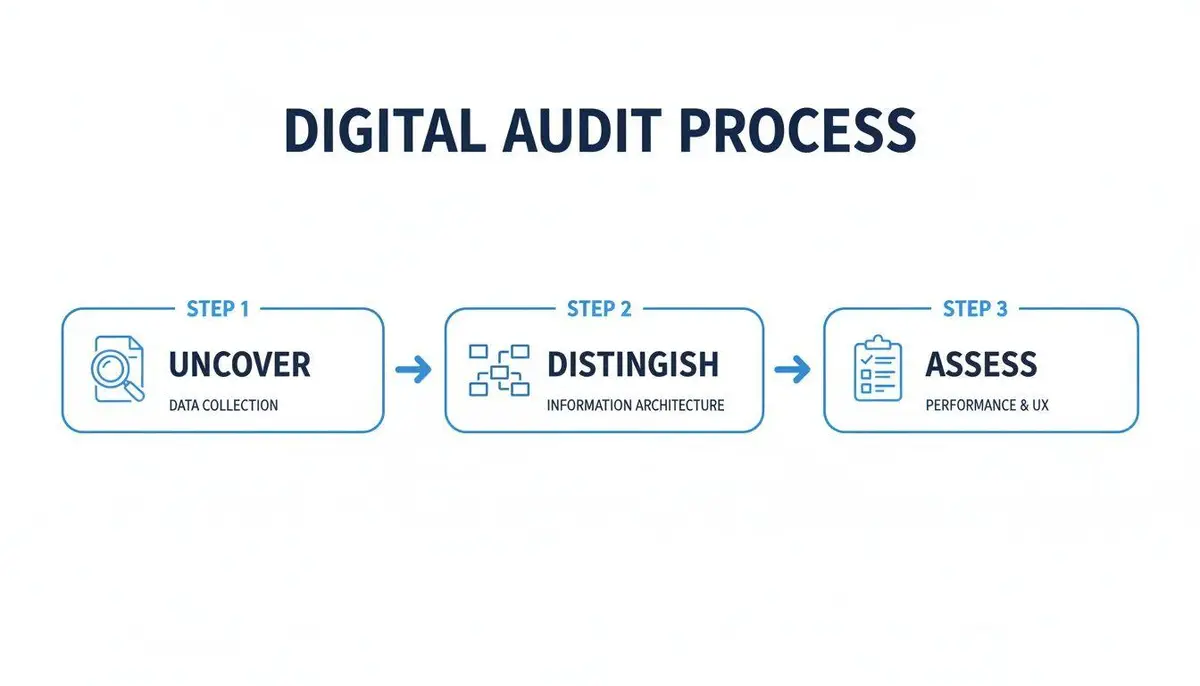
A structured audit ensures that your campaign is built on solid intelligence, enabling you to neutralize the most damaging sources with maximum efficiency.
State-Specific Mugshot Laws as Your Primary Weapon
Your strongest leverage lies in state-level statutes enacted to combat the predatory business models of mugshot websites. These laws are a powerful tool in this process.
Jurisdictions such as Florida, Texas, and Georgia have passed laws that make it illegal for website operators to charge a fee for removal, particularly if the underlying case was dismissed or the record has been expunged.
Your formal takedown notice must lead with this legal authority. Citing the specific statute transforms the communication from a simple request into a notification of legal non-compliance. This legal pressure is often the only catalyst for action, as the operators’ business model depends on their targets’ ignorance of these rights.
Drafting a Takedown Notice with Legal Precision
Your communication must be professional, dispassionate, and fact-based. An emotional or vaguely worded email is easily discarded. A formal, well-structured notice functions as a legal document that cannot be summarily dismissed.
An effective notice must contain these key components: a direct and unambiguous subject line, such as “Formal Takedown Notice Under [State Statute Name/Number]”; the exact URLs of the infringing content to eliminate any ambiguity; clear evidence of your legal grounds, including attached expungement orders or direct citation of the relevant state law; and a firm but reasonable deadline for compliance, such as 10 business days, to convey intent and a structured escalation plan.
The objective is to make it more costly and legally risky for the site operator to retain your image than to comply with the removal demand. A notice grounded in law creates a liability they cannot afford to ignore.
For a more detailed protocol, our firm has developed a professional escalation guide for removing personal pictures.
Escalation When Initial Contact Fails
It is standard for many of these sites to ignore initial outreach. This is a deliberate tactic. A pre-planned escalation strategy is therefore essential. The next step is to target the website’s technical infrastructure providers: the hosting company and the domain registrar. This information is typically available via a WHOIS lookup.
These service providers have terms of use that prohibit illegal activities and harassment on their platforms. You will provide them with a copy of your unanswered takedown notice and a clear explanation of how their client is violating both the law and the provider’s own policies. This action places the host and registrar on notice, creating top-down pressure on the offending site operator.
Takedown Method Effectiveness Comparison
For those considering a self-directed approach, it is critical to understand the probable outcomes. The process is a war of attrition where expertise and persistence determine success. Professional services leverage established relationships and refined escalation protocols to dramatically increase the probability of a successful outcome.
| Method | Typical Success Rate | Average Timeline | Key Challenge |
|---|---|---|---|
| Individual DIY Outreach | ~30% | 3-6+ Months | Unresponsive site owners and lack of leverage. |
| Contacting Hosting Providers | ~50% | 1-3 Months | Proving a clear terms of service violation. |
| State Law Legal Notices | ~75% | 30-90 Days | Requires precise legal language and follow-up. |
| Professional Removal Service | 95%+ | 7-30 Days | Secures a certain outcome with speed and efficiency. |
The data indicates that while individual efforts can occasionally succeed, they represent a lengthy and frustrating process with a low probability of comprehensive resolution.
The Reality of Self-Directed Removal
Attempting to manage this process independently is a formidable task with a high likelihood of failure. Individual, DIY removal attempts fail approximately 70% of the time, largely because unresponsive websites ignore nearly 90% of such requests.
In competitive markets like the US and EU, where one in five executives reports having online issues related to past arrest records, this is an unacceptable risk. For high-net-worth individuals and family offices, a lingering mugshot can erode investor confidence by as much as 20-30%. Professional intervention is not a matter of convenience; it is a strategic necessity for preserving value and achieving certainty.
Finalizing Removal: De-Indexing the Mugshot from Google Search

Securing the removal of your mugshot from the source website is a critical victory, but it does not conclude the mission.
Even after the image is deleted from the host page, it can persist for weeks or months within Google’s search index and cache, a ghost image in the system. To permanently erase it, you must formally instruct Google that its records are outdated. This is not a suggestion; it is a specific technical directive that prompts Google to re-crawl the page and verify that the content has been removed. Failure to complete this step means that anyone searching your name will continue to see the damaging image in search results, even if the link itself is broken.
Executing this final step with precision is non-negotiable. An incorrect or premature de-indexing request will be rejected, forcing a restart of the process while the harmful content remains visible.
Proper Execution of Google’s Removal Tools
Google provides a specific utility for this purpose: the “Remove Outdated Content” tool. This is the only direct method to accelerate the de-indexing process. The most significant error is submitting a removal request prematurely.
If a URL is submitted before the mugshot has been verifiably deleted from the source website, Google’s crawler will visit the page, confirm the image is still present, and instantly deny the request. You must have absolute confirmation of source removal before initiating this step.
The process requires you to submit the exact URL where the mugshot was previously located and specify the nature of the change (e.g., an image was removed, the page returns a “404 Not Found” error). Google then schedules its crawler to verify this change.
The de-indexing process is a critical final step that demands technical precision. For further context, our firm offers a guide to understanding URL de-indexing and its impact on search visibility.
Timelines and Realistic Expectations
Once a valid request is filed, patience is required. Google’s processing time can range from a few days to several weeks. There is no mechanism for expediting a request once it is in the queue. The status can be monitored via Google Search Console, but direct intervention is not possible.
During this period, the mugshot may still appear in search results, often as a “cached” version of the old page. The cache is a snapshot from Google’s last crawl. Once the de-indexing request is approved, both the live search result and the cached copy will be purged.
The scale of Google’s operations puts these timelines in perspective. The company processes an estimated 1.8 million removal requests monthly for outdated personal data. The system is imperfect; reports indicate Google refuses 73% of behavioral data deletion requests, often citing ‘legitimate interest.’ This underscores the fact that while a mugshot can be removed from search results, the underlying data may persist within Google’s internal systems.
Common Errors Resulting in Request Rejection
Beyond premature submission, several technical errors can lead to the rejection of a de-indexing request. Awareness of these pitfalls is crucial for success.
Common mistakes include submitting the direct URL of the image file (e.g., a .jpg link) instead of the webpage URL where it was displayed; failing to account for a site’s server-side cache, where content may appear removed to a user but remains visible to Google’s crawlers; and misusing the tool to report content that is still live, which falls outside its designated function and results in immediate denial.
These errors are avoidable. Before submitting any request to Google, you must verify the URL in a private or incognito browsing window to confirm the content is definitively gone. This step is a non-negotiable prerequisite for a successful final removal.
Building a Resilient Digital Reputation

Removing a mugshot is a reactive, defensive victory. For a public figure, a purely defensive posture is insufficient. The long-term objective is to transition from neutralizing a negative to constructing a digital fortress capable of withstanding future threats.
This requires a sustained strategy of proactive online reputation management. The primary tactic is suppression: the creation and promotion of a suite of positive, authoritative online properties that you own and control. When executed correctly, these assets will dominate the first page of Google search results for your name, pushing any residual negative content to the point of practical invisibility.
This is not an act of concealment. It is the deliberate act of reclaiming your public narrative and ensuring that your professional identity is not defined by a single, isolated event.
The Strategy: Strategic Content Suppression
The most effective method for fortifying search results is a technique known as “flooding the SERPs” (Search Engine Results Pages). This involves creating and promoting a volume of high-quality, professional content that outranks and displaces negative material.
Consider the first page of Google as prime digital real estate. If you do not develop this space, others will. Your objective is to populate it with assets that showcase your expertise, accomplishments, and leadership, thereby creating a powerful protective buffer.
Suppression is not a compromise; for a public figure, a robust positive presence is more powerful than a neutral one. It demonstrates control and resilience, transforming a past liability into an opportunity to reinforce your personal brand.
This strategy marks a fundamental shift from a defensive to an offensive posture. Instead of reacting to problems, you are actively shaping public perception on your own terms.
Building Your Portfolio of Digital Assets
A resilient reputation is built on a diverse network of online properties that Google recognizes as credible and authoritative. This creates a web of influence around your name.
Your portfolio must include a mix of owned and earned media. This encompasses polished professional profiles on platforms like LinkedIn and industry-specific sites (e.g., Crunchbase for entrepreneurs, Doximity for physicians). A personal website or blog, using your name as the domain, is a non-negotiable digital headquarters where you maintain absolute content control. Furthermore, guest articles and publications on respected industry platforms serve as powerful third-party endorsements. Finally, media features and interviews generate valuable backlinks and cement your status as an expert.
Each of these assets must be meticulously managed with consistent branding, professional headshots, and detailed, accurate biographical information.
Amplifying Your Positive Content
Asset creation is only half the battle. To be effective, these assets must be promoted to gain the search authority required to rank on the first page. This demands a disciplined approach to search engine optimization (SEO) for every piece of content.
This involves building high-quality backlinks to your positive profiles, strategically sharing content on social media, and interlinking assets to create a cohesive network. This technical process sends strong signals to Google, indicating that these positive pages are the most relevant and authoritative results for your name.
To effectively control your first-page search results, a comprehensive approach to Mastering Search Engine Reputation Management is essential. This methodical work transforms a collection of webpages into a formidable digital firewall, representing a long-term investment in the security and control of your most valuable asset: your reputation.
Why Professional Counsel is Non-Negotiable
The temptation to address this matter personally is understandable. However, for an executive or public figure, removing a mugshot from Google is not a suitable arena for a DIY approach. The stakes are too high for trial and error.
A single misstep (an improperly worded takedown notice, a failure to identify a scraper site, or a mishandled de-indexing submission) can backfire, exacerbating the problem and prolonging the reputational damage for months or even years.
The online ecosystem of mugshot websites is a complex web of primary sources, automated scrapers, and opaque data brokers. Many operators, particularly those in uncooperative offshore jurisdictions, are architected to be unresponsive. They are designed to frustrate, ignore, and exploit legal loopholes to keep damaging content online.
Certainty and Speed Are Strategic Imperatives
When your career and reputation are at risk, you cannot afford to gamble. Engaging a specialized firm transforms an uncertain, frustrating process into a calculated, strategic operation. We possess the established contacts, technical capabilities, and legal leverage to compel compliance, efficiently and discreetly.
Professional engagement is not a cost; it is an investment in risk management. You are purchasing speed, confidentiality, and a predictable, successful outcome.
Certain indicators signal an immediate need for professional intervention. The “whack-a-mole” problem, where a removed mugshot reappears on other sites, indicates a syndication network is at play. Hitting a “brick wall,” where a site owner is entirely unresponsive or hosted in a non-cooperative jurisdiction, requires specialized escalation. Finally, a compressed timeline, driven by a critical event like a funding round or board meeting, demands the efficiency that only a professional service can guarantee.
While knowing the top questions to ask a criminal defense attorney is crucial for understanding your legal position, a reputation management expert executes the digital cleanup with surgical precision. Our sole objective is to clear the digital record and restore your online narrative permanently.
Mugshot Removal: Answering Your Critical Questions
Confronting a persistent online mugshot generates significant stress and urgent questions. Clear, direct answers are required. The following are the most frequent and critical inquiries we address.
My Case Was Expunged. Why Is the Mugshot Still Online?
This is the most pervasive misconception. A legal expungement is a victory within the judicial system, clearing your official record. However, private mugshot websites do not receive notifications from the court.
These are independent commercial entities. To have the photo removed, you must proactively contact every website posting it, provide proof of the expungement, and demand compliance. Only after every source is cleared can you direct Google to de-index the obsolete search results.
What is a Realistic Timeline for Removal?
The timeline is contingent on two variables: the number of sites hosting the image and their level of compliance.
In a best-case scenario involving a few cooperative, US-based websites, a resolution might be achieved within 30 to 60 days.
The reality is often more complex. Mugshots are frequently syndicated across dozens of non-compliant sites, many operated from overseas jurisdictions that ignore takedown notices. A professional service can circumvent these obstacles, typically initiating action within 24-48 hours and clearing the majority of links within weeks, not months.
If Removed, Can the Mugshot Reappear?
Yes, this is a distinct possibility. The predatory nature of these networks means that even after a successful removal from one site, a related site may scrape and republish the content later.
This is why a one-time removal effort is often insufficient. An effective, long-term strategy must include ongoing monitoring to detect any re-publication of the image. This allows for immediate action to remove the new instance before it can cause further damage, thereby ensuring the permanence of the solution.
When this problem requires a solution characterized by speed, certainty, and absolute confidentiality, professional intervention is necessary. ContentRemoval.com possesses the specialized expertise to navigate this complex process, protecting your reputation by permanently removing the liability of an online mugshot. Start your confidential assessment today.
Frequently asked questions
Can Google remove a mugshot directly?
No. Google does not host the image, it indexes pages published elsewhere. Google’s Remove Outdated Content tool only works after the mugshot has been deleted from the source page, and it will deny a request if the crawler still finds the image live.
How long does mugshot removal take?
The article gives a best case of 30 to 60 days for a few cooperative U.S. sites. Syndicated copies on non-compliant or overseas sites take longer, and Google’s own processing after source removal can run from a few days to several weeks.
What do I do if a mugshot site ignores my takedown request?
Escalate to the site’s hosting company and domain registrar, found through a WHOIS lookup, with a copy of the unanswered notice and an explanation of how the operator violates the law and the provider’s terms. Lead every notice with the relevant state statute and a compliance deadline such as 10 business days.