
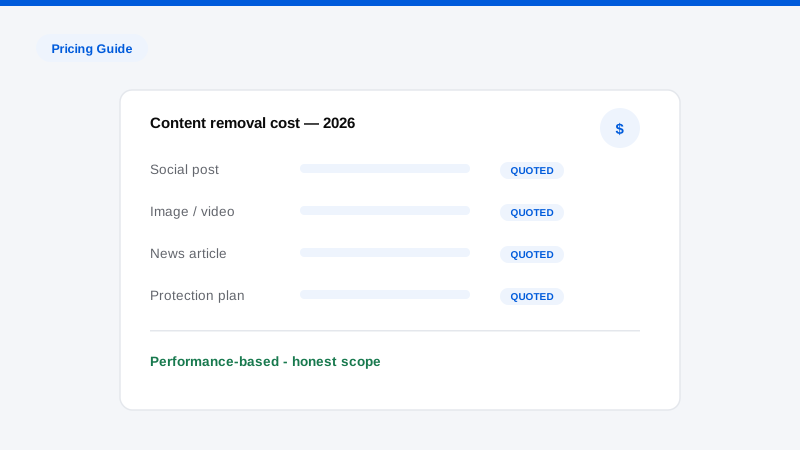
The cost of content removal depends on the specific URLs, the requested outcome and the work needed to support a request. Before comparing fees, establish whether you need a publisher to remove content, a search engine to delist it, or an inaccurate statement to be corrected. Those results are not interchangeable.
This guide helps you compare proposals. For ContentRemoval.com’s assessment and quote process, use our pricing page.
Compare the same outcome
A quote for a Google result may leave the original page accessible. A quote for one publisher may exclude syndicated articles. A fee for preparing an application may apply whether or not the publisher approves it. Ask the provider to describe completion in terms you can check.
For news articles, record the original article and any copies. For image removal, distinguish the source image from a Google Images thumbnail. For court records, distinguish a private database listing from the official court file. A provider should explain these differences before quoting.
What makes a case more complex?
A clear policy violation on one platform may require less coordination than a contested article distributed across several websites. Relevant variables include the evidence available, the number of pages, the publisher’s rules, whether a representative is authorised to act, and any need for independent legal advice.
An urgent business deadline may justify prioritising the work, but it cannot guarantee a third party will act before a transaction, board meeting or announcement. Ask which milestones the provider controls and which depend on someone else.
Separate project fees from ongoing services
A defined cleanup and an ongoing reputation programme solve different problems. One removes or corrects an agreed set of items where a valid route exists. The other may add monitoring, reporting and new applications over time.
Before choosing a retainer, clarify its term, included applications, exclusions and treatment of existing content. Before choosing a one-off project, clarify follow-up, republication and whether search-result checks are included. See Protection Plans for the site’s current programme structure and reputation management services pricing for a wider comparison checklist.
What professional assessment adds
A removal application is part of a wider service: understanding the problem, organising evidence, selecting an appropriate approach, managing follow-up and verifying what changed. This is particularly useful where several publishers, search results or high-stakes business deadlines are involved.
If a standard report has been unsuccessful, share the reply in your confidential assessment. We will review the specific case before recommending next steps. An initial refusal is not a substitute for a complete assessment of the content and available evidence.
Questions to ask before signing
- Which exact URLs are included, and what outcome is sought for each?
- What evidence supports the request, and who must provide authorisation?
- Is the fee for the application, the verified outcome or an ongoing service?
- What happens if the request is rejected or approved only in part?
- Are legal fees, third-party costs, additional copies or monitoring separate?
- How are response estimates presented, and what happens when a publisher takes longer?
- What evidence will show completion and any remaining exposure?
Keep the answers in writing. A proposal that explains limitations is more useful than a headline promise to erase everything.
Judge value against the problem you can document
For a founder or company, a harmful search result may affect customer questions, recruitment or due diligence. Document those concerns without assuming every lost sale was caused by a particular page. Set measurable objectives such as correction of an identified error, removal of a specified URL or verification of a search-result change.
Do not treat an estimated improvement in revenue, rankings or AI mentions as a guaranteed return. Those depend on factors beyond the removal itself.
Frequently asked questions
How much does removing one negative Google link cost?
It requires assessment of the source, content and available removal route. Ask whether the quote covers only Google visibility or also the underlying webpage. ContentRemoval.com provides a written quote after a free assessment.
Is a more expensive service more likely to succeed?
Price alone does not establish eligibility or expertise. Compare the evidence, scope, contract and verification method. No provider controls every publisher or search engine decision.
What if I have already tried to get the content removed?
Bring the previous reports and replies to your assessment. We can review what was attempted alongside the live content and evidence, then explain the work we recommend.
What should a removal guarantee mean?
Any guarantee should specify the exact outcome, exclusions and payment or refund terms. It should not imply control of official court records, all internet copies or future AI answers.
Request a scoped proposal
Start with a free confidential assessment. Share the URLs and the outcome you want so the proposal can distinguish feasible removal work from other options.