
Most parents discover their child’s online exposure by accident: a Google search that surfaces a team roster with a full name and school, a people-search profile listing a sixteen-year-old as a “household member” alongside the family’s home address, a tagged photo posted by a relative that anyone can find. If you are trying to remove your child’s information from the internet, the first thing to know is that you have more leverage than you might expect (platforms, schools, and even Google maintain processes specifically for minors) and the second is that using that leverage takes method, not panic.
We do this work professionally, and we want to be straightforward with you at the outset: there is no single form that clears a child’s name from the internet, some exposure (like a birth announcement in a newspaper archive) may not be removable at all, and information tends to reappear as new records and new posts are created. What is absolutely achievable is a dramatic reduction, getting the sensitive combinations of name, photo, school, and home address out of easy reach, and building habits that keep them out.
This guide walks through each source of exposure in order of practical priority, with the specific removal route for each. Take it one section at a time; this is a project measured in evenings, not months.
Start with a calm audit, not a takedown spree
Before filing anything, spend fifteen minutes finding out what is actually visible. Search your child’s full name in quotes, alone and with your city, their school, and their teams or activities. Do an image search on their name. Search your own name too, children most often appear as appendages to parents’ listings and posts.
Log every result in three buckets: identity data (name, birth date, photos), location data (home address, school, regular activities), and relational data (who their family is). This inventory becomes your worklist for everything that follows. You cannot systematically remove your child’s information from the internet without first knowing where it lives. The combinations are what matter. A first name on a team photo is minor; a full name plus school plus a parent’s home address on a broker site is the finding you move on first. This audit is the same first step we run in any digital footprint cleanup, and it turns an anxious, open-ended worry into a finite checklist.
School, team, and activity websites
Schools, sports leagues, dance studios, and scouting organizations are among the most common publishers of children’s names and photos: honor rolls, rosters, tournament brackets, newsletters, and event galleries, all indexed by Google.
You have more standing here than anywhere else, because these organizations answer to you directly:
- Ask, specifically and in writing. Email the school or league with the exact URLs and ask for the removal of your child’s full name and identifiable photos. Most comply readily; they simply never considered search visibility. Requesting first-name-plus-last-initial as the standard going forward is a reasonable and commonly accepted compromise.
- Use the opt-out that already exists. US public schools operating under FERPA typically designate things like names, photos, and activity participation as “directory information”, and must let parents opt out of its disclosure, usually via a form buried in back-to-school paperwork. File it every year. (We are not lawyers and this is not legal advice; the school’s own FERPA notice governs the details.)
- Address third-party publishers. Local news sites and tournament-results platforms that picked up rosters need their own requests. Be polite and specific; editors handle these routinely for minors.
- Set the norm forward. Ask the coach or troop leader to collect photo-consent preferences for the group. One conversation prevents years of future cleanup.
Data brokers list children more often than parents realize
People-search sites are built around adults, but children appear constantly as collateral data: “household members,” “possible relatives,” and, once they turn eighteen or acquire records like a learner’s permit or a first apartment, full profiles of their own.
The removal mechanics mirror adult data broker removal: each site has an opt-out process, a parent or guardian can file on a minor’s behalf, and many brokers state policies against listing minors at all, which gives your request extra force when you point out the listed person’s age. Practical notes from our casework:
- Search the brokers for your own name first; your child usually appears inside your profile and your spouse’s, so suppressing the parents’ listings removes most child references.
- Where a child has a standalone listing, file the site’s opt-out and state clearly that the subject is a minor. Escalate to the site’s privacy contact if the automated flow fails.
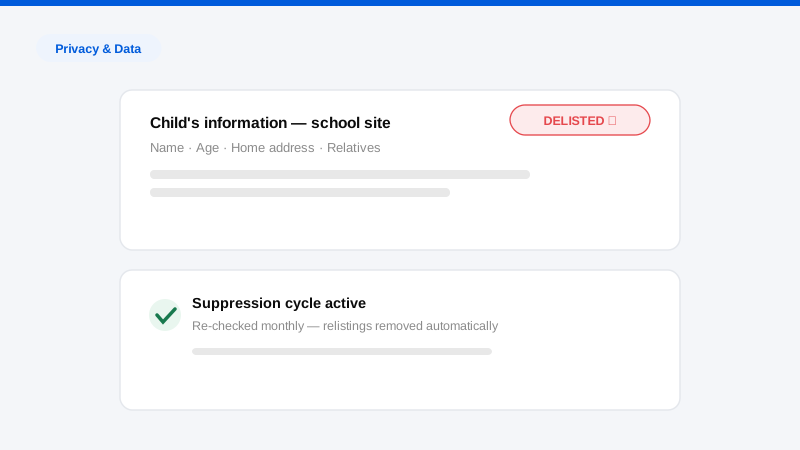
- Expect recurrence. Broker databases rebuild from refreshed record feeds, so a household listing removed in spring can reappear by fall. Quarterly re-checks are the fix, recurrence is a pipeline problem, not a sign your request failed. This maintenance rhythm is exactly what our ongoing protection plans exist to carry for busy families.
A note on COPPA, since parents often invoke it: the Children’s Online Privacy Protection Act governs how online services collect personal information from children under 13. It requires parental consent and gives parents deletion rights over data a service collected from their child directly. It is a real lever against apps and platforms your child uses. It is not, however, a general-purpose removal law for information about your child published by third parties like brokers or news sites. Knowing which lever fits which target saves a lot of misdirected effort. (Again: not legal advice, for a specific dispute, talk to a privacy attorney.)
Google’s removal process for images of minors
Here is leverage many parents never hear about: Google maintains a dedicated process to remove images of anyone under 18 from its search results, on request from the minor or their parent or guardian. It is not limited to harmful or explicit imagery. A parent can request de-indexing of essentially any image of their child from image search, with narrow exceptions for cases of compelling public interest or newsworthiness.
To use it, search Google’s support pages for the option to remove images of minors under 18, then submit the form with the image URLs and the URLs of the pages where the images appear (right-click a result to copy the image address, and gather the page addresses from the results). Google reviews and, when approved, removes the images from its search results.
Understand what this does and does not do: the photo stops appearing in Google searches, but it still exists on the hosting site, findable by anyone who goes there directly. For full removal you still contact the host, but since search is how strangers find children’s photos, de-indexing removes most of the practical risk on its own. Google runs parallel processes for other sensitive situations too, non-consensual explicit imagery and content that exposes personal contact information among them. This search-layer work is a whole discipline of its own; our guide to removing yourself from Google covers the adult equivalents in depth.
The hardest category: family and friends who overshare
The most persistent source of children’s online exposure is not brokers or schools. It is loving adults. Grandparents posting first-day-of-school photos with the school’s name visible on a sign. Relatives tagging your child by full name. A co-parent with a public account and different instincts about sharing.
There is no takedown form for a grandmother, so this category runs on conversation and platform tools:
- Have the direct conversation, framed around safety rather than criticism. A concrete, non-accusatory request works best: please don’t post photos that show the school, the house number, or a full name; please share to family only, not publicly.
- Use the platforms’ minor-protection reporting where needed. Facebook and Instagram accept reports concerning images of minors, and their processes give particular weight to requests from parents of children under 13. Untagging, restricting who can tag, and asking the poster to change a post’s audience to “friends” all reduce reach without requiring deletion.
- Set your child’s own accounts to private: and audit the friend/follower lists with them, since a private account followed by 800 strangers is not private.
- Agree on family rules before events, because the cheapest photo to remove is the one that was never posted publicly.
Progress here is social, not technical, and imperfect compliance still helps: every audience restriction and removed tag shrinks what a stranger’s search can assemble.
How to remove your child’s information from the internet: a two-weekend plan
- Audit (60 to 90 minutes). Run the name, name-plus-school, and image searches described above. Build the three-bucket list. Prioritize anything combining full name with school or home address.
- File the Google minors’ image removals for every identifiable photo you want out of search. This is often the highest impact single hour of the whole project.
- Email schools, leagues, and activity sites with specific URLs and a clear request. File the school’s directory-information opt-out.
- Sweep the data brokers: parents’ profiles first, any standalone child listings second, flagging the subject’s age in each request.
- Handle social exposure. Conversations with relatives, audience restrictions, untagging, privacy settings on the child’s own accounts.
- Reduce future input. Photo-consent norms with schools and teams; family sharing rules; a habit of checking new sign-ups (camps, tournaments, apps) for publication and data practices before handing over a full name and birth date.
- Re-check quarterly. Fifteen minutes re-running the audit searches. Re-file whatever returned; new exposures caught early are the easiest removals you will ever do.
When professional help makes sense
Plenty of families run this entire playbook themselves, and this guide is written so you can. Consider a professional online privacy service when the situation outgrows evenings-and-weekends: a child being targeted or bullied with personal information, a custody or safety situation where address exposure carries real danger, a family whose public profile makes the children research targets, or simply a broker ecosystem that keeps re-listing the household faster than you can re-file. High-visibility families often fold children’s coverage into household-wide programs, it is a standard component of our work with family offices, because children’s exposure and parents’ exposure feed each other through exactly the relational listings this guide describes.
A hard boundary, stated plainly: if you encounter sexualized imagery of a minor or credible threats to a child, that is a law-enforcement matter first. In the US, reports go to the CyberTipline run by the National Center for Missing & Exploited Children (NCMEC), and platforms remove such material on an expedited basis. No privacy vendor, us included, is the right first call for that.
Frequently asked questions
Can I demand a website delete my child’s information?
Sometimes. Services your child uses directly are subject to COPPA’s parental deletion rights for under-13s, and platforms’ own policies for minors often go further than the law requires. Third-party publishers (news sites, blogs, brokers) are governed by their own policies and by generally applicable privacy laws, which vary by state. In practice, a specific, polite request citing the subject’s age succeeds far more often than a legal demand, and where it doesn’t, the search-engine layer (Google’s minors’ image process, personal-information removals) usually can reduce visibility anyway.
My child is now 18. Does everything change?
The minor-specific levers narrow (Google’s under-18 image process no longer applies, and platforms treat them as adults) but the standard adult toolkit fully opens: broker opt-outs in their own name, personal-information removal requests, and privacy-law rights in states that provide them. Eighteen is also when standalone broker profiles start forming, so it is the right moment for a first full personal data removal pass in their own name.
Should I remove everything, or is some presence fine?
That is a values call, not a technical one. Many families are comfortable with, say, a name on an honor roll, and focus removals on the dangerous combinations, full name linked to school, schedule, or home address, and photos findable by strangers. The audit gives you the inventory; you choose the line. Our own bias after years of this work: keep the combinations apart, and the individual data points matter much less.
Will removed information stay removed?
Not automatically. New rosters get posted, brokers re-ingest records, relatives keep taking photos. The families who stay clean are the ones who pair one thorough cleanup with a light quarterly re-check and a few standing rules about what gets shared. Suppression plus habits beats any one-time purge.
Find out what a stranger can see right now
The gap between what parents fear and what is actually published is usually wide, in both directions. Run our free exposure scan to get a concrete picture of what your family’s names, addresses, and photos look like from the outside, and a prioritized list of what to remove first, whether you do it yourself with this guide or hand the whole project to our team.