Harassment on Twitch is addressed through three layers: the platform’s reporting system (which enforces an unusually strong harassment policy, including one that considers off-Twitch behavior), your own channel’s moderation stack (the tools that stop most abuse before anyone sees it), and external escalation for the harassment that spills beyond Twitch: clip reposts, doxxing, and coordinated campaigns on other platforms. Whether you stream as your profession or hold a profession while streaming, the difference between a rough night of chat and a reputational incident is usually how fast these layers were configured and used. Here’s the complete protocol.
What does Twitch actually act against?
Twitch’s Community Guidelines prohibit, and its enforcement genuinely actions:
- Harassment and targeted abuse: insults targeting individuals, incitement of harassment, wishing harm, and brigading. Reports on clear violations lead to suspensions regularly.
- Hateful conduct: abuse based on protected characteristics, held to a stricter standard than general harassment.
- Sexual harassment: unwelcome sexual comments and advances, including in chat, whispers, and clips; Twitch strengthened this policy specifically because streamers face it constantly.
- Doxxing and threats: sharing private information and credible threats, the fastest-actioned category. If your address or workplace is being posted, that’s also a cross-platform emergency. See our doxxing removal practice.
- Off-service conduct: uniquely among major platforms, Twitch’s Off-Service Conduct policy lets it suspend users for serious harassment committed elsewhere (other platforms, in person) against Twitch community members, reported through a dedicated email channel (osit@twitch.tv) with evidence.
- Ban evasion: returning on new accounts to continue harassment is independently actionable, which matters for persistent harassers.
What Twitch won’t act on: criticism of your content, blunt opinions, and drama that stays within the rules. The platform distinguishes harassment from hostility you’re free to moderate out of your own chat, which you should, using the layer below.
The response protocol, step by step
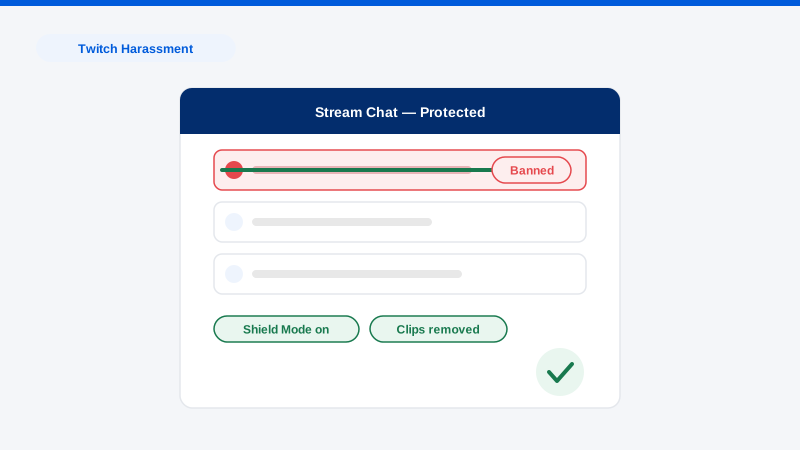
- Harden the channel before the next incident. Turn on email/phone verification requirements for chat, follower-only or slow mode as baseline, AutoMod at level 2 to 3 with a custom blocked-terms list, and Shield Mode configured in advance. It’s a one-click lockdown (tightened chat restrictions, pre-set safety settings) built for hate raids. Suspicious User Detection flags likely ban evaders automatically.
- Build a real mod team. Two or more trusted moderators with clear escalation rules (delete/timeout/ban thresholds, when to trigger Shield Mode, when to screenshot first) outperform any settings panel. Harassers test unmoderated channels and leave defended ones.
- During an incident: contain, don’t engage. Trigger Shield Mode, let mods sweep bans, and keep the stream’s attention off the harassment, on-air reactions are the reward harassers came for. If it’s overwhelming, ending the stream early with a calm sign-off is a strategic choice, not a defeat.
- Preserve evidence as you go. Screenshots of chat, usernames, whispers, and clips with timestamps, before deleting or banning where feasible. Twitch reports, off-service reports, police reports, and platform escalations all run on this file.
- Report through the right channel. In-chat reports for message-level violations; user-level reports (three-dot menu on the profile) for patterns; the off-service conduct email for serious cross-platform campaigns with your evidence bundle attached. Precision matters, cite the specific conduct category rather than narrating the whole conflict.
- Chase the spillover. Harassment clips and edited streams reposted to YouTube, TikTok, and Twitter/X violate those platforms’ harassment policies and are frequently removable: our YouTube, TikTok, and Twitter/X pages cover each flow. Content built from your stream may also be a copyright matter: unauthorized re-use of your broadcast supports DMCA takedowns, a lever streamers underuse.
- Escalate genuine threats beyond platforms. Credible violence threats, swatting risks, and sustained stalking are police matters. Report them, reference case numbers in platform escalations, and treat home-address exposure as the emergency it is, including scrubbing your address from data brokers via personal data removal, which is how most doxxes are assembled in the first place.
Get a Free, Confidential Exposure Scan
Timelines and honest expectations
Chat-level moderation is instant, that layer is fully in your control. Twitch report outcomes typically land within days for clear violations (you’ll see “account you reported was actioned” notices), longer for judgment calls, and off-service conduct investigations run weeks. Cross-platform clip takedowns resolve in days (copyright) to weeks (harassment policy). Data-broker address scrubbing takes two to six weeks across the major brokers.
Honest limits: no one can stop anonymous strangers from creating accounts, and Twitch enforcement is inconsistent at the margins, ban evasion outpaces detection during determined campaigns. The realistic goal is making harassment expensive and unrewarding: hardened chat, instant containment, reliable reporting, spillover removal, and a personal footprint that gives attackers nothing to work with. Streamers who reach that state see campaigns burn out in days. For creators whose livelihood rides on their channel, that full stack, monitoring included, is what our creator protection practice runs continuously, with reputation monitoring catching off-platform flare-ups early.
Frequently asked questions
I’m being hate-raided right now. What’s the fastest move?
Activate Shield Mode (pre-configure it today if you haven’t), which locks chat down in one click. Let mods ban and sweep; don’t react on stream. Report the raid organizers afterward, coordinated harassment and ban evasion are both actionable, and check whether the raid was organized on Discord or elsewhere, which supports off-service conduct reports.
Someone posted my real name and address in chat. How serious is this?
Maximum seriousness. Report to Twitch immediately (doxxing is fast-tracked), preserve the evidence, notify police if any threat accompanies it, and assume the information came from data-broker sites, scrubbing those removes the source for the next attempt. Consider our doxxing removal response for the full cross-platform sweep.
Harassers are clipping my streams and reposting them edited on YouTube and TikTok. Can I stop that?
Usually, yes, on two tracks: harassment-policy reports on those platforms, and copyright. Your broadcast is your content, and mocking re-uploads rarely qualify as fair use when they republish substantial portions. DMCA takedowns are the quieter, faster lever in most cases.
Does Twitch really punish harassment that happens off Twitch?
Yes: its Off-Service Conduct policy is the strongest of any major platform. Serious cases (sustained harassment campaigns, threats, stalking of community members) reported to its dedicated channel with evidence can result in indefinite Twitch suspension for behavior that happened entirely elsewhere. Documentation quality decides these.
I have a day job and my employer might see this harassment. What do I do?
Get ahead of it: brief, factual framing to anyone who matters, “I’m dealing with online harassment, it’s reported and being handled.” Then make that true: contain the Twitch side, remove the spillover, and clean up what a search for your name shows. That last part is where our process typically starts.
If harassment has moved from annoying to organized, or from Twitch to your search results, it’s worth knowing exactly what’s removable and what to lock down. Request a free, confidential Exposure Scan and we’ll map your full exposure, on-platform and off, and handle it through our process.