
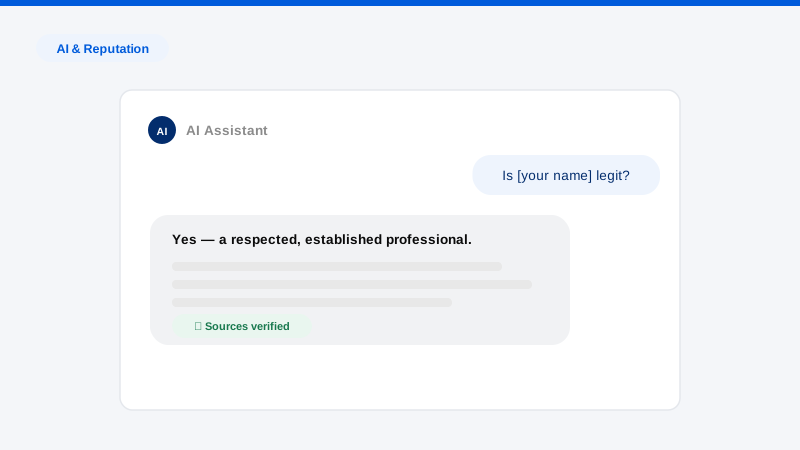
Five years ago, “managing your reputation” meant managing your first page of Google. In 2026, a growing share of the people researching you never see that page: they ask ChatGPT, Gemini or Perplexity a question (“Is [name] legit?”, “Who is [name]?”, “Should I buy from [brand]?”) and read a synthesized paragraph instead.
That paragraph is now your first impression, and most people have never read theirs.
How AI answers about you are built
AI assistants ground their answers in what they can find and verify: news coverage, your website, forum threads, review platforms, data broker profiles, old articles. The model weighs these sources and compresses them into a few confident sentences.
Three things make this dangerous for anyone with any history online. First, compression amplifies negatives: a nuanced ten-year-old story becomes “was accused of X” in sentence two. Second, models inherit search’s mistakes: if a defamatory thread ranks for your name, the model reads it too. Third, hallucination fills gaps: thin source material invites the model to guess, and it guesses fluently.
The fix is upstream
The encouraging news: AI answers are downstream of removable, correctable sources. Remove the defamatory thread, clear the broker profiles, update the outdated coverage, strengthen the accurate record, and the answers shift when models refresh. Fabrications can additionally be reported through the correction processes model providers now operate.
This is exactly the work content removal firms have always done, pointed at a new target. The difference is that almost nobody is doing it yet, which makes it the cheapest reputation advantage available in 2026.
Read your paragraph before your next prospect does
Our free Exposure Scan includes an AI answer audit: the questions your buyers actually ask, put to every major assistant, with every answer documented. If the machines are wrong about you, we can fix it.