
A reputation monitoring service is a continuous early warning system that scans search engines, review platforms, social networks, news, forums and the dark web for mentions of your name, brand or executives, then uses sentiment analysis and human review to separate genuine threats from noise. Its value depends on tiered alerts, defined response protocols and a direct route to removal.
Key facts
- Monitoring parameters should include brand misspellings, executive names, product names and previous crisis keywords.
- The article’s protocol assigns critical threats an under one hour response with executive, legal and communications involvement.
- Closed groups, paywalled content and private channels remain blind spots for automated monitoring.
- Third-party service tiers cited range from free alerts to enterprise solutions above $10,000 per month.
Where ContentRemoval.com comes in. ContentRemoval.com pairs monitoring with the step most services stop short of: when an alert surfaces a defamatory article, leaked file, fake profile or privacy violation, the same team moves to remove it at source or de-index it, then keeps watching for reuploads. Communications leads, general counsel and family office managers usually make contact when alerts are arriving but nothing is coming down. A free 15-minute Exposure Scan maps what is removable, and the report is yours to keep. Get a Free, Confidential Exposure Scan or read how our reputation management work is done.
In today’s digital landscape, your online reputation can change in minutes. A single negative review, defamatory article, or social media crisis can spread across the internet before you even know it exists. For executives, companies, and high-profile individuals, waiting to discover reputation threats after they’ve already caused damage is no longer an acceptable strategy. A reputation monitoring service provides the continuous surveillance and early warning system necessary to protect your brand, identify emerging threats, and respond before minor issues escalate into full-blown crises. This comprehensive approach combines technology, human expertise, and strategic intervention to maintain the positive perception you’ve worked years to build.
Understanding Modern Reputation Monitoring Services
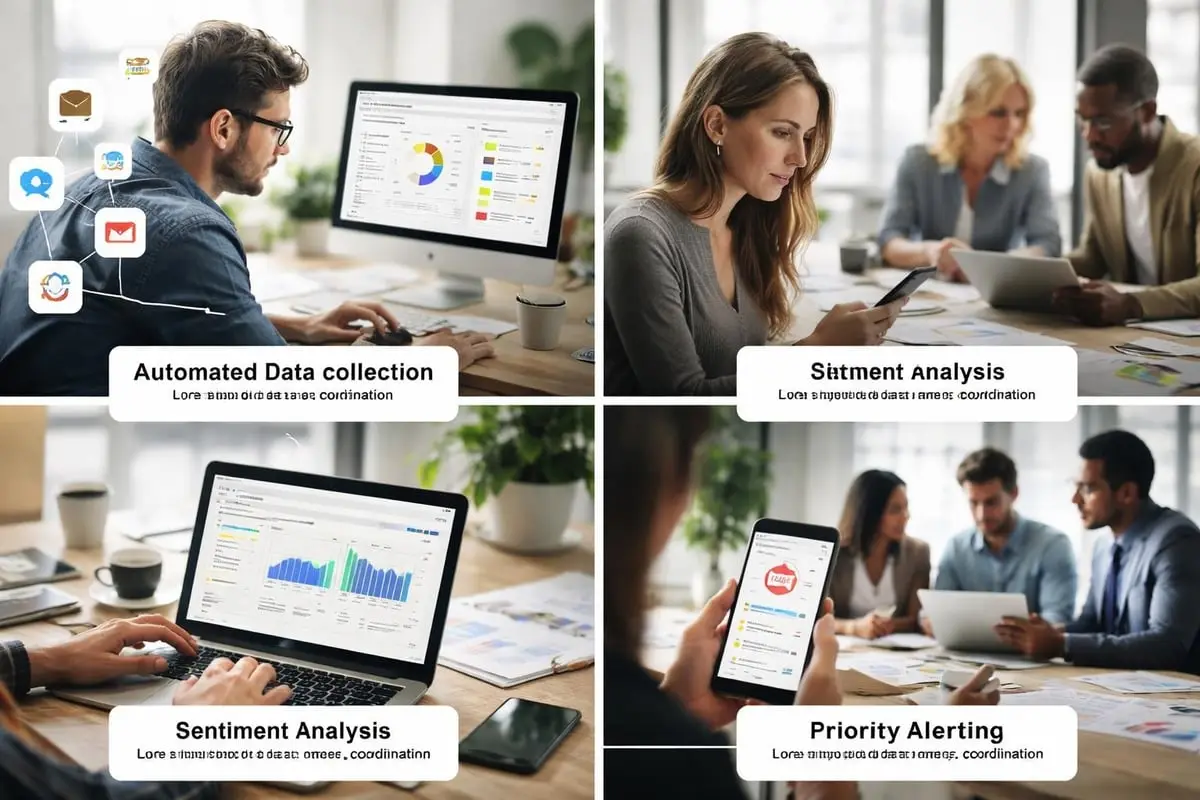
A reputation monitoring service functions as your digital early warning system, continuously scanning the internet for mentions of your name, brand, products, or key personnel. Unlike basic Google Alerts or manual searches, professional monitoring services employ sophisticated technology that tracks conversations across search engines, review platforms, social media networks, news outlets, forums, and even the dark web.
The scope of monitoring extends far beyond simple keyword tracking. Modern services analyze sentiment, identify emerging patterns, detect coordinated attacks, and distinguish between legitimate criticism and malicious campaigns. This intelligence allows you to understand not just what people are saying, but the context, reach, and potential impact of those conversations.
Core Components of Professional Monitoring
Data Collection Infrastructure
- Real-time crawling of millions of websites and platforms
- Social media listening across major and niche networks
- Review site monitoring including Google, Yelp, Trustpilot, and industry-specific platforms
- News aggregation from local, national, and international sources
- Forum and community tracking across Reddit, specialized boards, and discussion groups
- Video platform monitoring including YouTube, TikTok, and Vimeo
Analysis and Intelligence
The raw data collected requires sophisticated analysis to be actionable. Advanced services use natural language processing and machine learning to categorize mentions, assess sentiment, identify influencers, and predict potential escalation patterns.
Most reputation monitoring tools now incorporate artificial intelligence to reduce false positives and prioritize genuine threats. This filtering ensures you focus on issues that matter rather than drowning in irrelevant mentions.
Why Businesses Need Continuous Reputation Monitoring
The digital environment operates 24/7 across global time zones. Threats can emerge at any moment, and delays in detection often mean the difference between containment and crisis. Understanding online reputation monitoring for businesses reveals why passive approaches fail in modern markets.
Brand Protection in Real-Time
Every day without monitoring represents potential vulnerabilities. A disgruntled former employee might post defamatory content on industry forums. Competitors could launch negative SEO campaigns. Customers experiencing issues might share complaints across multiple platforms simultaneously. Without active monitoring, these situations gain momentum before you’re even aware they exist.
Financial Impact and Risk Management
Research consistently shows that consumers trust online reviews as much as personal recommendations. A single negative article ranking on page one of Google can cost businesses millions in lost revenue. For executives and founders, defamatory content can derail funding rounds, partnerships, and career opportunities.
| Risk Category | Detection Window | Potential Impact | Mitigation Value |
|---|---|---|---|
| Negative Review | Hours | Revenue loss, reputation damage | High |
| Defamatory Article | Days | Legal exposure, business opportunities lost | Critical |
| Social Media Crisis | Minutes to hours | Brand damage, customer exodus | Critical |
| Data Breach Exposure | Hours to days | Privacy violations, legal liability | High |
| Competitor Attack | Days to weeks | Market position erosion | Medium to High |
Stakeholder Confidence and Due Diligence
Investors, partners, and clients increasingly conduct comprehensive online due diligence before committing to relationships. Understanding reputation management from a strategic perspective reveals how monitoring supports business development efforts by ensuring decision-makers encounter accurate, positive information during their research.
Key Features of Enterprise-Grade Monitoring Services
Not all reputation monitoring services operate at the same level of sophistication. Enterprise and high-stakes situations require capabilities that exceed basic social listening or alert tools.
Multi-Platform Comprehensive Coverage
Professional services monitor:
- Search Engine Results across Google, Bing, Yahoo, and regional engines
- Social Media Networks including established and emerging platforms
- Review and Rating Sites specific to your industry and geography
- News and Media Outlets from mainstream to niche publications
- Video and Image Platforms where visual content spreads rapidly
- Forums and Communities where conversations often start before reaching mainstream platforms
- Dark Web Monitoring for data leaks and coordinated attack planning
Advanced Alert Systems and Prioritization
Volume without context creates noise rather than intelligence. Sophisticated monitoring services implement multi-tier alert systems that categorize mentions by urgency, reach, sentiment, and source authority.
Critical alerts trigger immediate notification for high-threat situations: defamatory articles on authoritative sites, coordinated social media attacks, data breaches, or content appearing on page one of search results for your brand terms.
Standard alerts provide regular updates on routine mentions, reviews, and conversations that require awareness but not immediate action.
Background intelligence captures lower-priority mentions for trend analysis and pattern recognition over time.
Implementing a Reputation Monitoring Strategy
Effective monitoring requires more than subscribing to a software platform. Strategic implementation aligns monitoring capabilities with your specific vulnerabilities, business objectives, and response capabilities.
Identifying Your Monitoring Parameters
Start by defining what matters most to your reputation:
- Primary brand names and common misspellings
- Executive names and leadership team members
- Product and service names
- Key personnel who represent the company publicly
- Industry-specific keywords that might appear in negative contexts
- Competitor names (for comparative mentions)
- Previous crisis keywords or phrases
Geographic Considerations
Global businesses require monitoring across languages and regional platforms. What appears in German forums or Japanese social networks can be as critical as English-language content, particularly for companies with international operations or stakeholder bases.
Setting Response Protocols
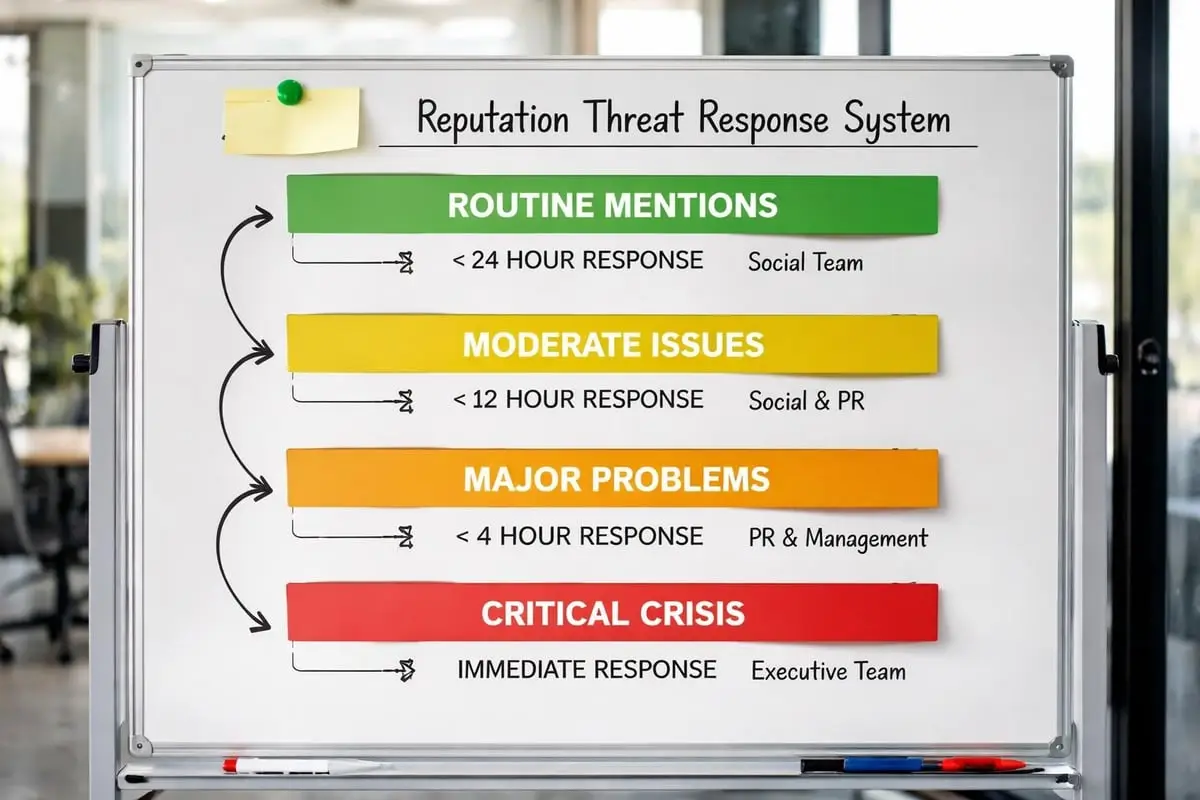
Monitoring without action plans wastes resources. Establish clear protocols for different threat categories:
| Threat Level | Response Time | Team Involved | Typical Actions |
|---|---|---|---|
| Critical | Under 1 hour | Executive, Legal, Communications | Immediate assessment, legal review, rapid response deployment |
| High | 2-4 hours | Reputation manager, Communications | Evaluation, response strategy, engagement or removal efforts |
| Medium | 24 hours | Reputation team | Analysis, tracking, potential engagement |
| Low | Weekly review | Monitoring team | Documentation, trend analysis |
The integration between monitoring and action becomes especially important when dealing with harmful content that requires removal. Services specializing in content removal can work directly from monitoring alerts to eliminate defamatory articles, privacy violations, or explicit content before it gains traction.
Technology and Tools Powering Reputation Monitoring
The reputation monitoring service landscape includes specialized software, artificial intelligence, and human expertise working in concert. Understanding the technology helps you evaluate service providers and set realistic expectations.
Automated Monitoring Platforms
Reputation monitoring software has evolved dramatically in recent years. Modern platforms employ:
- Web crawlers that index billions of pages daily
- API integrations with major platforms for real-time data access
- Machine learning algorithms that improve accuracy over time
- Natural language processing for sentiment analysis across languages
- Image recognition technology to identify visual content containing logos or faces
- Audio analysis for podcast and video content transcription and monitoring
Human Analysis and Context
Technology captures data, but human expertise provides context. Professional services combine automated monitoring with analyst review to:
- Verify the credibility and authority of sources
- Assess the actual threat level beyond algorithmic scoring
- Identify nuanced attacks that automated systems might miss
- Understand industry-specific context and competitive dynamics
- Recommend strategic responses based on experience with similar situations
Data Visualization and Reporting
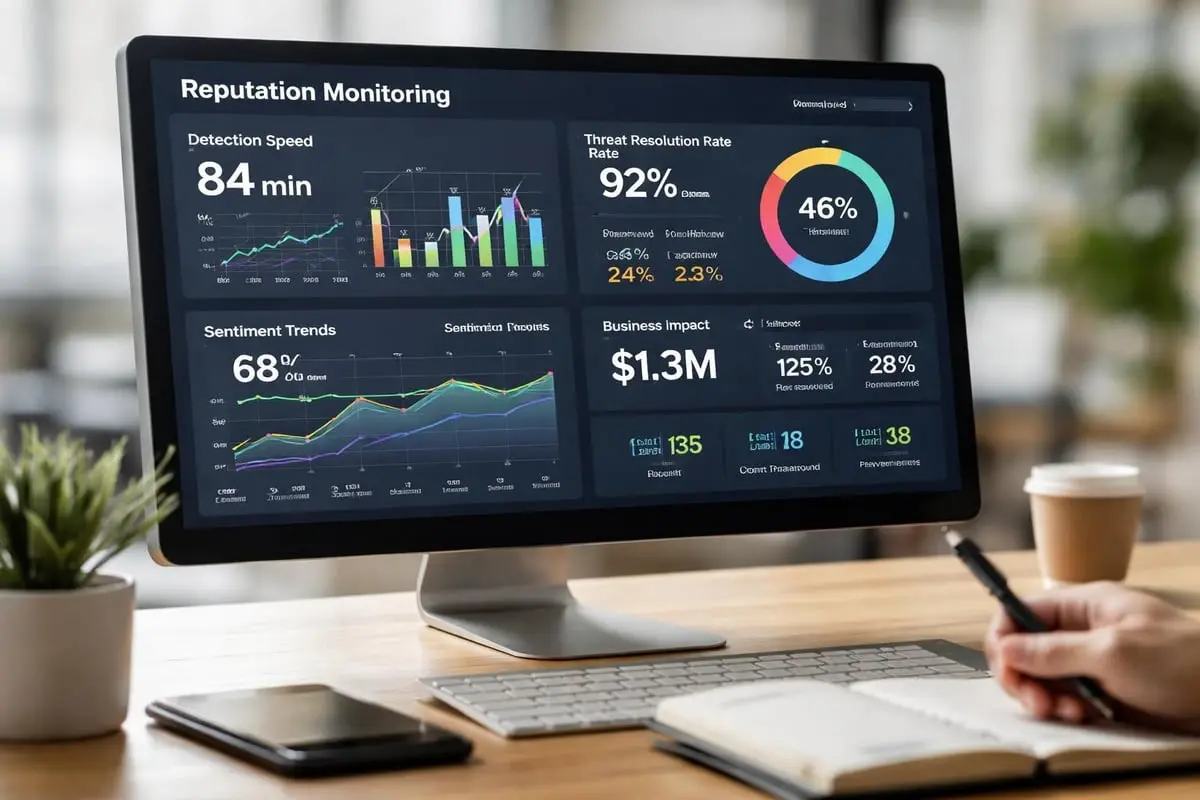
Raw data serves little purpose without clear presentation. Quality monitoring services provide dashboards and reports that visualize:
- Trend analysis showing mention volume and sentiment over time
- Source distribution revealing where conversations concentrate
- Influence mapping identifying key voices driving narratives
- Competitive benchmarking comparing your reputation metrics against competitors
- Geographic heat maps showing where conversations emerge and concentrate
Specialized Monitoring for High-Risk Scenarios
Certain situations require enhanced monitoring beyond standard brand tracking. Executives facing coordinated attacks, companies in crisis, or individuals dealing with privacy violations need specialized approaches.
Crisis Monitoring and Escalation
During active crises, monitoring intensity increases dramatically. Services shift from standard intervals to continuous real-time tracking, with dedicated analysts watching for escalation signals, emerging narratives, and spreading patterns.
Crisis monitoring focuses on velocity (how fast content spreads), amplification (who’s sharing and their influence), and migration (how conversations move between platforms). These metrics inform response strategies and help predict whether situations will self-contain or require aggressive intervention.
Privacy and Personal Security Monitoring
For individuals concerned about doxxing, stalking, or privacy violations, monitoring extends to:
- Personal information appearing on data broker sites
- Home addresses or phone numbers published online
- Family member mentions that could create security risks
- Image searches for unauthorized use of personal photos
- Dark web forums discussing targeting or harassment
Comprehensive digital footprint cleanup often begins with monitoring services that identify exactly where personal information has spread across the internet.
Competitive Intelligence and Brand Protection
Monitoring competitive mentions reveals market positioning, identifies potential partnership opportunities, and detects when competitors reference your brand inappropriately. This intelligence supports strategic planning while protecting against trademark violations and misleading comparisons.
Integration with Broader Reputation Management
A reputation monitoring service functions most effectively as part of a comprehensive reputation management strategy rather than as a standalone solution. Monitoring identifies threats, but resolution requires additional capabilities.
From Detection to Action
The monitoring-to-action pipeline should flow seamlessly:
- Detection through automated systems and human review
- Assessment of threat level, accuracy, and removal potential
- Strategy development for engagement, suppression, or removal
- Execution of chosen response approach
- Verification that actions achieved desired outcomes
- Ongoing tracking to ensure issues don’t resurface
For situations involving defamatory content, harmful search results, or privacy violations, knowing how to remove negative content from Google search becomes critical. Monitoring identifies the problem; removal expertise solves it.
Building Positive Content Ecosystems
Monitoring also reveals content gaps and opportunities. Analysis of what ranks for your brand terms, what questions people ask, and what narratives dominate helps inform content creation strategies that strengthen your overall reputation.
Proactive Reputation Building
- Identify keywords where competitors dominate but you’re absent
- Discover questions and concerns that your content should address
- Find industry conversations where your expertise could add value
- Spot opportunities for thought leadership and media engagement
Selecting the Right Reputation Monitoring Service
The market offers solutions ranging from free Google Alerts to enterprise platforms costing tens of thousands monthly. Matching your needs to appropriate capabilities ensures you invest wisely.
Evaluation Criteria
Coverage and Depth
How many sources does the service monitor? Can it track international platforms and languages relevant to your business? Does it include dark web monitoring if that matters to your situation?
Alert Quality and Speed
How quickly do alerts reach you after content appears? What’s the false positive rate? Can you customize sensitivity and parameters?
Analysis and Reporting
Do you receive raw data dumps or analyzed intelligence? Are reports actionable or just informative? Can you access historical data for trend analysis?
Integration Capabilities
Does the service integrate with your existing communications, legal, or customer service systems? Can data export into your preferred formats?
Response Support
Does the provider offer just monitoring, or also response services? If they include response capabilities, what’s their track record with successful content removal, crisis management, or reputation repair?
Service Tiers and Investment Levels
| Service Level | Monthly Investment | Best For | Key Limitations |
|---|---|---|---|
| Basic Alerts | $0-$50 | Individuals, small businesses with low risk | Limited sources, high false positives, delayed alerts |
| Standard Monitoring | $200-$1,000 | Growing businesses, moderate risk profiles | Basic analysis, limited customization |
| Professional Service | $2,000-$10,000 | Established companies, executives, high-stakes situations | May lack specialized capabilities for certain industries |
| Enterprise Solutions | $10,000+ | Large corporations, public figures, crisis situations | Significant investment, may exceed needs of smaller entities |
Common Monitoring Challenges and Solutions
Even sophisticated reputation monitoring services face limitations and challenges. Understanding these helps set realistic expectations and develop backup strategies.
Information Overload and Alert Fatigue
High-profile brands or common names generate enormous mention volumes. Without proper filtering, teams become overwhelmed and miss critical threats among routine mentions.
Solutions include:
- Implementing machine learning to improve relevance filtering
- Creating separate alert streams for different threat levels
- Establishing clear escalation criteria that reduce noise
- Using negative keyword filters to exclude irrelevant mentions
- Scheduling regular reviews rather than real-time alerts for lower-priority items
Platform Access Restrictions
Private groups, paywalled content, and platform restrictions limit what monitoring services can access. Conversations in closed Facebook groups, private Slack channels, or subscriber-only publications may escape detection.
This represents a fundamental limitation of automated monitoring. Supplementing technology with industry connections, customer feedback channels, and employee reports helps capture conversations that occur in private spaces.
Speed Versus Accuracy Trade-offs
Faster alerts sometimes mean higher false positive rates. Services tuned for maximum speed might flag mentions that aren’t actually relevant or threatening, while those emphasizing accuracy might deliver alerts hours after content appears.
Defining your priority helps providers tune their systems appropriately. Crisis-prone situations favor speed with manual review, while stable reputations might prefer verified accuracy over immediacy.
Advanced Monitoring Techniques for 2026
The reputation monitoring service field continues evolving with new technologies and methodologies that enhance detection capabilities and reduce response times.
Predictive Analytics and Pattern Recognition
Modern systems don’t just detect existing mentions but predict emerging threats. By analyzing patterns, these services identify:
- Early indicators of coordinated attacks before they fully launch
- Sentiment shifts that suggest brewing problems
- Seasonal or event-driven reputation risks
- Individual actors who frequently initiate negative campaigns
Machine Learning Evolution
AI systems trained on years of reputation data can now recognize attack patterns, distinguish organic criticism from orchestrated campaigns, and even predict which negative mentions are likely to gain traction versus which will fade quickly.
Cross-Platform Narrative Tracking
Sophisticated monitoring now tracks how narratives evolve and migrate across platforms. A complaint starting in a Reddit thread might move to Twitter, get picked up by a blogger, and eventually reach mainstream media. Understanding these progression patterns allows for earlier intervention.
Visual and Audio Content Monitoring
As content consumption shifts toward video and audio formats, monitoring capabilities expand beyond text:
- Image recognition identifying your logo, products, or executives in photos and videos
- Video transcription converting spoken content to searchable text
- Audio fingerprinting detecting when your brand gets mentioned in podcasts
- Meme tracking identifying when your brand becomes subject of viral visual content
Regulatory Compliance and Privacy Considerations
Reputation monitoring must balance comprehensive surveillance with privacy rights and regulatory compliance, particularly as data protection laws strengthen globally.
GDPR, CCPA, and Data Protection
Monitoring services operating internationally must comply with various privacy regulations. This affects:
- What data can be collected and stored about individuals
- How long monitoring data can be retained
- Requirements for data deletion upon request
- Restrictions on monitoring personal social media accounts
Ethical Boundaries
Professional services establish clear policies around what constitutes legitimate reputation monitoring versus privacy invasion. Monitoring publicly available information about your brand remains universally acceptable, while tracking private individuals who haven’t engaged with your brand crosses ethical lines.
Industry-Specific Regulations
Healthcare, finance, and other regulated industries face additional considerations:
- HIPAA compliance for medical reputation monitoring
- Financial industry regulations around customer communications
- Legal sector confidentiality requirements
- Government contractor security protocols
Working with specialized providers who understand your industry’s regulatory environment ensures monitoring activities don’t create compliance risks while protecting your reputation.
Measuring Monitoring Effectiveness
Like any business investment, reputation monitoring services should demonstrate measurable value. Establishing metrics helps evaluate ROI and optimize your approach.
Key Performance Indicators
Detection Metrics
- Average time from content publication to detection
- Percentage of mentions captured versus estimated total
- False positive rate requiring manual dismissal
- Coverage across target platforms and geographies
Response Metrics
- Time from detection to initial response
- Percentage of threats successfully mitigated
- Content removal success rates
- Crisis escalation prevention rate
Business Impact Indicators
- Search result improvements for brand terms
- Review rating trends over time
- Sentiment score changes
- Estimated revenue protection from prevented crises
Continuous Improvement Processes
Effective monitoring programs evolve based on:
- Quarterly reviews of detection coverage and missed threats
- Feedback loops from response teams about alert quality
- Emerging platform integration as new social networks gain relevance
- Keyword refinement based on industry changes and product launches
- Competitive benchmarking to ensure monitoring matches or exceeds industry standards
Organizations implementing reputation management strategies find that monitoring serves as both the foundation for protection and the measurement system proving the value of their broader efforts.
Building Internal Monitoring Capabilities
While many organizations outsource reputation monitoring to specialized services, some develop internal capabilities to supplement or replace external providers. This approach offers advantages and challenges worth considering.
When Internal Monitoring Makes Sense
Large organizations with dedicated communications or reputation teams might benefit from internal capabilities when:
- Monitoring volumes justify full-time staff allocation
- Industry-specific knowledge provides competitive advantages in threat assessment
- Sensitive information requires limiting external access
- Budget allows for both technology investment and personnel
- Existing teams possess technical skills for platform management
Hybrid Approaches
Many successful programs combine internal and external resources:
Internal teams handle:
- Day-to-day monitoring of routine mentions
- Industry-specific platform tracking
- Internal stakeholder reporting
- First-level response to standard situations
External services provide:
- Technology platforms and infrastructure
- After-hours and weekend coverage
- Crisis surge capacity
- Specialized expertise for complex removals
- Dark web and restricted access monitoring
This division maximizes efficiency while controlling costs and maintaining security over sensitive matters.
Future Trends in Reputation Monitoring Services
The reputation monitoring landscape will continue evolving as technology advances and the digital environment becomes more complex. Staying ahead of trends helps maintain effective protection.
Artificial Intelligence and Automation
AI capabilities will expand beyond current sentiment analysis to:
- Automatically draft appropriate responses to different mention types
- Predict viral potential of negative content before it spreads
- Identify deepfakes and manipulated content involving your brand
- Generate real-time crisis management recommendations
- Personalize monitoring parameters based on your specific risk profile
Decentralized Platforms and Web3
As conversations shift to decentralized social networks, blockchain-based communities, and Web3 platforms, monitoring services must adapt to track these new spaces where traditional crawling methods may not work.
Privacy-First Monitoring
Growing privacy concerns and regulations will push monitoring toward more ethical, consent-based approaches that balance reputation protection with individual privacy rights.
Integrated Reputation Ecosystems
Future services will likely integrate monitoring with response, content creation, SEO, and legal services into unified reputation protection platforms. This convergence simplifies vendor management while enabling faster, more coordinated responses to threats.
Protecting your reputation in 2026 requires continuous vigilance across an increasingly complex digital landscape where threats emerge globally and spread instantly. A reputation monitoring service provides the comprehensive surveillance, intelligent analysis, and early warning capabilities necessary to detect and respond to risks before they cause irreparable damage. Whether you’re an executive, founder, or established company, the question isn’t whether you can afford professional monitoring, but whether you can afford to operate without it. Content Removal combines advanced monitoring capabilities with proven removal expertise to protect your online reputation through proactive surveillance and decisive action when harmful content threatens what you’ve built.
Frequently asked questions
Is Google Alerts enough to monitor my online reputation?
For low-risk individuals it is a starting point, but it misses social platforms, review sites, forums, video and the dark web, produces false positives and delivers alerts late. Professional services add sentiment analysis, coordinated attack detection, image recognition and human review to prioritize what needs action.
What should I ask before choosing a reputation monitoring service?
Ask how many sources and languages it covers, whether dark web monitoring is included, how fast alerts arrive and what the false positive rate is, whether reports are analyzed intelligence or raw data, and whether the provider also handles response and removal. A monitoring feed with no route to action is surveillance, not protection.
How fast should a company respond to a reputation alert?
The article’s model sets critical threats such as a defamatory article on an authoritative site or a coordinated attack at under one hour, high threats at 2 to 4 hours, medium at 24 hours and low-priority items at a weekly review. Each tier names the team involved and the expected actions.