
Online privacy protection for UHNWI families means reducing the number of usable signals available to an adversary, not keeping a low profile. The program runs in five phases: a footprint audit that produces a risk dossier across surface, deep, and dark web, technical and family office hardening, proactive de-indexing and takedowns, a first-hour incident protocol, and governance with monthly monitoring.
Key facts
- Score findings by exploit value: identity, physical, reputational, and structural exposure
- Audit the human perimeter too: spouse, children, assistants, household staff, and family office personnel
- Family office controls should include data classification, vendor segregation, and approval gates for outbound files
- Review cadence: monthly exposure checks, quarterly controls review, and event-based review after travel or transactions
Where ContentRemoval.com comes in. ContentRemoval.com handles Phase III and the recurrence layer for principals and their offices: source removal of people-search entries and exposed records, de-indexing of lawful but damaging pages, impersonation takedowns, and ongoing monitoring for resurfaced data. The family office chief of staff, the security lead, or the principal’s counsel usually makes contact. A free 15-minute Exposure Scan maps what is removable, and the report is yours to keep. Get a Free, Confidential Exposure Scan or read how our personal data removal work is done.
A new client usually calls after something small has already gone wrong. A boarding pass photo posted by a child. A staff member who reused a password. An assistant who forwarded a “routine” PDF to the wrong address. Then a family office receives a convincing message that references a real travel plan, a real property entity, or a real adviser relationship. That’s when the client realizes the issue isn’t one leak. It’s exposure across dozens of systems, people, and jurisdictions.
For an ultra-high-net-worth individual, online privacy protection isn’t a lifestyle preference. It’s part of asset protection, family security, transaction integrity, and legal strategy. If your name, relatives, holding structures, residences, device habits, and credential trails can be assembled by an adversary, you don’t have a privacy problem. You have a live risk surface.
The New Risk Surface for Ultra-High-Net-Worth Individuals
The threat isn’t limited to hackers trying random passwords. A serious adversary works like an investigator. They map your spouse’s social accounts, your children’s school references, your assistant’s contact details, your trust structures, your travel patterns, and every old breach that exposed a login tied to one of your vendors. They don’t need full access at the start. They need enough context to sound legitimate.

That’s the right way to think about online privacy protection uhnwi. Not as “keeping a low profile,” but as reducing the total number of usable signals available to hostile parties. Those signals include breached credentials, property references, litigation mentions, archived images, charity board listings, old press releases, and family metadata buried in harmless-looking posts.
The public already understands the problem in broad terms. 92% of Americans are concerned about their privacy when using the Internet, 45% of breaches stem from stolen credentials, more than 120 countries have enacted data protection laws, and cybercrime is projected to cost $10.5 trillion annually by 2025 according to Termly’s privacy statistics roundup. The gap for your world is that generic concern doesn’t produce a UHNWI-grade protection program.
Why wealth changes the threat model
A public executive can survive ordinary online noise. A UHNWI often can’t afford the secondary effects. A leaked number can become extortion pressure. A family member’s tagged location can become a physical security issue. A false article can affect financing, counterparties, or litigation posture before your lawyers even draft a response.
Practical rule: If a piece of data can help someone identify where you are, who advises you, how money moves around you, or which family member is easiest to approach, treat it as a security asset.
This is why citizenship planning, residency planning, and privacy planning often intersect. Clients restructuring their personal footprint across jurisdictions usually benefit from understanding how mobility choices affect exposure, compliance, and public records. A useful starting point is How to Get a Second UK Passport, not as a “privacy trick,” but as part of a broader jurisdiction and risk conversation.
Privacy failures rarely stay digital
The mistake well-informed individuals make is assuming a privacy incident remains online. It doesn’t. It turns into a source of influence. It can shape negotiations, invite impersonation, trigger unwanted press attention, or expose family routines. The firms that manage this well treat identity, search visibility, exposed records, and family-office workflows as one system. That’s the framework I recommend in this strategic framework for executives.
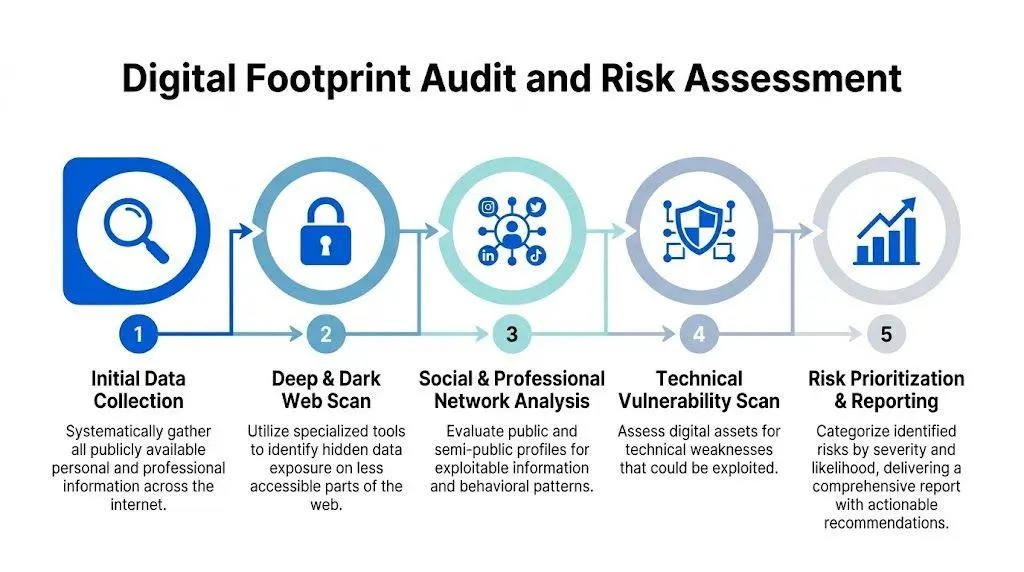
Phase I Digital Footprint Audit and Risk Assessment
Most self-audits are worthless because they focus on vanity results. Typing your name into Google tells you almost nothing about your attack surface. A proper audit produces a risk dossier. It identifies what exists, where it sits, who can access it, how easily it can be connected to you, and which items offer immediate strategic advantage.
Start with identity mapping
Begin by listing every identity variant tied to the principal. Legal name, shortened name, middle-initial versions, common misspellings, former surnames, company bios, foundation profiles, board pages, speaker pages, archived press mentions, and usernames. Then do the same for the spouse, adult children, household staff in visible roles, executive assistants, and key family office personnel.
The reason is simple. Attackers often reach the principal through a weaker perimeter. The assistant with an exposed email history. The child with public sports photos. The household employee whose profile reveals the name of the estate. The audit has to include the human network around wealth, not just the wealth holder.
Look beyond search engines
Search engines reveal what’s visible. They do not reveal everything that matters. You need to inspect:
- Surface web exposure including media coverage, people-search pages, directory listings, company websites, cached pages, and social media profiles.
- Deep web exposure such as public records, corporate filings, litigation databases, archived newsletters, forum references, conference attendee pages, and leaked document repositories.
- Dark web exposure including credential leaks, brokered databases, chatter around names or domains, and compromised account combinations tied to personal or business identities.
A serious audit also checks whether images, not just text, create exposure. Family photos can reveal vehicle plates, house interiors, school insignia, artwork, travel habits, or geolocation clues. That material is often more valuable to a stalker, fraudster, or extortionist than a spreadsheet of contact data.
Include financial surveillance in the risk file
Most privacy guides are written for ordinary consumers. They ignore how wealth structures create a different problem. 73% of online households express privacy concerns, yet standard guidance fails to address how laws such as the Bank Secrecy Act and evolving financial monitoring environments can create de-anonymization risk for complex holdings, family offices, and offshore structures, as discussed by the National Telecommunications and Information Administration.
That means your audit must track not just personal data, but transactional visibility. Which vendors know the principal’s legal name? Which properties are linked in searchable records? Which advisers reuse identifying details across portals, PDFs, invoices, travel bookings, and signatures? Privacy collapses when these fragments line up.
Your family office should know exactly which data points let an outsider connect the person, the vehicle, the residence, the entity, and the money flow. If nobody can answer that quickly, the office is operating blind.
Score exposure by exploit value
Don’t organize findings by platform. Organize them by danger.
A practical way to do it is to classify each finding into four categories:
| Risk category | What it includes | Why it matters |
|---|---|---|
| Identity leverage | Exposed emails, phone numbers, usernames, leaked credentials | Enables impersonation and account takeover |
| Physical exposure | Home addresses, travel habits, school references, vehicle details | Increases stalking and real-world security risk |
| Reputational exposure | False articles, forum allegations, leaked images, archived rumors | Shapes counterparties’ perception before facts catch up |
| Structural exposure | Entity records, adviser names, trust references, transaction patterns | Helps adversaries map wealth and target weak intermediaries |
Produce a dossier, not a spreadsheet
At the end of the audit, you need a document that names the highest-risk assets, links them to likely threat scenarios, and assigns ownership. Legal handles removal strategy. Security handles device and travel implications. The family office handles vendor controls. Household staff receive revised operating rules. Without named responsibility, audits become expensive PDFs nobody acts on.
Phase II Technical and Operational Hardening
Once the audit is done, you stop admiring the problem and start reducing it. Hardening is where principals either become difficult to target or remain convenient prey. Convenience is what usually loses.

Personal hardening for the principal and family
Your phone is not a phone. It’s a tracking device, document vault, authentication token, contact graph, and surveillance object. Treat it accordingly. The same applies to your spouse’s devices and your children’s devices.
The basic rules are not negotiable:
- Separate identities by function. Use distinct emails and phone numbers for private life, public-facing activity, property matters, travel, vendors, and high-value financial relationships.
- Stop using SMS for sensitive coordination. If a message would matter to a journalist, litigant, extortionist, or hostile counterparty, it shouldn’t travel by ordinary text.
- Remove default exposure points. Shared albums, automatic contact syncing, location sharing, cloud backups without review, and public social metadata create unnecessary linkage.
- Retire old accounts. Dormant accounts are often forgotten entry points and correlation tools.
- Limit family oversharing by rule, not by request. “Be careful” is not a policy. Named restrictions on travel posting, school references, interiors, vehicles, and live location are.
The family often resists this because it feels restrictive. Ignore that instinct. A UHNWI household needs operational discipline. Privacy fails through routine behavior, not dramatic mistakes.
Family office controls need enterprise standards
The family office is where personal privacy and institutional vulnerability collide. Staff handle legal documents, tax files, wire instructions, travel manifests, cap tables, residence data, passport copies, and adviser correspondence. If the office runs on trust and habit alone, it’s exposed.
A mature Data Loss Prevention system belongs here. According to Dataversity’s overview of privacy technologies, mature DLP deployments can reduce data breach incidents by 69% in financial sectors, and AI-tuned enterprise DLP can achieve 95% detection accuracy against insider threats. The underlying method is disciplined and clear: classify sensitive data, define policies that flag or block exfiltration, monitor across endpoints and cloud systems, integrate with SIEM for alerts, and keep auditing.
That sounds technical because it is. It also happens to be one of the few controls that directly addresses how data leaves an office.
What hardening should look like in practice
- Data classification first. Tag passport scans, trust records, deal materials, family calendars, medical files, and wire instructions as sensitive before trying to monitor movement.
- Vendor segregation next. Your travel adviser, residence manager, and PR consultant should not have the same access pattern or retention rights.
- Approval gates for outbound files. Large attachments, unusual destinations, and uploads to unsanctioned platforms should trigger review.
- Logging that humans read. Alerts buried in a dashboard are theater. Someone must own the response function.
The cleanest family offices run like tightly governed private institutions. The messy ones operate like a collection of trusted inboxes. Attackers prefer the second model.
Many clients also need a service layer that removes exposed personal data from websites, search engines, and platforms while the office hardens its systems. One example is internet privacy protection services for executives, which fits when technical controls alone won’t clean up existing exposure.
A short explainer is useful here:
Operational discipline beats expensive tools
We regularly see wealthy households buy premium hardware and still fail on routine protocol. They share access informally, allow personal devices into office workflows, forward sensitive files through consumer apps, and let vendors keep data forever. That defeats the point of every expensive tool in the stack.
Use a simple decision standard:
| Question | If the answer is yes | Required action |
|---|---|---|
| Can this data identify the principal or family? | Exposure creates personal risk | Restrict storage and transmission |
| Can this data move money or authorize action? | Exposure creates fraud risk | Add verification and logging |
| Can this data reveal location or routine? | Exposure creates physical risk | Limit access and retention |
| Can a vendor see this unnecessarily? | Exposure widens third-party risk | Remove or compartmentalize access |
Phase III Proactive De-Indexing and Legal Takedown Procedures
Most wealthy people wait too long to remove harmful material. They call after the article ranks, after the screenshots circulate, after a hostile forum thread is copied to three other sites, or after a leaked image becomes a search suggestion. That is backward. Privacy protection works best when you remove liabilities before they become part of the public record around your name.
Source removal and de-indexing are not the same
Clients confuse these constantly. Source removal means the content is deleted or disabled at the website, platform, forum, directory, or repository hosting it. De-indexing means search engines stop showing the result for relevant queries, even if the underlying page still exists.
You often need both. If a people-search site publishes your address, removal at source is the priority. If a lawful but damaging page can’t be deleted quickly, de-indexing may reduce discovery while parallel pressure continues. If you don’t understand the distinction, you’ll waste time issuing the wrong demands to the wrong parties.
For a more technical explanation of search-result suppression, review this guide to de-indexing and search result removal.
The legal environment is fragmented
Anyone telling you privacy law will solve this neatly is either inexperienced or selling fantasy. The legal environment remains uneven. In 2025, California’s CCPA enforcement produced a $1.55 million settlement with Healthline, the largest penalty under that law, but nearly half of the 19 U.S. states with extensive privacy laws still fail to offer adequate protection, and 79% of organizations face regulatory complexity according to White & Case’s privacy and cybersecurity outlook. That patchwork is exactly why proactive de-indexing and source-removal work matters.
If harmful material touches multiple jurisdictions, your strategy has to match the available lever. That may include privacy complaints, copyright-based action where rights exist, platform impersonation procedures, negotiated publisher revisions, court-backed demands in stronger cases, or European data rights where applicable. The wrong tactic wastes time and can harden the publisher’s position.
Act before amplification
The first copy of harmful content is usually the easiest to tackle. Once search engines crawl it, aggregators copy it, social users screenshot it, and AI systems summarize it, the matter gets harder and more expensive. That’s why we push clients to remove low-grade exposure early. The ugly but manageable forum post. The old directory page. The stale cached profile. The inaccurate personal record. Left alone, they become source material for the next problem.
Delay turns a contained item into a reputation architecture. Search engines, data brokers, and copycat sites build on what you leave standing.
A disciplined takedown strategy usually follows this order:
- Verify the exact source before taking action. Don’t fight the search result alone if the origin remains live.
- Preserve evidence with screenshots, timestamps, URLs, and account identifiers before any request is sent.
- Choose the strongest lever based on the content type. Privacy violation, impersonation, copyright, defamation posture, platform rule breach, or local legal remedy.
- Push for reupload resistance where possible. Removal without monitoring often means recurrence.
This is one area where speed matters more than rhetoric. A polished legal letter sent a week late is often less useful than a targeted procedural action sent the same day.
Phase IV Rapid Incident Response and Crisis Management
When an incident breaks, don’t improvise. Panic creates bad evidence handling, contradictory communications, and unnecessary spread. The first hour should look controlled even if the situation isn’t.
The priorities are containment, preservation, and command. Containment means reducing further exposure. Preservation means capturing proof before accounts disappear or posts change. Command means one person directs legal, technical, household, and communications decisions.
The first moves that actually matter
If a doxxing event occurs, stop the instinct to message everyone at once. Capture the page, the account details, the timestamps, and any connected reposts. Then determine whether the leaked data exposes residence, children, travel, or immediate physical risk. If it does, physical security and household notification move to the front of the queue.
If the incident is impersonation, secure the genuine account first. Change credentials, preserve proof of the fake profile, and submit platform reports using the strongest available identity verification. Then inform the small group most likely to be targeted by the imposter, usually staff, advisers, and close contacts.
If the issue involves private or intimate imagery, preserve evidence without redistributing the file, initiate platform and host reporting immediately, and route all action through counsel or a specialist response team so nobody on staff worsens the chain of publication.
Incident Response First Hour Protocol
| Incident Type | Primary Action | Secondary Action | Communication Lead |
|---|---|---|---|
| Doxxing or personal data leak | Preserve URLs, screenshots, timestamps, and account details | Assess immediate family and residence risk, then notify security | Family office chief of staff or security lead |
| Social media impersonation | Secure the real account and document the fake one | Report to platform and warn close contacts privately | Communications lead with legal oversight |
| Leaked credentials | Rotate affected credentials and isolate linked accounts | Review vendor or staff exposure tied to the same identity | IT or security lead |
| Private image or video exposure | Preserve evidence and trigger platform removal process | Restrict internal sharing and coordinate legal response | Legal counsel |
| False allegation gaining traction | Capture publications and social spread | Prepare factual response position and removal strategy | Counsel with reputation adviser |
One voice, not five
Families under pressure often make the same mistake. The lawyer sends one message. The assistant sends another. A spouse reports content from a personal account. A PR team drafts a statement. A security team starts calling vendors. That creates noise and sometimes admissions you didn’t intend.
In a privacy crisis, silence is often better than fragmented communication. Speak through one authorized channel and document every step.
Your team should know in advance who owns what. Legal handles preservation language and platform escalation. Security handles risk to person and property. Technical staff handle account containment. One senior operator decides what the family hears and when.
Phase V Long-Term Governance and Continuous Monitoring
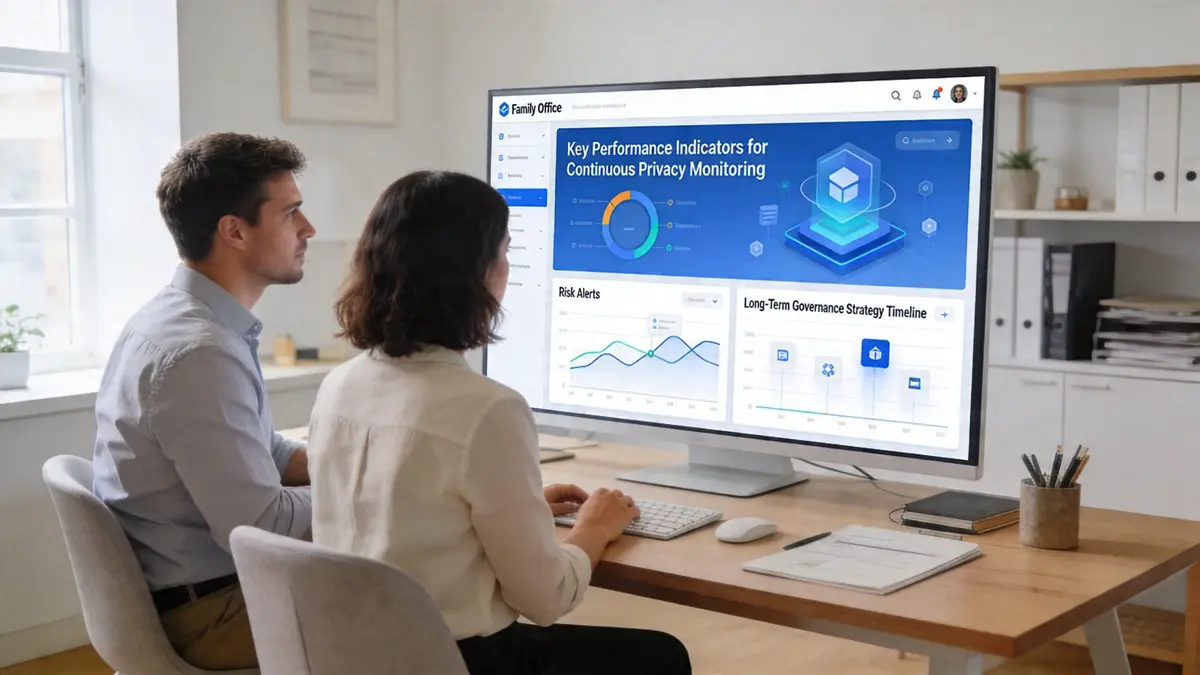
One-time cleanups don’t hold. New exposure appears through vendors, filings, social drift, scraped images, copied pages, forgotten accounts, and plain human carelessness. UHNWI privacy only becomes durable when it moves from project work to governance.
Governance has to be named
Every family office should assign privacy ownership. Not vaguely. Specifically. One person owns policy. One owns vendor review. One owns incident routing. One owns family and staff training. If everyone assumes someone else is watching the problem, nobody is.
The principal should also set written operating rules for the household and office. Posting delays for travel. Restrictions on interiors and children. No casual forwarding of IDs. Approved communications channels. Rules for external photographers, event staff, and domestic employees. Wealth creates complexity. Policy is how you stop complexity from turning into leakage.
Monitoring needs to cover new forms of attack
The threat is no longer limited to leaked records and obvious impersonation. AI-driven facial recognition and synthetic media create unique doxxing and deepfake risks for high-profile individuals, and general privacy laws don’t adequately address that category of harm, as discussed by Brookings on facial recognition and privacy.
That’s why continuous monitoring has become indispensable. Not generic brand monitoring. Specific scanning for biometric exposure, fake profiles, reused executive imagery, manipulated video, and newly indexed personal data. If your team only checks the obvious platforms, it will miss the places where damage starts.
Build a standing review cycle
A durable privacy program usually runs on a fixed cadence:
- Monthly review of new search exposure, data broker resurfacing, impersonation signals, and sensitive mentions.
- Quarterly controls review for vendors, staff access, and family compliance with posting and communications rules.
- Event-based review after travel, litigation, press coverage, transactions, property purchases, school changes, or household staffing changes.
This isn’t bureaucracy. It’s maintenance. The family office already monitors investment risk, insurance renewals, and legal exposure. Digital privacy belongs in the same operating rhythm.
The strongest privacy posture is boring to manage. That’s a compliment. Predictable monitoring and disciplined review prevent dramatic surprises.
Expert Answers to UHNWI Privacy Questions
Should I delete all social media
No. A total disappearance can create other problems, including impersonation space, narrative vacuum, and unnecessary friction with legitimate business visibility. What you should do is reduce the value of what remains public. Strip location habits, family references, interiors, travel timing, staff tags, and relationship clues. Keep controlled, low-information profiles where necessary. Remove the rest aggressively.
Is my family office really the main target
Often, yes. Attackers go where process is weakest. The principal may have a protected device and a cautious routine. The office may still be circulating passports, itineraries, NDAs, draft wires, and private numbers through routine workflows. Household staff, assistants, and outside vendors also attract attackers because they’re easier to manipulate and often hold enough context to make fraud believable.
Can lawyers handle this without a specialist privacy team
Sometimes, but not efficiently. Lawyers are vital when the issue requires a formal rights-based position, court posture, or cross-border legal handling. But many privacy problems are procedural and technical before they’re legal. Search suppression, source identification, platform escalation, impersonation evidence packages, reupload monitoring, and data broker remediation all require operational expertise. If you rely on one tool for every problem, you’ll move too slowly.
The right model is coordinated. Counsel for legal advantage. Security for physical implications. Technical operators for containment. Reputation specialists for removal and monitoring. That combination is how serious principals stay ahead of compounding exposure.
If your name, family, staff, and family office are already generating digital exposure you can’t fully map, fix that now. ContentRemoval.com handles confidential assessments, takedown strategy, de-indexing, and ongoing monitoring for high-profile clients who need decisive action rather than generic advice.
Frequently asked questions
Should a wealthy family delete all social media accounts?
No. Total disappearance creates impersonation space, a narrative vacuum, and friction with legitimate business visibility. Reduce the value of what remains public instead: strip location habits, family references, interiors, travel timing, staff tags, and relationship clues, keep controlled low-information profiles where needed, and remove the rest.
Why is the family office often the main target rather than the principal?
Attackers go where process is weakest. The principal may have a protected device and a cautious routine while the office circulates passports, itineraries, NDAs, draft wires, and private numbers through routine workflows. Household staff, assistants, and vendors hold enough context to make fraud believable and are easier to manipulate.
What should I do in the first hour of a doxxing incident?
Capture the page, the account details, the timestamps, and any connected reposts before messaging anyone. Then determine whether the leaked data exposes residence, children, travel, or immediate physical risk; if it does, physical security and household notification move to the front. Speak through one authorized channel and document every step.