
To get more Google reviews without policy risk, verify and complete your Google Business Profile, generate the direct review link from the built-in Get more reviews workflow, and send it within 1 to 2 days of a confirmed satisfaction moment by SMS, email or in person. Ask for honest feedback, never a five-star rating, and never gate or incentivize.
Key facts
- BrightLocal’s 2023 survey found 98% of consumers read local reviews and 87% used Google to evaluate businesses.
- Sending a direct review link rather than making customers search has been reported to lift completion by over 300%.
- Google prohibits review gating, incentives, posting on a customer’s behalf and pressuring for positive ratings.
- Track new reviews per month, response time and text-review rate, and answer every review within about 48 hours.
Where ContentRemoval.com comes in. ContentRemoval.com is the escalation route when a review program meets a review problem: fake or malicious reviews that ordinary flagging will not remove, coordinated attacks, competitor interference, impersonation or a profile that no longer reflects the business. Practice owners, marketing leads or general counsel usually make contact once a standard report has stalled. A free 15-minute Exposure Scan maps what is removable and the report is yours to keep. Get a Free, Confidential Exposure Scan or read how our review removal work is done.
Most advice on how do I get more Google reviews is too casual for a serious business. It treats reviews like a volume game. Ask more people, send more reminders, add a QR code, hope for the best.
That approach works until it creates a problem you can’t easily unwind. For a founder, executive, practice leader, or brand with real reputational exposure, careless review generation can produce the wrong kind of visibility. A rushed campaign can trigger policy issues, invite public complaints before they’re resolved, or create a review pattern that looks manufactured rather than credible.
The better question isn’t how to get the most reviews. It’s how to build a review acquisition system that is authentic, low-friction, operationally repeatable, and defensible if Google, a regulator, a litigant, or a skeptical prospective client ever scrutinizes it.
Rethinking the Goal Beyond Mere Volume
The internet keeps repeating the same bad instruction: ask everyone. That’s lazy advice. It ignores context, client sensitivity, staff judgment, and compliance risk.
Google reviews matter because buyers rely on them heavily. BrightLocal’s 2023 survey found that 98% of consumers read online reviews for local businesses, and 87% used Google specifically to evaluate businesses, which makes your Google review profile a primary trust signal in the market, as summarized by Chowly’s review survey discussion. That scale cuts both ways. A credible review profile helps. A manipulated or sloppy one becomes evidence against you.
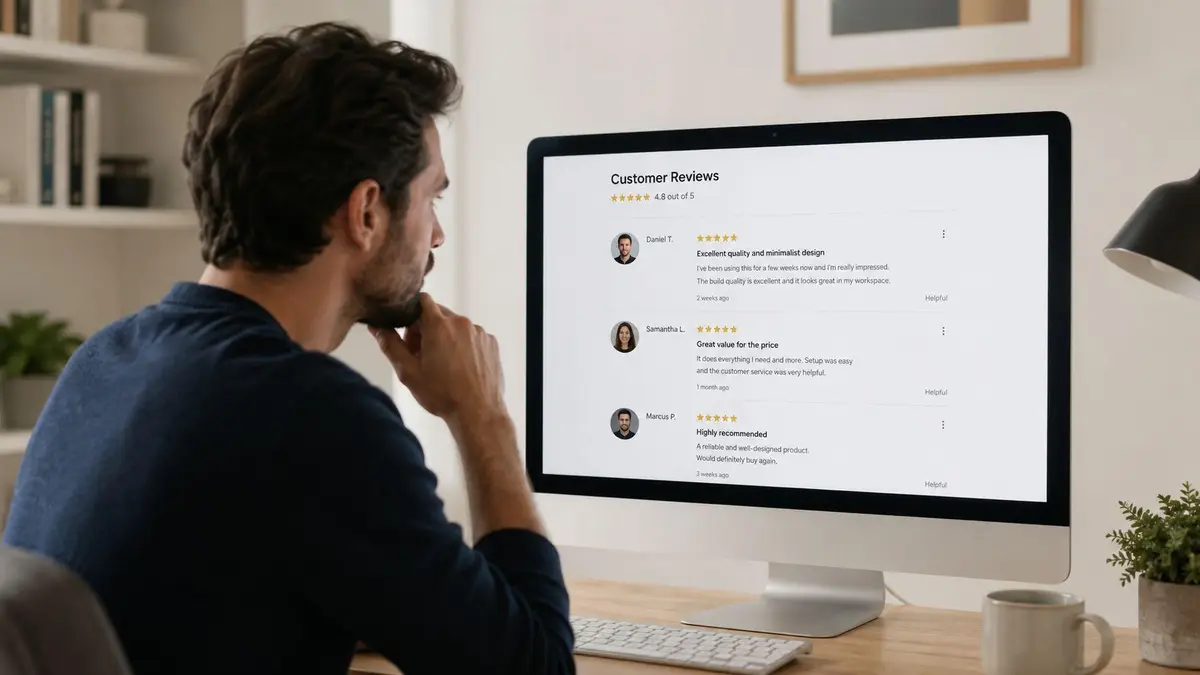
Reputation equity matters more than raw count
A high-quality review portfolio does three things at once. It signals client satisfaction, demonstrates responsiveness, and withstands scrutiny. That is very different from chasing a larger count at any cost.
If you run a law-adjacent practice, private clinic, advisory firm, family office service, or executive brand, your review strategy must protect confidentiality, avoid coercion, and preserve authenticity. The common growth-hack mentality misses that entirely.
Practical rule: If a review tactic would look awkward in a deposition, regulatory inquiry, newsroom investigation, or internal audit, don’t use it.
The right objective is a body of feedback that looks real because it is real. Mixed language, varied writing styles, specific service references, and steady collection over time all create credibility. A suspicious flood of templated praise does the opposite.
Why indiscriminate asking can backfire
“Ask everyone” sounds fair, but in execution it often becomes indiscriminate outreach by junior staff with no timing discipline and no judgment about active disputes, unresolved service issues, or privacy concerns. That’s how you turn one dissatisfied client into a public critic.
A review request should never be the first sign that you think an engagement went well. It should follow a real moment of satisfaction that your team has confirmed. That’s one reason effective reputation programs tie review requests to service milestones and client experience signals, not generic batch sends.
If your current process is primitive, fix that first. ContentRemoval’s perspective on building a stronger online reputation aligns with the broader reality here: visibility without control isn’t an asset. It’s exposure.
Establishing Your Foundational Framework
Before you ask anyone for a review, your Google Business Profile has to withstand scrutiny. Most profiles don’t. They’re incomplete, poorly categorized, visually inconsistent, and unmanaged in the one place where prospective clients are most likely to form a first impression.
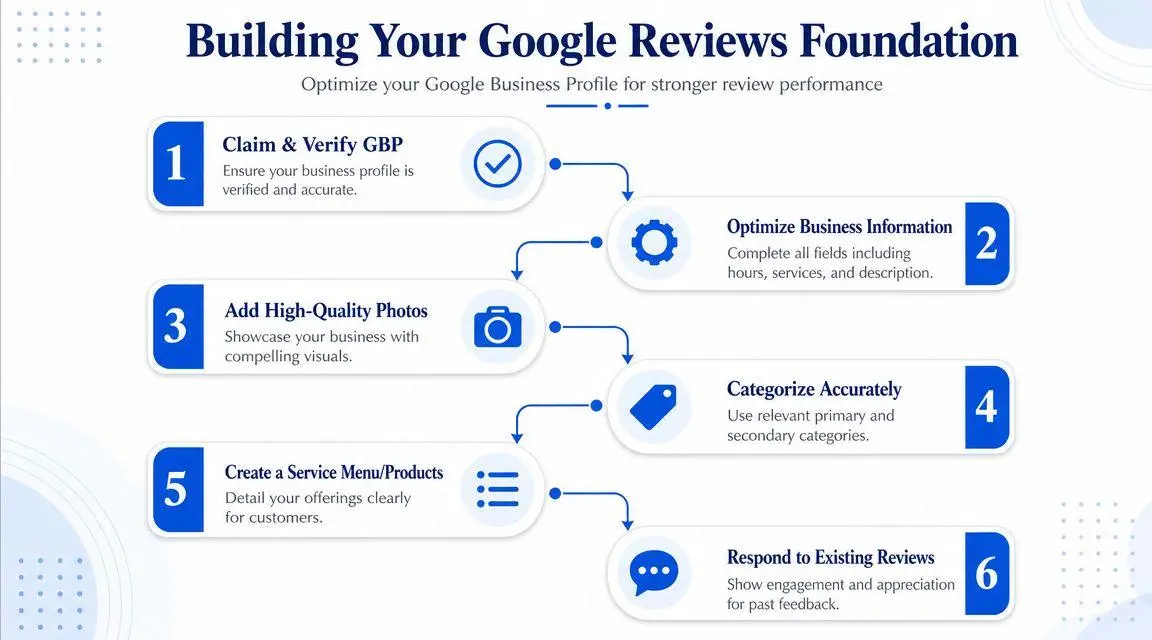
Build a profile that looks deliberate
Start with the basics, but don’t stop there.
- Verification first: Claim and verify the profile under the business entity that should control reputation assets long term, not under a departing employee’s login.
- Category discipline: Choose categories that accurately reflect the actual service model. Misclassification confuses both users and Google.
- Full field completion: Hours, service areas, description, services, products, and contact paths should all be current and internally consistent.
- Image quality: Use professional photos that reflect the environment clients will actually encounter.
- Q&A control: Seed common questions and answer them clearly so users don’t fill the vacuum with assumptions.
For a useful outside reference, Silva Marketing’s Google Business Profile tips offer a practical overview of profile optimization decisions that many operators overlook.
Your direct review link is the core asset
Google Business Profiles now include a built-in “Get more reviews” workflow that generates a direct, shareable review link. That link is the foundation of any serious review program, and industry guidance summarized by Referrizer’s Google review guide recommends using it within 1 to 2 days of service completion, when follow-through is usually strongest.
That detail matters because it changes review collection from passive hope into process design. Don’t ask clients to search for your business manually. Don’t send them to a cluttered profile page if you can send them directly to the review form. Don’t make them do administrative work to help you.
A short explainer is worth watching if your team needs a visual walkthrough of profile management and review setup:
Tighten signal integrity before outreach begins
The profile itself communicates more than many executives realize. Prospective clients infer whether your operation is careful, current, and credible from small details. Inconsistent phone numbers, weak imagery, stale updates, and unanswered old reviews all erode trust before anyone reads the latest feedback.
A review strategy can’t outperform a neglected profile. It only sends more people to inspect the neglect.
Set governance before launch. Assign ownership. Define who can edit profile details, who can respond publicly, and who approves escalation if a review raises legal or confidentiality concerns. That’s how you prevent your review program from becoming another unmanaged marketing channel.
Deploying Compliant Solicitation Campaigns
If you want more Google reviews, reduce friction and tighten your language. Those are the two levers that actually matter in practice.
One source claims that sending a direct review link rather than asking customers to find the business themselves can improve completion rates by over 300%, according to Brandastic’s review workflow guide. I agree with the principle even more than the number. Every extra click gives people a reason not to finish.
Ask at a real satisfaction point
The correct moment is not “end of month.” It’s not “after every invoice batch.” It’s not “whenever the marketing coordinator remembers.”
Ask right after a successful outcome that the client can recognize. A resolved issue. A completed installation. A smooth closing. A delivered engagement. A positive handoff call. If the client has just thanked your team, you have your opening.
Use channels that match the relationship:
- SMS for speed: Best when the relationship is already operational and mobile-first.
- Email for professional services: Better when clients expect formal communication and may want a moment to write thoughtfully.
- In-person ask plus follow-up link: Strongest when frontline staff can identify genuine satisfaction and send the link immediately.
For timing guidance and examples that fit operational workflows, this guide on review request best practices is worth reviewing with your customer-facing teams.
Use scripts that sound human, not needy
Here are templates I’d approve for an executive-facing brand.
SMS template
“Hi [First Name], thank you for working with us on [service]. If you’re comfortable sharing your experience, here’s the direct Google review link: [link]. We appreciate the feedback.”
Email template
Subject: Thank you for working with us
“Hi [First Name],
Thank you again for choosing us for [matter/service/project]. If you’d be willing to leave an honest Google review, you can do so here: [direct link].
Specific feedback about your experience helps future clients evaluate us accurately.
Thank you,
[Name]”
In-person close
“We appreciate your trust. If you’re open to it, I can text or email you the direct Google review link now.”
None of these scripts asks for a five-star rating. None pressures the client. None uses emotional manipulation. They request honest feedback and make completion easy.
Keep the request short, specific, and close to the service moment. Long explanations depress response.
Standardize the mechanics
Most review systems fail because the process lives in someone’s memory rather than in operations. Fix that.
- Create one approved direct link from your Google Business Profile.
- Generate a matching QR code for front desk, checkout, printed materials, and mobile staff kits.
- Train staff on trigger moments when a request is appropriate.
- Write approved templates by channel so no one improvises badly.
- Log requests and outcomes so you can see which teams, locations, and moments produce authentic reviews.
Thus, review generation becomes part of reputation management rather than generic marketing. If your broader reputation workflows are loose, these ORM business best practices provide a useful standard for governance and consistency.
Navigating the Rules of Engagement and Compliance
Most review advice collapses at this point. It tells you how to ask, but not where the line is. For a business with reputational exposure, that omission is unacceptable.
A major risk is review gating, which means selectively soliciting reviews from happy customers while diverting unhappy customers away from Google. Google prohibits that, and guidance summarized by Townsquare Interactive’s policy-focused review article also warns against offering discounts or gifts for reviews, posting reviews on behalf of customers, and pressuring customers for positive ratings.
The bright line you should enforce
The standard is simple. You may ask for honest feedback. You may not manipulate who gets asked based on expected positivity, and you may not buy or induce sentiment.
That means many common “clever” tactics are not clever at all. They are evidence of a process designed to distort the review environment.
If your system filters for praise before a customer reaches Google, you’ve already crossed the line.
Compliant vs prohibited review tactics
| Tactic | Compliant Approach (Safe) | Prohibited Approach (Risk) | Consequence of Risk |
|---|---|---|---|
| Asking for reviews | Ask clients for an honest review after a completed service | Ask only clients you believe will leave positive feedback | Creates review gating risk and undermines authenticity |
| Request language | Request feedback without specifying star rating | Ask for a five-star review or pressure for positive wording | Makes the solicitation look manipulative |
| Incentives | Thank clients for their time without tying value to a review | Offer discounts, gifts, credits, or perks in exchange for reviews | Exposes the business to policy violations and reputational blowback |
| Submission process | Send a direct Google review link to the client | Post a review on the client’s behalf or script the content too tightly | Raises authenticity concerns and can invalidate the review |
| Dissatisfied clients | Invite direct resolution while still maintaining a neutral review policy | Route unhappy clients into private channels while only happy clients get Google access | Fits the pattern Google prohibits under gating |
| Staff goals | Reward service quality or name mentions in feedback | Reward star ratings or pressure staff to secure only positive reviews | Distorts employee behavior and increases compliance risk |
What executive teams should audit immediately
Review generation isn’t just a marketing workflow. It’s a policy issue. Audit it like one.
- Check incentive leakage: Staff often promise small favors casually. Those promises count.
- Review intake forms: If you ask customers to rate satisfaction first and only send promoters to Google, that is a problem.
- Inspect agency scripts: Many outsourced vendors still use prohibited or dubious tactics.
- Examine frontline discretion: Teams need guidance on when not to ask, especially during disputes, refunds, or service recovery.
Safe language versus dangerous language
Safe request language sounds like this: “If you’re willing, we’d appreciate an honest Google review.” Dangerous language sounds like this: “If you had a good experience, please leave us a five-star review,” or “Leave a review and we’ll send you a thank-you gift.”
You also need internal rules on privacy-sensitive matters. If you operate in sectors where a public review can reveal a sensitive relationship, your ask must be more careful. Some clients won’t want to identify themselves publicly, even when satisfied. Respect that immediately and without pressure.
A compliant review program protects the business even when individual staff turnover, agencies change, or a platform review occurs later. That is the test. Not whether the tactic “works” this quarter.
Managing Negative and Fraudulent Reviews
A business that never receives criticism can look less credible than one that handles criticism well. Discerning buyers know real companies serve real people, and real people occasionally complain.
Your response protocol matters more than the fantasy of a perfect profile.
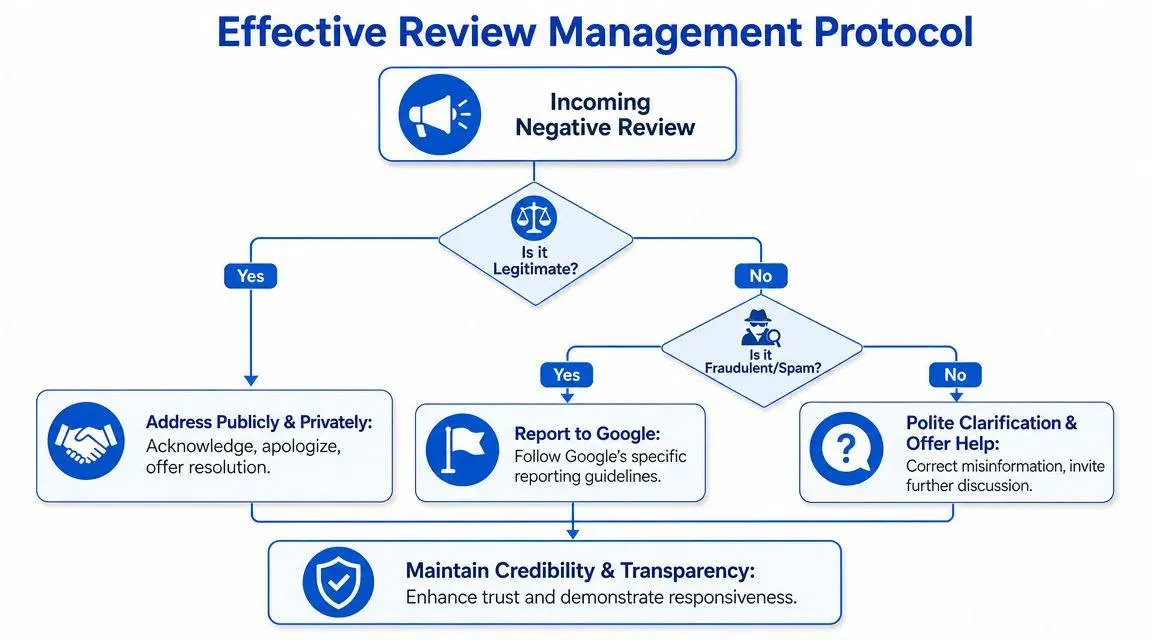
Separate legitimate criticism from platform abuse
Start with a classification decision. Is the review genuine but unfavorable, mistaken, or fraudulent?
If it’s legitimate criticism, respond publicly with restraint. Acknowledge the concern, avoid argument, offer an offline resolution path, and don’t disclose confidential details to defend yourself. Your audience is not only the reviewer. It’s every prospective client reading the exchange.
If it’s mistaken identity or incomplete context, correct the record politely and invite direct contact. Don’t sound accusatory. Often the most effective move is calm clarification.
If it’s fraudulent, spam, impersonation-based, or otherwise policy-violating, preserve evidence before you act. Capture screenshots, dates, account details, and any internal records showing the reviewer was never a client or that the statements are false.
A practical response matrix
-
Legitimate and resolvable
- Reply promptly and professionally
- Move the dispute offline
- Document the resolution attempt internally
-
Unclear but possibly genuine
- Respond with a neutral request for contact
- Avoid factual admissions without internal verification
- Monitor for follow-up or pattern behavior
-
Fraudulent or malicious
- Flag the review through Google
- Compile supporting evidence
- Escalate if the review forms part of a broader harassment or defamation pattern
A public response should show control, not indignation. Anger persuades no one.
Know when standard reporting is not enough
Google’s removal pathways are narrow. Reviews that are false in spirit but not obviously prohibited by platform rules may remain live. That’s where many businesses waste time arguing inside the review thread or filing repeated weak reports.
For high-stakes matters, the work becomes evidentiary and strategic. You need to determine whether the issue is simple spam, coordinated abuse, competitor interference, impersonation, or defamatory content connected to a larger campaign. Those scenarios require different handling.
When a review is plainly harmful and ordinary reporting has stalled, firms such as ContentRemoval.com can assist with false review removal and broader reputation management where platform processes alone don’t resolve the issue. For a deeper executive-level framework, see this guide on removing bad Google reviews strategically.
Don’t overreact to every negative review
Not every bad review should trigger escalation. Some should trigger operational correction instead. If multiple reviewers mention the same friction point, that isn’t a content problem. It’s a service problem becoming visible.
The strongest teams treat negative reviews as two separate matters at once. First, they manage the public record. Second, they diagnose whether the complaint reveals a pattern in scheduling, communication, billing, wait times, or expectation-setting. That is how a review profile becomes a management instrument rather than a vanity score.
From Metric to System An Optimization Playbook
Executives ask how do I get more Google reviews when the better management question is this: what does the review system tell us about operations, trust, and risk?
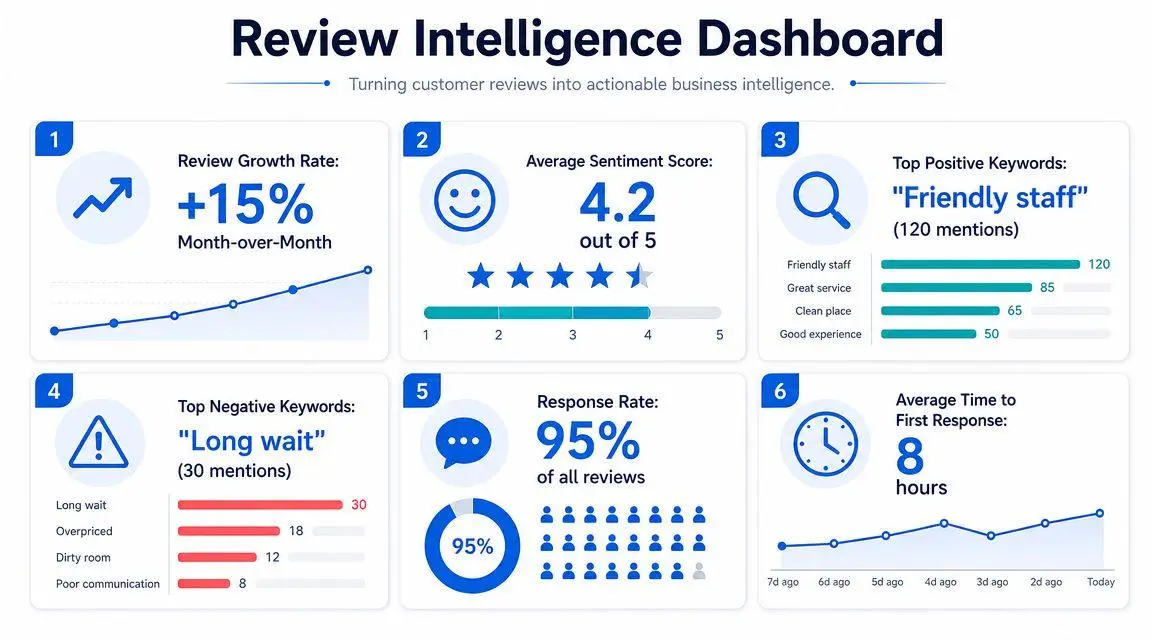
A mature review-generation approach treats reviews as a process metric. Guidance summarized by Funk Levis on operational review systems recommends tracking new reviews per month, personalizing requests, and responding to every review within about 48 hours. That’s the correct mindset. Reviews are not a campaign. They are an operating rhythm.
Measure what management can actually improve
Track a small set of metrics with discipline.
- New reviews per month: This shows whether request activity is steady or erratic.
- Response time: Delayed responses communicate neglect.
- Text-review rate: Written feedback carries more diagnostic value than star ratings alone.
- Theme analysis: Look for recurring praise and recurring complaints by office, location, employee, or service line.
If you operate multiple locations or need structured monitoring across many public pages, technical teams sometimes use data collection tools such as a web scraping API to gather public review information for analysis. The tool is not the strategy. The value comes from what your operators do with the findings.
Optimize the workflow, not just the ask
A review request can be tested without becoming manipulative. Change one variable at a time. Compare channels. Compare timing. Compare sender identity. Compare whether first-name personalization changes completion quality. Then standardize what produces authentic feedback with the least friction.
Reviews should feed operational decisions. If they don’t change staffing, training, communication, or service delivery, you’re collecting them for vanity.
The strongest organizations distinguish themselves through their approach to reviews. They stop treating reviews as a scoreboard and start using them as market intelligence. Reviews reveal what clients remember, what they value enough to mention publicly, and where preventable dissatisfaction keeps surfacing. That information belongs in management meetings, not buried in a marketing dashboard.
If your business is facing fake reviews, coordinated attacks, review-policy exposure, or a profile that no longer reflects the quality of the underlying operation, ContentRemoval.com can assess the situation confidentially and map a response that includes removal strategy, escalation pathways, and long-term reputation protection.
Frequently asked questions
Is it against Google’s rules to ask customers for a five-star review?
Yes. Asking for a specific rating or pressuring for positive wording makes the solicitation look manipulative and falls within conduct Google prohibits. Ask for an honest review instead, keep the request short, and send the direct link close to the service moment.
What is review gating and why is it a problem?
Review gating is asking only customers you expect to be positive, or surveying satisfaction first and routing only promoters to Google while diverting unhappy customers elsewhere. Google prohibits it. A compliant program invites everyone to leave honest feedback while offering direct resolution to dissatisfied clients without blocking their access to Google.
When is the best time to send a Google review request?
Right after a successful outcome the client can recognize, such as a resolved issue, completed project or positive handoff, and within 1 to 2 days of service completion. Batch sends at month end or after invoicing miss the satisfaction moment and increase the chance of asking during an unresolved dispute.