
Hotel online reputation management is the systematic monitoring, response and improvement of how a property appears across TripAdvisor, Google Business Profile, Booking.com, Expedia, Yelp, social platforms and search results. It combines fast review responses, ethical review generation, staff training, crisis protocols and, where content is false or defamatory, platform reporting and takedown routes rather than suppression alone.
Key facts
- Hotels responding to reviews within 24 hours tend to show higher overall ratings than those that delay.
- Review requests sent 2 to 3 days after checkout achieve the strongest response rates.
- Offering discounts or rewards for reviews breaches most platform terms and can trigger removal or penalties.
- Responses that reveal dates, room numbers or guest circumstances can create a second privacy problem.
Where ContentRemoval.com comes in. ContentRemoval.com works with hotels, resorts and hospitality groups on the content that day-to-day review management cannot fix: defamatory reviews alleging health violations or crimes that never happened, malicious posts from non-guests, privacy violations and negative search results tied to the property’s name. General managers, brand marketing leads or ownership counsel usually make contact after platform reports have been denied. A free 15-minute Exposure Scan maps what is removable and the report is yours to keep. Get a Free, Confidential Exposure Scan or read how our reputation management work is done.
The hospitality industry operates in an environment where a single negative review can influence hundreds of booking decisions. For hotels, motels, resorts, and boutique properties, online reputation has become the primary factor determining occupancy rates, pricing power, and long-term profitability. Unlike traditional word-of-mouth recommendations that remained confined to small social circles, digital reviews and social media comments now reach global audiences instantaneously, creating both unprecedented opportunities and significant vulnerabilities for property owners and management teams.
The Foundation of Hotel Online Reputation Management
Hotel online reputation management encompasses the systematic monitoring, analysis, response, and strategic improvement of how a property appears across digital channels. This discipline extends far beyond simply responding to reviews on TripAdvisor or Booking.com. It requires comprehensive oversight of search engine results, social media platforms, industry-specific review sites, local business directories, and even user-generated content on platforms like Instagram and YouTube.
The financial implications of reputation management cannot be overstated. Research consistently demonstrates that hotels with higher review ratings command premium pricing, achieve better occupancy rates, and generate superior revenue per available room. A half-star improvement in overall rating can translate to occupancy increases of 10-20% during competitive periods, while properties with ratings below 3.5 stars face severe booking disadvantages regardless of location or amenities.
Core Components of Effective Reputation Systems
Building a robust reputation management framework requires integration across multiple operational areas. Guest experience begins at the first touchpoint-often through search results or social media discovery-and continues through booking, arrival, stay, and post-departure communication. Each phase presents opportunities to shape perception and mitigate potential negative feedback.
- Real-time monitoring systems that track mentions across all major platforms
- Response protocols with defined timelines and escalation procedures
- Staff training programs ensuring consistent service delivery
- Data analysis tools identifying trends and recurring issues
- Crisis management procedures for handling serious reputation threats
The most successful hotel reputation strategies recognize that online perception reflects operational reality. While tactical responses to reviews matter, sustainable reputation improvement requires addressing underlying service quality, facility maintenance, and staff performance issues that generate negative feedback in the first place.
Review Platform Management and Response Strategy
Major booking platforms and review sites serve as the primary reputation battleground for hotels. TripAdvisor, Google Business Profile, Booking.com, Expedia, and Yelp collectively influence the majority of travel decisions, with effective review management requiring platform-specific approaches due to varying algorithms, display formats, and user demographics.
Response timing significantly impacts effectiveness. Studies indicate that hotels responding to reviews within 24 hours demonstrate higher overall ratings compared to those with delayed or absent responses. This speed signals attentiveness to guests and provides prospective customers with confidence that management actively monitors feedback and addresses concerns.

Crafting Effective Review Responses
Professional review responses follow specific structural principles that maximize positive impact while minimizing legal and reputational risks. For positive reviews, responses should express genuine appreciation, personalize acknowledgment of specific details mentioned, reinforce brand values, and invite future visits. Generic “thank you” responses waste valuable opportunities to strengthen guest relationships and showcase property personality to potential customers reading the exchange.
Negative review responses demand greater sophistication. The response serves three distinct audiences: the original reviewer, prospective guests evaluating the property, and search engine algorithms that factor response presence into local SEO rankings. Effective negative responses acknowledge the guest’s experience without admitting fault prematurely, explain context where appropriate, demonstrate concrete steps taken to prevent recurrence, and invite offline resolution for legitimate grievances.
| Response Type | Primary Goal | Key Elements | Avoid |
|---|---|---|---|
| Positive Reviews | Relationship Building | Personal details, gratitude, invitation | Generic templates, over-promotion |
| Negative Reviews | Damage Control | Empathy, context, resolution | Defensiveness, blame, legal exposure |
| Neutral Reviews | Conversion Opportunity | Highlighting positives, addressing gaps | Desperation, excessive length |
Several categories of negative reviews warrant particularly careful handling. Defamatory content containing false statements about health violations, criminal activity, or serious misconduct may qualify for removal through platform reporting mechanisms or, in severe cases, professional reputation management services that specialize in content takedown and de-indexing strategies.
Search Engine Results and Digital Footprint Control
When potential guests search for a hotel by name, the first page of results essentially serves as the property’s digital front entrance. Negative news articles, complaint sites, or malicious content appearing in these prime positions can devastate booking rates regardless of actual service quality. Comprehensive hotel online reputation management requires active control of search engine results pages through a combination of content creation, technical SEO, and when necessary, removal of harmful content.
Google’s local search algorithm weights several reputation factors heavily, including review volume, average rating, response rate, and recency of feedback. Properties appearing in the local pack (the map-based results displayed for location-based searches) receive substantially more visibility than those relegated to organic listings below. Maintaining optimal Google Business Profile presence requires consistent information accuracy across all directories, regular posting of updates and offers, comprehensive photo galleries, and prompt review responses.
Managing Harmful Search Results
Certain types of content pose disproportionate reputational threats when appearing in hotel name searches. Negative news coverage from local media outlets, complaints on consumer advocacy sites, or defamatory blog posts can persist in search results for years, continuously damaging the property’s digital reputation. While traditional SEO suppression tactics-creating positive content to push negative results to later pages-offer one approach, they require sustained effort and provide no guarantee of success.
For hotels facing serious reputation crises from false or defamatory content, removing negative content from Google search results through direct takedown represents a more permanent solution. This approach involves identifying legal grounds for removal, submitting properly formatted requests to search engines and source websites, and following up through technical and legal channels to secure de-indexing.
Properties dealing with privacy violations, explicit content posted by malicious parties, or copyright-infringing material have clearer paths to content removal compared to negative but truthful reviews. Understanding these distinctions proves critical when developing response strategies for different types of reputational threats.
Social Media Integration and Brand Building
Social media platforms serve dual reputation functions for hotels: brand building channels that showcase property features and guest experiences, and public feedback forums where service issues can rapidly escalate. Instagram, Facebook, Twitter, and increasingly TikTok influence booking decisions, particularly among younger travelers who rely on visual content and peer recommendations over traditional review sites.
Proactive social media strategies focus on generating authentic user-generated content that showcases genuine guest experiences. Encouraging photo sharing through Instagram-worthy design elements, creating branded hashtags, and featuring guest content (with permission) builds social proof more effectively than purely promotional posts. According to hospitality industry research, properties with active social engagement achieve 35% higher booking inquiry rates compared to those with minimal social presence.
Crisis Response on Social Platforms
Social media crises require immediate response protocols due to viral spread potential. A single negative experience shared by an influencer or well-connected guest can reach thousands within hours, creating reputational damage that persists long after the original incident. Effective crisis management on social platforms requires several key capabilities:
- Real-time monitoring systems detecting brand mentions across platforms
- Escalation procedures routing serious issues to senior management immediately
- Approved response templates enabling quick acknowledgment while investigation proceeds
- Authority to resolve empowering social media managers to offer compensation when appropriate
- Documentation protocols preserving evidence and response records for potential legal needs
The permanent nature of social media content creates particular challenges. Unlike review sites with content policies and removal procedures, social platforms generally protect user speech broadly, making deletion of negative posts extremely difficult. This reality emphasizes prevention and rapid resolution over post-crisis cleanup.
Review Generation and Guest Feedback Systems
Passive reputation management-simply responding to reviews that guests voluntarily submit-leaves hotels vulnerable to selection bias where extremely satisfied and highly dissatisfied guests dominate feedback while the satisfied majority remains silent. Strategic review generation programs actively solicit feedback from all guests, improving review volume, elevating average ratings, and providing management with comprehensive performance data.
Timing and channel selection significantly impact review solicitation effectiveness. Research indicates that requests sent 2-3 days post-checkout achieve optimal response rates, allowing guests time to return home while memories remain fresh. Multi-channel approaches combining email, SMS, and in-app notifications generate higher participation than single-method campaigns.
Incentivizing Reviews Ethically
Review platforms maintain strict policies against incentivized reviews, creating compliance challenges for hotels seeking to boost participation. Offering discounts or rewards specifically for leaving reviews violates most platform terms of service and can result in review removal or account penalties. However, industry best practices suggest several compliant approaches:
- General loyalty programs rewarding engagement without specific review requirements
- Post-stay surveys collecting feedback internally before platform requests
- Gamification elements making review submission part of broader brand interaction
- VIP recognition programs acknowledging active community participants
The most effective review generation systems integrate with property management software, automatically triggering requests based on checkout date, stay characteristics, and guest profile. Segmentation proves valuable-luxury suite guests may receive different messaging and timing compared to budget room occupants, while business travelers often respond better to professional LinkedIn-oriented approaches versus leisure travelers preferring Instagram integration.
Reputation Monitoring Technology and Analytics
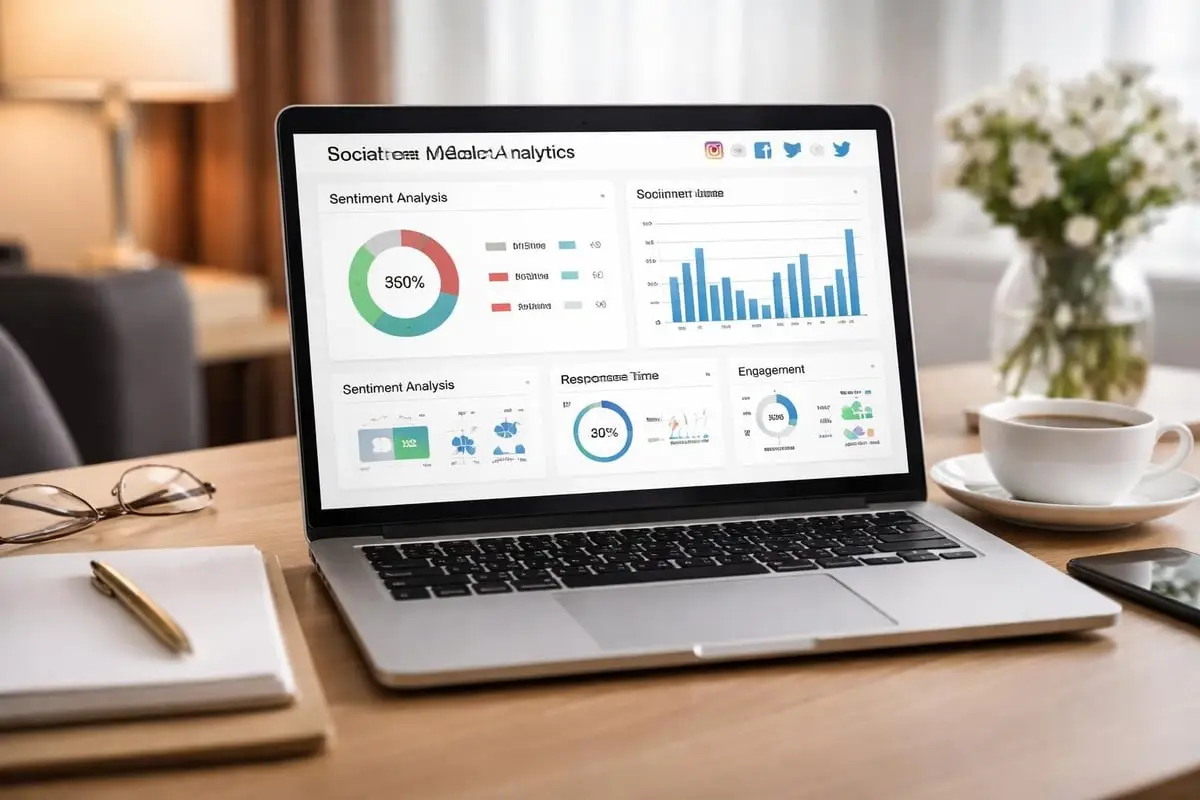
Modern hotel online reputation management relies heavily on specialized software platforms that aggregate data from dozens of sources, providing centralized dashboards for monitoring, analysis, and response. These systems track mentions across review sites, social media, news outlets, and forums, applying sentiment analysis to categorize feedback and identify emerging issues before they escalate.
Key performance indicators for reputation monitoring extend beyond simple average ratings. Comprehensive analytics examine rating trends over time, sentiment distribution across different guest segments, common themes in negative feedback, competitive positioning relative to comparable properties, and correlation between operational changes and guest perception shifts.
| Metric Category | Key Indicators | Business Impact |
|---|---|---|
| Volume Metrics | Total reviews, monthly growth rate, platform distribution | Search visibility, trust signals |
| Rating Metrics | Average score, rating trend, competitive comparison | Pricing power, conversion rates |
| Sentiment Analysis | Positive/negative ratio, theme frequency, tone assessment | Operational priorities, service gaps |
| Response Metrics | Response rate, average response time, resolution effectiveness | Guest relationships, crisis prevention |
Advanced analytics platforms incorporate natural language processing to identify specific amenity mentions, service touchpoints, and staff interactions generating positive or negative sentiment. This granular data enables targeted operational improvements-for example, discovering that breakfast quality drives disproportionate rating impact compared to other amenities, justifying focused investment in culinary operations.
Staff Training and Operational Excellence
Technology and tactics cannot compensate for poor service delivery. Sustainable hotel online reputation management requires embedding reputation awareness throughout organizational culture, ensuring every staff member understands their role in shaping guest perception and ultimately online reviews. From front desk associates to housekeeping staff to maintenance technicians, every guest interaction contributes to the experience that generates digital feedback.
Service recovery training proves particularly valuable for reputation outcomes. Research from hospitality management studies demonstrates that guests experiencing problems that receive immediate, empathetic resolution often leave more positive reviews than guests with entirely problem-free stays. This counterintuitive finding reflects the powerful impression created by staff members who take ownership of issues and go beyond standard procedures to ensure satisfaction.
Creating Reputation-Conscious Culture
Leading hotels integrate reputation metrics into departmental performance evaluations, making online feedback a shared responsibility rather than solely a marketing concern. Housekeeping teams see specific mentions of room cleanliness, maintenance staff track facility-related comments, and food service operations monitor dining experience reviews. This transparency creates accountability and helps staff understand the direct connection between their work and business performance.
Regular review-sharing sessions-where teams discuss both positive recognition and constructive criticism-normalize feedback as a learning tool rather than punitive measure. Celebrating staff members mentioned by name in glowing reviews, while coaching those associated with negative experiences, reinforces the personal impact of service quality on reputation outcomes.

Competitive Intelligence and Market Positioning
Hotel online reputation management extends beyond managing one’s own reviews to systematically analyzing competitive positioning within the local market. Understanding how competing properties perform on key reputation metrics, what guests praise or criticize about alternatives, and where gaps exist in market offerings informs strategic positioning and marketing messaging.
Competitive reputation analysis reveals opportunities for differentiation. If nearby hotels consistently receive complaints about parking difficulties, a property emphasizing ample free parking in messaging and ensuring this amenity receives prominent review mentions gains competitive advantage. Similarly, identifying service gaps where competitors underperform-perhaps responsiveness to special requests or accommodation of dietary restrictions-creates opportunities to excel in areas that matter to guests.
Pricing strategies increasingly incorporate reputation metrics as luxury properties with superior ratings justify premium positioning while budget hotels must compete primarily on value perception. Dynamic pricing algorithms now factor review scores and sentiment trends, automatically adjusting rates based on reputation changes relative to competitive set performance.
Crisis Management and Reputation Recovery
Even well-managed properties occasionally face serious reputation crises-health department violations, criminal incidents on premises, natural disasters causing temporary closures, or viral negative experiences generating widespread media attention. These situations demand specialized crisis communication protocols that differ substantially from routine negative review management.
The initial response window proves critical. In the digital age, hotels typically have 2-4 hours before a crisis story fully develops across social media and news outlets. This narrow window requires pre-established decision-making authority, approved holding statements addressing common crisis scenarios, and media relations protocols enabling rapid, coordinated communication.
Recovery Strategies for Severe Reputation Damage
Properties recovering from major reputational incidents must balance transparency with strategic messaging. Acknowledging problems demonstrates accountability while explaining remediation steps provides reassurance about future safety and quality. However, over-emphasizing past issues in communication can inadvertently extend crisis duration by keeping negative associations prominent.
Multi-channel recovery campaigns typically combine:
- Direct communication to past guests explaining situation and improvements
- Media outreach sharing recovery story and quality improvements
- Influencer partnerships generating fresh positive content and experiences
- Review generation from satisfied recent guests to dilute crisis-period feedback
- SEO optimization ensuring positive recovery content ranks prominently
For situations involving false or defamatory content that continues damaging reputation after crisis resolution, hotels may need to explore digital footprint cleanup strategies that permanently remove harmful material rather than attempting to suppress it through content creation alone.
Legal Considerations and Content Removal
Hotel online reputation management intersects with multiple legal domains including defamation law, privacy regulations, intellectual property rights, and platform terms of service. Understanding these frameworks enables properties to pursue appropriate remedies when facing content that crosses from legitimate criticism into actionable harm.
Defamatory reviews containing provably false statements of fact-claims of health code violations that never occurred, allegations of criminal activity without basis, or fabricated service failures-may qualify for legal action. However, the high bar for defamation claims, particularly against anonymous reviewers, makes litigation generally impractical except in extreme cases. Platform reporting mechanisms offer more accessible remedies for content violating review site policies.
Platform Policies and Removal Procedures
Major review platforms maintain content guidelines prohibiting certain types of posts including those containing hate speech, explicit content, personal attacks on staff, competitor sabotage, and reviews from non-guests. Successfully navigating removal procedures requires understanding platform-specific reporting processes, providing compelling evidence of policy violations, and escalating through appropriate channels when initial requests receive denials.
Google’s review removal policies differ from TripAdvisor’s, which differ from Yelp’s, necessitating platform-specific strategies. Some sites employ automated first-level review of removal requests, requiring appeals to reach human moderators who can evaluate nuanced situations. Properties managing reputation across multiple platforms benefit from documented procedures for each major site, including contact escalation paths and typical response timelines.
For content that doesn’t violate platform policies but contains false statements causing substantial business harm, specialized services focusing on content removal employ legal, technical, and strategic approaches to secure takedowns and de-indexing across search engines and websites, protecting hotels from ongoing reputational damage.
Privacy Concerns and Guest Data Protection
Hotel reputation management systems collecting guest information for review solicitation, feedback analysis, and marketing purposes must comply with privacy regulations including GDPR in Europe, CCPA in California, and various international data protection laws. Non-compliance creates both legal liability and reputational risk, as privacy breaches themselves generate negative publicity and erode guest trust.
Best practices for privacy-compliant reputation management include obtaining explicit consent for marketing communications, providing clear opt-out mechanisms, securing guest data through appropriate technical safeguards, limiting data retention to legitimate business purposes, and training staff on privacy obligations. Third-party reputation management platforms must also demonstrate compliance through appropriate data processing agreements and security certifications.
Guest concerns about privacy extend to review responses that reveal booking details, personal circumstances, or private conversations. Responses mentioning specific dates, room numbers, or guest situations-even when defending against unfair criticism-may violate privacy expectations and create additional reputational harm. Generic, professional responses that avoid specific details generally serve hotels better than detailed rebuttals exposing private information.
Integration with Revenue Management and Marketing
Forward-thinking hotel operations integrate reputation data directly into revenue management systems, using sentiment trends, competitive positioning, and review volume as inputs for pricing decisions and inventory allocation. Properties experiencing positive reputation momentum can implement more aggressive pricing strategies, while those facing declining scores may need promotional tactics to maintain occupancy during recovery periods.
Marketing campaigns increasingly leverage reputation assets, featuring authentic guest reviews in advertising creative, showcasing user-generated social content, and building campaigns around specific praised amenities or experiences. This approach provides more credible messaging than traditional promotional content while reinforcing the aspects of guest experience generating positive feedback.
Attribution analysis connecting review performance to booking sources reveals which platforms and review sites drive the most valuable traffic. A hotel discovering that TripAdvisor rankings substantially influence direct bookings might prioritize that platform for response efforts and review generation, while another property finding that Google reviews matter most for their market would emphasize Google Business Profile optimization.
The Role of Guest Experience Design
The most sophisticated approach to hotel online reputation management recognizes that reputation outcomes begin with intentional experience design creating inherently review-worthy moments. From arrival through departure, thoughtfully designed touchpoints generate positive emotional responses that guests naturally want to share, reducing dependence on formal review solicitation.
Instagram-worthy design elements-dramatic lobby features, unique room amenities, scenic property views, or artistic installations-encourage organic social sharing that builds brand awareness and reputation simultaneously. Food and beverage offerings designed for visual appeal generate natural content creation, while unexpected service touches create story-worthy moments that guests mention in reviews.
The concept of “instagrammability” extends beyond aesthetics to encompass any distinctive, shareable aspect of the guest experience. A hotel providing complimentary bikes for exploring local neighborhoods, hosting rooftop yoga sessions with city views, or offering locally-sourced artisanal amenities creates differentiated experiences worth mentioning in reviews and social posts.
Emerging Technologies and Future Trends
Artificial intelligence and machine learning increasingly power hotel online reputation management systems, enabling capabilities like automatic response drafting, predictive analytics identifying guests likely to leave negative reviews, and real-time sentiment analysis of incoming feedback. These technologies will continue advancing, potentially enabling personalized reputation management where response strategies adapt to individual reviewer characteristics and sentiment patterns.
Voice search and AI assistants are reshaping how travelers discover and evaluate hotels. Optimizing for voice queries requires different approaches than traditional text search, with emphasis on natural language question patterns and featured snippet optimization. As travelers increasingly ask Alexa or Google Assistant for hotel recommendations, reputation signals feeding these systems gain importance.
Blockchain-based review systems promising verified, tamper-proof guest feedback may disrupt traditional platform dominance, though mainstream adoption remains uncertain. Video reviews continue growing in prevalence, requiring hotels to monitor and respond to visual content across YouTube, TikTok, and emerging platforms. Virtual reality property tours and AI-powered chatbots handling initial guest concerns represent additional technological frontiers affecting reputation management practices.
Mastering hotel online reputation management requires strategic integration of technology, operational excellence, crisis preparedness, and authentic guest relationship building that extends far beyond simple review responses. For properties facing serious reputational threats from defamatory content, privacy violations, or harmful search results that standard practices cannot resolve, specialized expertise becomes essential. Content Removal helps hotels and hospitality businesses permanently remove damaging content, de-index harmful search results, and restore online reputation through direct takedown strategies, enabling properties to focus on delivering exceptional guest experiences rather than managing digital crises.
Frequently asked questions
How fast should a hotel respond to a negative review?
Within 24 hours where possible. Response speed signals attentiveness to the reviewer, reassures prospective guests reading the exchange, and feeds local search ranking factors. The reply should acknowledge the experience without admitting fault prematurely, add context where appropriate, note steps taken and invite offline resolution.
Can a hotel offer a discount for leaving a Google or TripAdvisor review?
No. Incentivizing reviews violates most platform terms of service and can result in review removal or account penalties. Compliant alternatives include general loyalty programs that reward engagement without a review requirement, internal post-stay surveys before platform requests, and recognition programs for active guests.
When can a hotel get a fake or defamatory review removed?
When the review breaches platform policy: content from non-guests, competitor sabotage, personal attacks on staff, hate speech or explicit material, or provably false factual claims such as fabricated health code violations. Each platform has its own reporting path and appeal route to reach a human moderator, and content that survives policy review may need legal or takedown work.