
Examples of defamation of character include false criminal accusations, fabricated fraud or business misconduct claims, false sexual misconduct allegations, invented health conditions, infidelity rumors, false extremist or hate-crime associations, deepfake or impersonation content, and false plagiarism or IP theft claims. Many qualify as defamation per se, where reputational harm is presumed and specific financial loss need not be proven.
Key facts
- False accusations of crime, fraud, sexual misconduct or serious disease are typically defamation per se.
- Truth is the most common defense, so verifiably false factual claims give the strongest legal position.
- Every category starts with preserving URLs, screenshots, dates and publisher details before any demand.
- Impersonation and deepfakes have their own platform policies, which can be faster than a defamation claim.
Where ContentRemoval.com comes in. ContentRemoval.com removes defamatory material at the source and from search once the false statements have been identified and the evidence packaged, working alongside your defamation counsel rather than in place of them. Executives, founders and their lawyers usually make contact once a cease-and-desist has stalled or the content is spreading across platforms. A free 15-minute Exposure Scan maps what is removable and the report is yours to keep. Get a Free, Confidential Exposure Scan or read how our defamation removal work is done.
In high-stakes business and public life, reputation is the most valuable and vulnerable asset. A single false statement (a fabricated review, a malicious social media post, or a sophisticated deepfake) can dismantle years of credibility, jeopardize major deals, and inflict irreparable personal harm. These are not minor inconveniences; they are strategic attacks.
Understanding the precise legal and tactical distinctions between different forms of reputational harm is the first critical step in mounting an effective defense. This guide moves beyond abstract legal theory to provide concrete examples of defamation of character, dissecting each scenario to reveal the underlying mechanisms of the attack and the immediate, decisive actions required to neutralize the threat.
We will analyze the anatomy of defamation, from false accusations of criminal conduct to fabricated business misconduct. This provides the strategic framework high-profile individuals require to protect their legacy and livelihood from targeted reputational assaults. Each example is broken down to offer a clear analysis of why the statement is defamatory, the legal elements involved, common defenses an attacker might use, and the specific remediation steps necessary to regain control.
1. False Criminal Accusations and Arrest Record Defamation
Accusing someone of a crime they did not commit is one of the clearest and most damaging examples of defamation of character. These false statements, known legally as defamation per se, are considered so inherently harmful that the plaintiff often does not need to prove specific financial damages. The law presumes that such an accusation will cause injury to a person’s reputation.
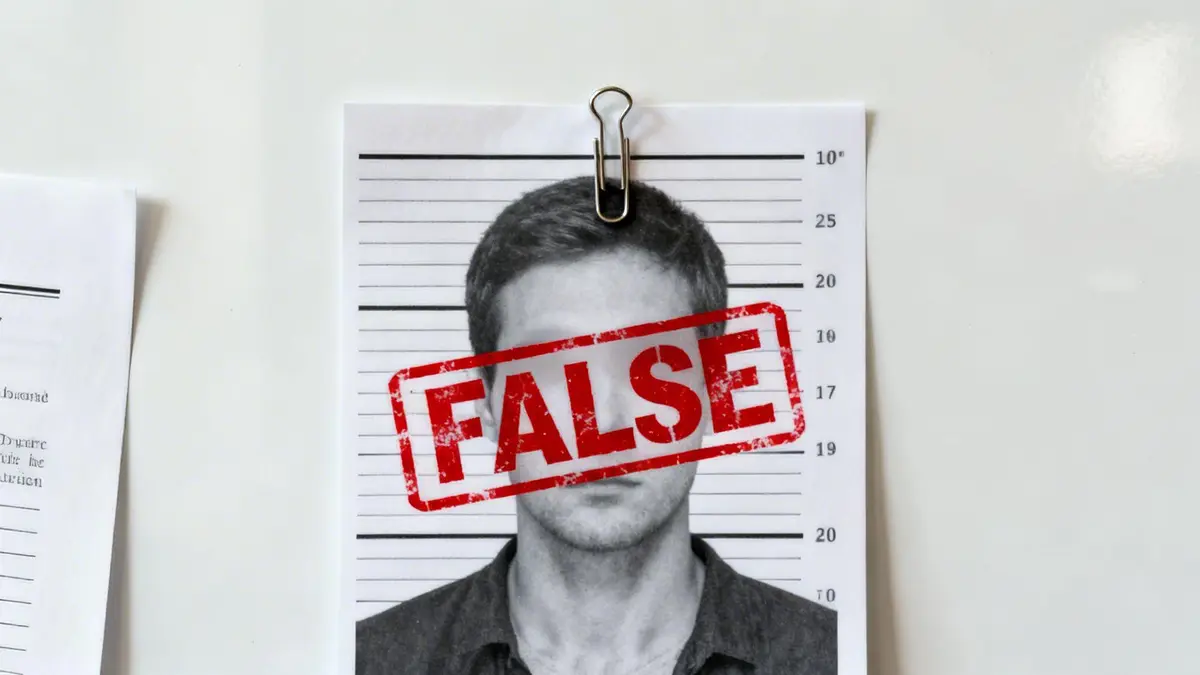
For executives and high-net-worth individuals, the threat extends beyond simple rumors. Malicious actors, competitors, or even automated aggregator sites can publish fabricated arrest records or false mugshots. These can quickly rank in search results for a person’s name, creating an immediate and severe crisis that threatens business relationships, investor confidence, and personal standing. A CEO falsely linked to fraud or an entrepreneur whose name appears on a dark web list of “arrested” individuals faces an urgent and complex reputational battle.
Analysis & Strategic Response
The primary challenge with false criminal accusations is the speed at which they spread and the perceived authority of the sources. A mugshot aggregator site, for example, appears official to the average person, lending undeserved credibility to its false content. The defense of “truth” is the most common counter-argument in defamation cases. When a criminal accusation is verifiably false, the legal position is exceptionally strong. The focus must shift from proving falsity to swift, strategic removal and mitigation.
Immediate remediation must be aggressive and multi-pronged. The first step is to meticulously document all instances of the defamatory statement, including screenshots, URLs, and publication dates. Concurrently, a cease-and-desist letter from legal counsel must be sent to the publisher, demanding immediate removal. For executives dealing with persistent false arrest records online, a more detailed strategy may be necessary. The goal is to contain the damage before it permanently embeds itself in search engine results and public perception.
2. False Business Misconduct and Fraud Allegations
Statements falsely accusing a business or its leaders of financial crimes like fraud, embezzlement, or unethical conduct are powerful examples of defamation of character. Unlike general criticism, these allegations attack the very foundation of trust upon which a company is built. Such accusations, often appearing on review platforms, industry blogs, or social media forums, are considered defamation per se in many jurisdictions because they directly strike at a person’s professional reputation and business integrity. The presumed damage is so significant that proving specific financial loss is often not a prerequisite for a successful claim.
For a CEO or founder, the impact is immediate and severe. A false accusation of embezzling investor funds in a tech publication’s comment section, or an anonymous Reddit post claiming an e-commerce brand is a Ponzi scheme, can instantly erode market confidence. These statements jeopardize everything from a pending M&A deal to employee morale and customer loyalty. When a competitor maliciously seeds articles linking an executive to a bribery scandal, the attack is designed not just to harm reputation but to cripple the business itself.
Analysis & Strategic Response
The primary danger of false business misconduct allegations is their capacity to appear credible, especially when posted by someone posing as an industry insider or disgruntled employee. Readers often give more weight to negative information, and a single, well-placed false claim can trigger a cascade of negative press and social media chatter, making the source of the original lie difficult to trace and contain. The strategic objective is twofold: disprove the allegation with verifiable evidence and surgically remove the content from high-visibility platforms. When a pattern of false claims emerges, it often indicates a coordinated sabotage campaign, which can strengthen the legal position.
Your initial response must be executed with precision. The first step is to preserve all evidence of the defamatory statements, capturing URLs, screenshots, and user profile information of the perpetrator. Concurrently, gather internal documentation, such as audited financial statements or contracts, that directly refutes the fraudulent claim. This evidence becomes the foundation for both legal action and removal requests. The priority is to target the highest-traffic sources first (such as Google News, major social media platforms, and prominent industry forums) to neutralize the threat before it metastasizes.
3. False Sexual Misconduct and Harassment Claims
Allegations of sexual misconduct, harassment, or assault are some of the most destructive examples of defamation of character. Like false criminal accusations, these claims often qualify as defamation per se, where the harm to reputation is so evident that specific financial damages do not need to be proven. The statements are inherently damaging and can destroy careers, families, and personal safety overnight.
For high-profile individuals, these false claims frequently surface on anonymous social media accounts, gossip blogs, or dedicated accusation websites. A viral Twitter thread can name a celebrity in fabricated assault allegations, or an executive can be targeted on an anonymous list of workplace harassers. The speed of digital transmission means the accusation often spreads faster than any possible defense, causing immediate and often irreversible damage to business partnerships, public trust, and personal well-being.
Analysis & Strategic Response
The challenge with false sexual misconduct claims is the “guilty until proven innocent” perception they create in the public sphere. The source may be an anonymous blog or an unverified social media account, yet the accusation itself is often treated with the weight of established fact, making a measured response extremely difficult. When facing a false accusation of this nature, the accuser’s anonymity is a strategic vulnerability. Identifying the source can reveal motives like extortion, personal vendettas, or competitive sabotage, which fundamentally changes the legal and reputational battlefield.
The immediate response must combine aggressive evidence preservation with swift action. First, meticulously document all communications, witness statements, and evidence of alibis that prove the claim’s falsity. Concurrently, report the defamatory content to the hosting platform, providing clear documentation that refutes the allegation. If the accuser has made demands for payment, this may escalate the matter to extortion, a criminal offense that provides a powerful angle for law enforcement intervention. The goal is a rapid takedown of the content combined with a carefully prepared strategic response to reclaim the narrative.
4. False Health, Disease, and Medical Condition Attribution
Falsely attributing a serious medical condition, disease, or mental illness to someone is a potent and cruel form of defamation. Like false criminal claims, these statements are often defamatory per se, meaning the law presumes reputational harm without the need for the plaintiff to prove specific financial loss. The intimate and sensitive nature of health information makes such falsehoods especially damaging.
For public figures, executives, and professionals, these attacks can be career-ending. A surgeon falsely rumored to have a substance abuse problem, a CEO falsely claimed to have a terminal illness on a gossip blog, or a political figure accused of mental instability faces immediate questions about their competence and judgment. This specific type of defamation exploits public stigma and fear surrounding health, creating a crisis that undermines professional credibility and personal relationships.
Analysis & Strategic Response
The primary challenge with false health claims is their parasitic attachment to a person’s identity, making them difficult to disprove without violating one’s own privacy. The mere suggestion can plant a seed of doubt that is hard to remove, as the attacker weaponizes social taboos. These are prime examples of defamation of character designed for maximum personal injury. The attacker’s goal is to force a public denial that involves disclosing private medical information, creating a no-win scenario. The strategic response must focus on invalidating the claim without surrendering privacy.
Your first action is to secure documentation that disproves the allegation, which can be held confidentially by legal counsel. Next, issue a cease-and-desist letter that asserts the statement’s falsity and cites both defamation and privacy invasion laws. Your legal demand should target the publishers, such as gossip sites or social media platforms, focusing on the clear falsity of the health claim. Documenting the impact on employee confidence or business relationships will strengthen a case for damages and accelerate removal efforts.
5. False Infidelity and Sexual Behavior Allegations
Fabricated claims about a person’s marital fidelity, sexual relationships, or private conduct constitute a potent and deeply personal form of defamation. Like false criminal accusations, these statements are often considered defamation per se, meaning the law presumes they will cause harm to one’s reputation without the need for the plaintiff to prove specific financial loss. The intimate nature of these attacks is designed to inflict maximum personal and professional damage.
For a public-facing executive or family office principal, the consequences are immediate and severe. A false rumor about an affair with a subordinate, posted anonymously on a gossip site, can shatter employee morale and invite internal investigations. Similarly, a malicious social media post falsely outing an individual can create a crisis that jeopardizes business partnerships, strains family relationships, and permanently damages their public persona. These are classic examples of defamation of character designed for maximum impact.
Analysis & Strategic Response
The primary threat from false sexual allegations is their tendency to blur the lines between personal and professional life, creating a multifaceted crisis. Attackers exploit the sensitive nature of the topic, knowing that the mere accusation can be enough to cause significant harm, regardless of its truthfulness. These false claims often appear on high-traffic gossip platforms, anonymous forums, and social media, where they are quickly amplified. False claims about sexual behavior often intersect with other legal violations, such as invasion of privacy or the distribution of non-consensual intimate imagery (NCII). Identifying these overlaps can create additional legal avenues for removal and recourse.
Your response must be both swift and discreet. The first priority is to preserve all evidence of the defamatory statements, including URLs, screenshots, and any information identifying the publisher. A strong cease-and-desist letter from legal counsel should follow, demanding immediate takedown and citing the defamatory nature of the content. When the attack involves former associates or employees, the case for malice is often stronger, providing more leverage. The objective is to erase the content before it contaminates search results and public perception.
6. False Racial, Religious, or Ethnic Identity Claims
Falsely associating an individual with an extremist ideology or misrepresenting their racial, religious, or ethnic background is a potent form of defamation. These claims are designed to incite public outrage, sever business ties, and destroy a person’s social standing. Like false criminal accusations, statements alleging someone holds extremist beliefs or has committed a hate crime can qualify as defamation per se, as the harm to reputation is immediately apparent.
For business leaders, these attacks are particularly destructive. A tech founder falsely labeled as a member of a white nationalist group on social media, a CEO falsely accused of committing a hate crime against a religious minority, or an executive linked to an extremist organization in a fraudulent news article all face immediate and catastrophic fallout. Such accusations threaten employee morale, trigger partner and investor flight, and can incite real-world threats.
Analysis & Strategic Response
The danger of these false claims lies in their emotional weight and their alignment with current social and political tensions. Platforms and the public are primed to react strongly to allegations of extremism or hate, often leading to judgment before verification. The goal of the attacker is often to make the target “toxic” by association, rendering them indefensible in the court of public opinion. When facing false claims of extremism, the reputational damage often precedes any legal remedy. The strategic priority is to disrupt the narrative by immediately reporting the content to platforms, citing their specific policies against hate speech, misinformation, and inciting violence.
Your immediate actions must focus on evidence preservation and rapid platform-level intervention. Systematically document all instances of the false claims, preserving URLs, screenshots, and any data suggesting a coordinated campaign. Simultaneously, deploy legal counsel to report the defamatory content directly to the trust and safety teams of the relevant social media sites, forums, or blogs. Emphasize how the false claim violates their terms of service regarding hate, extremism, and harassment. This approach attacks the distribution of the lie at its source, containing the damage while you prepare a broader legal and reputational response.
7. False Impersonation and Deepfake Defamation
Impersonation attacks, ranging from fabricated social media accounts to AI-generated deepfake videos, represent a severe and technologically advanced form of defamation. These schemes attribute false statements or actions to a target by creating content that appears to originate from them directly. The goal is to hijack an individual’s identity to destroy their credibility from within, making it one of the most insidious examples of defamation of character.

For a public figure or executive, the consequences are immediate and disastrous. A fake Twitter account impersonating a CEO can post false business statements, tanking stock prices in minutes. A deepfake video showing an executive seemingly admitting to misconduct can go viral, causing irreparable harm before it can be debunked. These coordinated campaigns are designed for maximum impact, spreading false information that, because it appears to come from the source, is accepted as authentic by the public, investors, and the media.
Analysis & Strategic Response
The primary danger of impersonation and deepfake content is the erosion of authenticity. When malicious actors can convincingly mimic a person’s voice, face, and communication style, the public loses the ability to distinguish truth from fiction. This creates a crisis not just of reputation, but of reality itself, where the victim is forced to disprove something they appear to have said or done. In cases of impersonation, the defamatory statement is attributed directly to you. Your response must therefore focus on reclaiming control of your identity and irrefutably proving the content’s fraudulent origin.
Immediate action is critical. The first step is to report the impersonation directly to the platform, providing verification of your authentic accounts and identity. Preserve all evidence of the fake profile or deepfake video, documenting URLs, screenshots, and any data showing coordinated activity. For deepfakes, reverse image searches and metadata analysis may help establish their artificial origin. For sophisticated, multi-platform attacks, involving digital forensics experts to trace IP addresses and coordinate with law enforcement may be necessary to unmask the perpetrators and dismantle their operation.
8. False Intellectual Property Theft and Plagiarism Accusations
Accusations of stealing intellectual property (IP) (whether it’s code, a creative work, or a proprietary business method) strike at the core of a professional’s integrity and credibility. These are not merely insults; they are potent examples of defamation of character that can destroy a career built on originality and trust. For creators, entrepreneurs, and tech founders, a false claim of plagiarism or patent infringement published on social media, industry forums, or a widely-read blog can trigger an immediate crisis, jeopardizing funding, partnerships, and customer loyalty.
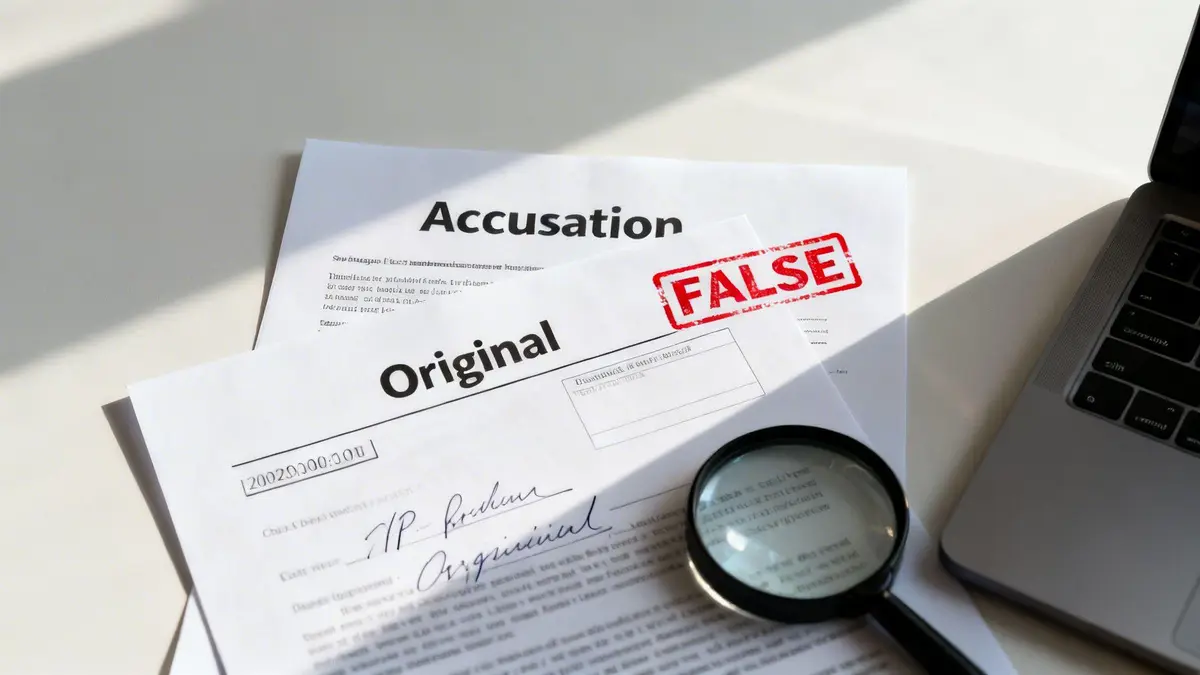
These defamatory statements are particularly damaging in creative and technical fields where originality is the primary currency. For instance, a SaaS founder might face a competitor’s coordinated Twitter campaign alleging their algorithm was stolen. A creator could be targeted by a rival with fabricated claims of plagiarism on Substack, complete with misleading “evidence.” The damage is swift, as the accusation itself is often treated as fact by a public audience, leading to severe and often irreversible reputational harm.
Analysis & Strategic Response
The strategic challenge lies in disproving a technical or creative accusation to a non-technical audience while managing the rapid spread of the narrative online. Unlike other forms of defamation, these claims often carry a veneer of legitimacy, making them difficult to counter with simple denials. The goal is to decisively prove original creation and expose the accuser’s malicious intent. When a competitor or malicious actor is behind the false accusation, their action may not just be defamation but also a form of tortious interference. Demonstrating that the accuser is a competitor seeking to sabotage your business strengthens the legal claim and provides leverage for aggressive removal demands.
Your immediate response must be grounded in documentation. Compile and organize all evidence proving your ownership and creation timeline, including code repository timestamps, patent filings, copyright registrations, and internal development records. This evidence forms the basis of cease-and-desist letters and platform removal requests, which should cite both defamation and violations of intellectual property policies. The objective is to dismantle the false claim at its source on platforms like Medium, industry blogs, and social media before it becomes an accepted truth.
Comparison of 8 Defamation Examples
| Type of False Claim | Removal Complexity | Resource Requirements | Expected Outcome | Ideal Use Cases | Key Advantages |
|---|---|---|---|---|---|
| False Criminal Accusations and Arrest Record Defamation | High, cross-jurisdiction mugshot sites and reuploads complicate removal | Legal counsel, takedown requests, continuous monitoring, evidence of business impact | High likelihood of rapid de-indexing/removal from major sites but risk of recurrence | Executives, founders, high-net-worth individuals whose employment or deals are threatened | Strong legal precedent; damages easily quantifiable; platforms responsive to clear falsehoods |
| False Business Misconduct and Fraud Allegations | Medium-High, fact vs. opinion and anonymous sources create gray areas | Legal & PR coordination, financial records, platform takedowns, coordinated multi-site removal | Good if factual falsity documented; may require simultaneous multi-platform action | CEOs, startups, investors facing allegations that harm funding or partnerships | Economic harm documentation strengthens claims; courts protect business reputation |
| False Sexual Misconduct and Harassment Claims | Very High, high proof burden and social sensitivity slow enforcement | Extensive evidence (communications, witnesses, alibi), legal discovery, PR strategy, possible law enforcement | Possible removal but often slow; reputational damage can persist after takedown | Public figures and executives targeted by viral or anonymous accusations affecting safety/career | Severe damages justify aggressive action; platforms responsive when strong evidence provided |
| False Health, Disease, and Medical Condition Attribution | Medium, gossip sites resist but mainstream platforms often comply | Confidential medical documentation, legal/privacy requests, targeted takedowns | Good removal prospects on major platforms; gossip forums and international sites harder | Healthcare professionals and public figures where false health claims undermine trust | Clear falsity plus privacy concerns support takedowns; courts recognize special harm |
| False Infidelity and Sexual Behavior Allegations | Medium-High, privacy vs. defamation issues; revenge porn may invoke NCII laws | Evidence proving falsity, privacy remedies, legal & PR intervention, platform reports | Likely removal from major platforms; gossip sites and rapid social spread remain challenges | Executives, celebrities, family-office principals targeted by revenge or gossip posts | Sensitive-content and NCII policies aid removal; damages often quantifiable |
| False Racial, Religious, or Ethnic Identity Claims | Medium, opinion/identity distinctions and jurisdictional variation add complexity | Documentation of true identity/beliefs, legal action, platform policy flags for hate/extremism | Good removal chances when falsity and potential for harm are shown; viral spread risk persists | Targets in diverse workplaces or public roles where identity claims can incite discrimination | Platforms and public policy favor removing false hate-crime attributions; clear reputational harm |
| False Impersonation and Deepfake Defamation | Very High, deepfakes and coordinated impersonation are technically and procedurally complex | Forensic analysis, account verification, IP/impersonation legal claims, law enforcement coordination | Fake accounts often removable quickly; deepfakes require protracted forensic and cross-platform action | When fake accounts or videos simulate the target to spread false statements at scale | Specific anti-impersonation policies and statutes enable direct remedies; impersonation is independently actionable |
| False Intellectual Property Theft and Plagiarism Accusations | Medium, technical IP disputes can blur defamation lines | Technical documentation (timestamps, source files), IP counsel, platform and publication takedowns | Good outcome if originality proven; may run alongside IP proceedings | Creators, entrepreneurs, and companies in creative/tech fields facing false plagiarism claims | Technical evidence can decisively rebut claims; business damage is measurable |
Executing a Decisive Reputational Defense Strategy
The various examples of defamation of character detailed throughout this article, from false criminal allegations to deepfake impersonations, illustrate a critical truth: recognizing a defamatory attack is merely the first step. The decisive factor that separates a temporary crisis from a permanent reputational scar is the speed, precision, and sophistication of the response. Each category of defamation requires a distinct, multi-pronged strategy that standard legal or public relations approaches often fail to address effectively.
Delay is the adversary of resolution. Every hour a false narrative remains online, it becomes more deeply embedded in search engine results, social media archives, and the public consciousness. This digital entrenchment exponentially increases the difficulty and cost of removal. When faced with a reputational attack, understanding how to fight false accusations is key to protecting your name and future. However, knowledge alone is insufficient without immediate, specialized execution.
The strategic takeaways from each example underscore a unified theme: a reactive posture is a losing one. Whether it is a fabricated review damaging your business, a malicious social media post, or a surreptitiously leaked private conversation, the required counter-maneuver is not a simple takedown request. It involves a coordinated effort of content removal, search result de-indexing, and platform-specific containment protocols to prevent redistribution. This level of response demands a team that operates at the intersection of law, technology, and crisis management.
Mastering this defensive posture is not just about damage control; it is about preserving your legacy, market position, and personal security. The ability to swiftly neutralize threats demonstrates control and resilience, reassuring stakeholders, partners, and the public. Professional intervention should not be viewed as a final option but as an essential first move in a proactive defense. It is the most direct path to reclaiming control of your narrative and securing your digital footprint against future attacks. The stakes are too high for anything less than an expert, immediate, and definitive response.
Is your reputation under attack from false and damaging content? The team at ContentRemoval.com specializes in rapidly and discreetly removing defamatory material from the internet. Contact us for a confidential consultation to secure your digital legacy.
Frequently asked questions
What is defamation per se and why does it matter?
Defamation per se covers false statements so inherently damaging that the law presumes injury to reputation, such as accusing someone of a crime, fraud, sexual misconduct or a serious disease. The practical effect is that the target often does not need to prove specific financial loss, which strengthens both the legal claim and removal demands.
How do you respond to a false health rumor without revealing private medical information?
Have counsel hold confidential documentation that disproves the claim, then send a cease-and-desist asserting falsity under both defamation and privacy law. The demand targets the publisher’s clear falsehood rather than putting your medical history on the record, which is the trap the attacker is trying to set.
Is a deepfake video of me defamation?
It can be, because the fabricated content attributes false statements or actions to you directly. Report the impersonation to the platform with proof of your authentic accounts, preserve every copy, and use reverse image search or metadata analysis to establish artificial origin. Multi-platform attacks may need digital forensics and law enforcement.