
A defamation lawyer in Los Angeles assesses whether a false statement meets California’s test: a false statement of fact, published to a third party, made with at least negligence, causing actual damage. Claims carry a one-year limitations period under the single-publication rule. For executives, the faster question is what can be removed or de-indexed now while counsel preserves the claim.
Key facts
- California distinguishes libel, which is written or fixed, from slander, which is spoken.
- The article cites that roughly 60 to 75 percent of California defamation claims fail at summary judgment.
- California’s single-publication rule means a post staying online does not restart the one-year clock.
- Forensic identification before filing can cut litigation costs by 40 to 60 percent, per the article.
Where ContentRemoval.com comes in. Los Angeles litigators are built for damages and subpoenas, not for getting a false article off page one by Friday. ContentRemoval.com runs the removal track alongside your counsel: publisher outreach, platform enforcement, search de-indexing and monitoring for reposts, all without a public docket. Executives, their attorneys, family offices and publicists all make contact. A free 15-minute Exposure Scan maps what is removable, and the report is yours to keep. Get a Free, Confidential Exposure Scan or read how our defamation removal work is done.
A false post, review, article, or anonymous thread usually isn’t discovered at a convenient moment. It shows up before a financing call, during a board dispute, after a termination, or while a family office is already handling another risk issue. By the time the subject sees it, colleagues have forwarded screenshots, search results have started shifting, and the instinct to “sue immediately” is already competing with a second concern: making the problem bigger by responding badly.
That’s the reality behind most searches for defamation lawyer los angeles. The legal question matters, but the operational question usually matters first. What can be removed now, what has to be preserved as evidence, what should never be said in writing, and which response will stop the spread without turning a contained attack into a public fight.
For executives, public figures, founders, and high-net-worth families in Los Angeles, the strongest response is rarely a single tactic. It’s a coordinated sequence. Legal analysis decides whether the statement is actionable. Digital enforcement determines whether the content can be taken down, de-indexed, or suppressed quickly. Forensic work identifies who is behind anonymous postings. The order matters.
Responding to an Online Reputational Attack
An executive wakes up to a message from investor relations: a search result has appeared overnight accusing him of fraud. The article is false, but it looks polished enough to be repeated. A fake review campaign starts the same morning. Someone on social media reposts the claim with added commentary. By noon, the issue is no longer “bad press.” It’s a live commercial threat.

That first day is where many people make expensive mistakes. They contact the poster directly in anger, post a rebuttal that preserves the accusation in public, or tell internal teams to “get it removed” before anyone has captured evidence. A disciplined response is quieter. Preserve the URLs, timestamps, screenshots, cached search results, and any related messages. Then assess the source, platform, and likely objective behind the attack.
What to do in the first hours
The practical aim is containment. You need to know whether you’re looking at a one-off post, a coordinated smear, impersonation, a review manipulation campaign, or content designed to rank in search and pressure a settlement. The response to each is different.
A useful starting point is a documented escalation process. Teams dealing with ratings attacks or coordinated online criticism can borrow from these effective review and response tactics, especially the discipline around evidence capture and controlled messaging. The same principle applies to defamation. Don’t improvise in public.
Practical rule: If the content is false and harmful, preserve first, analyze second, respond third.
There’s also a difference between reputational discomfort and legal defamation. Some content should be met with a factual response. Some should be escalated to platform enforcement. Some should go straight to counsel and forensic review. If you’re under pressure and need a clear sequence, this strategic guide for online defamation victims lays out the immediate decision points.
Why Los Angeles cases require discretion
Los Angeles adds its own pressure. Entertainment, venture, private capital, and executive recruiting circles are tightly networked. False allegations don’t need to remain online for long to affect negotiations or trust. People searching for a defamation lawyer los angeles often aren’t trying to win a philosophical argument. They’re trying to stop business loss, family exposure, or reputational contagion.
That changes the strategy. Speed matters. So does privacy. The best response is the one that removes visibility, maintains an advantageous position, and avoids unnecessary publicity.
Defining Defamation Under California Law
California law draws a basic distinction between libel and slander. Libel is written or otherwise fixed defamatory content. Slander is spoken defamation. For most reputation crises involving search results, websites, review platforms, social media, and articles, the issue is libel.
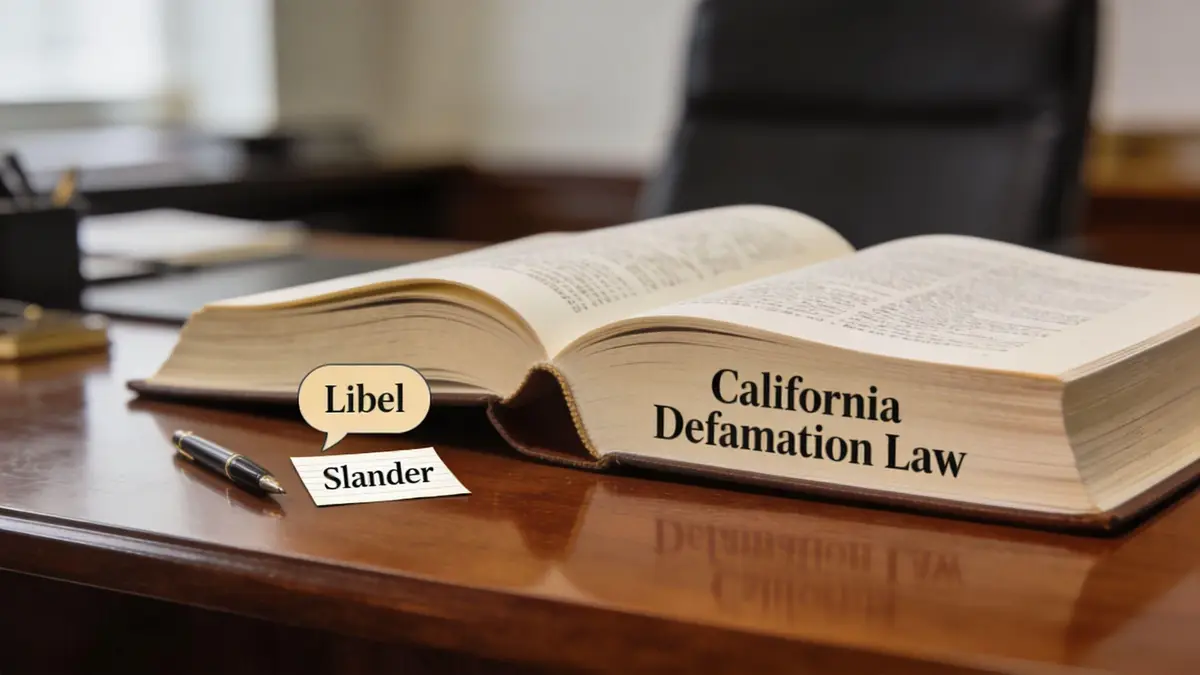
The harder question isn’t the label. It’s whether the statement is actionable. California courts apply a demanding framework because speech rights and First Amendment defenses are central to these cases. According to Dhillon Law’s discussion of defamation law, California courts apply heightened scrutiny, and approximately 60-75% of defamation claims fail at summary judgment due to First Amendment protections for speech, which means plaintiffs carry a serious burden on falsity, fault, and damages.
The four proofs that matter
A viable claim generally turns on four core showings:
You must usually prove a false statement of fact, publication to a third party, fault at least amounting to negligence, and actual damage.
Those elements sound straightforward until they meet real-world facts. “He’s a crook” may be rhetorical opinion in one context and a factual accusation in another. “We fired her for misconduct” may trigger a very different analysis depending on what happened, who received the statement, and whether any privilege applies.
The most common legal mistake is assuming that a harmful statement is automatically defamatory. It isn’t. California law protects opinion, commentary, and many privileged communications. The question is whether the statement would be understood as asserting a provably false fact.
Context usually decides the case
Consider a business example. A rival posts that a founder “runs a scam operation and steals client funds.” If the statement presents a factual accusation that can be proven false, and it’s published to others and causes measurable harm, it may support a claim. If the same rival says “I think this company is terrible and I’d never trust them,” that’s far more likely to be framed as opinion.
Courts also look at audience perception. That matters in Los Angeles, where industry gossip often travels through “tips,” blind items, reposted threads, and quasi-journalistic commentary. Literal wording is only part of the analysis. Implication, context, and the setting of the statement matter.
The legal framework is easier to understand when you hear it discussed in practical terms:
Why legal viability and removal strategy are different questions
A post can be legally weak as a lawsuit and still be removable through platform rules, search de-indexing processes, or direct intervention with the publisher. That’s one reason a pure litigation mindset often misses the fundamental objective. The court question is, “Can this claim survive?” The operational question is, “How do we reduce public visibility as fast as possible without losing advantage?”
Those are related questions, but they aren’t the same.
Critical Timelines and California’s Statute of Limitations
Time works against the target in defamation matters. Harmful content gets copied, indexed, quoted, screenshotted, and republished. At the same time, the legal filing window is narrow. In California, defamation claims are generally governed by a one-year statute of limitations, which is why waiting for “things to calm down” can close off options.
Why delay creates two separate risks
The first risk is legal. If suit becomes necessary, delay can weaken or eliminate that route. The second risk is practical. Online attacks mature quickly. The original page may be joined by scraper sites, reposts, commentary, and autocomplete associations. Search visibility can become a bigger problem than the original publication.
That’s why experienced counsel usually tracks two timelines at once:
- The filing timeline: when the statement was first published, whether later posts are new publications, and whether any tolling argument is realistic.
- The evidence timeline: what can disappear, be edited, deleted, or hidden if you wait too long.
- The exposure timeline: whether the content is beginning to rank, spread across platforms, or contaminate branded search results.
Delay rarely helps the person being targeted. It usually helps the publisher, the platform, or the anonymous attacker.
The single-publication rule and online content
California’s single-publication rule matters because plaintiffs often assume each new view of an article restarts the clock. It usually doesn’t. A post remaining online is not the same thing as a fresh publication every day. That rule can surprise people who find defamatory content months after it first went live.
There are edge cases. A materially altered republication, a repost to a new audience, or a substantially new publication event may change the analysis. But relying on that possibility without counsel is risky. A search result that feels newly urgent may still be tied to an older original publication date.
Discovery issues are fact-specific
Some readers search for a defamation lawyer los angeles only after a banker, recruiter, or board member alerts them to content they had never seen. That raises the obvious question: if you didn’t know about it, does the limitations period still run?
Sometimes discovery arguments become relevant, especially where anonymity, concealment, or technical publication issues are involved. But they are not a safety net you should assume will save a late claim. Courts look carefully at when the content became available and what the plaintiff reasonably could have discovered.
A practical triage table helps:
| Issue | Why it matters |
|---|---|
| First publication date | Often drives the limitations analysis |
| Later edits or reposts | May or may not count as republication |
| Anonymous source | Can complicate timing and identification |
| Search indexing date | Important for visibility, not necessarily for restarting the legal clock |
The procedural clock is one reason smart responses begin immediately. Even when litigation isn’t the preferred path, early legal review preserves a position of strength.
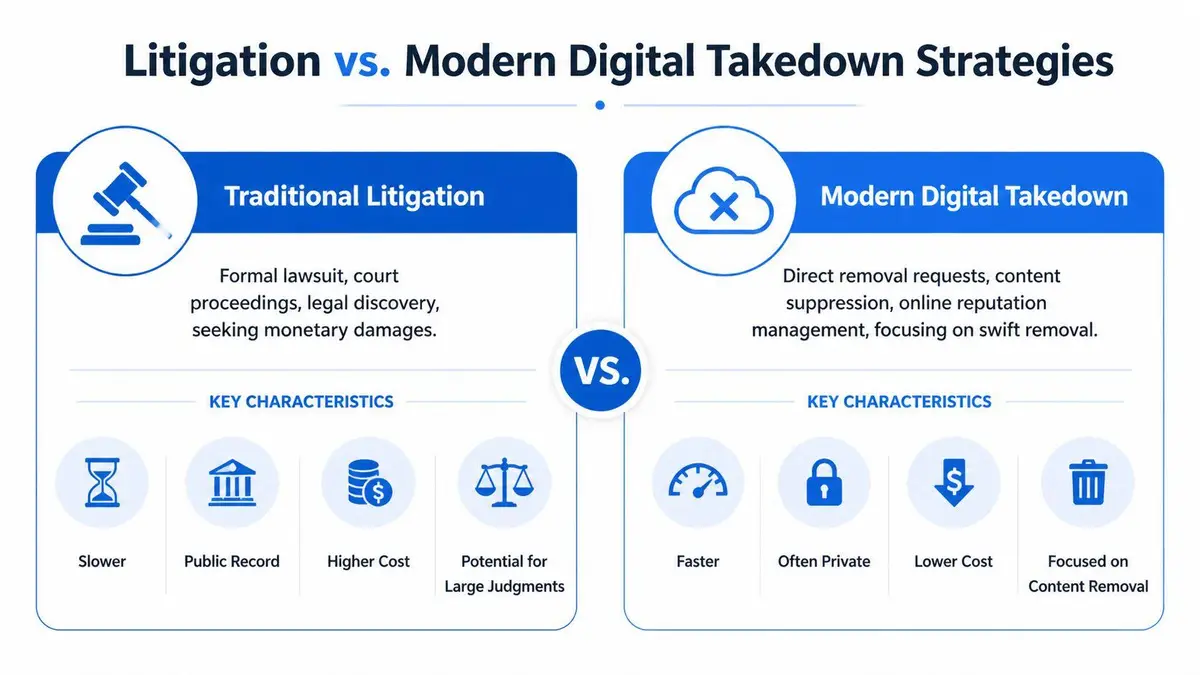
Litigation vs Modern Digital Takedown Strategies
A CEO learns at 6:30 a.m. that a false accusation is ranking on page one for their name. By 9:00 a.m., the board has seen it, a lender has asked questions, and screenshots are circulating in private group chats. In that moment, the first question usually is not whether a lawsuit is available. It is how fast the content can be taken out of circulation without creating a bigger public record.
Litigation still has a place in a defamation response. If the goal is damages, subpoena power, or a court order tied to a specific defendant, filing suit may be the right move. But high-net-worth individuals and executives often have a different priority. They want speed, privacy, and a path that does not amplify the allegation through public pleadings and searchable docket entries.
The litigation path
A lawsuit gives counsel formal tools. It also creates exposure. Complaints, motions, and hearings can repeat the underlying accusation in a forum the press, competitors, and search engines can find. If the speaker is anonymous, the early phase may focus less on removal and more on subpoenas, motions to quash, and First Amendment objections. For public figures, actual malice standards add another layer of difficulty.
Cost is part of the decision, too. In practice, defamation litigation in Los Angeles is often expensive, slow, and hard to keep quiet. That does not make it the wrong choice. It means it should be chosen for a defined reason, not as the default response to every digital attack.
The digital takedown path
Digital takedown work starts with a different objective. Reduce visibility fast. Remove what can be removed. De-index what cannot be removed. Contain reposting before the content hardens into a permanent search problem.
That may involve publisher outreach, platform reporting, impersonation claims, terms-of-service enforcement, search engine requests, host escalation, and technical review of how the content was published. In many matters, the fastest path is procedural, not judicial. A well-built takedown package can succeed because it matches the platform rule, evidentiary standard, and decision-maker who controls access. This strategic guide to getting a website taken down for slander reflects that operating model.
This approach also gives clients something traditional litigation often cannot. Discretion. A private resolution with a host, platform, site owner, or search engine usually draws far less attention than a filed complaint.
What works better in a digital-first crisis
The strongest responses are usually hybrid. Counsel preserves claims, sets the legal posture, and prepares for subpoena or filing if needed. A digital enforcement team works in parallel on removal, de-indexing, suppression, evidence capture, and platform-specific escalation. That split matters because the legal question and the visibility problem are related, but they are not identical.
A demand letter by itself often fails when the sender has not identified the true publisher, hosting stack, or rule set that governs removal. A lawsuit by itself can fail to solve the immediate search problem. PR alone rarely fixes defamatory content that remains indexed under a client’s name.
The trade-offs are straightforward:
| Path | Best for | Main downside |
|---|---|---|
| Litigation | Damages, subpoenas, precedent, formal relief | Slow, public, expensive |
| Takedown and de-indexing | Speed, privacy, search cleanup, platform action | Some sites refuse voluntary cooperation |
| Hybrid response | Fast containment plus preserved legal advantage | Requires tight coordination across legal and technical teams |
The right path depends on the specific objective. If the priority is money, a judgment may matter most. If the priority is keeping false content away from investors, recruiters, counterparties, or family office contacts, digital removal usually comes first. In Los Angeles, that distinction is not academic. It often determines whether a defamation response contains the damage or turns a bad post into a longer, more public fight.
The Process of an Advanced Defamation Response
A strategic response doesn’t begin with a generic cease-and-desist. It begins with evidence discipline and technical analysis. Anonymous attacks, throwaway domains, fake review profiles, and repost networks are often less anonymous than they appear.
Start with forensic identification
Experienced internet defamation practitioners in Los Angeles use forensic computer tracking before filing suit. According to Syverson Law’s description of internet defamation practice, this pre-litigation strategy can reduce litigation costs by 40-60% by enabling targeted takedown requests before a formal case is filed, and defendants often back down when confronted with strong evidence of identity and origin.
That matters because anonymous speakers benefit from delay and uncertainty. Once counsel or a specialist can map the content trail, analyze hosting and account patterns, and narrow likely attribution, the posture changes. The attacker is no longer a mystery. They’re a risk-bearing defendant or account holder.
Then build pressure in the right order
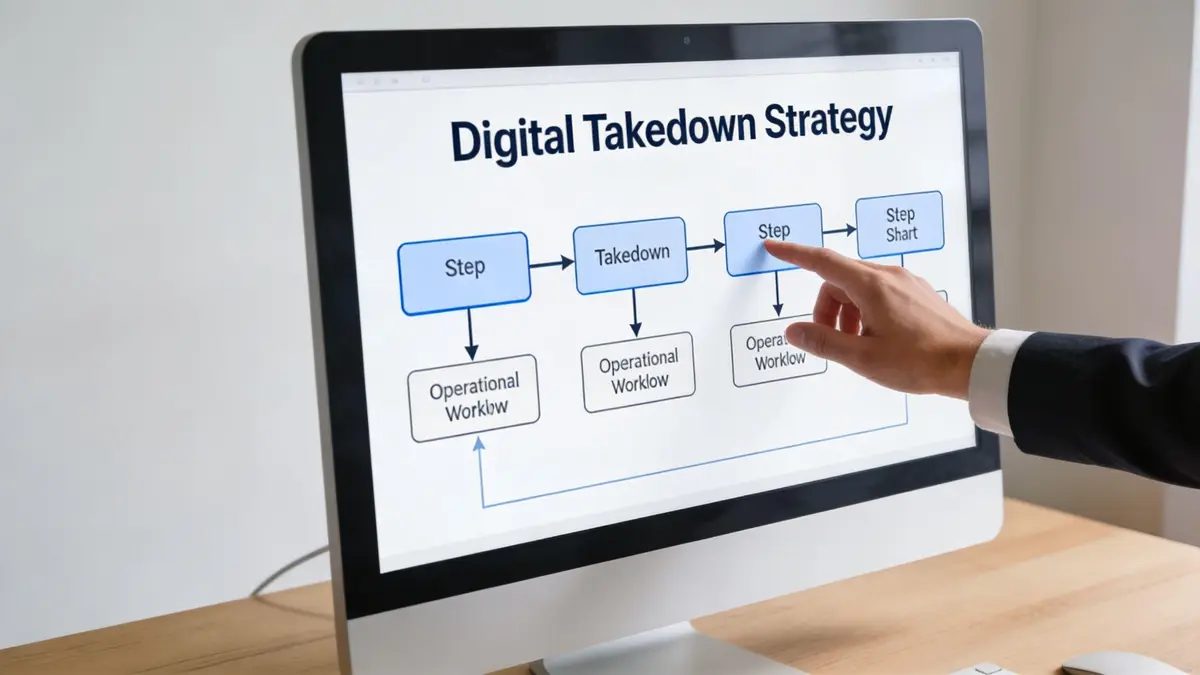
The operational workflow usually looks something like this:
- Preserve and authenticate the evidence. Capture the page, source code where relevant, search result placement, account identifiers, and related posts before anything changes.
- Assess the legal theory and platform theory separately. A statement may be difficult to litigate yet removable under impersonation, harassment, manipulated media, privacy, or site-specific terms.
- Send targeted notices. The strongest notices are fact-specific and supported by evidence. They don’t ramble. They identify falsity, harm, technical footprint, and the consequence of noncompliance.
- Escalate to the actual control point. Sometimes that’s the publisher. Sometimes it’s in-house counsel, a hosting provider, a registrar, a review platform, a social network, or search.
- Clean up residual visibility. Removal of the source isn’t always the end of the job. Cached snippets, mirrored pages, and indexed references may need separate handling.
A weak demand letter tells the other side you’re upset. A strong one tells them you know exactly who controls the exposure and what happens next.
Why de-indexing and monitoring matter after removal
Many reputation responses fail because they stop after the first apparent win. The page disappears, but search results still show snippets. A forum thread gets removed, but a scraper keeps a copy. A fake account is disabled, but the same actor reappears under a variation.
That’s why the closing phase matters as much as the opening phase. Advanced response work includes de-indexing requests where appropriate, suppression planning for residual search contamination, and ongoing monitoring for reuploads or derivative posts. Without that final layer, the client gets a temporary reprieve instead of an actual solution.
How to Evaluate and Hire the Right Counsel in Los Angeles
At 7:30 a.m., an executive sees a false post about fraud on page one of Google, a board member has already texted a screenshot, and outside counsel is asking whether to file. That is the moment hiring mistakes get expensive. A polished litigator may be the right choice for a damages case, but a digital reputational attack often turns first on removal speed, platform fluency, and the ability to keep the response out of public view.
Los Angeles has no shortage of accomplished lawyers. The harder question is narrower. Who can assess, within hours, whether the problem is best handled through a demand letter, a subpoena path, a platform escalation, a de-indexing request, or a coordinated sequence of all four?
The right hire starts with objective fit. The California State Bar’s public attorney profile system lets clients verify admission status, discipline history, and basic licensing information before they discuss strategy or fees. Use it as a screening tool, not a decision tool. A clean bar profile does not tell you whether counsel has handled anonymous smear sites, manipulated media, extortionate review campaigns, or search-result cleanup after a takedown.
Questions that separate specialists from generalists
Ask for process, not just credentials.
- Case triage: How do you decide whether the goal is removal, de-indexing, source identification, damages, or containment?
- Platform experience: Which platforms, publishers, hosts, and search engines have you dealt with directly in defamation or impersonation matters?
- Anonymity response: What is your plan if the attacker is hiding behind throwaway accounts, offshore infrastructure, or layered reposting?
- Public exposure control: If litigation becomes necessary, how do you reduce the chance that the lawsuit itself amplifies the allegation?
- Team coordination: Can you work alongside investigators, digital forensics providers, or reputation specialists without slowing the response?
- Billing clarity: What work is hourly legal analysis, what can be scoped, and what triggers a budget change?
Those questions expose a practical gap in the market. Many firms can litigate a defamation case. Far fewer can run a discreet, multi-track response where legal pressure, technical evidence, and search visibility are managed at the same time.
Cost transparency matters for a simple reason. High-net-worth clients are rarely paying for one task. They are paying for assessment, evidence preservation, publisher outreach, platform notices, search remediation, and sometimes litigation readiness in parallel. If counsel cannot separate those workstreams, the client loses control of budget and timing.
I usually advise clients to ask one more question early. What does success look like in 72 hours, 30 days, and 90 days? A lawyer who answers only in terms of pleadings and hearings may still be excellent counsel, but that answer may not fit a crisis driven by search visibility and rapid reposting.
For executives evaluating that hybrid model, this strategic guide to internet defamation attorney consultations for executives gives a useful framework for comparing legal counsel with digital response providers under real time pressure.
Why Leaders Choose ContentRemoval.com for Defamation Crises
The common thread in serious online defamation matters is that legal merit alone doesn’t solve the exposure problem. A false article can remain searchable while lawyers debate pleading standards. An anonymous review campaign can keep spreading while the target waits for a hearing date. A deepfake, impersonation account, or smear thread can do immediate damage long before a court reaches the merits.
That’s why executives, founders, public figures, and family offices often choose a response model built around speed, discretion, and platform-level execution. They need evidence preserved without public theatrics. They need a clear distinction between what should be litigated and what should be removed discreetly. They need a workflow that treats search results, reposts, and reuploads as part of the same threat surface.
In practice, the strongest outcomes usually come from coordinated action: legal analysis where legal advantage matters, forensic work where anonymity is being used as cover, and takedown or de-indexing procedures where visibility is the primary source of harm. That is a narrower and more operational mandate than traditional courtroom representation, but for many digital-first attacks, it’s the mandate that fits the problem.
For that class of client, reputation protection isn’t vanity. It’s risk control. The right response protects negotiations, preserves privacy, limits contagion across search and social platforms, and stops a false narrative from hardening into a permanent online record.
When a false online attack threatens your name, company, or family, waiting usually makes the job harder. ContentRemoval.com works with executives, public figures, legal teams, and high-net-worth clients to assess the threat confidentially, map the fastest removal path, and coordinate a discreet action plan focused on source removal, de-indexing, and long-term containment.
Frequently asked questions
What do I need to prove for defamation in California?
Four things: a false statement of fact rather than opinion, publication to a third party, fault of at least negligence, and actual damage. Public figures face a higher fault standard. Context decides many cases, since the same words can read as rhetorical opinion in one setting and a factual accusation in another.
Should I sue or try to get the content removed first?
The article recommends a hybrid response. Removal and de-indexing usually come first when the priority is keeping false content away from investors, recruiters and counterparties, because litigation is slow, public and can repeat the accusation in searchable filings. Counsel preserves claims and prepares subpoenas or a suit in parallel if a defined legal objective justifies it.
What should I ask a defamation lawyer before hiring them?
Ask how they triage between removal, de-indexing, identification and damages, which platforms and hosts they have dealt with directly, what their plan is for anonymous attackers, how they keep a lawsuit from amplifying the allegation, and how billing separates each workstream. Ask what success looks like at 72 hours, 30 days and 90 days.