Military recruiters look for evidence that contradicts your enlistment paperwork or signals a security risk: drug use, gang affiliation, extremist content, criminal activity, violent or threatening statements, and dishonesty, a social media history that conflicts with what you told your recruiter. Recruiters themselves typically run informal checks (searching your name, scanning public profiles) while formal review arrives later, during security-clearance investigation and continuous vetting, where social media can be examined under federal guidelines. The practical takeaway: your public accounts are part of your application whether or not anyone tells you so, and cleaning them up before you apply is both allowed and smart.
What actually gets checked, and when?
There are three distinct review moments, and applicants routinely confuse them.
The recruiter’s informal look. Recruiters are salespeople with quotas, not investigators, but they are also the first filter, and most will search an applicant’s name and glance at public Instagram, TikTok, X, and Facebook profiles. What they are screening for is anything that would embarrass them for having signed you: obvious drug content, gang signs, threats, or a public persona wildly inconsistent with your application.
MEPS and enlistment processing. Your statements about drug history, arrests, and affiliations become part of a federal record. Social media evidence contradicting those statements is where applicants get hurt. A fraudulent-enlistment issue is far more serious than most of the underlying conduct would have been if disclosed honestly.
Security clearance investigation and continuous vetting. For any role requiring a clearance, investigators operate under Security Executive Agent Directive 5, which authorizes the collection of publicly available social media information. Adjudication follows the standard guidelines (foreign influence, drug involvement, criminal conduct, personal conduct) and post-2018 continuous vetting means the review never fully ends. Publicly visible posts are fair game; investigators do not need your passwords and are not supposed to demand them. We cover the clearance stage in depth in our sibling guide to social media preparation for security clearance vetting.
What can disqualify you?
The recurring categories, in rough order of how often they actually sink applicants:
- Drug content. Photos or posts depicting use, dealer contact, or glorification, including marijuana, which remains federally disqualifying conduct regardless of state law.
- Extremist and gang affiliation. DoD policy on extremist activity has tightened substantially; symbols, memberships, and shared content are all screened. Gang signs and affiliations are explicit disqualifiers.
- Violence and threats. Posts threatening people, glorifying mass violence, or depicting you brandishing weapons in a threatening context.
- Criminal conduct. Evidence of undisclosed offenses: including things you were never charged for.
- Dishonesty. The meta-category: anything proving your application false. This is the one that converts a waiverable issue into a fraudulent-enlistment problem.
- Conduct unbecoming. Harassment, hate speech, and content that would reflect poorly on the service. Rarely a hard disqualifier alone; frequently a tiebreaker.
Old posts count. A 2019 photo surfaced in 2026 is evaluated as evidence of history, not current character, context helps, but only if the reviewer ever asks for it.
How to clean your footprint before applying, step by step
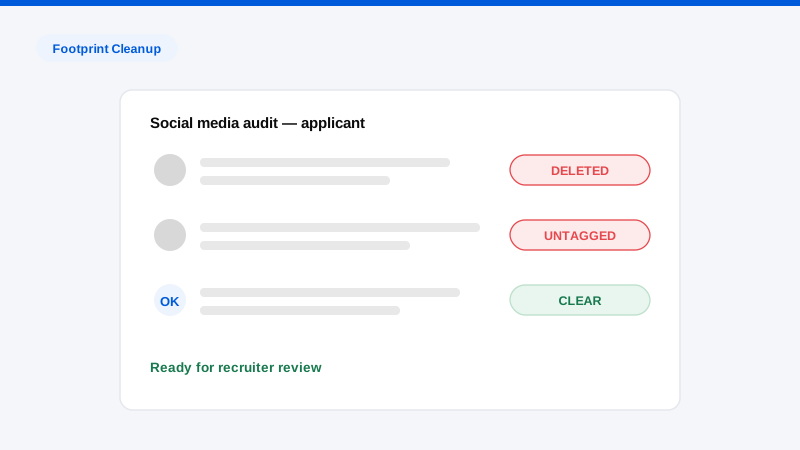
- Audit yourself like an investigator. Search your name, usernames, and phone number in an incognito window: Google, image search, TikTok, X, and Facebook’s people search. What surfaces publicly is your actual exposure, and most applicants are surprised by it.
- Delete, don’t just hide, disqualifying content. Go through your own posts, tagged photos, comments, and old accounts, including forgotten Tumblr, Reddit, and gaming profiles. Deleting content you control is legitimate cleanup; nothing requires you to preserve your teenage feed.
- Untag and request takedowns for others’ content. Photos posted by friends need an untag plus a deletion request. For content someone else refuses to remove, platform reporting and formal removal routes exist. This is where our content removal practice does its work.
- Lock down what remains. Set profiles to private, prune followers you cannot vouch for, and strip identifying data, but understand that privacy settings limit casual review, not clearance investigation, and a screenshot already taken is beyond any setting.
- Check the data brokers. People-search sites republish your addresses, relatives, and phone numbers, material relevant to vetting and to basic operational privacy once you serve. A data broker removal sweep closes that layer.
- Never lie about what existed. Cleanup is legal; false statements on federal forms are not. If you had a documented issue, disclose it honestly, waivers exist precisely because recruiting acknowledges human history.
Get a Free, Confidential Exposure Scan
Honest expectations about cleanup
Content you control deletes in minutes. Content others posted takes days to weeks through platform processes, and third-party pages (news mentions, arrest listings, forum threads) run longer and are never guaranteed; a platform’s decision is always its own. Cached copies and search results lag behind deletions and need their own cleanup pass. The realistic goal is not a sterile internet history; it is a public footprint with nothing disqualifying, nothing contradicting your paperwork, and nothing you would be unable to explain calmly if asked. For most applicants that is entirely achievable in two to six weeks, which is exactly why the right time to start is before your recruiter searches your name, not after. Our digital footprint cleanup service runs this end to end for applicants and for the parents of applicants, quietly and quickly.
Frequently asked questions
Do military recruiters actually check your social media?
Commonly, yes, an informal name search and a scan of public profiles is standard practice for many recruiters, though it is not a mandated step of enlistment processing. The formal, documented review comes with security-clearance investigation, where public social media collection is explicitly authorized. Assume both will happen and prepare for the stricter one.
Is it legal to delete posts before enlisting?
Yes. Curating or deleting your own social media before applying is lawful and sensible; there is no obligation to preserve your history for review. What is illegal is lying, denying documented drug use or arrests on federal forms. Delete freely, disclose honestly.
Can a private account still hurt my application?
It can. Privacy settings stop casual browsing, but screenshots travel, followers talk, and clearance investigators may see more than a stranger would. Treat “private” as reduced visibility, not immunity, the safer standard is that nothing disqualifying exists on the account at all.
Will old posts from when I was a teenager disqualify me?
Usually not by themselves, unless they document a hard disqualifier like gang affiliation or serious criminal conduct. Adjudication weighs recency, age at the time, and pattern. A single stupid post at fifteen is survivable; the risk is old posts that contradict your current sworn statements.
What if someone else posted the disqualifying content?
You can be asked about anything attached to your name regardless of who posted it. Start with untagging and a direct removal request; escalate through platform reporting for harassment or privacy violations; and for stubborn third-party pages, professional removal is the reliable route. This is among the most common pre-application problems we solve.
A recruiter’s search of your name should find nothing you have to explain. A free, confidential Exposure Scan shows you exactly what that search returns today (every profile, photo, broker listing, and stray page tied to your name) with an honest assessment of what can be cleaned and how fast. Our process page shows how the cleanup runs from there.