
A slander cease and desist letter is a formal, legally grounded demand that a person stop making false spoken statements that damage your reputation. To carry weight it must quote the statement, state when and where it was said, explain why it is false, describe the harm caused, and set a firm deadline for cessation and retraction.
Key facts
- A viable claim needs a false statement of fact, communication to a third party, and demonstrable harm.
- Slander per se covers accusations of crime, loathsome disease, professional misconduct and sexual misconduct, with damages presumed.
- Deadlines in the letter typically run between 48 hours and 14 days.
- Serve by certified mail with return receipt or a process server who provides an affidavit of service.
Where ContentRemoval.com comes in. ContentRemoval.com works alongside the letter, targeting the podcast episode, video, forum thread or review where the spoken falsehood now lives, through platform notices, de-indexing requests and source removal. Executives, their counsel and their communications teams usually make contact after a demand has been ignored. A free 15-minute Exposure Scan maps what is removable, and the report is theirs to keep. Get a Free, Confidential Exposure Scan or read how our defamation removal work is done.
A slander cease and desist letter is the first official move in your reputation defense. It is a formal, legally-grounded demand that an individual or entity stop spreading false spoken statements damaging to your reputation. The letter serves as a severe warning: their actions have been identified, and you are prepared to pursue legal remedies if the conduct does not cease immediately.
Your Immediate Response to Slanderous Attacks

When a false, damaging rumor circulates (whether in a closed-door meeting, at an industry conference, or on a podcast) the instinct is to retaliate publicly. For an executive, entrepreneur, or public figure, such a reaction can inflict more damage than the original slander.
A public dispute is a strategic error. What is required is a swift, calculated response grounded in legal reality. The foundation of any credible action is to determine if what was said crosses the line from insult into actionable slander.
Assess the Statement Against Legal Standards
Before issuing a warning, you must confirm you have a viable legal claim. Not every negative comment or harsh opinion qualifies as slander. To justify a slander cease and desist, the spoken statement must meet specific legal criteria.
First, it must be a false statement of fact, not an opinion. “His leadership style is abrasive” is an opinion. “He was fired from his last job for embezzlement” is a statement of fact. If that assertion is untrue, it constitutes potential slander.
Second, the statement must be “published,” which, in the context of slander, means it was communicated to at least one other person. This could be a private remark to a colleague, a comment during a video conference, or a broadcast on a widely heard podcast. This communication to a third party is the mechanism of reputational harm.
Finally, you must demonstrate that you have suffered harm. For certain accusations, such as those involving criminal acts or professional misconduct (slander per se), the law presumes damages. In other instances, you must prove specific losses, such as a canceled contract or a quantifiable decline in professional standing.
We utilize the following framework to conduct this initial legal assessment.
Initial Assessment Framework for Slander
| Element | Definition | Actionable Example | Non-Actionable Example |
|---|---|---|---|
| False Statement of Fact | A specific, untrue assertion presented as fact. | “She forged her credentials to get the job.” | “I don’t think she’s qualified for the job.” |
| Publication | The statement was communicated to a third party. | A manager tells another employee the false statement. | The person says it to you alone, with no one else hearing. |
| Harm/Damages | The statement caused tangible or presumed harm to your reputation. | Losing a client directly after they heard the falsehood. | No demonstrable negative impact; no one believed it. |
This table serves as a preliminary diagnostic. If the statement satisfies all “actionable” criteria, you have a solid basis to proceed.
The Critical Need for Evidence Preservation
Your ability to enforce a cease and desist, and to prevail in litigation, is contingent upon the evidence you collect. Do not delay.
The moment you become aware of a slanderous attack, your priority must shift to documentation. Preserve everything: recordings, witness contacts, and evidence of the immediate fallout. This raw intelligence is the bedrock of any successful reputation defense strategy.
If the slander occurred in a digital format, such as a podcast or recorded webinar, you must secure an unedited copy of the file. If it was spoken in person, your focus must be on witnesses. Obtain their names, contact information, and a summary of what they are prepared to state they heard.
This is non-negotiable. While spoken words were once fleeting, digital media has rendered them dangerously permanent. Slander per se cases, once rare, have seen a significant rise. A century ago, they represented just 1.7% of defamation cases; by 2010, that figure had climbed to 37%: a nearly 20-fold increase.
While legal action is crucial, managing the immediate fallout is also necessary. Understanding how to improve online reputation is a vital component of a comprehensive response. Our firm is structured to manage this exact type of online personal attack, and we move quickly to contain the damage before it escalates.
Laying the Legal Groundwork for Your Demand
Before drafting a cease and desist letter, the legal groundwork must be laid. The letter’s strength is directly proportional to the legal claim supporting it. This is not an expression of anger; it is the opening salvo in a potential legal conflict.
Issuing a demand without a solid legal basis is a critical error. At best, it is ignored. At worst, it can trigger public backlash or a countersuit. The initial step is to analyze the slanderous statement to confirm it meets the legal definition of defamation.
The Power of Slander Per Se: When Harm is Assumed
Certain false statements are so intrinsically harmful that the law presumes damages. This legal doctrine is known as slander per se. When it applies, you are relieved of the burden of proving specific financial loss or reputational injury.
These statements generally fall into four categories:
- Accusing an individual of a crime.
- Stating an individual has a loathsome or contagious disease.
- Damaging an individual in their business, trade, or profession.
- Implying serious sexual misconduct.
As a real-world example, consider a false statement made at a conference: “We had to remove him from the board for insider trading.” This implicates two categories: a criminal act and an attack on professional integrity. In this scenario, a court would likely presume reputational harm without requiring proof of a specific lost business deal.
Slander Per Quod: When You Have to Prove the Damage
Most other spoken falsehoods fall under the category of slander per quod. With these statements, the harm is not immediately apparent. Here, the burden of proof rests on you to show a direct, quantifiable link between the falsehood and the damages you sustained.
This requires connecting the slander to the consequence. For example, if a competitor falsely tells a prospective partner your company’s software has a major security flaw, and that partner then terminates a $2 million contract citing “security concerns,” you have clear evidence of specific damages.
The distinction is critical: slander per se provides immediate leverage because injury is presumed. With slander per quod, you must present concrete proof of your losses. Knowing which standard applies dictates your entire legal strategy.
Begin collecting evidence immediately. This includes emails from clients canceling contracts, internal sales reports showing a decline after the statement was made, or documented conversations with colleagues about the damage to your professional standing.
Meeting the “Serious Harm” Threshold
Even if a statement appears slanderous, many jurisdictions now impose an additional “serious harm” threshold. You must demonstrate that the falsehood caused, or is likely to cause, significant damage to your reputation. A minor insult that results in momentary embarrassment will likely not suffice.
This standard significantly influences whether a case is worth pursuing. In the UK, a 2017 court decision that eased this requirement for claimants caused defamation cases to spike to 323 in 2019. By 2020, that number fell back to 152 as courts refined their interpretation. This demonstrates how the “serious harm” standard can alter the strategic landscape.
Determining if the slander you have faced meets this test is a critical early step. The question is not only whether you can take action, but whether you should. Your cease and desist letter carries far more weight when the opposing party knows you have already cleared this legal hurdle and are prepared to prove it in court.
Drafting a Slander Cease and Desist Letter With Authority
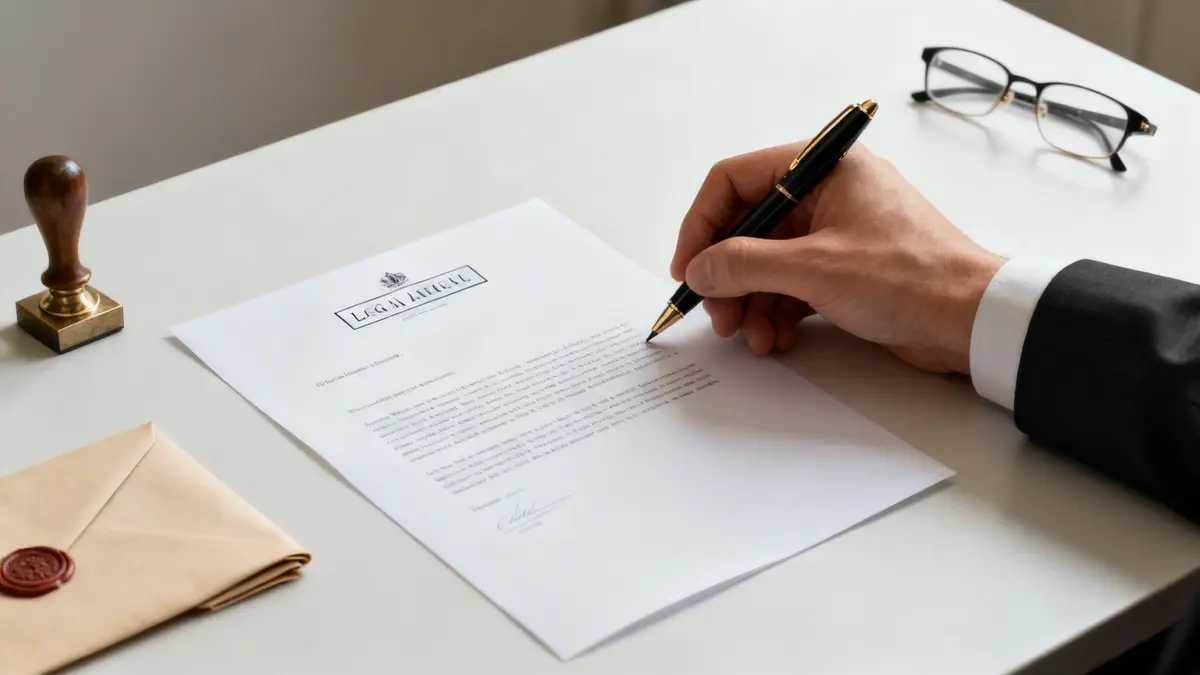
When you send a slander cease and desist letter, you are not making a polite request. You are executing a calculated legal maneuver that carries the implicit threat of a lawsuit. A potent letter projects authority and precision, leaving no ambiguity in the recipient’s mind that you understand the facts, know your rights, and are prepared to escalate the matter.
This letter is a surgical instrument, not a vehicle for venting frustration. Its function is to halt the defamatory statements and initiate the process of reputational repair. Every word must serve a purpose, from identifying the slanderer to delineating the serious consequences of ignoring your demand.
The Anatomy of an Authoritative Demand
The core of the letter must be a detailed, factual account of the slanderous statements. Vague accusations will be dismissed. Specificity is paramount. Identify what was said, quoting the defamatory words verbatim if possible. State when and where the incident occurred with precision, for example, “during the quarterly board meeting on May 15, 2024,” or “on the ‘Market Movers’ podcast episode released June 1, 2024.” Name the speaker and any witnesses present.
This level of detail signals that you have already begun documenting the incident for a potential court case. It compels the opposing party to address their specific words, making it far more difficult to hide behind general denials. From there, you must connect the statement to its consequences. Clearly explain why the statements are false and how they have caused tangible harm. For instance, explicitly state that a false claim of professional misconduct directly led to a major client withdrawing from a contract. This demonstrates the “damages” element of your slander claim and shows you are already quantifying the financial and reputational injury.
A cease and desist letter should read like a summary of a legal argument. The objective is to convince the recipient (and more importantly, their counsel) that litigating this matter would be an expensive error. Every sentence must build upon the strength and gravity of your claim.
Maintain a professional and firm tone. Emotional language or overt threats will weaken your position and may be used against you. Your authority derives from cold, hard facts and the clear, unavoidable consequences you outline.
Outlining Non-Negotiable Demands and Deadlines
After establishing the facts, state your demands. These are not requests; they are directives. A robust cease and desist for slander will include three core demands:
- Immediate Cessation: The individual must immediately and permanently cease making the specific false statements and any others of a similar nature about you or your business.
- Formal Retraction: The individual must issue a public retraction of their false statements to the same audience that heard the original slander. If the slander occurred in a meeting, the retraction must be made to those same individuals.
- Preservation of Evidence: Formally instruct the individual to preserve all evidence related to the matter, including recordings, notes, and emails. This is a legal step that prevents the destruction of evidence and signals preparation for the discovery phase of a lawsuit.
Each demand must be accompanied by a firm deadline, typically between 48 hours and 14 days, depending on the urgency. A short deadline underscores the gravity of the situation. If there is any uncertainty about the legal sufficiency of the letter, engage a civil litigation lawyer.
Finally, end by reserving your rights. Include a closing statement making it clear that this letter represents their one opportunity to resolve the matter informally. State that if they fail to comply, you reserve the full right to pursue all available legal remedies, including a lawsuit for damages. This final paragraph serves as a warning that this is their last chance to de-escalate before you initiate more forceful action.
Sending the Letter and Dealing With the Fallout
Sending your cease and desist letter marks the beginning of the engagement, not its conclusion. The method of delivery is as critical as the content. An email can be deleted, and a standard letter can be “lost,” but formal, documented delivery is a strategic move that proves receipt and establishes a paper trail for potential litigation.
Once the letter is sent, you enter a period of active waiting. The recipient’s response, or lack thereof, will dictate your next move. This is where strategy comes into play, and you must be prepared for any reaction.
How to Properly Serve the Letter
The objective is to obtain undeniable proof of receipt, eliminating any claim that the demand was never received.
- Certified Mail with Return Receipt: This is the standard method. It provides official tracking and a signed receipt card returned to you upon delivery. This receipt is legal proof that your letter was accepted at the specified address.
- Professional Process Server: For high-stakes situations, a process server is the most robust option. These are neutral, third-party professionals who personally hand-deliver legal documents. They then provide a sworn Affidavit of Service, a court-admissible document detailing the time, place, and manner of delivery. This is nearly impossible to dispute.
Email can be used as a supplementary method but should never be the primary means of delivery. Sending a copy by email demonstrates a good-faith effort to communicate, but it lacks the legal weight of a signed receipt or an affidavit.
The Three Ways This Can Go
After the letter is delivered, you can anticipate one of three responses. Your strategic preparedness for each is key.
1. They Comply
This is the desired outcome. The individual ceases the slander and agrees to issue a retraction. However, do not accept their word as fact. You must verify compliance. If you demanded a public retraction, confirm that it was delivered to the original audience. Monitor their communications to ensure they are adhering to the terms.
2. They Go Silent
A lack of response is a common delay tactic. They are testing your resolve, hoping you will abandon the effort. Do not let this deter you.
The deadline in your letter is your trigger for escalation. The day after it expires, your attorney should send a follow-up. This communication should be firm, stating that their silence is interpreted as a refusal to cooperate and that you are preparing to initiate legal proceedings. This often prompts a response.
3. They Fight Back
The recipient may respond with hostility. They might retain their own counsel and send a letter denying the allegations, claiming their statements were true or mere “opinion,” or even threatening a countersuit. This is a clear signal of escalation.
Once you receive a hostile response or a letter from their attorney, all direct communication must cease. The matter has transitioned from a demand to the preliminary stage of potential litigation. Your legal team must assume full control and prepare for the next phase.
When dealing with online slander, platform intervention may be necessary. A well-drafted cease and desist letter can serve as powerful evidence to support a takedown request when the slander violates a website’s terms of service. For a detailed overview of this process, see our guide on how to submit a Google legal request to remove content.
Ultimately, managing the aftermath of a slander cease and desist requires vigilance and a readiness to escalate. Your initial demand must be backed by the will to see it through.
When to Escalate Beyond the Written Demand
A slander cease and desist letter is an opening move. The recipient’s subsequent actions, or inaction, will determine your next step. The period following delivery is for strategic preparation, not passive waiting.
Once the deadline in your letter passes, the path forward clarifies. If they have complied, your immediate objective has been met. If they have ignored your demand or escalated their attacks, you are at a critical decision point. You must now determine if escalating pressure is warranted.
This decision tree outlines the common scenarios following the dispatch of your letter, guiding your response to cooperation, silence, or defiance.
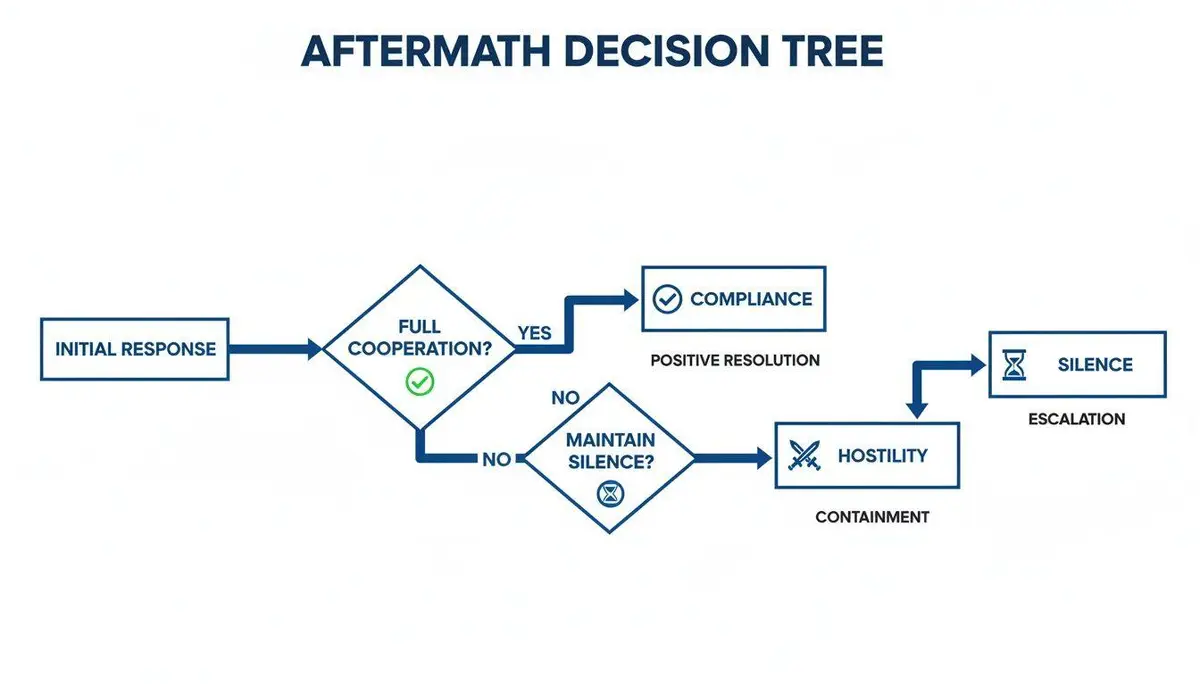
As the chart indicates, only full compliance concludes the matter. Any other response requires a strategic decision to escalate.
Analyzing the Cost-Benefit of Litigation
The most direct escalation is a lawsuit. Filing a defamation suit unequivocally demonstrates your seriousness. However, litigation is neither cheap nor fast. Before filing, you must conduct a rigorous cost-benefit analysis of the financial, temporal, and reputational implications.
Litigation is a significant undertaking. Attorney’s fees, court costs, and expert witness fees can accumulate rapidly. The process can extend for months or years, diverting focus from your professional and personal life. Furthermore, lawsuits are public records. This can backfire by amplifying the original slanderous statements through the Streisand effect.
The potential recovery must justify the cost of pursuit. Recent US defamation cases have yielded staggering judgments. The Sandy Hook Elementary School shooting lawsuits resulted in a judgment exceeding $1.4 billion against Alex Jones. In another case, teenager Nicholas Sandmann filed lawsuits seeking $450 million, ultimately reaching settlements with CNN and The Washington Post. More details on these and other famous defamation cases on FreedomForum.org are available for review. These examples demonstrate that while large awards are possible, they require immense resources to achieve.
A lawsuit should be approached as a business decision, not an emotional reaction. The question is not “Can I win?” but “Is winning worth the cost?” The objective of the suit must be clear, whether it is to recover financial losses, restore your name, or prevent future attacks.
Exploring Alternatives to a Protracted Legal Battle
For many executives and high-profile individuals, the primary goal is not a dramatic courtroom victory but the swift and discreet removal of damaging content. In these cases, alternatives to litigation are often the superior strategic choice. A targeted content removal campaign can achieve the desired outcome faster and with less public exposure.
This approach changes the tactical focus from the speaker to the platform. Instead of pursuing the individual, you target the online venues where the slander resides. A specialist firm like ContentRemoval.com can attack the problem from multiple angles simultaneously, including:
- De-Indexing Campaigns: Submitting sophisticated legal and technical requests to search engines like Google to remove slanderous pages from their results. If the content cannot be found, its power is neutralized.
- Source Removal: Leveraging relationships with hosting companies and website administrators, supported by strong legal arguments, to secure deletion of the content from the source website.
- Jurisdictional Leverage: Identifying a website’s hosting jurisdiction and using local laws and regulations to compel content removal, succeeding where direct demands have failed.
These tactics are surgical and confidential. They avoid the public spectacle of a lawsuit and can deliver results in weeks or days, not years. By scrubbing the content from public view, you neutralize the reputational threat without engaging in a protracted and expensive legal war.
Ultimately, escalating beyond a slander cease and desist presents a choice: public confrontation or private resolution.
Frequently Asked Questions
For a public figure or executive facing slander, the pressure to act is immediate. However, making the correct strategic move is more important than making a fast one. Here are direct answers to the most common questions we encounter from our clients.
Can I Send a Slander Cease and Desist Myself or Do I Need a Lawyer?
While you can send a letter yourself, it is a tactic that frequently backfires. A letter from an individual is often dismissed as an empty threat and lacks the necessary gravitas.
When that same demand arrives on the letterhead of a law firm or a specialist service like ContentRemoval.com, the message is transformed. It signals serious intent and the resources to escalate the conflict. A self-drafted letter also risks creating new liabilities, such as making an inadvertent admission or misstating the law, which can compromise your position later.
A self-sent letter is a request. A letter from counsel is a warning. The recipient’s response will reflect this difference.
What Is the Difference Between Slander and Libel?
The classic distinction is that slander is spoken defamation, while libel is written. Slander is a false and damaging statement made in a live speech, a broadcast interview, or a podcast.
Libel is defamation in a fixed medium, such as an email, a social media post, or a blog article. Historically, libel was considered more damaging due to its permanence. That distinction has now blurred. A slanderous comment in a viral video or podcast can persist indefinitely and reach a global audience, making it as destructive as any written piece. Both require a rapid and forceful response.
How Long Do I Have to Take Action Against Slander?
This is a critical point where many fail to act in time. The period for filing a lawsuit, known as the statute of limitations, begins the moment the slanderous statement is made. This deadline varies significantly by jurisdiction but is often short, sometimes as little as one year.
Missing this deadline permanently forfeits your right to sue for damages, regardless of the strength of your case. This compressed timeline necessitates immediate action: gathering evidence, seeking professional counsel, sending an authoritative cease and desist, and preparing to file a lawsuit if the other party fails to comply.
What If the Slander Occurs Anonymously Online?
An anonymous attacker presents a tactical challenge, but one that is solvable. The approach is twofold. First, we issue a formal notice to the platform hosting the content (the social media site, review page, or forum) demanding removal for violation of its terms of service.
Simultaneously, your legal team can file a “John Doe” lawsuit against the anonymous poster. This legal action allows us to subpoena the website or internet service provider (ISP) for records that can reveal the individual’s identity. Specialist firms also employ proprietary methods to unmask anonymous attackers and secure content removal, often faster than the court system. Anonymity is a shield, not an impenetrable barrier.
When facing slander, time is your adversary. Each moment of delay allows the reputational damage to spread, impacting your career, business, and personal life. A slander cease and desist is a critical first step, but it must be executed with precision and authority.
At ContentRemoval.com, we specialize in defending high-profile individuals and executives from these digital attacks. We move with speed to neutralize the source of the slander and, equally important, to erase its digital footprint. To discuss your situation in complete confidence, contact us for an initial assessment.