
Proving defamation requires four elements: a false statement of fact rather than opinion, publication to a third party, fault by the publisher, and demonstrable harm. Private individuals must show negligence, while public figures must prove actual malice under New York Times v. Sullivan. Evidence must be captured with URLs, timestamps and metadata, then preserved with a chain of custody.
Key facts
- Adding I think or I believe does not protect a statement that implies a provably false fact.
- Public figures must prove actual malice: knowledge of falsity or reckless disregard for the truth.
- A preservation letter puts a platform on notice; a subpoena can then compel user data and IP logs.
- A John Doe lawsuit is the route to unmask an anonymous poster, and Section 230 does not block court orders.
Where ContentRemoval.com comes in. ContentRemoval.com works on the removal side of defamation cases, taking down or de-indexing the false article, review or post while counsel builds the legal claim, and preserving the evidence in a form that supports both. The executive’s lawyer or general counsel usually makes contact, sometimes before deciding whether litigation is worth it. A free, confidential 15-minute Exposure Scan maps what is removable and where, and the report is yours to keep. Get a Free, Confidential Exposure Scan or read how our defamation removal work is done.
Successfully proving defamation is not about pointing out a lie online and expecting justice. It is a precise, high-stakes process demanding a coherent legal strategy and irrefutable proof. For executives, entrepreneurs, and other high-profile individuals, a single false statement can ignite a reputational crisis, impacting everything from professional standing to personal security.
This is not the time for generic advice. You require a clear, actionable framework to confront these attacks directly.

The objective is to build a case so compelling that your opponent has no choice but to retreat. This may mean litigation. In other instances, it means a discreet, surgical takedown of the content before it disseminates further. This guide is your playbook for moving from the initial shock of an attack to a final, successful resolution.
Establishing the Core Elements of a Defamation Claim
Before you can fight back against an online attack, you must be certain it qualifies as defamation in the eyes of the law. This is not about hurt feelings; it is a methodical process of proving four specific legal elements. If you cannot prove every single one, your case will fail.
These are the absolute requirements for a viable claim: a false statement of fact, its publication or communication to a third party, a specific level of fault on the part of the publisher, and demonstrable damages resulting from the statement.
A firm grip on these components is the first, most crucial step. It allows for a realistic assessment of your chances of success before you invest significant time and resources into a legal conflict.
Distinguishing Fact from Protected Opinion
This is often the first hurdle where a defamation claim stumbles. The line between a factual claim and a protected opinion is a frequent battleground, and knowing the difference is key. An opinion, no matter how insulting, is generally protected speech. A false statement of fact is not.
For example, a review stating, “In my opinion, John Doe is a difficult person to work with,” is likely an opinion. But a statement such as, “John Doe was fired from his last three positions for embezzling funds,” presents a specific, factual claim. If it is not true, you are looking at defamation.
Simply adding “I think” or “I believe” does not grant a blanket protection. If a statement implies a provably false fact, it can still be defamatory. A court will look at the entire context to determine if the average reader would perceive it as an assertion of fact.
The Shifting Standard of Fault
The level of fault you need to prove changes dramatically depending on who you are. This is a critical strategic point because the legal system treats private citizens very differently from public figures.
For private individuals, the burden is lower. You typically only need to prove negligence. This means the publisher failed to exercise reasonable care in verifying the truth of the statement.
For public officials, celebrities, or well-known executives, the bar is set much higher. You must prove actual malice. This standard, established in the landmark New York Times Co. v. Sullivan case, means you have to show the publisher either knew the statement was false or acted with a reckless disregard for the truth.
This higher standard for public figures exists to encourage open debate on public matters. From a practical standpoint, it places a significant burden of proof on anyone in the public eye, demanding a more aggressive, forensic approach to gathering evidence to prove the publisher’s state of mind.
Quantifying Harm and Navigating Jurisdictions
Finally, you must show you were actually harmed. Sometimes this is straightforward, such as a lost contract or a terminated business relationship, where financial records can demonstrate direct monetary loss. But harm can also be damage to your professional reputation or personal standing, which is more difficult to quantify but just as real.
Where the defamation occurred also matters immensely. Defamation laws vary significantly from one country to another, and even between states. The UK, for instance, has historically been known for being more plaintiff-friendly, often placing the burden on the defendant to prove their statement was true. The U.S., with its powerful First Amendment protections for speech, presents a more challenging path for plaintiffs.
Our experts have prepared a detailed breakdown of the complex legal aspects of online defamation for further reading. Understanding these foundational legal principles is non-negotiable for building a strong case and choosing the correct path forward.
Mastering Digital Evidence Collection and Preservation
When you are the target of online defamation, the evidence can feel ephemeral. A malicious comment, a fake review, or a false statement on a blog can be deleted in an instant, taking your entire case with it. To fight back effectively, your first move must be swift and precise. You need to secure irrefutable proof before it disappears.
This process goes far beyond taking a simple screenshot, which is easily challenged and lacks critical forensic data. The objective is to build an evidence locker so robust that its authenticity is beyond question in a legal setting.
Capturing High-Fidelity Digital Artifacts
First, you must document the defamatory content with absolute precision. A simple screenshot is insufficient because it is easily manipulated and omits crucial information. Your goal is to capture a complete digital record that presents the full context.
For every defamatory post, comment, or article, you must capture:
- The Full Page and URL: Do not just capture the comment itself. Use a browser extension or specialized tool that captures the entire webpage from top to bottom. The full URL must be clearly visible.
- Timestamp and Date: Your capture must include a visible, computer-generated timestamp. This anchors the publication of the defamatory statement to a specific moment, a crucial detail for establishing a timeline.
- Surrounding Context: Never isolate the defamatory statement. Document the entire conversation, the profile of the individual who posted it, and any engagement it received: likes, shares, and replies. This context proves how widely the statement was disseminated and helps establish the extent of the damage.
Cases have been severely weakened because the only evidence was a cropped image of an insulting comment. It is easily dismissed. A forensically sound capture, showing the full URL, a timestamp, and the social context, transforms a flimsy screenshot into a powerful piece of evidence.
The Importance of Metadata and Chain of Custody
What is visible on the screen is only half the battle. The most damning evidence is often contained within the metadata, data such as when a file was created, the account that posted it, and the IP address from which it originated. This is how you unmask anonymous attackers.
However, possessing the data is not enough; you must prove its authenticity. This is where chain of custody becomes critical. Think of it as a detailed log for your evidence that tracks every time it was accessed, moved, or analyzed. A broken chain of custody can render your evidence inadmissible in court.
As soon as you collect any evidence, save it to a secure, write-protected drive and begin a log. Note what was collected, where it came from, when it was acquired, and who handled it. For digital files, integrity is everything. The Open Evidence Project offers resources on verifying the origin of digital evidence.
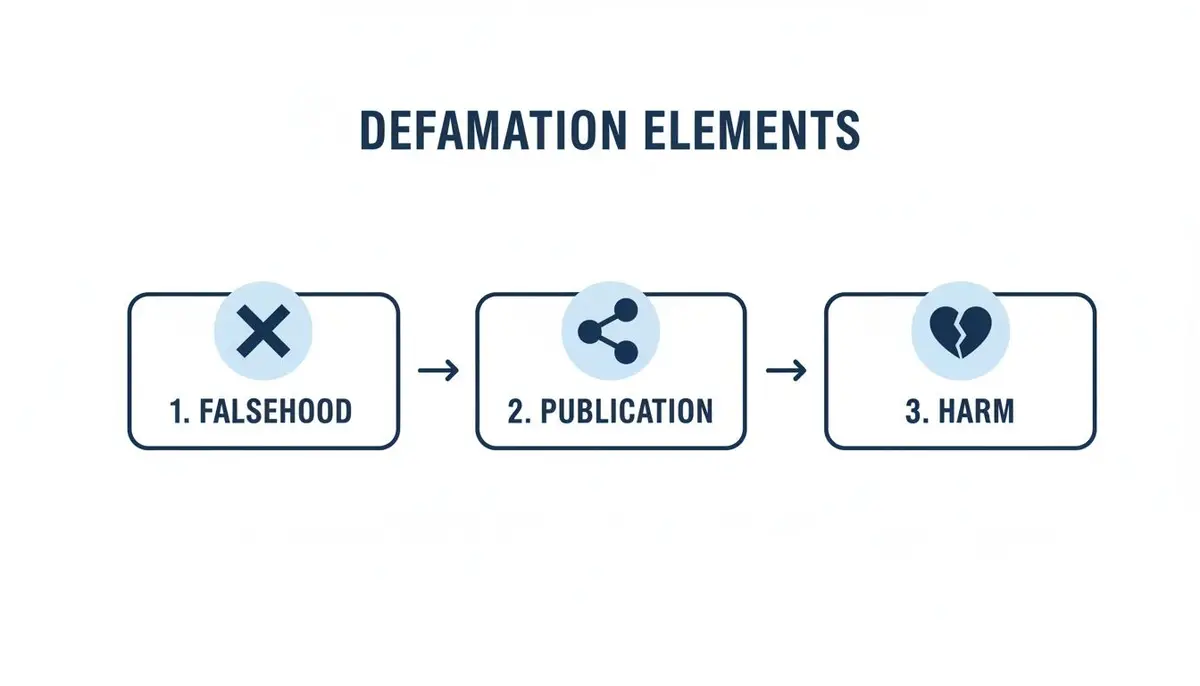
Every piece of collected evidence should directly support one of the core elements of a defamation claim: that the statement was false, that it was published to others, and that it caused you harm.
Using Legal Tools to Preserve Evidence
A common roadblock is that the most critical evidence, such as server logs or the real identity behind an anonymous account, is held by a third party like a social media platform, web host, or Internet Service Provider (ISP). You cannot simply request it; you must use the correct legal instruments.
Your first move should be to have legal counsel send a preservation letter or spoliation notice. This is a formal demand instructing the platform to save all data related to the defamation. It puts them on notice that they can be held liable if they delete it, preventing crucial data from being purged during routine maintenance.
Once the data is preserved, your lawyer can issue a subpoena. This is a court-backed order that compels the platform to hand over the information. A subpoena can force them to reveal user data, IP logs, and other internal records that can unmask an anonymous attacker. It is an essential tool in combating online harassment.
Of course, you cannot act on what you do not know exists. This is why active reputation monitoring is so important. It provides an early warning when a threat emerges.
This is also the point where engaging a digital forensic expert can be a game-changer. These specialists do more than just collect data correctly; they can authenticate it for court and serve as expert witnesses. Their involvement transforms a folder of screenshots into a case prepared for litigation.
Navigating Global Jurisdictional Complexities
There is no such thing as a global defamation law. What exists is a complex, often contradictory patchwork of rules that changes dramatically from one jurisdiction to another. For any executive or high-profile individual fighting a reputational attack, grasping these differences is not merely academic. It is the foundation of a winning strategy.
The location of the defamer, your own location, and where the audience views the defamatory content all determine which country’s laws apply. This creates the opportunity to strategically choose the most favorable jurisdiction for a lawsuit, a practice known as libel tourism. An attack that would be nearly impossible to fight under America’s stringent free speech protections might be swiftly resolved in a more plaintiff-friendly court in the UK or Australia.
This choice of venue is a high-stakes decision that shapes the entire legal battle. A case built for a U.S. court, which demands public figures prove “actual malice,” is fundamentally different from one prepared for a jurisdiction where the burden of proof falls on the defendant to prove their statements were true.
The Weaponization of Defamation Law
A disturbing trend has emerged where defamation law is used not as a shield, but as a sword to silence critics. In the United States, for instance, some well-funded corporate players have launched mass defamation lawsuits against multiple media outlets simultaneously. Their goal is not necessarily to win each case on its merits; it is to bleed news organizations dry through a coordinated, multi-front legal war.
This is a raw demonstration of how powerful actors can exploit the system. They force defendants into a costly war of attrition, banking on the idea that they will surrender under the sheer weight of legal fees and procedural complexities. Facing this kind of tactic requires significant resources and a legal team prepared for a protracted, complicated fight.
High-Stakes Jurisdictions Like South Korea
Nowhere is the strategic importance of jurisdiction more clear than in a country like South Korea, where the defamation laws have serious teeth. Litigation there is remarkably common, with an estimated 30,000 accusations filed annually.
What truly elevates the stakes is that defamation can be a criminal offense, carrying penalties of up to seven years in prison. This is a world away from the purely civil, monetary damages sought in most Western countries. The legal structure is also unique; third parties, not just the person being defamed, can file criminal complaints. This has created a chilling effect on speech, especially for journalists, where roughly 30% have been sued for their reporting. The experts at OpenNet Korea have tracked the impact of these laws on free expression in detail.
For our clients, such a situation requires a completely different playbook. The goal might not be a monetary award but rapid de-indexing of content to avoid entanglement in a criminal proceeding. The threat of severe penalties creates unique leverage for compelling swift removal actions.
This global variance means a one-size-fits-all approach to proving online defamation is doomed from the start. A strategy that works in New York will be ineffective in London and could be disastrous in Seoul.
Success demands a nuanced, multi-pronged approach custom-built for the specific legal and cultural realities of each jurisdiction. It requires a team that can anticipate these international challenges, find the leverage in a country’s laws, and execute the right move (whether that is a court order, a platform takedown, or a quiet settlement) to protect your name across any border.
From Demand Letters to Litigation: Executing Your Response
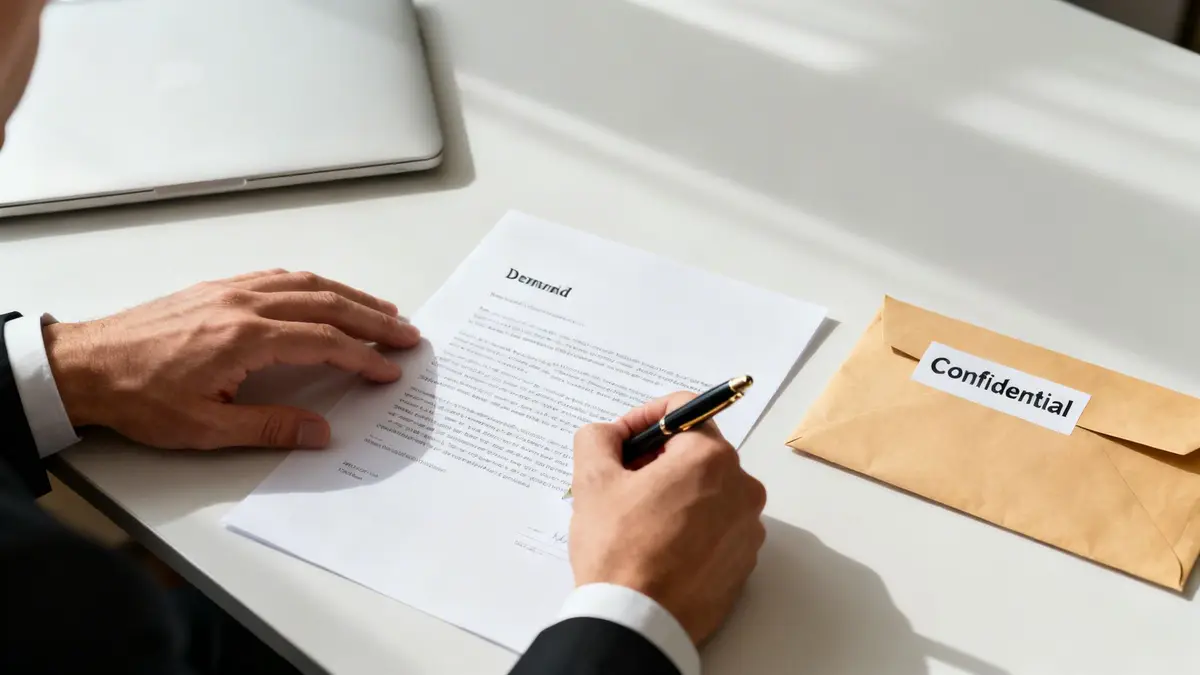
Once you have gathered your evidence and confirmed you have a solid legal case, it is time to switch from defense to offense. This phase is about taking calculated action to neutralize the defamatory attacks. The key is to choose the right strategy for the situation, aiming for maximum impact without incurring unnecessary costs or creating a public spectacle.
Often, the first move is sending a professionally drafted demand letter, sometimes called a cease and desist. This is not a polite request. It is a powerful legal shot across the bow. A properly constructed letter is forceful enough to compel a response but measured enough that you do not reveal your entire strategy or escalate the conflict needlessly.
This letter officially puts the defamer on notice. It demonstrates that you are aware of their actions and are prepared to take legal action. That seriousness alone is often enough to secure the content’s removal quietly and quickly, without ever having to step foot in a courtroom.
The Art of the Demand Letter
A demand letter is a strategic tool, not a forum for venting anger. Your goal is specific: to have the defamatory content taken down immediately and ensure the behavior ceases permanently.
A well-crafted letter must pinpoint the exact defamatory statements, clearly state that these claims are false and have caused harm, demand the immediate removal of the content, and insist on a commitment that the behavior will not be repeated.
It needs to be direct and professional, with the clear implication that a lawsuit will follow non-compliance. The tone is everything. If it is weak or vague, the recipient may assume you are bluffing. Conversely, an overly hostile letter could provoke a public fight you would rather avoid. It is a delicate balance.
Choosing Between Platform Takedowns and a Lawsuit
Before proceeding directly to litigation, it is worth attempting to work through the platform where the content was posted. Sites like Google, Facebook, and various review platforms have their own terms of service. If you can show that the content clearly violates their rules (such as impersonation, harassment, or hate speech) a takedown request can yield a much faster result than litigation.
This approach works best for clear-cut policy violations. The challenge is that platforms are often reluctant to adjudicate on what is true or false, especially when a post blurs the line between opinion and fact. If the platform will not act or the attacker is relentless, a lawsuit becomes the only logical next step. We cover these other options in our guide on how to deal with online defamation effectively.
Filing a lawsuit is a serious escalation. It is not just about monetary damages; it is a powerful tool for discovery. Litigation grants you the legal authority to issue subpoenas, compelling platforms and internet service providers to unmask anonymous attackers and turn over critical data.
For public figures, the path is much harder. You have to prove “actual malice,” a high legal standard meaning you must show the publisher knew the statement was false or acted with reckless disregard for the truth.
This is where many high-profile legal fights are won or lost. The U.S. defamation scene in 2026 is seeing unprecedented levels of litigation, impacting both media outlets and public figures. For example, as of 2026, several corporate entities and their affiliates have launched coordinated defamation lawsuits against major media companies. This signals a major shift, as corporations move from isolated lawsuits to broader litigation campaigns to protect their reputations.
Ultimately, deciding to litigate is a strategic choice. It is the move you make when other methods have failed or when the damage is so severe that only the full weight of the legal system can bring about a resolution and begin the process of restoring your good name.
Your Questions on Proving Defamation Answered
When you’re the target of an online attack, the questions can feel overwhelming. The right path isn’t always clear, and every decision feels like it carries immense weight. We’ve compiled some of the most pressing questions we hear from executives and other high-profile clients to give you direct answers grounded in real-world experience.
Is It Worth Suing Over an Anonymous Comment?
This question addresses a crucial strategic decision. The answer is yes; suing an anonymous poster is not only possible but often the only way to unmask them and terminate the harassment.
The process begins by filing what is known as a “John Doe” lawsuit against the unknown individual. This legal action is the key that unlocks the next step: it gives your attorney the power to issue subpoenas to the platform, web host, or internet service provider involved.
These companies are then legally required to hand over identifying information, like IP addresses, account details, or login histories. While Section 230 of the Communications Decency Act shields platforms from liability for their users’ posts, it does not shield them from complying with a court order.
Ultimately, the decision comes down to a cost-benefit analysis. Is the damage severe enough to justify the legal fees and time? For an executive whose entire professional reputation is at stake, the answer is often a resounding yes. Unmasking a persistent attacker is frequently the only path to a resolution.
Can a Bad Review Be Considered Defamation?
Yes, a bad review can absolutely be defamatory. The determination hinges on whether the statement is an opinion or a false assertion of fact. That is the critical distinction.
Consider two examples:
- Opinion: “I had a terrible experience with this consultant; I found their advice unhelpful.” This is a classic example of protected opinion. It is a subjective take on their own experience.
- Factual Assertion: “This consultant charged my credit card twice for the same service and refuses to issue a refund.” This is a specific claim that can be proven true or false. If it is false, it is defamatory.
Some believe they can shield themselves by adding the phrase “in my opinion.” That is not a reliable defense. A statement like, “In my opinion, the chef uses expired ingredients,” implies a provably false fact and can still be grounds for a lawsuit. When a review moves from personal critique to a false claim that harms your business, you have crossed into defamation territory.
One key concept here is defamation per se. Some false statements are considered so damaging on their face that the law presumes you suffered harm. This typically includes false accusations of a serious crime, having a “loathsome” disease, or, most relevant for professionals, statements that injure you in your business or trade.
What if I Am a Public Figure? Is Proving Defamation Impossible?
It is not impossible, but the legal standard is significantly higher. As a public figure, you must prove actual malice.
This means you must show the person who published the statement either knew it was false or acted with a reckless disregard for the truth. Simple negligence is not sufficient.
The “actual malice” standard exists to protect free speech and allow for robust public debate. To meet this high bar, you must build a compelling case that establishes the publisher’s state of mind. This usually requires extensive discovery to uncover evidence, such as:
- Internal emails showing the publisher was aware of evidence that contradicted their story.
- Proof they relied on a source they knew was untrustworthy.
- A complete failure to conduct even basic fact-checking on an explosive allegation.
While the standard is high, it is far from insurmountable. Major cases have been won by meticulously gathering a mountain of evidence that demonstrates a clear intent to harm or, at the very least, a shocking indifference to the facts. It requires a sophisticated strategy and the resources to see it through.
How Do I Prove Financial Harm From an Online Post?
Quantifying the damage is often one of the most challenging parts of a defamation case. You must translate reputational harm into a specific dollar amount for the court. You cannot just state you were damaged; you must show it.
To prove what the law calls special damages (your direct financial losses), your team must draw a straight line from the defamatory post to your lost revenue. You need documentation that shows a clear cause-and-effect relationship.
Some of the most powerful evidence includes:
- Emails from clients who explicitly mention the defamatory content as their reason for terminating a deal.
- Analytics reports showing a sudden, sustained drop in website traffic, sales leads, or revenue that aligns perfectly with the timing of the defamatory post.
- Testimony from a forensic accounting expert who can analyze your financial records and calculate the lost profits directly attributable to the attack.
In cases involving defamation per se, you may not have to prove specific financial losses to win. However, bringing concrete evidence of financial harm always strengthens your case and significantly increases the potential damages a court might award.
Proving defamation is a complex fight that demands a specialized blend of legal and technical skill. At ContentRemoval.com, we bring both to the table to defend our clients’ reputations. If you are dealing with an online attack, we can map out a clear, confidential strategy for you.
Schedule your confidential consultation with ContentRemoval.com today.
Frequently asked questions
Is a screenshot enough evidence for a defamation claim?
No. A cropped screenshot is easily challenged and omits the data that anchors a claim. Capture the full page with the URL visible, a computer-generated timestamp, the poster’s profile and the engagement around it, then store it on a write-protected drive with a log of who handled it.
Can a public figure win a defamation case?
Yes, but the standard is actual malice, so the case turns on the publisher’s state of mind. That usually requires discovery to surface internal emails showing awareness of contradicting evidence, reliance on a source known to be unreliable, or a complete failure to fact-check.
How do I prove financial harm from a defamatory post?
Draw a direct line from the post to the loss: emails from clients naming the content as the reason they walked away, analytics showing a drop in leads or revenue that matches the publication date, and forensic accounting testimony. In defamation per se cases harm is presumed, but concrete proof still strengthens the claim.