
To remove negative content from Google, start at the source by contacting the publisher or filing a DMCA or platform report, then use Google’s tools: Search Console for sites you control, personal privacy removal for sensitive data, and Remove Outdated Content once a page is gone. When removal is not possible, suppression with positive content pushes the result down.
Key facts
- Search Console URL removals are temporary, lasting roughly six months, unless the content is also changed.
- Direct publisher contact typically takes 1 to 4 weeks; DMCA takedowns 3 to 10 days.
- Truth is an absolute defense to defamation, so accurate but unflattering content cannot be forced down.
- False DMCA claims carry legal penalties, and aggressive lawsuits can trigger anti-SLAPP counterclaims.
Where ContentRemoval.com comes in. ContentRemoval.com is built for the cases this guide flags as beyond DIY: several negative results at once, high-authority publishers who ignore individuals, defamation or privacy issues that need a legal footing, and content that has spread across multiple sites, acting as the intermediary so your name stays out of the correspondence. Contact usually comes from the person affected, their assistant or their lawyer. A free 15-minute Exposure Scan maps what is removable, and the report is yours to keep. Get a Free, Confidential Exposure Scan or read how our search result removal work is done.
When your name or business appears alongside damaging content in Google search results, the impact can be immediate and severe. Negative articles, defamatory posts, privacy violations, and outdated information can derail career opportunities, damage business relationships, and cause significant personal distress. The good news is that you can take concrete steps to remove negative content from Google, though the process requires strategic thinking, persistence, and understanding of how search engines and content platforms operate. This comprehensive guide walks through proven methods to eliminate harmful content from search results and restore your online reputation.
Understanding How Google Displays Negative Content
Google doesn’t create content-it indexes and ranks pages from across the internet based on complex algorithms. When someone searches your name or brand, Google pulls results from news sites, blogs, social media platforms, review sites, forums, and countless other sources.
The Difference Between Removal and De-Indexing
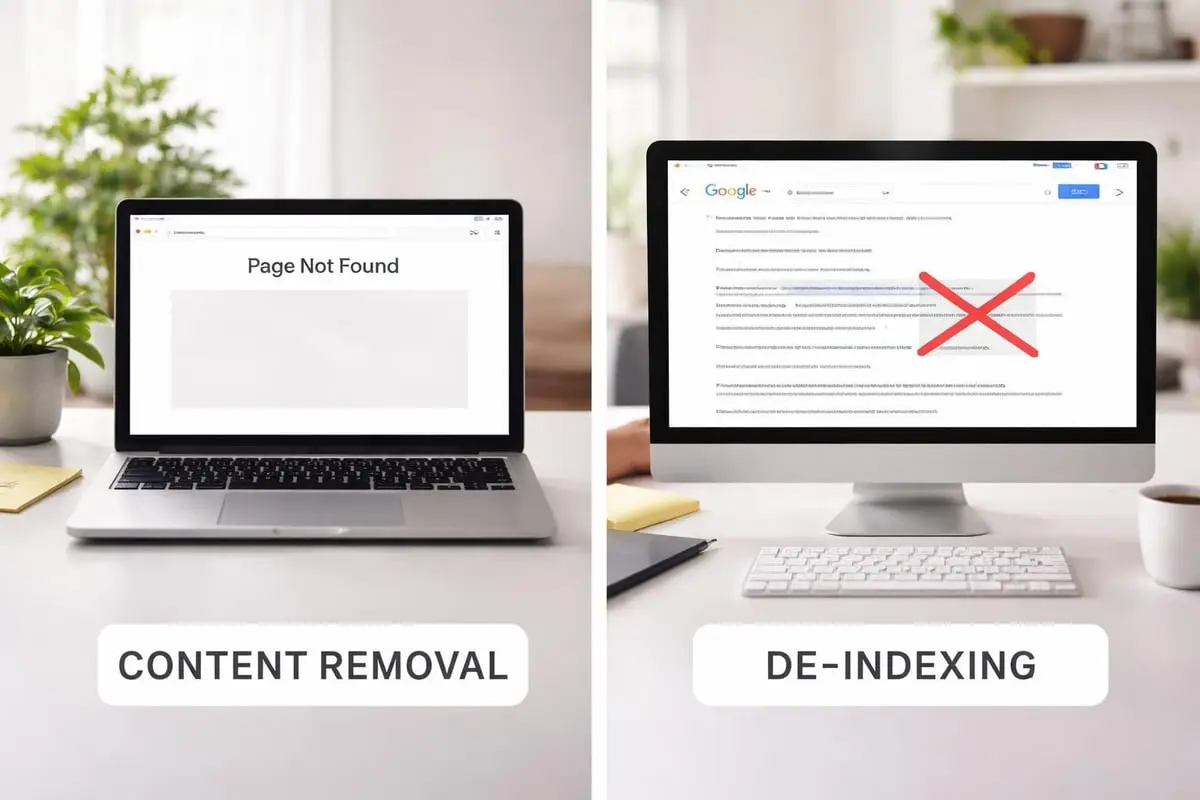
These terms are often used interchangeably, but they represent distinct processes. Removal means deleting content from its original source-the website where it was published. De-indexing means removing a page from Google’s search index, making it invisible in search results even though it still exists on the original website.
Both approaches have value depending on your situation. Complete removal offers the most thorough solution, while de-indexing provides a faster path to cleaning up search results when content removal isn’t immediately possible.
Why Negative Content Appears in Search Results
Google’s algorithms prioritize several factors when determining what appears in search results:
- Relevance: How closely the content matches search queries
- Authority: The credibility and trustworthiness of the publishing domain
- Freshness: How recent the content is
- Engagement: User interaction signals like clicks and time on page
- Backlinks: How many other sites link to the content
Negative content often ranks well because controversy generates engagement, authoritative news sites publish critical coverage, and multiple sources link to sensational stories. Understanding these ranking factors helps you develop effective strategies to remove negative content from Google.
Direct Content Removal Strategies
The most effective way to eliminate negative content from search results is removing it from the source. This approach ensures the content disappears completely rather than just hiding it from Google.
Contacting Website Owners and Publishers
Start by identifying who controls the content. For blog posts, news articles, or forum threads, reach out directly to:
- Website administrators or content managers
- Article authors or journalists
- Platform moderators or support teams
- Domain registrars (in extreme cases)
When making removal requests, be professional and specific. Clearly explain why the content should be removed, citing:
- Factual inaccuracies that misrepresent you or your business
- Privacy violations that expose personal information without consent
- Defamatory statements that are demonstrably false
- Outdated information that no longer reflects current reality
- Copyright infringement if they’ve used your intellectual property
Many publishers have established content removal policies. Removing negative news articles from Google often requires working directly with editorial teams who balance journalistic standards against legitimate privacy concerns.
Legal Takedown Notices and DMCA Requests
When content violates intellectual property rights, the Digital Millennium Copyright Act (DMCA) provides a powerful tool. If someone has republished your copyrighted material-photographs, text, videos, or other creative works-you can submit a DMCA takedown notice.
| Removal Method | Best For | Timeline | Success Rate |
|---|---|---|---|
| Direct Contact | Cooperative publishers, minor issues | 1-4 weeks | Moderate to High |
| DMCA Takedown | Copyright violations | 3-10 days | High |
| Legal Demand | Defamation, serious violations | 2-8 weeks | High |
| Platform Reporting | Terms of service violations | 1-3 weeks | Moderate |
The DMCA process requires specific documentation, including proof of ownership and identification of the infringing material. Specialized services like copyright infringement removal can expedite this process and ensure proper legal compliance.
Platform-Specific Removal Processes
Major platforms maintain their own content policies and removal procedures:
Social Media Platforms: Facebook, Twitter, Instagram, and LinkedIn all have reporting mechanisms for content that violates community standards, including harassment, impersonation, privacy violations, and harmful content.
Review Sites: Yelp, Google Business Profile, and Trustpilot allow you to flag reviews that violate their guidelines, such as fake reviews, competitor sabotage, or reviews containing personal attacks rather than legitimate service feedback.
Forums and Discussion Boards: Reddit, Quora, and specialized forums typically respond to reports of doxxing, harassment, or content that violates their terms of service.
Success with platform-specific removals depends on demonstrating clear policy violations. Simply disliking content or finding it unflattering rarely qualifies for removal under most platform guidelines.
Google’s Official Removal Tools and Policies
Google provides several mechanisms to remove content from search results, each designed for specific situations and legal frameworks.
Google Search Console Removal Requests
If you control the website where negative content appears, Google Search Console offers the fastest removal path. The URL Removal Tool lets you temporarily hide pages from search results while you address the underlying content.
This tool works best for:
- Content on websites you own or manage
- Temporary removal while you fix or update pages
- Urgent situations requiring immediate de-indexing
Keep in mind these removals are temporary (approximately six months). For permanent solutions, you must remove or update the actual content and use proper technical implementations like robots.txt directives or noindex tags.
Legal Removal Requests Under Personal Privacy
Google has expanded removal options for personal privacy protection, particularly following European regulations and evolving privacy standards worldwide. You can request removal of search results containing:
- Personal identification numbers: Social Security numbers, bank account details, driver’s license numbers
- Financial information: Credit card numbers, private financial records
- Medical records: Health information, treatment details, medical images
- Sensitive personal images: Explicit or intimate content shared without consent
The right to be forgotten has established important precedents for personal privacy protection, though implementation varies significantly by jurisdiction. Understanding how to remove personal data from Google requires knowledge of both legal frameworks and technical processes.

Outdated Content Removal Requests
Google’s “Remove Outdated Content” tool helps when content has been deleted from the source website but still appears in search results or cached pages. This commonly happens when:
- A publisher removes an article but Google hasn’t updated its index
- Personal information was deleted from a forum but remains in search snippets
- A business removes negative content from its site but old versions appear in cache
Submit the URL through Google’s outdated content removal form, providing the current page status (404 error, content removed, or substantially changed). Google typically processes these requests within a few days, though complex cases may take longer.
Search Result Suppression Techniques
When direct removal isn’t possible or practical, suppression strategies can push negative content down in search rankings where fewer people will see it. This approach recognizes that removing negative search results sometimes requires multiple tactics working in concert.
Creating Positive Content Assets
The foundation of suppression involves creating high-quality content that outranks negative results. Develop a portfolio of owned digital assets:
- Personal or business website: Optimized for your name or brand
- Professional social profiles: LinkedIn, Twitter, industry-specific platforms
- Content platforms: Medium, YouTube, podcasting platforms
- Professional directories: Industry associations, alumni networks
- Press releases and media: Positive news coverage and announcements
Each asset should be thoroughly optimized with relevant keywords, quality content, and proper technical SEO. The goal is occupying multiple first-page positions, leaving less room for negative content.
Strategic Content Optimization
Creating content isn’t enough-you must optimize it to outrank existing negative results. Focus on:
- Keyword targeting: Use your exact name or brand as it appears in negative results
- Title optimization: Place your name or brand early in page titles
- Content depth: Comprehensive, valuable content outperforms thin pages
- Backlink building: Earn links from authoritative, relevant sources
- Technical SEO: Fast loading, mobile optimization, proper schema markup
Building a strong content foundation takes time but provides lasting value beyond reputation management. These assets continue working for you indefinitely, creating a buffer against future reputation threats.
Leveraging Authority Domains
Content published on high-authority domains ranks faster and higher than content on newer or lower-authority sites. Strategic options include:
Guest posting on industry publications, major blogs, and news sites that accept contributed content. These placements carry significant SEO weight and can quickly climb search rankings.
Social media profiles on established platforms benefit from domain authority. A well-optimized LinkedIn profile or Twitter account often ranks prominently for name searches.
Press release distribution through reputable services can generate multiple high-authority mentions across news aggregation sites.
Professional directories specific to your industry provide valuable links and search visibility.
The key is consistently producing genuine, valuable content rather than obvious SEO manipulation. Google’s algorithms have become sophisticated at detecting and devaluing low-quality content created solely for ranking purposes.
Working with Reputation Management Professionals
Complex reputation challenges often exceed what individuals can handle alone. Professional reputation management services bring specialized expertise, established relationships, and resources unavailable to most people.
When to Consider Professional Help
Several situations warrant professional intervention:
- Multiple negative results across search pages
- High-authority publishers unlikely to respond to individual requests
- Legal complexity involving defamation, privacy violations, or international law
- Time sensitivity requiring immediate action
- Technical challenges beyond your expertise
- Failed DIY attempts where your efforts haven’t produced results
Specialized firms that focus on content removal bring established processes, legal knowledge, and platform relationships that accelerate results. They understand the nuances of different removal pathways and can navigate complex situations involving multiple content types and platforms.
What Professional Services Provide
Reputable reputation management firms offer structured, comprehensive approaches:
| Service Component | What It Includes | Typical Timeline |
|---|---|---|
| Reputation Audit | Comprehensive search analysis, threat assessment | 3-5 days |
| Removal Strategy | Custom action plan, prioritized targets | 1 week |
| Direct Removals | Publisher outreach, legal notices, platform reports | 2-8 weeks |
| De-Indexing | Google removal requests, technical interventions | 1-4 weeks |
| Suppression | Content creation, optimization, ongoing monitoring | Ongoing |
Professional services also provide discretion and confidentiality crucial for sensitive situations. They act as intermediaries, keeping your direct involvement minimal and protecting your privacy throughout the process.
Evaluating Reputation Management Providers
Not all reputation services deliver equal value. When evaluating providers, consider:
- Transparency: Clear explanations of methods and realistic timelines
- Ethics: Legal, platform-compliant approaches without black-hat tactics
- Experience: Demonstrated success with cases similar to yours
- Pricing: Transparent fee structures without hidden costs
- Communication: Regular updates and accessible support
- Guarantees: Realistic promises about achievable outcomes
Be wary of services promising immediate, guaranteed results or using questionable tactics that could backfire. Effective reputation work requires patience, expertise, and ethical approaches that produce lasting results.
Advanced Strategies to Remove Negative Content from Google
Beyond basic removal requests and suppression tactics, advanced strategies address particularly challenging reputation issues.
Multi-Platform Coordination
Negative content often spreads across multiple platforms-an original article gets shared on social media, discussed in forums, and quoted by other publishers. Effective removal requires coordinated action across all instances:
- Identify all versions: Use comprehensive monitoring to find every mention
- Prioritize by impact: Focus first on high-visibility, high-authority sources
- Coordinate timing: Simultaneous removal prevents content migration
- Monitor for republication: Set up alerts for content reappearing elsewhere
This coordinated approach prevents the “whack-a-mole” problem where content disappears from one location only to resurface elsewhere.
Technical De-Indexing Methods
When content can’t be removed from source websites, technical interventions can hide it from search results:
Noindex directives tell search engines not to index specific pages. If you control the website or can convince the owner, adding a noindex meta tag prevents Google from displaying the page in results.
Robots.txt blocking prevents search engine crawlers from accessing specific pages or directories. This method works for websites you control or when publishers cooperate with your removal request.
Canonicalization points search engines to preferred versions of content, potentially consolidating ranking signals away from negative pages.
Password protection or removing pages entirely (returning 404 or 410 status codes) signals to Google that content should be removed from the index.
Leveraging Privacy Regulations
Privacy laws increasingly empower individuals to control their online information. Depending on your jurisdiction and the content’s nature, several regulations may apply:
GDPR (General Data Protection Regulation) in Europe grants broad rights to request deletion of personal data. Even non-European residents can sometimes invoke GDPR when dealing with European publishers or platforms.
CCPA (California Consumer Privacy Act) and similar U.S. state laws provide privacy protections for residents, including data deletion rights.
PIPEDA in Canada, LGPD in Brazil, and similar frameworks worldwide create removal pathways based on privacy rights.
Steps to remove negative content from Google often involve understanding which privacy frameworks apply to your situation and leveraging them effectively.
Preventing Future Negative Content
Once you’ve cleaned up existing problems, prevention becomes critical. Proactive reputation management prevents small issues from becoming major crises.
Ongoing Monitoring Systems
Implement comprehensive monitoring to catch new negative content quickly:
- Google Alerts: Free tool for basic name and brand monitoring
- Specialized monitoring services: More comprehensive coverage with better filtering
- Social listening tools: Track mentions across social platforms
- Review monitoring: Automatic alerts for new reviews across major sites
Early detection allows faster response. Content is easier to remove or suppress before it gains traction, accumulates backlinks, and rises in search rankings.
Building Reputation Resilience
Strong positive presence creates resilience against future attacks:
- Maintain active social profiles that you control and update regularly
- Publish quality content establishing expertise and thought leadership
- Engage with your community building goodwill and positive associations
- Encourage positive reviews from satisfied customers or colleagues
- Document achievements through press releases, case studies, and announcements
This ongoing effort creates what reputation professionals call “SEO armor”-a strong positive presence that’s difficult for negative content to penetrate.

Crisis Response Protocols
Despite prevention efforts, new reputation threats may emerge. Establish clear response protocols:
Immediate assessment: Evaluate the threat level, visibility, and potential impact within 24 hours of discovery.
Response decision tree: Determine whether to ignore, respond publicly, request removal, or pursue legal action based on predefined criteria.
Escalation procedures: Know when to involve legal counsel, PR professionals, or specialized reputation services.
Communication guidelines: Prepare templates and guidelines for different response scenarios.
Having these protocols in place prevents emotional, hasty reactions that often worsen reputation problems.
Common Challenges and Solutions
Even with expert knowledge, removing negative content from Google presents predictable challenges. Understanding these obstacles and their solutions improves your success rate.
Unresponsive Publishers and Platforms
Challenge: Many content publishers ignore removal requests, particularly when they believe content is newsworthy or protected by free speech rights.
Solutions:
- Escalate through multiple contact channels (email, phone, social media)
- Reference specific policy violations rather than general complaints
- Involve legal counsel for formal demand letters
- Pursue platform-level reporting when publishers don’t respond
- Consider content removal services with established publisher relationships
Anonymous or Foreign Content Sources
Challenge: Content published anonymously or hosted in foreign jurisdictions complicates removal efforts.
Solutions:
- Use WHOIS lookup and domain research to identify responsible parties
- Work with platforms and hosting providers rather than anonymous publishers
- Leverage international privacy frameworks and cross-border legal agreements
- Focus on de-indexing from Google rather than source removal
- Consider reputation suppression as an alternative
Content Protected by Journalistic Privilege
Challenge: News articles and journalistic content receive strong legal protections, even when unflattering or based on incomplete information.
Solutions:
- Request corrections or updates rather than complete removal
- Provide new information or context that warrants story updates
- Pursue removal of factual inaccuracies while acknowledging legitimate reporting
- Focus on suppression strategies when removal isn’t viable
- Explore legal options only for clear defamation or privacy violations
Duplicate Content Across Multiple Sites
Challenge: Negative content often appears on numerous sites through syndication, quotation, or malicious republication.
Solutions:
- Tackle the original source first, which may trigger removal of syndicated copies
- Submit separate removal requests for each unique publisher
- Use DMCA takedowns for unauthorized republication of copyrighted material
- Focus de-indexing efforts on highest-ranking versions
- Implement monitoring to catch new appearances quickly
Technical Considerations for Content Removal
Understanding technical aspects of how Google indexes and displays content helps you implement more effective removal strategies.
Search Index Refresh Cycles
Google doesn’t instantly update search results when content changes or is removed. The search index operates on refresh cycles that vary by page importance and update frequency:
- High-authority, frequently updated sites: Recrawled daily or even hourly
- Medium-authority sites: Recrawled weekly to monthly
- Low-authority or infrequently updated sites: Recrawled monthly or less often
You can accelerate re-indexing by submitting URLs directly through Google Search Console or requesting cache updates through the outdated content removal tool.
Cache and Snippet Management
Even after removing content from its source, Google’s cache may preserve old versions for days or weeks. Search snippets (the preview text shown in results) may also display outdated or unwanted information.
Cache removal requires submitting removal requests specifically for cached pages, not just the live content. Use Google’s removal tool to target both the live URL and its cached version.
Snippet optimization involves controlling what text appears in search results through:
- Meta descriptions that present desired messaging
- Structured data markup guiding Google’s content selection
- Content structure that influences what Google extracts for snippets
Understanding Search Result Variations
Search results vary based on numerous factors:
- Personalization: Past search history and user behavior influence results
- Location: Geographic location affects ranking and result selection
- Device: Mobile versus desktop results may differ
- Search context: Recent searches and query patterns impact results
- Time: Results change over time as new content appears and old content ages
Test your search visibility using incognito mode, multiple devices, different locations (via VPN), and asking others to search. This comprehensive view reveals the true extent of negative content visibility.
Measuring Success and ROI
Effective reputation management requires measuring progress and demonstrating tangible results.
Key Performance Indicators
Track these metrics to evaluate your content removal efforts:
| Metric | What It Measures | Target |
|---|---|---|
| First Page Results | Number of negative results on page 1 | Zero negative |
| Visibility Score | Weighted score based on position and impact | <10% negative |
| Search Volume | Monthly searches for monitored terms | Trending stable/down |
| Sentiment Ratio | Positive vs. negative mentions | >80% positive/neutral |
| Removal Success Rate | Percentage of requests granted | >70% |
| Time to Resolution | Average days from identification to removal | <30 days |
Regular tracking reveals trends, validates strategy effectiveness, and identifies areas requiring additional attention.
Long-Term Reputation Health
Beyond immediate removal success, monitor long-term reputation indicators:
- New content velocity: Rate of new positive content creation
- Engagement metrics: Social following growth, content interaction
- Authority building: Domain authority scores, backlink growth
- Review trends: Average ratings, review volume, sentiment
- Crisis frequency: How often new reputation threats emerge
These indicators reveal whether you’re building sustainable reputation resilience or just fighting recurring fires.
Cost-Benefit Analysis
Reputation damage carries real financial costs-lost opportunities, damaged relationships, decreased business, and personal stress. When evaluating removal investments, consider:
Direct costs: Time spent, professional services fees, legal expenses, technology tools
Opportunity costs: Business or career opportunities lost due to reputation damage
Emotional costs: Stress, anxiety, and personal impact of ongoing reputation problems
Future value: Long-term benefits of clean search results and strong positive presence
For most people and businesses, investing in effective content removal and reputation management delivers returns far exceeding the direct costs.
Ethical and Legal Considerations
Attempting to remove negative content from Google raises important ethical and legal questions that deserve careful consideration.
Balancing Privacy and Transparency
The tension between personal privacy rights and public transparency creates complex ethical territory. Legitimate considerations include:
Public interest: Some negative content serves genuine public interest, warning others about fraudulent businesses, dangerous individuals, or important historical events.
Accountability: Public figures and businesses have reduced privacy expectations when their actions affect others.
Redemption: People deserve opportunities to move past mistakes, especially for old, minor, or resolved issues.
Manipulation versus protection: There’s a meaningful difference between suppressing legitimate criticism and protecting against false or disproportionate attacks.
Navigate these considerations honestly. Attempting to hide legitimate warnings or factual reporting often backfires and creates new reputation problems.
Legal Boundaries and Risks
Several legal frameworks govern content removal efforts:
Defamation law protects against false statements that damage reputation. However, truth is an absolute defense-you cannot successfully remove content simply because it’s unflattering if it’s factually accurate.
Privacy law increasingly empowers individuals to control personal information, but public figures and businesses face higher bars for privacy claims.
Copyright law prohibits using DMCA takedowns for content that doesn’t actually violate your copyrights. False DMCA claims carry legal penalties.
Anti-SLAPP laws protect free speech by penalizing frivolous lawsuits intended to silence critics. Overly aggressive legal tactics can trigger costly anti-SLAPP counterclaims.
Understanding these boundaries prevents legal missteps that could worsen your situation. When in doubt, consult qualified legal counsel before pursuing aggressive removal tactics.
Transparency with Stakeholders
If you’re managing business reputation, consider how removal efforts align with stakeholder expectations:
- Customers: Deserve honest information about products and services
- Investors: Require accurate information for investment decisions
- Employees: Need to trust their employer’s integrity
- Partners: Expect transparency in business relationships
Attempting to hide legitimate problems rather than addressing them damages trust and often creates larger reputation issues when the truth emerges.
Successfully removing harmful content from search results requires strategic thinking, technical knowledge, and often professional expertise. Whether you pursue DIY removal requests, technical de-indexing, suppression through positive content, or comprehensive reputation management, the key is acting quickly and thoughtfully with methods appropriate to your specific situation. When negative search results threaten your personal or business reputation, Content Removal provides specialized expertise in direct takedowns, de-indexing strategies, and reputation recovery across search engines and platforms worldwide, delivering discretion and results when your online reputation matters most.
Frequently asked questions
Why does negative content rank so high on Google for my name?
Google weighs relevance, domain authority, freshness, engagement and backlinks. Negative content often scores well on all of them because controversy drives clicks, critical coverage appears on authoritative news domains and many sites link to sensational stories.
What is the Remove Outdated Content tool and when should I use it?
It is Google’s tool for pages that have already been deleted or changed at the source but still show in results or cached copies. You submit the URL and state the current status, such as a 404 or substantially changed content, and Google typically processes the request within a few days.
Can I get a negative news article removed from Google?
Journalistic content has strong protections, so full removal is unusual unless there is clear defamation or a privacy violation. More realistic options are requesting a correction or update with new information, de-indexing where a policy applies, and suppression to push the article down for searches of your name.