
Online reputation management for high-net-worth individuals is a legally driven defense against targeted attacks: defamation campaigns, weaponized leaks, negative SEO, and doxxing. The strategy begins with a diagnosis of what can be removed under defamation, copyright, privacy, or impersonation rules versus what must be suppressed, backed by dark web monitoring and a 24 to 48 hour crisis playbook.
Key facts
- Removal rests on clear grounds: defamation, copyright infringement, privacy violations including NCII, or impersonation
- Accurate reporting from a legitimate outlet is practically impossible to remove; suppression is the correct strategy
- Timelines: containment in 24 to 48 hours, clear-cut removals in 1 to 4 weeks, suppression over 3 to 12 months
- Monitoring should watch for malicious forum chatter, credentials sold on dark web markets, and new impersonation profiles
Where ContentRemoval.com comes in. ContentRemoval.com runs these engagements under strict need-to-know access and encrypted channels, and where required works directly through the client’s counsel so the engagement sits under privilege. The family office, the principal’s general counsel, or a security adviser usually makes the first contact, and secure channels are set up before the full scope is disclosed. A free 15-minute Exposure Scan maps what is removable, and the report is yours to keep. Get a Free, Confidential Exposure Scan or read how our reputation management work is done.
For high-net-worth individuals, families, and their advisors, online reputation management is not a vanity project. It is a critical defense strategy for protecting assets, ensuring personal safety, and preserving the value of a lifetime’s work.
A single, well-placed digital attack can inflict damage in hours that traditional PR is unequipped to handle. True online reputation management for high net worth clients is a specialized, strategic, and legally-driven defense against sophisticated digital threats.
The Digital Threat Landscape for High-Net-Worth Individuals
For prominent individuals and their families, the internet is not a level playing field; it is a minefield of risk. A digital footprint is a direct reflection of credibility, impacting everything from deal flow and company valuations to personal security.
The negativity directed at this level is rarely random noise. It is targeted. The threats are often sophisticated, well-funded, and launched with a specific, malicious objective. Orchestrated disinformation campaigns, deliberate content leaks, and weaponized fake reviews are increasingly common. The perpetrators range from disgruntled ex-employees and opponents in litigation to competitors and activists using a public profile for their own gain.
High-Stakes Digital Threats Facing HNWIs
The attacks directed at high-net-worth individuals are calculated strikes against the pillars of their success. The most common threats and their immediate impacts are outlined below.
| Threat Vector | Description & Typical Perpetrator | Potential Impact |
|---|---|---|
| Defamation Campaigns | Coordinated negative articles, blog posts, or social media content. Often launched by business rivals, activist groups, or aggrieved individuals. | Erodes public trust, damages brand partnerships, and can influence investor sentiment. |
| Weaponized “Leaks” | The deliberate release of confidential documents, emails, or personal information. Perpetrators could be ex-employees or hostile actors who have breached security. | Derails M&A deals, exposes business strategy, and creates legal liability. |
| Negative SEO Attacks | Maliciously creating and promoting negative content to dominate search results for your name or company. Often orchestrated by competitors. | Subverts a positive reputation in search engines, making negative information the primary public-facing narrative. |
| Doxxing & Privacy Invasions | The public release of private information like home addresses or family details. Often carried out by extremists or extortionists. | Poses a direct physical security risk to the individual and their family. |
Each of these vectors requires a defense far more advanced than standard public relations. While implementing robust cybersecurity is a crucial first step, it is only one component of a comprehensive defensive framework.
A Rapidly Expanding Market of Risk and Defense
The growing intensity of these threats has created a boom in the professional services required to counter them. The online reputation management market is projected to reach USD 7.75 billion by 2026 and is expected to surge to USD 14.01 billion by 2031.
This market growth directly reflects the tangible financial and personal damage that leaders and their families are facing. Family offices and large enterprises now view proactive reputation defense as an essential cost of doing business. Discover more insights about this market growth on Mordor Intelligence.
An unmanaged digital reputation is an unmanaged financial liability. The question is not if a threat will emerge, but whether you have the specialized framework in place to neutralize it before it inflicts irreversible damage.
Understanding Your Strategic Options: Removal vs. Suppression
Treating all negative online content uniformly is a critical error. It is an amateur approach that wastes time and resources, and can amplify the very problem you seek to resolve. A professional strategy for online reputation management for high-net-worth clients begins with a precise diagnosis, determining what can be surgically removed versus what must be strategically suppressed.
This distinction is not semantic. The choice between removal and suppression dictates the entire engagement, from legal tactics to the timeline for resolution. They are distinct disciplines, and misapplication is a primary reason reputation campaigns fail.
This chart breaks down the initial decision matrix when a new digital threat is identified.
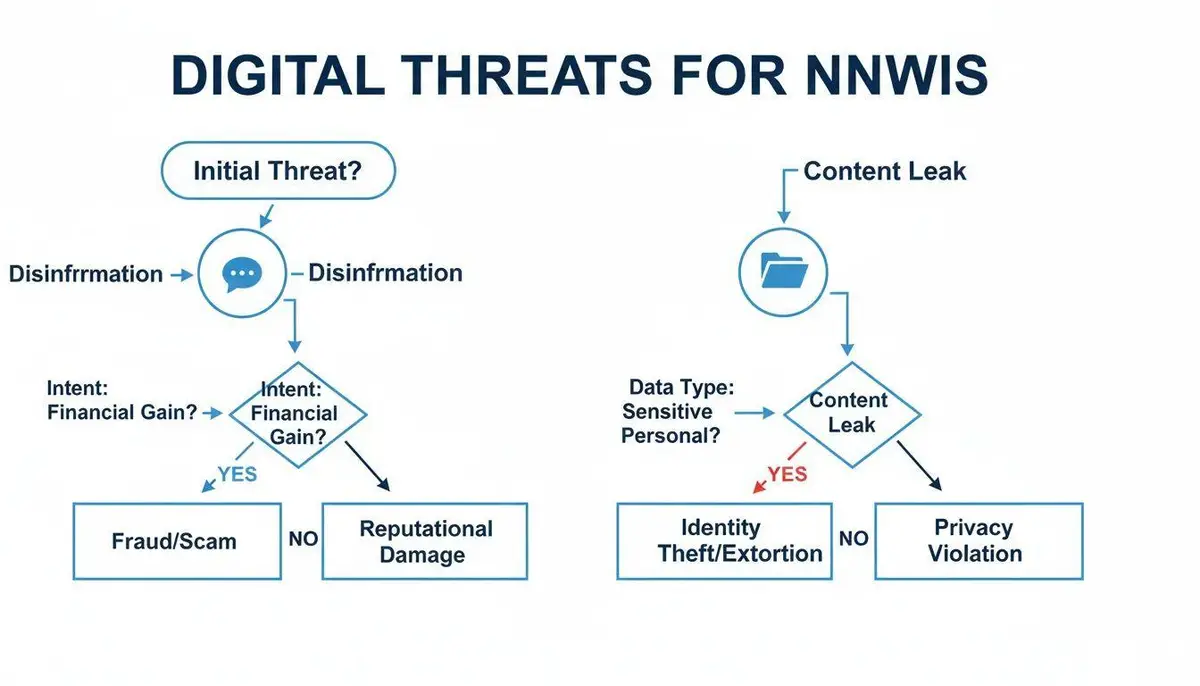
The correct path forward depends entirely on the nature of the threat, be it a deliberate disinformation campaign, a damaging leak of private files, or another form of digital assault.
The Surgical Strike of Content Removal
Content removal is a direct, decisive action to permanently delete harmful material from the internet. It is analogous to a surgeon excising a tumor. The objective is to remove the content from its source website and ensure its deletion from search engine caches.
This option is viable only when the content violates a clear rule: a law, a platform’s terms of service, or a specific regulation. Most successful removals are built on solid legal grounds, including:
- Defamation: Proving a statement is a false assertion of “fact” (not an opinion) that has caused reputational damage.
- Copyright Infringement: The unauthorized use of intellectual property: photos, videos, articles.
- Privacy Violations: The publication of sensitive personal information, such as financial records, home addresses (doxxing), or non-consensual intimate images (NCII).
- Impersonation: The creation of a fraudulent social media profile or email account to deceive others.
In these instances, we deploy legal instruments like the Digital Millennium Copyright Act (DMCA) or engage directly with the legal departments of hosting companies and online platforms. When the legal footing is solid, removal is the most definitive solution.
The Strategic Campaign of Content Suppression
When removal is not a viable option, suppression is the necessary strategy. This is the correct approach for dealing with legitimate but damaging content, particularly negative articles from reputable news outlets. Press freedoms make forcing a major publication to retract a factually accurate story a futile endeavor.
Suppression is not about hiding the truth; it is about controlling the narrative. The objective is to create and promote a wave of positive, authoritative, and well-optimized content that systematically displaces the negative item from the first page of search results.
This is not a simple PR push. It is a highly sophisticated search engine optimization (SEO) campaign engineered to dominate the search results for a specific name or entity. By burying a negative article on the second or third page of Google, it becomes practically invisible, as over 75% of users never click past the first page. You can delve deeper into the strategic methods to suppress negative content and restore digital authority in our full guide.
This process is akin to managing a chronic condition. The negative article may persist on the web, but a successful suppression campaign ensures it no longer inflicts harm. It will not appear when potential investors, business partners, or new clients conduct their due diligence. This approach requires patience and expertise, a sustained effort over several months to construct a “digital firewall” of positive assets that protect your name. Any firm offering a one-size-fits-all solution fails to grasp the stakes; a bespoke diagnosis is the only responsible path forward.
Building a Proactive Defense with AI-Powered Monitoring
The only winning strategy in high-stakes reputation protection is a proactive one. A reactive approach is, by definition, a failure. Waiting for a crisis to appear on the front page of Google is tactically indefensible.
Simple tools like Google Alerts are insufficient for the complex, fast-moving threats faced by high-net-worth individuals. They are the digital equivalent of a smoke detector with a dead battery.

True defense requires an always-on intelligence system. This is not passive listening; it is an active operation. We use sophisticated AI platforms to maintain constant surveillance over the public web, all major social media networks, and, critically, the dark web.
From Reactive Alerts to Predictive Intelligence
The power of constant monitoring lies in its ability to detect the faint signals that precede a crisis. It functions as an advanced radar for your digital life. A basic alert informs you that a negative article was just published. A predictive system, in contrast, identifies the chatter that signals an attack is being planned.
This intelligence work is laser-focused on spotting specific warning signs of reputational damage:
- Malicious Chatter: We identify discussions on hidden forums or social media threads that indicate a smear campaign is being organized against you or your companies.
- Compromised Credentials: We discover if your personal or corporate logins are being sold on dark web markets, often before they can be used to exfiltrate data or capital.
- Impersonation Attempts: We flag newly created social media profiles or websites registered in your name that are designed to defraud partners or disseminate disinformation.
This level of intelligence transforms the strategic posture from a defensive crouch to one of proactive engagement. It allows you to see threats forming on the horizon. The entire framework of our firm’s reputation monitoring services is built around this principle of preemption.
An early warning is the most powerful weapon in reputation defense. Detecting a threat before it becomes a public crisis provides a critical window to launch preemptive countermeasures, seize control of the narrative, and neutralize the risk before any damage is done.
The Financial Case for Proactive Monitoring
Failure to detect these threats early is not a PR problem; it is a direct financial risk. For individuals and families with significant assets, a single piece of negative content, such as a false review or a data leak, can trigger a devastating financial domino effect.
The numbers are stark. Research shows that each negative article can cost a business up to 30 customers. It can drive up the cost of acquiring new customers by 20% and erode as much as 25% of the market value tied directly to a company’s reputation.
When a scandal reaches the top of search results, where 27.6% of all clicks go, the damage multiplies. This is precisely why 87% of executives agree that reputation management provides a clear return on investment by protecting revenue and strengthening stakeholder loyalty. A rapid crisis response can slash potential financial losses by over 35%. You can read the full research about these reputation management statistics to see the data for yourself.
This leads to a critical truth: proactive monitoring is not an expense. It is an essential investment in protecting your assets and legacy. Identifying a threat early provides the time and space to act decisively. You can quietly secure compromised accounts, prepare legal notices before a defamatory story goes viral, or deploy a counter-narrative to inoculate against coming disinformation. This is the essence of modern reputation defense, a continuous intelligence operation designed to fortify your digital world.
Executing a Crisis Response Playbook with Speed and Precision
When a reputation crisis breaks, there is no time to form a committee. The first 24 to 48 hours are determinative. This is the window where a problem is either contained or allowed to metastasize, jeopardizing personal standing and enterprise value. A panicked, disjointed reaction is the fastest way to compound the damage. Control is achieved only through a methodical plan executed by a seasoned team.
This is the function of a crisis response playbook. It is not a static document but a live-fire protocol activated the moment a threat is confirmed. The playbook initiates a carefully orchestrated sequence of actions designed to disarm the threat before it can proliferate.

Immediate Actions: The First Critical Hours
The initial move is a rapid assessment to determine the nature of the threat. Is it a defamatory article, a private data leak, or a viral video? The answer dictates the entire strategy, ensuring every action is calibrated to the specific threat.
Concurrently, our legal analysts search for a vulnerability. Does the content infringe on a copyright? Violate a platform’s terms of service? Does it meet the legal standard for defamation? If a legal angle for removal exists, we act on it immediately. Swift action here is crucial to prevent the content from being copied and mirrored across the web, which makes removal exponentially more difficult.
While legal actions are in motion, suppression work begins. This involves a combination of technical SEO and strategic communications designed to reclaim control of the first page of search results. The objective is simple: when your name is searched, the narrative should be the one you control, not the one an attacker is promoting.
Anatomy of a Coordinated Response
Consider a common scenario for a high-net-worth executive: a defamatory video alleging financial misconduct goes viral.
- Initial Containment (Hours 0-12): The playbook is activated. Our team analyzes the video for elements enabling an immediate takedown, such as a copyrighted company logo or background music. Simultaneously, the video is reported on every social platform for violating rules on harassment or defamation.
- Legal & Technical Action (Hours 12-48): Formal legal notices are sent to the website’s hosting provider and the platform’s legal department, demanding removal. At the same time, our proprietary tools work to de-index the video’s URL from search engines, rendering it almost impossible to find even if it remains online on an obscure site.
- Strategic Suppression (Day 3 Onward): We begin promoting positive content. A pre-approved suite of authoritative articles and profiles highlighting the executive’s actual career achievements and philanthropy is amplified. This targeted SEO work displaces the negative video and related news from the first page of Google, burying it in digital obscurity.
This measured approach is the antithesis of a panicked reaction. An amateur might issue a defensive public statement that only adds fuel to the fire. We work quietly and surgically behind the scenes, dismantling the attack at its source and reshaping the information landscape.
The financial consequences of mismanaging a crisis are staggering. For a high-net-worth individual, reputation is capital. Research shows that reputation accounts for 30-40% of a company’s value, and a staggering 41% of companies that experience a major crisis see a direct impact on their brand value and revenue. A slow or clumsy response can erase billions in market capitalization or derail a major transaction. Discover more insights about these reputation statistics at New Media.
A crisis playbook is the ultimate tool for turning chaos into control. It provides the structure, speed, and precision needed to protect decades of work from being destroyed in a few hours. The difference between a methodical execution and a disorganized scramble is often measured in millions of dollars.
The Importance of Confidentiality in a Bespoke Engagement
In online reputation management for high net worth individuals, confidentiality is not a feature; it is the foundation of the engagement. The issues we handle, from private family matters to intricate business disputes, are too sensitive for a standard agency approach. This work demands a level of security commensurate with a top-tier law firm or a family office.
From the initial conversation, the process is designed for containment. There are no generic intake forms or group sales calls. Your initial consultation is a protected briefing where secure communication channels are established before the full scope of the issue is disclosed. We secure the environment first.

Crafting a Secure and Bespoke Strategy
A bespoke engagement means the strategy is built from the ground up, exclusively for the client. We do not use a playbook of generic tactics. Instead, we conduct a deep analysis of your unique risk profile, professional responsibilities, and even your family’s comfort with public visibility. This initial deep dive dictates every subsequent action.
You cannot afford to have junior account managers or a revolving door of staff handling sensitive information. In a specialist firm, access is granted on a strict need-to-know basis. Your case is compartmentalized, with only senior strategists and analysts directly assigned to it having access to the details, much like an intelligence operation.
Our security framework is built on non-negotiable core principles:
- Encrypted Communications: All emails, files, and messages are routed through secure, end-to-end encrypted platforms. No exceptions.
- Attorney-Client Privilege: When required, we work directly with your legal counsel. This wraps the entire engagement in attorney-client privilege, adding a powerful layer of legal protection.
- Ironclad NDAs: While our team is bound by comprehensive non-disclosure agreements, our true commitment to privacy is cultural. It is ingrained in our operational DNA, not merely a document we sign.
A premium service is defined not just by its results, but by its process. The assurance that your sensitive personal and professional information is handled with absolute precision and discretion is the foundation upon which trust and success are built.
This approach must extend beyond digital threats. A complete defense, for example, must account for the human element, such as understanding the nuances of private staff confidentiality. A vulnerability can arise from close physical proximity as easily as from a remote hacker.
Standard PR vs. Specialist HNWI Reputation Management
It is crucial to understand the fundamental differences between a generalist agency and a specialist firm built for high-stakes situations. While both may fall under the “PR” umbrella, their core functions, methods, and objectives are worlds apart. A standard PR firm is designed to generate attention; a specialist reputation firm is designed to solve complex problems with discretion.
The table below delineates these operational differences.
| Aspect | Standard Public Relations | Specialist HNWI Reputation Management |
|---|---|---|
| Onboarding | Public-facing intake forms and general discovery calls. | Confidential assessment via encrypted channels. |
| Access Control | Broad team access to client files for campaign efficiency. | Strict need-to-know access limited to senior strategists. |
| Legal Integration | Refers out to external law firms as needed. | Can operate directly under attorney-client privilege. |
| Core Focus | Gaining media attention and public awareness. | Resolving sensitive issues with maximum discretion. |
The choice is not about which is “better,” but about which is engineered for the specific task.
Ultimately, engaging a firm for a high-stakes reputational issue is an act of profound trust. The operational security, meticulous onboarding, and deep-seated commitment to confidentiality are not mere marketing points. They are the essential guardrails that enable a successful outcome and prevent a bad situation from becoming catastrophic.
Defining Success with Timelines, Costs, and Measurable Results
In high-stakes environments, ambiguity is a liability. Any legitimate reputation management strategy must be founded on absolute clarity. This requires clear objectives, realistic timelines, transparent costs, and a firm definition of what success entails.
Vague promises about “improving your image” are the hallmark of an amateur. A true specialist operates more like a trusted investment advisor, defining ROI in concrete terms. The cost should be viewed not as a fee, but as a strategic investment weighed against the tangible risk of catastrophic financial damage. What is the cost of a derailed merger? A dip in company valuation? A threat to your family’s safety? Viewed through this lens, protecting your digital narrative is a fundamental component of asset protection.
Establishing Realistic Timelines
The timeline for any online reputation management high net worth campaign depends entirely on the objective. There is no one-size-fits-all schedule, and any firm offering one demonstrates a fundamental misunderstanding of the work. Different goals require vastly different time horizons, and a clear, phased roadmap should be expected from day one.
- Immediate Crisis Containment (24-48 Hours): When a crisis emerges, such as a data leak or a viral smear piece, the first two days are focused on containment. This is a rapid-response phase centered on legal takedowns and technical measures to halt the content’s proliferation.
- Targeted Content Removal (1-4 Weeks): If content clearly violates a platform’s rules or a law (e.g., copyright theft or blatant impersonation), removal can often be achieved within weeks. The exact timing is contingent on the responsiveness of the website or platform.
- Strategic Suppression Campaigns (3-12+ Months): Displacing a negative news article from the first page of Google is not a quick fix. It is a long-term strategic play. This sustained campaign involves creating and promoting a portfolio of positive digital assets to systematically bury the unwanted result.
Measuring What Matters Most
Success is not a feeling; it is a measurable outcome. While metrics like sentiment scores can offer a general sense of public perception, a high-stakes engagement must be measured by tangible results that directly protect your personal and professional life.
Success in this arena is defined by control. It is the permanent and verifiable removal of defamatory material, the relegation of a damaging article to the digital graveyard of page three on Google, and the establishment of a clean, authoritative, and accurate digital footprint that you command.
This is the real deliverable: a digital environment where your actual accomplishments and character are reflected accurately. It is an online world where malicious attacks are neutralized before they can inflict harm.
As you consider your options, understanding the different approaches firms take is crucial. Our guide to the best reputation management companies for 2026 provides a solid framework for making this critical decision. The end goal is to transform your online presence from a source of risk and anxiety into a fortified, valuable asset.
Your Questions Answered: A Frank Discussion on HNWI Reputation Management
When your name and legacy are at stake, you require direct answers, not vague promises. Here are the most critical questions we address for our clients, answered with the necessary candor.
How Quickly Can You Remove Negative Content?
The timeline is contingent on the specific threat. For a clear-cut legal violation, such as copyright infringement or impersonation on a major platform, removal can often be achieved within 24-72 hours. These platforms have established processes for such black-and-white issues.
However, many situations are more complex. Defamatory attacks from anonymous sources, particularly those hosted on uncooperative offshore sites, demand a more persistent and creative strategy. This is not a quick fix. Similarly, a suppression campaign is a strategic, long-term project measured in months, not hours.
Is It Possible to Remove a Negative News Article?
To be direct: removing a factually accurate story from a legitimate news outlet is practically impossible. Freedom of the press is a powerful shield, and any firm promising a forced takedown is misleading you. Attempting to strong-arm a major publisher often backfires, creating a new, larger story about the effort to suppress the original one.
The correct strategy is not removal; it is suppression. We execute a sophisticated SEO campaign to build a firewall of positive, authoritative content around your name. By creating and promoting a portfolio of strong digital assets that you control, we systematically displace the negative article from the first page of search results.
For all practical purposes, what cannot be found on the first page of Google does not exist. Our objective is to control that digital first impression, rendering old news irrelevant.
How Do You Ensure My Privacy and Confidentiality?
Your privacy is paramount. From our first interaction, we bypass standard web forms and insecure email. All communication is immediately moved to end-to-end encrypted channels to ensure complete privacy.
Internally, your case is compartmentalized on a strict need-to-know basis. Only senior strategists directly assigned to your file have access to the details. For an even stronger layer of security, we can operate directly through your legal counsel. This structures our entire engagement under attorney-client privilege, providing an ironclad legal shield and absolute peace of mind.
When your digital legacy is threatened, you need a team that specializes in high-stakes reputation defense. ContentRemoval.com has the experience and discretion to protect what you’ve worked a lifetime to build. To schedule a confidential consultation and explore your strategic options, contact us today.
Frequently asked questions
Can a wealthy individual get a negative news article removed?
Removing a factually accurate story from a legitimate outlet is practically impossible, and strong-arming a publisher often creates a bigger story about the attempt. The workable strategy is suppression: building a portfolio of authoritative assets you control that displaces the article from the first page of search results over several months.
Why is Google Alerts not enough to protect a high-net-worth family?
Alerts tell you a negative article was published after the fact. Threats against prominent families are targeted and often planned in hidden forums, on dark web markets where credentials are sold, or through freshly registered impersonation profiles. Always-on monitoring across the public web, social platforms, and the dark web gives a window to act before the attack goes public.
What happens in the first 48 hours of a reputation crisis for an executive?
A rapid assessment of the threat type, then a search for a legal vulnerability such as copyright, terms of service, or defamation that supports immediate takedown. In the article’s example, a defamatory video is reported on every platform in hours 0 to 12, formal notices and de-indexing run in hours 12 to 48, and suppression begins from day three.