
Removing personal information online means mapping every exposure with advanced search operators and a sweep of data brokers such as Whitepages, Spokeo and BeenVerified, opting out at each source, citing platform privacy policies for old posts, and de-indexing residual pages through Google’s Results about you tool. Because brokers trade data with one another, profiles regenerate, so monitoring continues.
Key facts
- Search operators such as an exact name plus city, or filetype:pdf, surface archived data a plain search misses.
- Data broker opt-outs are deliberately convoluted and often require you to supply more personal details to verify identity.
- California’s DROP platform lets residents send one takedown request to every registered broker at once.
- A DMCA notice to the hosting provider removes stolen photos or text but has no reach over defamation or reviews.
Where ContentRemoval.com comes in. ContentRemoval.com takes on personal data removal for executives and public figures whose home address, family names or financial details have surfaced on people-search sites or scraper domains. The request often comes from a family office, security lead or assistant who has already tried opting out and watched the profile return. A free 15-minute Exposure Scan maps what is removable and which brokers are involved, and the report is yours to keep. Get a Free, Confidential Exposure Scan or read how our personal data removal work is done.
Executing a successful removal of personal information from the internet requires a targeted, multi-front strategy. The process involves methodically identifying all exposure points, compelling the removal of data from each source, and ensuring the information does not regenerate. This entails direct action against data brokers and public record aggregators, followed by the systematic de-indexing of residual data from search engines like Google.
Why Your Digital Footprint Is a Direct Liability

For any individual with a public profile, exposed personal information constitutes a significant liability. The data points you leave online are perpetually scraped, packaged, and monetized by a shadow industry of data brokers and people-search websites. This is no longer a matter of privacy but of active risk management.
These automated systems do not merely gather a name and phone number. They collate hundreds of disparate data points to construct a detailed, actionable profile, which is then sold for a nominal fee or simply made public.
From Innocuous Data to Severe Consequences
Seemingly random details create tangible vulnerabilities. An old address, a relative’s name, or a disconnected phone number are the precise ingredients required for sophisticated social engineering and phishing attacks. Malicious actors assemble this information to bypass security questions, impersonate you to financial institutions, or manipulate your family and colleagues into disclosing even more sensitive intelligence.
The escalation of these threats results in real-world damage:
- Doxxing and Harassment: Your home address and family members’ names are published with the express intent of inciting targeted harassment, including physical threats at your residence.
- Corporate Espionage: Competitors or disaffected former employees can exploit personal details to gain leverage, compromise private communications, or execute a targeted smear campaign.
- Financial Fraud: With sufficient personal history, criminals can open lines of credit, file fraudulent tax returns, or take over your financial accounts with alarming efficiency.
For executives and public figures, a compromised digital identity is a breach of both personal and corporate security. When your data is exposed, the boundary between your private life and professional responsibilities is erased.
The Fallacy of Digital Anonymity
Many individuals mistakenly believe their information is too minor or obscure to present a genuine threat. This is a critical miscalculation. The issue is not a single data point, but the mosaic created when hundreds are aggregated. Data brokers sell the completed puzzle, providing any hostile actor a comprehensive roadmap to your life.
This aggregation is continuous, meaning your exposure grows daily. A decade-old forum comment can be linked to your current employment. A public property record can be connected to your children’s social media profiles. Each new piece of exposed data increases your vulnerability exponentially. The first step toward mitigation is understanding what a comprehensive digital footprint cleanup entails.
Learning how to remove personal information online has evolved beyond digital housekeeping; it is now an essential security protocol for anyone whose reputation, safety, or financial well-being is at risk. The threat is not theoretical. It is active, automated, and demands a professional, structured response.
Conducting a Comprehensive Discovery Audit
Before any removal can be initiated, you must know precisely what information exists and where. This initial phase is one of discovery, constructing a complete inventory of your digital footprint. This audit creates a map of every location where your personal information resides, from forgotten forum posts to detailed profiles on data aggregator sites.
This is not a casual search but a deep, systematic investigation. The resulting map serves as the playbook for the entire removal process, ensuring no exposure point is overlooked. This is accomplished through two primary methods: advanced search engine reconnaissance and a thorough audit of the data broker ecosystem.
Mastering Advanced Search Engine Reconnaissance
A simple Google search of your name is insufficient. Data brokers and other sites are adept at burying profiles just deep enough to evade casual discovery while remaining accessible to automated tools and determined individuals. To unearth this hidden data, you must employ advanced search operators on engines like Google, Bing, and DuckDuckGo.
These operators function as specific commands that refine search parameters. The most critical for this work include:
"Your Name": Enclosing your name in quotation marks forces the search engine to seek that exact phrase, filtering out irrelevant results containing only your first or last name."Your Name" AND "Your City": This combination is effective for locating location-specific data, revealing pages where your name and city appear together."Your Name" -site:linkedin.com: The minus operator is exceptionally useful for excluding results from a specific website, allowing you to filter out your own known profiles and focus on unidentified mentions.filetype:pdf "Your Name": This operator searches for specific file types. Personal information frequently appears in archived résumés, newsletters, or public records stored as PDF files.
The key is to combine these operators with every piece of personal information imaginable: past addresses, old phone numbers, defunct email addresses, relatives’ names, and online usernames. This process invariably uncovers a significant volume of forgotten or archived data.
The objective is to think like an adversary. What pieces of information could someone string together to build a profile on you? Search for those combinations relentlessly to find what they would find.
Auditing the Data Broker Ecosystem
While search engines reveal surface-level data, the true repository of personal information is held by hundreds of data brokers. These entities exist to collect, package, and sell your data, from public records to online purchasing habits.
Tackling them requires a methodical approach. Begin by obtaining a current list of data brokers, recognizing that this landscape is constantly in flux. Then, you must systematically visit the major sites (such as Whitepages, Spokeo, and BeenVerified) and search for your profile.
This is a deliberately tedious process. Brokers intentionally design their opt-out procedures to be convoluted, discouraging removal attempts. This creates a significant gap between expressed desires for privacy and actual protective actions. A YouGov survey found that while 61% of Americans consider limiting data access ‘very important,’ a staggering 33% do very little to protect themselves. This inaction is a critical vulnerability, particularly as 27% of young adults believe privacy concerns indicate someone has something to hide. The full report is available in the Data Privacy Day survey on YouGov.com.
A complete audit goes deeper, cross-referencing broker lists with breach databases to identify where your information has already been exposed and sold on the dark web. This builds the comprehensive map of your highest-risk exposure points. The inventory you create from this two-part audit is the foundation for every subsequent removal action.
Once your digital footprint is mapped, the tactical removal phase begins. This is not a passive task but a targeted campaign requiring focus and persistence. The objective is to systematically dismantle the profile that data brokers, search engines, and other sites have constructed about you online.
Prioritize the most damaging information first, anything that places your safety, employment, or reputation at immediate risk. After neutralizing the most acute threats, you can proceed methodically through the remainder of your inventoried list.
Tackling Data Brokers and People-Search Sites
Data brokers are the primary source of this problem. Their entire business model is predicated on aggregating your personal details and selling them to any willing buyer.
While most of these sites provide an “opt-out” mechanism, it is often buried and intentionally frustrating to navigate. The process typically involves several obstacles:
- Locating your profile: You must first find your specific listing among millions of others.
- Verifying your identity: Ironically, to prove your identity for removal, you are often required to provide more personal information, such as an email address or phone number.
- Submitting the request: This can involve anything from navigating a dozen web pages to filling out forms or, in some archaic cases, sending a fax.
This is a manual, resource-intensive process. A successful removal from one site does not prevent the profile from reappearing months later or appearing on an affiliate site you have never encountered.
The scale is massive. As of late 2025, California alone had over 500 registered data brokers. However, a significant legislative change is imminent. California’s DROP (Delete Request and Opt-out Platform) goes into effect on January 1, 2026. Mandated by the 2023 Delete Act, this platform will enable California residents to send a single, universal takedown request to every registered broker simultaneously. The official announcement about the DROP platform on privacy.ca.gov outlines how this will revolutionize the process.
Using a Platform’s Own Rules Against Them
Beyond data brokers, your information is likely scattered across old social media accounts, forums, and miscellaneous websites. Each has its own rules for removal. The strategy is to leverage their own policies.
A polite email asking for the removal of a ten-year-old forum comment made under your full name will likely be ignored.
A more effective approach is to locate the platform’s privacy policy or terms of service. Your removal request should then cite the specific rule they are violating by hosting your personally identifiable information.
Do not ask for a favor: notify them of a policy violation. This shift in framing changes the dynamic. You are no longer a user requesting help; you are holding them accountable to their own rules. Maintain a professional, direct, and dispassionate tone.
Getting Content De-Indexed from Search Engines
In some instances, removal from the source website is not possible. The site owner may be unresponsive, or the content, such as a news article, is legally protected. When you encounter such an impasse, the next move is to have the page de-indexed.
De-indexing does not delete the webpage, but it renders it practically invisible. If it does not appear on Google, its capacity to cause harm is almost entirely neutralized.
Google’s “Results about you” tool is designed for this purpose. It facilitates requests for the removal of search results containing sensitive information, including:
- Your home address, phone number, or email
- Government ID numbers (driver’s license, passport)
- Bank account or credit card numbers
- Confidential login credentials
Knowing how to remove online content from search results is a core competency in any cleanup effort, particularly for stubborn content that cannot be taken down at the source.
This diagram illustrates the fundamental discovery process, which is the foundation for all subsequent actions.
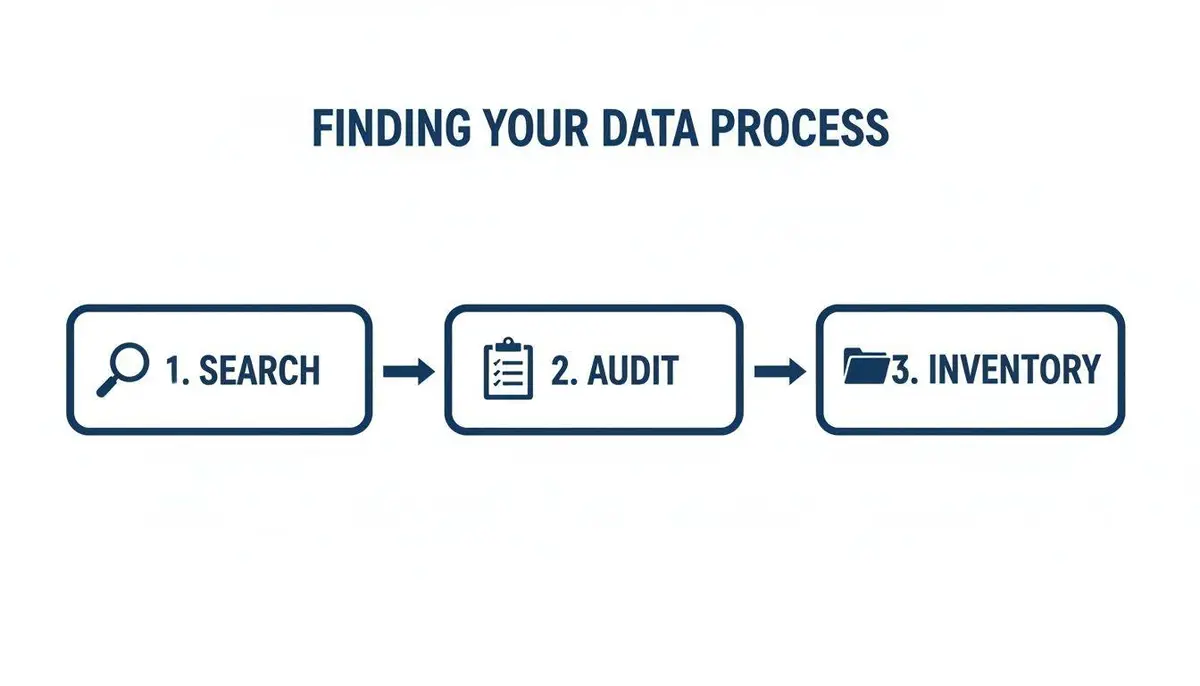
Starting with a broad search and refining it into a specific inventory ensures a comprehensive approach before initiating takedown requests.
DIY Removal vs. Professional Service: A Reality Check
A solo effort is feasible, but one must be realistic about the time, effort, and frustration involved. In many cases, engaging an expert is not a matter of convenience but of efficacy.
| Aspect | DIY Approach | Professional Service (e.g., ContentRemoval.com) |
|---|---|---|
| Speed & Efficiency | Slow and manual. Can consume hundreds of hours over many months. | Fast and systematic. Proprietary tools and established contacts accelerate the process significantly. |
| Completeness | Often incomplete. Easy to miss obscure data brokers or new sources. Removals may not be permanent. | Comprehensive. Experts know where to look and use ongoing monitoring to ensure information doesn’t reappear. |
| Effectiveness | Hit-or-miss. Success depends on navigating complex, often intentionally confusing, opt-out processes. | High success rate. Deep experience with legal policies, platform nuances, and escalation paths. |
| Emotional Toll | High. It’s frustrating and emotionally draining to constantly deal with unresponsive or hostile site owners. | Low. The service handles all communication and shields you from the stress of the process. |
| Cost | “Free” in terms of money, but extremely expensive in terms of your personal time and energy. | A financial investment, but it buys back your time, peace of mind, and delivers a definitive outcome. |
Attempting to scrub your own data from the internet is a grueling war of attrition. For high-stakes situations (where your career, safety, or reputation is on the line) professional intervention is the most strategic and effective path forward.
Applying Advanced Legal and Technical Remedies
When polite takedown requests are met with silence or refusal, the effort to reclaim your digital identity must escalate. It is time to move beyond requests and begin employing more powerful legal and technical instruments.
This phase is designed for difficult situations, such as persistent defamatory content, stolen intellectual property, or uncooperative publishers. The objective is no longer to ask for removal but to compel it with legal authority or render the content invisible through technical means.
Leveraging the Digital Millennium Copyright Act
One of the most potent tools available is the Digital Millennium Copyright Act (DMCA). This law is not exclusively for major corporations; it is a surprisingly effective instrument for individuals whose original photos, videos, or written works have been published without permission.
If a website has misappropriated your original content, you can file a DMCA takedown notice. Critically, this notice is not sent to the unresponsive website owner but directly to their hosting provider. A correctly formatted notice, containing specific legal language, legally obligates the host to remove the infringing material or risk liability. This is an effective method for bypassing an uncooperative site owner.
- When It Works: The DMCA is ideal for clear-cut copyright infringement, such as personal photos used without consent or blog posts copied verbatim.
- When It Fails: It has no jurisdiction over defamatory comments, negative reviews, or any content that does not directly infringe on your copyright. Misusing a DMCA notice will result in its rejection and may damage your credibility with the hosting provider.
Navigating Jurisdictional Challenges and Legal Demands
The physical location of a website’s server dictates the legal environment and strategy.
A legal demand sent to a publisher hosted in the United States or the European Union carries significant weight, as these regions have robust privacy and defamation laws. Conversely, a demand directed at a host in a jurisdiction with lax legal enforcement is often futile. For those needing advanced legal and technical remedies, an AI legal software can provide valuable assistance in navigating complex regulations and initiating removal.
This jurisdictional knowledge determines where to focus resources. A formal letter from legal counsel is effective with U.S.-based companies because the threat of litigation is credible. The letter is not a request but a clear signal of your intent to pursue legal action.
A well-crafted legal demand is not a request; it is a strategic maneuver that puts the onus of legal risk directly on the publisher. It forces them to weigh the cost of hosting the damaging content against the potential cost of a lawsuit.
If the publisher is in an uncooperative jurisdiction, this legal threat is empty. In such cases, the strategy must pivot from source removal to technical suppression.
The Strategy of Suppression and De-Indexing
Certain content, such as old news articles or mugshot records, is nearly impossible to remove directly. It is often protected by free speech principles, and the websites hosting it are designed to resist takedown efforts.
When deletion is not an option, the goal becomes invisibility.
The most powerful strategy is de-indexing, removing the content from search engines like Google. If the negative link cannot be found when your name is searched, its power is neutralized. This is accomplished by submitting targeted removal requests directly to Google, arguing that the content violates a specific policy, such as the exposure of personally identifiable information (PII). Our guide on how to submit a Google legal request details this official process.
This technical workaround is the primary solution for content that you have no legal power to remove. By having the harmful page removed from Google’s index, you effectively sever its connection to your public identity. When legal avenues are closed, this is often the most practical and effective path.
Establishing Continuous Monitoring and Prevention

Removing your information from a data broker site is a victory, but it is a single battle, not the end of the war. Mistaking it for a one-time task is a critical error.
Your data will reappear. This phenomenon, known as data regeneration, is the most challenging aspect of managing a digital footprint.
It occurs because the data broker industry is not a collection of independent entities but a tangled, interconnected network. These companies constantly scrape, buy, and trade data with one another. Even if you successfully remove your profile from one site, dozens of others still possess it and will eventually use it to repopulate the very database you just cleaned.
The Inevitability of Data Regeneration
Attempting to manage this manually is a futile endeavor. While manual removals are a necessary starting point, they are not a sustainable long-term strategy. Hundreds of data brokers operate on automated schedules, causing your information to resurface within weeks, or even days, of a successful takedown.
This is precisely where most DIY privacy efforts fail. No individual can realistically track hundreds of opt-out requests and constantly re-verify every site for profile regeneration. Without a system for continuous monitoring, initial hard work is quickly undone.
Data privacy isn’t a destination; it’s a state of constant vigilance. Think of your personal information as a live asset that others are always trying to get their hands on. A reactive cleanup has to evolve into a proactive defense.
Alarmingly few people are equipped for this reality. A 2026 study from Security.org revealed that despite widespread privacy concerns, only 6% of American adults had ever used a data removal service. More telling, less than half (42%) were even aware such services exist. The complete findings are available in the data removal service usage study on Security.org.
Building a Defensive Perimeter with Automated Tools
To combat automated data collection, you need an automated defense. This is where professional monitoring services become non-negotiable. These platforms perform the massive, round-the-clock scanning that is impossible for an individual to maintain.
A professional monitoring service operates as follows:
- Perpetual Web Scanning: The service’s tools continuously scan thousands of known data broker and people-search sites for any mention of your name, address, phone numbers, or other personal details.
- Dark Web Monitoring: The search extends beyond the public web to scour dark web marketplaces and breach forums where criminals trade stolen data.
- Instant Alerts and Automated Removal: As soon as a new profile or piece of your information is detected, the system flags it. For data brokers, it can immediately initiate the opt-out process on your behalf, ensuring the request is filed correctly and tracked.
- Reporting and Verification: You receive clear, concise reports showing new exposures and the actions taken to mitigate them, providing a real-time dashboard of your digital risk.
This approach transforms privacy management from a frantic, manual chore into a steady, strategic defense. It is about constructing a digital perimeter that not only cleans up past exposures but actively prevents new ones from taking root. Learning how to remove your information is the first step, but ensuring it stays removed is the decisive factor. It is the only way to maintain control in an ecosystem designed to strip it from you.
Common Questions About Removing Your Data from the Internet
When seeking to reclaim online privacy, certain questions consistently arise. Based on our experience assisting executives and public figures, these are the most pressing concerns.
How Long Does It Really Take to Get My Information Removed?
Any firm providing a one-size-fits-all timeline is not being transparent. The duration of the process is entirely contingent on the nature of the information and the entity hosting it.
Removing a profile from a compliant data broker might take a few weeks. However, addressing hostile content or a legitimate news story can evolve into a strategic campaign lasting several months.
While we can initiate action on critical takedowns within 24 to 48 hours, this must be viewed as a campaign, not an instant fix. Be wary of any service promising immediate results; this is a significant red flag in this field.
Can My Data Ever Be Permanently Deleted?
True, permanent deletion, the eradication of every copy, is nearly impossible. Even after successful removal from public websites and de-indexing from search engines, copies may persist on private servers or in archives like the Wayback Machine.
Our primary objective is not just deletion; it is neutralization.
By removing all public access points, we render the information effectively invisible and irrelevant. This is precisely why ongoing monitoring is non-negotiable. If the data re-emerges, we must be prepared to suppress it immediately to preserve the integrity of our prior work.
What If a Website Refuses to Take Down My Content?
This is a common scenario. When a publisher in a cooperative jurisdiction denies a legitimate request, our next step is often legal action, which may include obtaining a court order to compel removal.
However, if the site is hosted in a jurisdiction that will not cooperate, or if the content is protected speech (e.g., a news article), we cease engaging the source and pivot to targeting search engines.
The strategy becomes one of de-indexing the content, particularly from Google. If the information cannot be found, it might as well not exist. This achieves the same practical outcome, even if the source page technically remains live. Looking ahead, establishing strong defenses is crucial; implementing solid network security best practices can make you a much harder target in the future.
When your reputation and privacy are at stake, you need a team that has navigated every possible scenario and knows how to succeed. ContentRemoval.com excels at the complex, high-stakes removals that others cannot handle.
Contact us for a confidential assessment of your situation. ContentRemoval.com
Frequently asked questions
Why does my information keep coming back after I opt out of a data broker?
Data brokers scrape, buy and trade records with one another, so removing a profile from one site does not remove the copies held by dozens of others, which eventually repopulate it. The article calls this data regeneration and says resurfacing within weeks or days is common, which is why continuous monitoring and repeat opt-outs are required.
What should I write to a forum or website that is showing my personal details?
Do not ask for a favor. Find the site’s privacy policy or terms of service, identify the rule it is breaching by hosting your personally identifiable information, and notify them of that violation in a direct, professional message that names the URL and the data to be removed.
What can I do if the website hosting my personal information is overseas and ignores me?
A legal demand carries weight with hosts in the United States or European Union but is often empty against a site in a jurisdiction with weak enforcement. In that case the strategy shifts to de-indexing: a targeted request to Google arguing the page breaches its personal information policy, so the page cannot be found under your name even though it stays live.