
Proving libel means establishing four pillars: a verifiably false statement of fact, publication to a third party, fault by the publisher, and measurable damage. In the United States the whole burden sits with the plaintiff, and public figures must prove actual malice. In the UK the Defamation Act 2013 requires serious harm, after which the defendant must prove truth.
Key facts
- Libel is written or published defamation, including posts, reviews and videos; slander is spoken.
- The UK Defamation Act 2013 requires serious harm, and businesses must show serious financial loss.
- Most U.S. states allow one to two years to file; the UK generally allows one year.
- Damages split into special damages, the documented financial loss, and general damages for reputation and distress.
Where ContentRemoval.com comes in. ContentRemoval.com offers the discreet alternative the article describes for executives who need the statement gone rather than a verdict years away: terms of service removals, platform escalation channels and de-indexing from Google and Bing, run alongside or instead of a claim. The client’s solicitor, general counsel or family office usually makes contact. A free, confidential 15-minute Exposure Scan maps what is removable and by which route, and the report is yours to keep. Get a Free, Confidential Exposure Scan or read how our defamation removal work is done.
Building a libel case requires more than a sense of being wronged; it demands proof. To succeed, you must demonstrate that a verifiably false statement of fact was published to a third party, that the publisher was at fault, and that the statement caused material damage to your reputation.
Successfully navigating a libel claim is an exercise in building a formidable, evidence-backed argument that satisfies each legal requirement.
The Four Pillars of a Libel Claim

A libel case rests on four essential pillars. If even one is weak or missing, the entire claim collapses. Before investing time, capital, and emotional energy, you must clinically assess whether you can establish each one. This analysis is not about the personal injury sustained, but about a cold, hard evaluation of the legal hurdles ahead.
To win a libel suit, you and your legal team must prove four distinct elements. The burden of proof for each rests squarely on your shoulders. The following table outlines what this entails in practice.
| Legal Element | What You Must Prove | Common Pitfall |
|---|---|---|
| A False Statement of Fact | The statement is an assertion of fact that is objectively untrue. | Confusing an unflattering opinion with a verifiable factual claim. |
| Publication to a Third Party | The statement was communicated to at least one person other than you. | Assuming a private message (like a one-on-one text) meets the publication standard. |
| Fault | The publisher was, at minimum, negligent in publishing the falsehood. | Underestimating the much higher “actual malice” standard required for public figures. |
| Damages | You suffered quantifiable harm to your reputation or finances as a direct result. | Failing to connect the reputational harm directly to a specific financial loss. |
A deeper examination of each element is essential for any strategic response.
A False Statement of Fact
The entire claim hinges on this point. The challenged statement must be an assertion of fact that you can prove is false. This is non-negotiable. If a statement is substantially true, it is not libel, regardless of the reputational damage it causes.
The line between fact and opinion is a frequent point of contention where many cases become complicated. Pure opinion is protected speech. The statement “I think John is a terrible CEO” is an opinion.
However, a statement like, “In my opinion, John is a crook,” implies the speaker knows undisclosed facts about John’s illegal activities. Courts will often analyze the context and treat such “opinions” as factual claims in disguise.
A libel claim is built on provable falsehoods, not subjective disagreements. The statement in question must be a verifiable assertion of fact that you can demonstrate is untrue.
Publication to a Third Party
Next, you must show the defamatory statement was “published,” meaning it was seen or heard by at least one other person. In the context of the internet, this element is usually the easiest to prove. The moment a false review, social media comment, or blog post goes live, it is considered published.
The scale of that publication, however, becomes crucial when proving damages. Documenting how many people saw the content (through screenshots of view counts, shares, and comments) is key to demonstrating the extent of the harm.
Fault or Negligence
Simply publishing a false statement is insufficient. You must also prove the publisher was at fault. For a private individual, the standard is typically negligence. This means you must show the person did not act with reasonable care. Did they attempt to verify their claims before posting? A reasonable person would.
For public figures, the standard is dramatically higher. This is where the “actual malice” rule enters the legal analysis, and it is a game-changer.
The Standard for Public Figures
If you are a public official, a well-known CEO, or a celebrity, you are considered a public figure. To win a libel case, you must prove the publisher acted with actual malice. This specific legal term, originating from the landmark New York Times v. Sullivan case, means you have to demonstrate one of two things: the defendant either knew the statement was false or published it with a reckless disregard for the truth.
Proving a defendant’s state of mind is incredibly difficult. A comprehensive Columbia University study found that between 1964 and 2020, courts found actual malice in just 12% of cases involving public figures. This brutal standard is a major reason why plaintiffs win only about 15% of all libel suits brought to trial. You can find a deeper dive into these challenges in our guide on defamation law and removal strategies.
Demonstrable Harm or Damages
Finally, you must prove the false statement caused real, measurable harm. This is the “so what?” of your claim. The damage generally falls into two categories:
- Special Damages: These are the concrete, out-of-pocket financial losses. Examples include a lost business deal, a canceled speaking engagement, or a documented drop in sales that you can directly link to the defamatory post.
- General Damages: This covers the non-monetary harm that is harder to quantify but is just as real. This includes damage to your standing in the community, public humiliation, and the emotional distress you have suffered.
In clear-cut cases of libel per se (statements so obviously harmful that damage is presumed, such as an accusation of a serious crime or professional malpractice) you may not have to prove specific financial losses. Even so, presenting evidence of tangible harm will always make your case significantly stronger.
When you are attacked online, jurisdiction, where the attack is published and where it is read, determines the strategic landscape. A false statement posted in London but seen by colleagues in New York and clients in Sydney creates a complex legal puzzle. Understanding these different legal systems is the bedrock of any intelligent strategy for content removal or winning damages in court.
Some jurisdictions are more favorable than others. The United States, with its deeply-rooted free speech laws, sets an incredibly high bar for plaintiffs trying to prove libel, especially public figures. In other countries, the legal framework tends to favor the defamed individual. Knowing these differences from the outset is how you determine where you have a real chance of success.
The UK’s “Serious Harm” Test
The landscape in the UK changed dramatically with the Defamation Act 2013. Once a magnet for “libel tourism,” the UK now requires you to prove that a statement caused or is likely to cause “serious harm” to your reputation. This is not a minor detail. It is a significant hurdle intended to filter out trivial complaints.
For a business, the standard is even higher. You must show the statement has caused or will likely cause “serious financial loss.” That means producing evidence: a clear drop in sales, canceled contracts, or a measurable decline in your stock price that you can directly tie to the false statement.
Even with this high bar, the UK can still be a more favorable jurisdiction than the US. Once you establish serious harm, the burden of proof often flips. It is no longer on you to prove the statement was false; it is on the defendant to prove it was true, an honest opinion, or otherwise protected. This is a massive strategic advantage and places immense pressure on the publisher to retract or settle.
US vs. The Commonwealth: A Tale of Two Burdens
The most significant difference across jurisdictions is who must prove what. This completely changes how a case is approached.
- In the United States: The entire burden is on you, the plaintiff. You must prove the statement was false, that the publisher was at fault (negligent for a private citizen, or acting with “actual malice” as a public figure), and that you suffered damages. It is an uphill battle.
- In the UK and Australia: The dynamic is different. Once you show the statement was defamatory and caused serious harm, its falsity is generally assumed. The defendant must then build a defense, arguing that their statement was true (justification) or a valid opinion.
This might seem like a subtle legal point, but it dictates the entire strategy. In the US, your case centers on dissecting the publisher’s mindset and intentions. In the UK or Australia, the defendant is immediately on the defensive, forced to prove the truth of their claims.
The jurisdiction you choose is the chessboard for your entire libel strategy. Selecting the right one is often the most important move you’ll make, dictating your leverage and your chances of success.
Recent data from the UK and Australia shows that plaintiffs prove serious harm in about 36% of verified claims filed between 2014 and 2025. While a better success rate than in the U.S., it still demands solid evidence. For perspective, a 2025 Irish case ended with a politician winning €100,000 after a long trial. In England, juries can award significant damages for reputational harm alone, with payouts averaging around £250,000. You can explore the outcomes of high-profile defamation cases for more context.
Watching Out for SLAPPs
One final wrinkle to consider is the rise of SLAPPs, or Strategic Lawsuits Against Public Participation. These are retaliatory lawsuits filed with the sole objective of intimidating, silencing, and financially draining a critic, not to be won.
While SLAPPs are often seen as a tool for defendants, a plaintiff can be hit with an “anti-SLAPP” motion. Many US states and other regions have passed laws to quickly dismiss lawsuits that appear designed to shut down protected speech on matters of public interest. Before filing a claim, you must be aware of local anti-SLAPP laws. The last thing you want is for your legitimate case to be dismissed before a judge ever hears the facts.
Building Your Evidence Locker
A libel claim lives or dies on the quality of its evidence. Once you have a firm grasp of the legal framework, your focus must shift to gathering and preserving proof. This is a deliberate, methodical process that goes far beyond taking a few screenshots.
The goal is to build a forensically sound “evidence locker”, an undeniable, time-stamped record that will hold up under scrutiny. This collection is the foundation for all subsequent action, whether the objective is a quiet content removal or a full-scale lawsuit.
Preserving Digital Evidence with Metadata
A simple screenshot is a start, but it is insufficient. It shows what was said but fails to prove when or where it was published, precisely what a court or a platform administrator will demand.
Your first action should be to capture the defamatory content with its metadata fully intact. This is the digital DNA of a webpage or post, containing crucial information like timestamps, URLs, and IP addresses. Use a dedicated tool like Page Vault or Archive.is to create a verified, third-party record. This makes it incredibly difficult for the opposing side to argue the post never existed or was altered.
A screenshot is a photograph; a capture with metadata is a notarized affidavit. It provides an objective, verifiable timeline that anchors your entire claim.
This process establishes a chain of custody: a formal trail showing how your evidence was collected and protected, proving its authenticity when it matters most.
Documenting Reach and Impact
Proving libel is not just about showing a false statement was made; you must also demonstrate its fallout. How far did it spread? Who saw it? Your evidence locker must tell this part of the story. Systematically collect the following:
- Engagement Metrics: Archive records of likes, shares, and comments. These are not vanity metrics; they are hard data that quantify the statement’s reach.
- Third-Party Commentary: Save comments from others, particularly those indicating they believe the falsehood. This proves the statement was actually “published” (communicated to and understood by a third party).
- Witness Statements: Identify individuals who saw the content (clients, colleagues, even friends) and can speak to how it damaged their perception of you. A signed declaration from a credible witness can be a game-changer.
The following chart illustrates how evidence priorities shift based on jurisdiction.
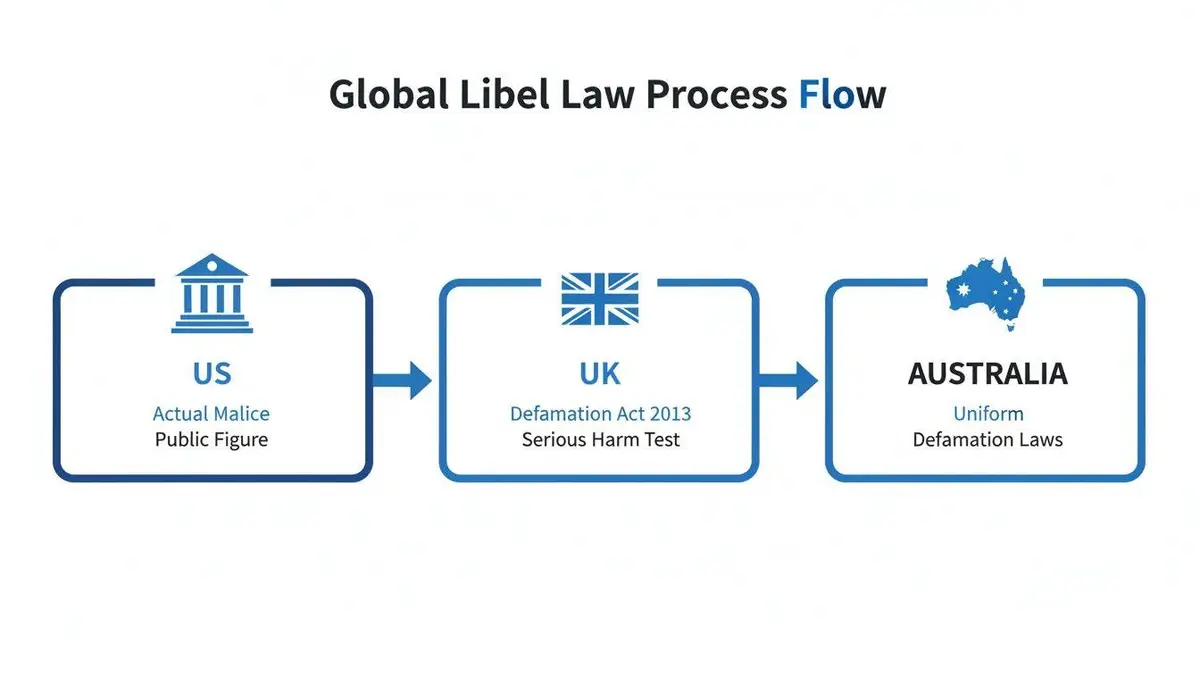
A one-size-fits-all approach is a recipe for failure. The proof you gather must be tailored to the legal standard you need to meet, whether that’s the high bar of ‘actual malice’ in the US or the ‘serious harm’ test in the UK.
Unmasking Anonymous Attackers
When the person defaming you is hiding behind a fake username, they are not untouchable. Unmasking an anonymous poster is a well-established, though complex, legal process.
It typically starts with filing a “John Doe” lawsuit against the unknown individual. With a case officially opened, your attorney can then issue subpoenas to the social media platform, web host, or internet service provider (ISP). Compelled by a court order, these companies can be required to turn over identifying information tied to the account, such as an IP address or registration details, giving you a name to attach to the lawsuit.
An “evidence-first approach” is the most intelligent way to proceed. In cases involving financial slander, for example, you may need expert help to quantify the damage. Firms that provide Forensic Accounting Services: The Evidence First Approach to Fraud and Disputes are essential for proving financial harm. To ensure nothing is missed, professional reputation monitoring is essential for catching new attacks the moment they appear.
Quantifying Reputational Harm and Securing Remedies
You have successfully proven the statement was false and published negligently. This is a significant milestone, but it does not automatically result in compensation. You must now answer a crucial question for the court: what was the actual, measurable impact of that lie? This is where the battle shifts from proving falsehood to proving damages.
Without a clear, documented link between the defamatory content and the harm you suffered, even the most blatant libel case can result in little to no compensation. You must demonstrate not just that you were wronged, but exactly what it cost you.
The Two Categories of Damages
In any libel case, courts assess compensatory damages in two distinct buckets. Each requires a different kind of proof, and your ability to build a case for both will determine the strength of your claim for financial relief.
- Special Damages: This is the hard math of your case, the direct, calculable financial losses you can trace straight back to the defamation. This could be a specific contract you lost, a speaking engagement that was canceled, or a noticeable drop in sales immediately following the false statement’s publication. Proving special damages requires meticulous documentation: emails, financial statements, and client letters that explicitly connect the financial loss to the defendant’s words.
- General Damages: This is where we account for the harm that does not come with an invoice. General damages address the injury to your reputation, your standing in the community, the emotional distress and anxiety the attack caused, and the public humiliation you have had to endure. While you cannot put a price tag on a tarnished reputation, the harm is very real and legally recognized.
The core challenge in proving libel is not just showing a lie was told. It is about translating the abstract concept of “reputational harm” into tangible, documented losses that a court can recognize and compensate. Special damages provide the financial anchor, while general damages address the personal devastation.
Assembling Evidence to Prove Harm
Building a case for damages requires a different set of evidence than what you used to prove the statement was false. You are no longer just documenting the defendant’s actions; you are documenting the ripple effect on your business, your career, and your well-being.
Your legal team will need to gather evidence such as:
- Expert Witness Testimony: A forensic accountant can be brought in to analyze your financial records and testify that a drop in revenue was directly caused by the defamatory publication. Industry experts can also speak to the damage done to your professional standing.
- Psychological Evaluations: To substantiate claims of emotional distress, anxiety, or depression, you will often need a formal evaluation from a qualified mental health professional. This gives the court a clinical basis for awarding general damages.
- Third-Party Statements: Affidavits from clients, colleagues, or investors can be incredibly powerful. When they can articulate how the false statement changed their perception of you or made them hesitant to do business, it makes the harm tangible.
This methodical approach to documenting harm is crucial. For a deeper dive into managing and removing these damaging falsehoods, our comprehensive guide on how to remove online defamation provides practical strategies.
Punitive Damages and Non-Monetary Remedies
Beyond compensating you for your losses, courts can also award punitive damages. The goal here is not to make you whole; it is to punish the defendant for truly outrageous behavior and deter others from similar conduct. These damages are usually reserved for cases where you can prove actual malice: meaning the defendant knew the statement was false or acted with a reckless disregard for the truth.
Finally, not all remedies are financial. Sometimes, the most valuable outcome is an injunction ordering the defendant to cease publishing the defamatory statements or a court-ordered retraction forcing them to publicly set the record straight. For many executives and public figures, a swift and prominent retraction can be worth far more than any monetary award.
Strategic Alternatives to Public Litigation
While we have mapped the path to proving libel in court, a lawsuit is not always the optimal move. For many high-profile individuals, executives, and family offices, the cure can be worse than the disease. The public spectacle of litigation often magnifies the very falsehoods you are trying to suppress, and the process is notoriously slow and expensive.
Fortunately, other options exist. Before engaging in a full-blown legal war, pre-litigation strategies and direct removal services can offer a faster, more discreet, and more effective solution. The goal is not to win a verdict years from now; it is to regain control of your reputation today.
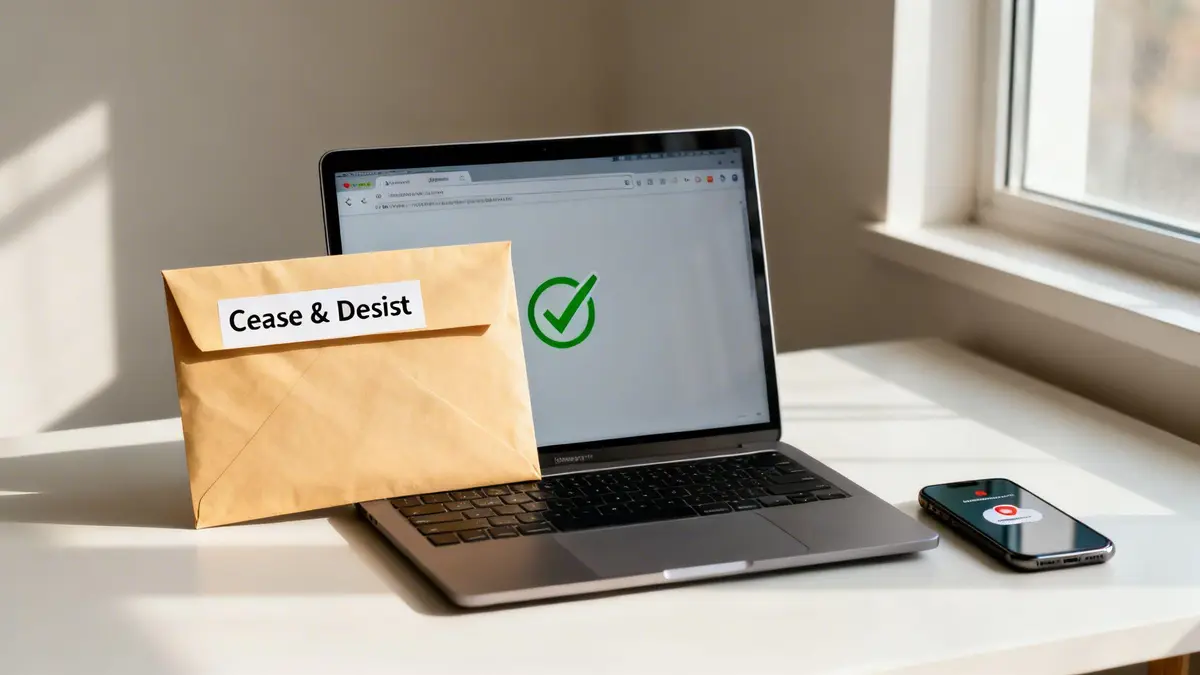
Leveraging the Cease and Desist Letter
The first strategic action we often recommend is a professionally drafted cease and desist letter. This is far more than an angry email. It is a formal legal notice that puts the publisher on the record. When executed correctly, it accomplishes several objectives simultaneously.
First, it signals your seriousness and willingness to escalate, forcing the publisher to re-evaluate their position. Second, and more importantly, it creates a paper trail proving the publisher is now aware of the statement’s falsity. If they continue to publish the material after receiving your notice, it can become powerful evidence of actual malice or, at a minimum, negligence in a future lawsuit.
A cease and desist letter is a calculated opening move. It is designed to test the other party’s resolve and, in many cases, secures a swift retraction without further conflict. A surprising number of incidents can be resolved quietly with this one step.
An effective letter is clinical and direct. It must specifically identify the false statements, provide evidence of their inaccuracy, and clearly outline the damage they are causing. This is not the place for emotion. It is a factual presentation of your case, designed to make the other party conduct a sober risk-benefit analysis.
The Power of Direct Content Removal
What if your cease and desist is ignored? Or if you are dealing with an anonymous poster or an uncooperative platform? This is when the strategy shifts from legal persuasion to technical execution. Specialized services like ContentRemoval.com use established channels and technical know-how to get content removed without ever stepping into a courtroom.
This approach is fundamentally different from a lawsuit. Instead of arguing the legal merits of a libel claim to a judge, the objective is to leverage platform-specific rules and relationships to get the content removed at the source or de-indexed from search results.
The process on the ground involves:
- Finding Terms of Service Violations: Often, defamatory content also violates other platform rules against harassment, hate speech, or impersonation. It is almost always faster to get content removed for a clear-cut TOS violation than to debate the finer points of defamation law with a platform’s legal team.
- Using Back-End Escalation Channels: Major platforms have private reporting channels reserved for trusted partners. Access is granted based on a history of accurate reporting, and these channels allow for a much quicker review than the standard forms available to the public.
- Launching De-Indexing Campaigns: Sometimes, removing content from a hostile or foreign-hosted website is impossible. The next best alternative is to make it invisible. By getting the page de-indexed from Google, Bing, and other search engines, you effectively neutralize its power. If no one can find it, it cannot harm your reputation.
This strategy is built for speed and discretion. For most of our clients, the goal is not a monetary award; it is stopping the reputational bleeding immediately. A successful removal campaign can often resolve an issue in 24 to 48 hours: a timeline that is simply unimaginable in the court system. It allows you to bypass the entire burden of proving libel, offering a rapid and confidential solution that protects your name without the collateral damage of a public fight.
Frequently Asked Questions About Proving Libel
When facing an attack on your reputation, legal jargon can make an already stressful situation feel impossible. The following are direct answers to common questions from executives and professionals assessing their next move, based on our experience handling these exact situations.
What Is the Difference Between Libel and Slander?
Both libel and slander are forms of defamation, a false statement that harms your reputation. The key difference lies in the medium of publication.
Libel is written or published defamation. This includes website articles, social media posts, negative reviews, videos, and photos. Slander, conversely, is spoken defamation.
In practice, courts almost always treat libel more seriously. A tweet or a blog post is permanent and can spread to thousands of people in minutes, creating massive and lasting damage far exceeding that of a spoken comment. Consequently, nearly all modern defamation cases concern libel.
Can I Sue for Libel if the Statement Was Made Anonymously?
Yes. The majority of online attacks are anonymous. You can and should pursue a claim against an anonymous poster through what is known as a “John Doe” lawsuit.
This process begins by filing a lawsuit against the unknown person. Your legal counsel can then serve subpoenas on the relevant platforms: the social media site, the forum administrator, or the Internet Service Provider (ISP). A court order can compel these entities to disclose identifying information, such as an IP address or the email used to register the account. It is a methodical process, but unmasking anonymous attackers is a well-established legal procedure.
How Long Do I Have to File a Libel Lawsuit?
This is one of the most critical and time-sensitive aspects of any libel claim. Your right to file a lawsuit is governed by a strict deadline known as the statute of limitations. If you miss this window, your claim is void, regardless of its merits.
The exact deadline varies by jurisdiction. Most U.S. states provide one to two years from the date the statement was first published. In the UK, it is generally just one year. Because this deadline is non-negotiable, it is vital to consult with a professional as soon as you discover a defamatory post to ensure you do not forfeit your legal rights.
Some jurisdictions apply a “discovery rule,” where the clock starts when you discover the defamation, not when it was published. However, many do not. Never assume you have extra time; swift action is the only way to preserve all your options.
Is an Opinion Considered Libelous?
Pure opinion is generally protected speech, but this protection is not absolute. The line is crossed when a statement presented as an “opinion” implies a false and damaging fact.
For instance, “In my opinion, John is a terrible executive,” is likely a protected opinion. However, “In my opinion, John is a thief,” is different. A reasonable person would assume the speaker has factual knowledge to support an accusation of theft. That implication makes the statement actionable.
Courts analyze the full context: the specific words used, the publication venue, and the overall conversation. If a statement implies a fact that can be proven false, it loses its “opinion” shield and can become the basis for a libel suit.
When you are the target of a smear campaign, time is not on your side. Public litigation is often the wrong tool for executives who need speed and confidentiality. ContentRemoval.com offers a discreet, powerful alternative. We use proprietary methods to get damaging content removed directly from websites and search results, often resolving the problem before it spirals. If you need to reclaim your reputation now, contact us for a confidential assessment.