
Protecting personal information online is a layered defense, not a strong password. Lock down core accounts with a password manager, hardware security keys and email aliases, harden devices with firewalls and encrypted messaging, then remove your data from the brokers who sell it. Add out-of-band verification for urgent requests, and monitor the public web and dark web for exposure.
Key facts
- Hardware keys such as YubiKey or Google Titan resist phishing that defeats SMS and email codes.
- Email aliases from services like SimpleLogin contain breaches and reveal which company leaked your address.
- Broker opt-outs are buried, often demand ID documents, and data reappears within months.
- Verify any urgent transfer or password request by calling a known number, never by replying.
Where ContentRemoval.com comes in. ContentRemoval.com handles the exposure that account hygiene cannot fix: the broker profiles that keep listing your home address and relatives, the leaked document indexed under your name, and the impersonation or doxxing page that follows a breach. Executives, family office staff and their security advisers usually make contact after a dark web alert or a self-search. A free, confidential 15-minute Exposure Scan maps what is removable, and the report is yours to keep. Get a Free, Confidential Exposure Scan or read how our personal data removal work is done.
Protecting your personal information online is no longer a matter of using a strong password. It is a strategic, layered defense requiring the active lockdown of digital accounts, the hardening of personal devices, and the methodical scrubbing of your data from third-party brokers who profit from its sale. This is not a one-time task but a continuous state of operational security.
Why Digital Privacy Is a Critical Concern for Executives

For high-net-worth individuals, executives, and public figures, the exposure of personal data is an immediate and active risk. The consequences extend far beyond incidental spam, escalating to real-world threats that jeopardize careers, financial stability, and personal safety. Generic cybersecurity advice is inadequate for those with a significant public profile.
The digital footprints of prominent individuals are valuable assets for threat actors. Information aggregated from disparate sources is compiled into detailed dossiers, which become powerful tools for malicious use. This scraped and stolen data fuels sophisticated, targeted attacks with severe consequences.
From Minor Leak to Major Threat
The path from a minor data leak to a full-blown crisis is predictable. A compromised password from a legacy forum, a home address scraped from a public records site, or family details shared on social media may seem innocuous in isolation. When aggregated by a determined adversary, they become weapons.
This compiled information powers highly personalized attacks, including:
- Spear Phishing: Attackers leverage personal details to craft highly convincing emails, impersonating colleagues or vendors to induce fraudulent fund transfers or the disclosure of sensitive corporate information.
- Extortion and Doxxing: Private information, from phone numbers to home addresses, is weaponized to threaten public exposure unless a ransom is paid.
- Reputation Attacks: False narratives and disinformation are strategically placed online to undermine shareholder confidence, sabotage business dealings, or inflict personal humiliation.
The scale of this problem is significant. In 2026, over 3,200 publicly reported data breaches exposed the private information of more than 353 million individuals. For public figures, the real damage occurs when leaked credentials and personal details are weaponized for targeted attacks.
Here is an overview of the essential first steps to reduce your attack surface. These actions constitute your primary line of defense against the most common threats.
Immediate Actions to Fortify Your Digital Perimeter
| Defensive Action | Primary Threat Mitigated | Implementation Priority |
|---|---|---|
| Enable Multi-Factor Authentication (MFA) | Account Takeover / Stolen Credentials | Critical |
| Use a Password Manager | Weak/Reused Password Compromise | Critical |
| Perform a Data Broker Opt-Out Sweep | Doxxing / Social Engineering / Phishing | High |
| Set Social Media to Private | Information Gathering for Attacks | High |
| Review App Permissions (Mobile/Web) | Unauthorized Data Collection / Malware | Medium |
While this table provides a tactical starting point, true digital hardening demands a comprehensive and continuous strategy, particularly when the stakes are high.
Why Standard Defenses Fall Short
Standard advice, use strong passwords and avoid suspicious emails, is merely the price of entry. It is a baseline, not a defense. Determined adversaries consistently bypass these simple measures. Effective protection requires a proactive strategy that renders you a difficult and unprofitable target.
For an executive, the question is not if their information is exposed, but where and how it will be weaponized. The objective is to shrink the available attack surface so dramatically that targeting you becomes impractical.
This requires a specialized approach beyond basic IT support. Leaders must also contend with the legal and ethical dimensions of data handling, including understanding a company’s general their approach to privacy. When significant personal and professional assets are at risk, managing this exposure becomes a core leadership function. It is not an IT problem; it is a strategic imperative. To explore this further, review our guide on protecting your online identity as a strategic framework for executives.
Lock Down Your Digital Life: Accounts and Devices
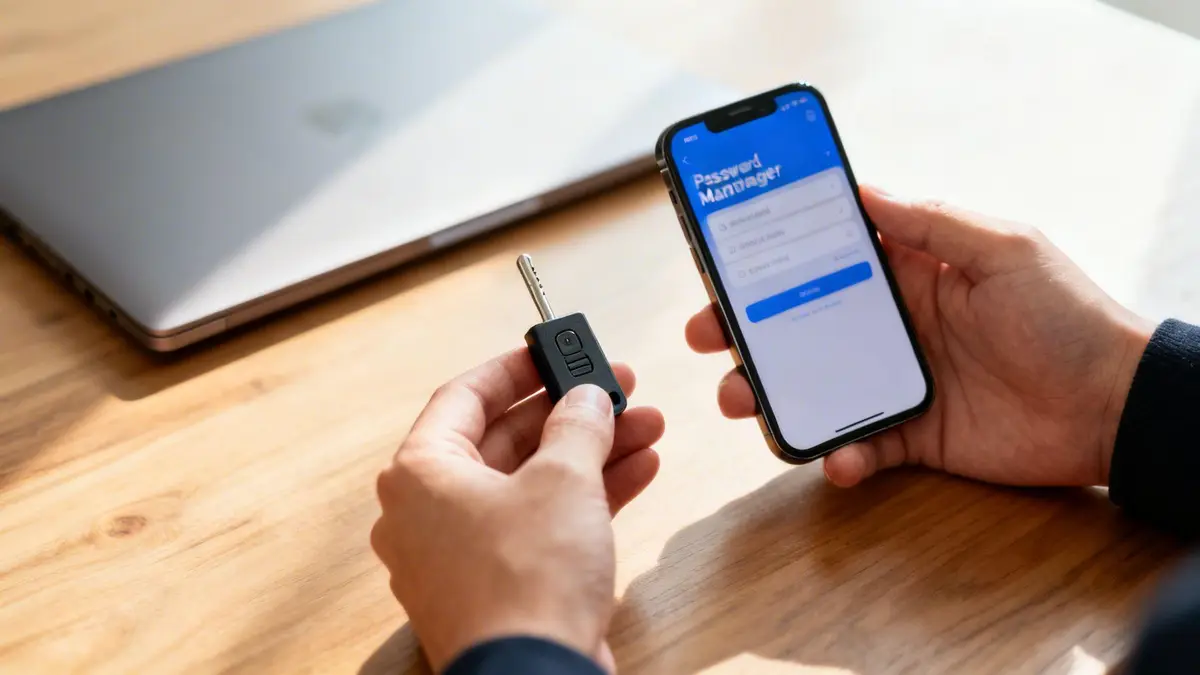
Your core assets (email, phone, cloud accounts, and primary devices) are the crown jewels for adversaries. A single weak link here can compromise your entire digital infrastructure. Generic advice is insufficient for individuals with a public profile; a “strong” password alone is no longer an adequate defense.
The goal is to construct a fortress, not merely to place a better lock on the door. This involves creating security layers that render common attacks like phishing and credential stuffing ineffective. The posture must be proactive, not reactive.
Ditch Passwords for Physical Security Keys
Passwords alone are a security anachronism. The single most significant security upgrade you can implement is true multi-factor authentication (MFA). However, not all MFA methods are equal. SMS and email-based codes can be intercepted or phished with alarming ease.
For high-value accounts, a physical hardware security key is non-negotiable. Devices like a YubiKey or Google Titan Security Key require both a password and physical possession of the key for login. An adversary in another country may possess your password, but without the key in hand, they are completely locked out.
A hardware key is your digital master key. An attacker cannot access your accounts without physically stealing it. It is the closest available solution to a silver bullet for stopping account takeovers.
Make this your immediate priority. Secure your primary email, password manager, and key financial accounts with a hardware key. This action elevates the difficulty of a successful attack from a simple password guess to a complex logistical challenge for the adversary.
Use a Different Key for Every Door
Reusing passwords is a known vulnerability, yet the practice persists. A credential breach on a forgotten online service can expose your primary financial accounts. The only practical mitigation is a password manager.
Services like 1Password or Bitwarden generate cryptographically secure, unique passwords for every site and application, storing and filling them automatically. This is analogous to having a unique, un-pickable lock on every asset you own.
Extend this strategy with email aliases. Services such as SimpleLogin or DuckDuckGo Email Protection allow you to create a unique email address for every online service. This has two primary benefits:
- Containment: If a service is breached, the compromise is tied to a disposable alias, not your primary email address. This makes it exceedingly difficult for attackers to aggregate data and build a profile on you.
- Leak Tracing: If an alias begins receiving spam, you can identify precisely which company sold your data or was breached. You can then disable that alias, neutralizing the threat.
This strategy of “compartmentalization” is a cornerstone of protecting personal information online. It ensures a minor security incident does not escalate into a catastrophic failure. For a more detailed analysis, review our complete guide on data security.
Harden the Hardware in Your Hands
Your computer and phone are the command centers of your digital life. Securing them is as critical as protecting the accounts they access. This process, known as “device hardening,” involves closing potential entry points.
First, locate your device’s built-in firewall. Both Windows and macOS include one, but their default configurations are often permissive. Configure it to block all unsolicited incoming connections. Next, audit the services and applications running in the background. If a program is not in use, disable or uninstall it. Every running process is a potential attack vector.
Finally, migrate sensitive communications to platforms with end-to-end encryption. Standard SMS messages are unencrypted and can be read by carriers and other third parties. For any communication you would not want publicly disclosed, use an application like Signal. It provides military-grade encryption for calls and messages, ensuring private conversations remain private.
Reclaiming Your Data from Third-Party Brokers

While you are securing your accounts and devices, a vast industry is working to buy and sell your private life. These entities, known as data brokers, operate in an opaque marketplace, quietly compiling detailed dossiers on millions of individuals.
The depth of these profiles is extensive. They contain not just your name and address, but often your phone number, property records, estimated wealth, political affiliations, and even the names of your family members. To a marketer, this data is valuable. To an attacker, it is a goldmine.
Our objective is to make your personal information a difficult and costly target. By methodically removing your data from these broker databases, you reduce your public profile and cut off the supply of information that adversaries rely on for targeting and exploitation.
Understanding the Data Broker Ecosystem
These companies aggregate information from numerous sources. Public records, such as court filings and property deeds, are a primary source. So are marketing surveys, contest entries, and data purchased from other companies, including social media platforms and mobile applications.
The scale of this operation is immense. There are hundreds of such companies, from large, well-known players like Acxiom and Oracle to smaller, specialized firms focusing on specific data types, like financial or health histories. Their business model is direct: collect data, package it, and sell it to any paying customer.
The information held by data brokers is the raw material for doxxing, identity theft, and sophisticated social engineering campaigns. Reclaiming control over this data is not optional; it is a critical defensive measure.
And “any paying customer” includes criminals. For a surprisingly low fee, an attacker can acquire all the information needed to impersonate you, harass your family, or launch a highly convincing spear-phishing attack against you or your organization.
The Manual Opt-Out Process: A Difficult Task
Attempting to remove your own data from these sites is an exercise in futility. Each broker maintains its own opt-out process, many of which appear intentionally designed to discourage completion.
You will be confronted with several obstacles:
- Broker Identification: You must first identify which of the hundreds of brokers possess your data.
- Form Location: The opt-out page is almost always buried deep within the website, accessible only via a small link in a privacy policy or terms of service document.
- Forced Disclosure: In a deeply ironic twist, you are often required to provide sensitive information, such as a copy of your driver’s license, to prove your identity and process the removal request.
- Constant Recurrence: Your data does not remain removed. Brokers are constantly collecting, meaning your information will reappear. This necessitates repeating the entire draining process every few months.
The system is designed to induce fatigue. The time and energy required to manage these opt-outs manually are prohibitive for most individuals, necessitating a different approach.
Automating Removals for Lasting Protection
Given the challenges of manual removal, the most effective strategy for protecting your information online is to engage a professional removal service. These services act as your proxy, systematically scrubbing your data from hundreds of brokers simultaneously.
A reputable professional service uses a combination of technology and legal expertise to execute the task correctly. They will typically:
- Scan Continuously: They perpetually scan broker sites to find your information, especially when it reappears.
- Automate Submissions: They manage the entire tedious opt-out process, submitting requests and handling all correspondence with each broker.
- Verify Removals: They do not simply submit a request; they follow up to confirm your data has been removed and monitor for its re-emergence.
This approach transforms data removal from a never-ending chore into a managed component of your security strategy. Our team has prepared a detailed overview of how these services operate. Explore our guide on the role of a personal information removal tool in building a robust privacy defense.
By engaging a specialist, you are not just addressing the data that is currently exposed. You are establishing a long-term defense to prevent its return. It is a proactive measure essential for anyone serious about protection from data-driven attacks.
Building a Human Firewall Against Social Engineering
Technical controls alone cannot protect you from a well-crafted, deceptive email. An attacker who cannot brute-force their way past your digital defenses will attempt to persuade you to open the door. This is the art of social engineering, a persistent and sophisticated threat faced daily by high-profile individuals.
The only effective defense is to build a “human firewall.” This is not software; it is a mindset rooted in professional skepticism and a series of verification protocols that become second nature. Attackers exploit our natural tendency to trust. They no longer send generic spam; they launch targeted campaigns, using information scraped about your life, work, and relationships to establish credibility.
Dissecting Advanced Deception Tactics
When targeting executives, public figures, or their teams, adversaries conduct thorough research and employ highly personalized methods designed to bypass standard caution.
Their primary tactics include:
- Spear Phishing: These are not mass emails with grammatical errors but custom-built lures. The email may reference a recent conference or a new company project, creating a believable pretext for you to click a link or download a file.
- Whaling: This is spear phishing aimed at high-value targets, the C-suite. The objective is often to trick a CEO or CFO into authorizing a fraudulent wire transfer or leaking strategic corporate data.
- Pretexting: This involves an elaborate fabrication. An attacker invents a scenario (the pretext) to gain your trust, posing as an IT technician requiring your password for an “urgent server upgrade,” a new HR employee, or even legal counsel from a firm you retain.
These deceptions succeed because they are built on a foundation of fact. An attacker will use your LinkedIn profile, recent press coverage, and data from broker sites to craft a message that appears entirely legitimate. The more you share publicly, the more ammunition you provide.
An unexpected and urgent request should be your number one red flag. Attackers use urgency to induce panic and force a mistake. Your first instinct should not be to act, but to pause and verify.
A cornerstone of building this human firewall is ongoing Security Awareness Training for yourself and your staff. It fosters a culture where questioning a suspicious request is not just accepted, but expected.
Implementing Verification Protocols
The most powerful defense against social engineering is simple: never trust a request that arrives through a single channel. You must verify it out-of-band: using a different, trusted method of communication.
If you receive an “urgent” email from a business partner requesting an immediate wire transfer, do not reply or click any links. Instead, pick up your phone and call them on a number you have previously verified. It is easy for an attacker to spoof an email address; it is far more difficult to intercept a phone call you initiate to a known-good number.
This protocol neutralizes the vast majority of such attacks. Apply it rigorously to all inbound requests:
- A text from your bank asking you to click a link to “verify your account.”
- An email from “IT” with a new security policy to download and sign.
- A direct message on social media from a “friend” asking for money for an emergency.
In every case, the correct response is to stop, switch channels, and verify.
Cultivating an Information Diet
Finally, you must be deliberate about what you share publicly. Adopt an “information diet.” Every personal detail you post, from your birthday and pet’s name to vacation plans, is another piece of the puzzle an attacker can use to build a convincing deception.
Review your social media profiles with a critical eye. Remove your exact birth date, phone number, and any details that map your family or daily routines. Scrutinize past posts for geotags that reveal your home or work locations. The less an attacker has to work with, the harder it is for them to impersonate someone you trust or craft a lure you will find compelling.
7. Build Your Proactive Monitoring and Response System
Effective digital protection is not a static configuration; it is active vigilance. The preceding steps build a strong perimeter, but you must now install the detection systems. You need a system that flags trouble long before it escalates into a crisis.
This means knowing, in real-time, where your information appears online. It requires more than occasional self-Googling. It demands an automated alert system that serves as a digital tripwire, providing the early warning necessary for swift action.
Monitor Your Digital Footprint
The first layer of your monitoring defense is establishing alerts for mentions of your name, company, or other key identifiers across the public web. This is your baseline for detecting and neutralizing reputational attacks.
While a free service like Google Alerts is a rudimentary starting point, it is insufficient for anyone with a significant public profile. You require professional-grade media monitoring tools that scan not just news sites but also forums, obscure blogs, and social media platforms for your keywords.
These alerts are your early warning system. A sudden spike in mentions or a malicious comment on a little-known forum could be the first indicator of a doxxing campaign or a coordinated smear attack. The objective is to intercept it before it gains momentum and becomes viral.
Scan the Dark Web. It’s Non-Negotiable
While the surface web reveals public exposure, a more sinister threat exists on the dark web. This is the internet’s illicit underbelly where criminals trade credentials stolen from data breaches. Your email and password from a long-forgotten service could be for sale right now.
This is why dark web scanning is not optional; it is an absolute necessity.
Specialized services constantly trawl these illegal marketplaces for your specific information, such as:
- Email addresses and passwords
- Credit card numbers
- Passport and ID numbers
- Sensitive corporate credentials
When your data appears on the dark web, it is not a potential problem. It is a confirmed breach. The clock is officially ticking. You must assume that threat actors possess your information and intend to use it.
A dark web alert is your cue to take immediate action. It provides the opportunity to change the compromised password, lock down connected accounts, and prevent a minor leak from becoming a devastating account takeover.
This protocol is your first line of defense against the social engineering attacks that often follow a data leak.
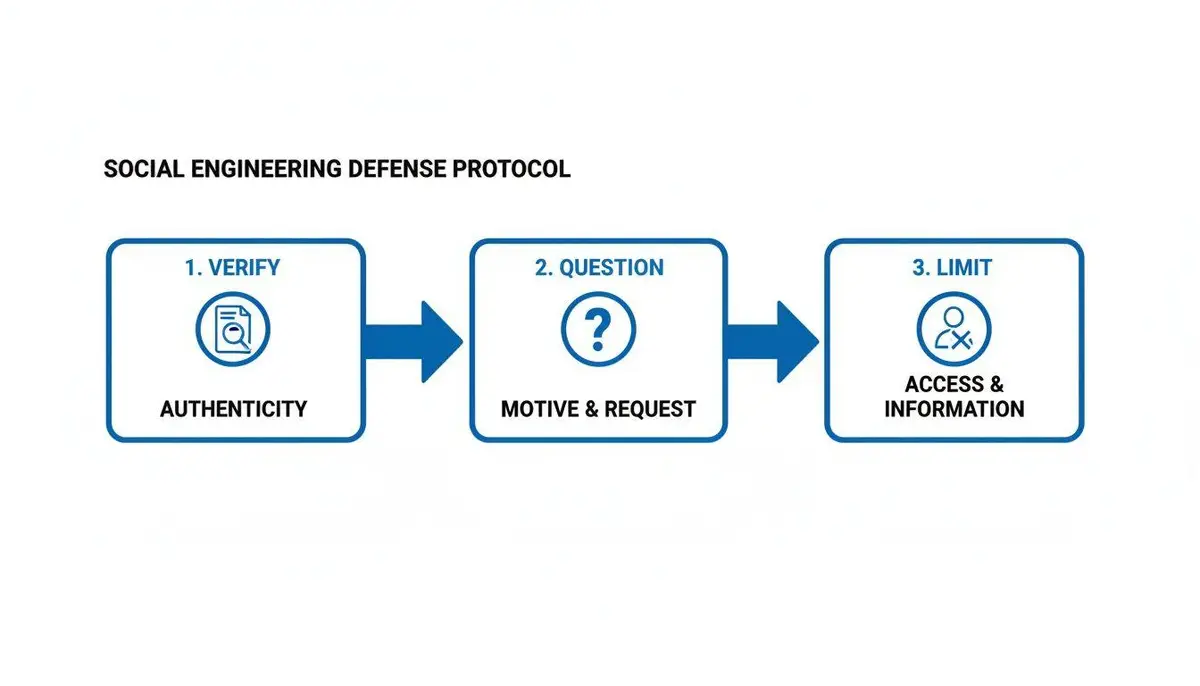
The core logic is simple but highly effective: verify, question, and limit. This framework can neutralize even sophisticated attempts to manipulate you or your team into relinquishing access.
Know When to Call in the Pros
Your monitoring will eventually detect a threat. Your subsequent actions are critical. You need a clear incident response plan, and a key component of that plan is knowing when to cease self-remediation and engage a professional.
For high-profile individuals, attempting to manage a serious reputational attack, a major data breach, or a complex defamation campaign alone is a strategic error. The rules of engagement are complex, and platforms have specific, often unpublished, procedures for content removal. A single misstep can exacerbate the situation or even disqualify you from further action.
You engage a specialist when you require results, speed, and certainty. A professional firm like ContentRemoval.com does not simply send polite requests. We leverage established relationships with platform administrators, legal expertise, and proven internal processes to compel action.
Our rapid-response protocol is designed for high-stakes scenarios. Upon engagement, our team mobilizes within 24-48 hours, working to de-index harmful content from search engines and secure its removal from the source website. This provides a level of speed and finality unattainable through individual effort. We manage the escalations, the legal justifications, and the relentless follow-up to ensure damaging material is not just removed. It stays removed.
Common Questions We Hear About Digital Privacy
Even with a robust plan, facing a digital threat raises urgent questions. Under pressure, you need direct, clear answers from experienced professionals. Here are the most critical questions we receive from clients, along with the no-nonsense advice we provide.
How Quickly Can My Personal Information Be Removed From The Internet?
This is typically the first question asked, and the honest answer is: it depends. The timeline for removing information varies significantly based on what it is and where it is posted. There is no “magic button.”
Data broker sites, which sell your personal information, are a slow process. A comprehensive cleanup can take anywhere from 30 to 90 days. It is a cyclical process: we issue takedown requests, verify compliance, and re-scan later to ensure your data has not reappeared from a new source. It is more akin to ongoing maintenance than a one-time fix.
Conversely, removing a specific piece of harmful content (such as a defamatory post, a leaked photo, or a false review) can be much faster. With the right pressure and legal arguments, we often achieve results in 24 to 48 hours. An established firm’s direct contacts and legal expertise are invaluable here for cutting through administrative delays.
Is It Possible To Be Completely Anonymous Online?
In short, no. For anyone with a public profile or a professional life, true, untraceable anonymity is a myth. Modern professional and personal life necessitates a digital footprint. Attempting to become completely invisible is a losing battle and a distraction from a more strategic objective.
The objective isn’t invisibility; it’s managed privacy. It’s about strategically shrinking your public data footprint, securing your most important digital accounts, and making it so difficult and expensive to target you that most threats will simply move on.
Your goal should be to reduce your risk to an acceptable level, not to disappear. The aim is to become a hard target.
My Information Was Leaked In A Major Data Breach. What Should I Do First?
The moment you learn you are part of a breach, you must act swiftly. The first few hours are critical for damage control.
First, immediately change the password on the compromised account. Critically, you must also change that password on every other site where you have used it. This is where most people fail, allowing a single breach to escalate into a comprehensive takeover of their digital life.
Next, enable multi-factor authentication (MFA) everywhere possible, particularly for email and financial accounts. A physical hardware security key is far more secure than an SMS-based code. Once that is complete, you must assess the extent of the exposure. For an executive or public figure, this is the point at which you engage a professional to conduct dark web scans and provide a full analysis of your new risk profile.
Can I Handle My Own Data Removal Without A Service?
You can certainly attempt it, but the system is designed to be frustrating and confusing. Data brokers do not facilitate opt-outs and have little incentive to keep your data removed permanently.
You can submit removal requests site-by-site, but you will find it is a full-time job. They often require you to provide more personal information to process the opt-out, and even after removal, your data frequently reappears months later.
This is where a professional service provides decisive value. We use automated systems to manage hundreds of these requests simultaneously, continuously monitor for data reappearance, and handle all follow-up and verification. It is a far more complete and lasting solution that prevents you from fighting a battle designed to be endless.
When your privacy is compromised, acting with speed and expert guidance is your most effective defense. ContentRemoval.com offers the dedicated support needed to remove harmful content, scrub your exposed data, and securely rebuild your digital reputation. If you are facing a threat, reach out for a confidential conversation about your options.
Schedule Your Confidential Consultation at ContentRemoval.com
Frequently asked questions
What is the single most effective way to protect my online accounts?
True multi-factor authentication using a physical hardware key on your primary email, password manager and financial accounts. An attacker with your password still cannot log in without the key, which turns a simple guess into a logistical problem for them.
What should I do first after my data appears in a breach?
Change the password on the compromised account and on every other site where you reused it, then enable multi-factor authentication everywhere, preferring a hardware key over SMS codes. After that, assess the wider exposure with dark web scans so you know what else is circulating.
How long does it take to remove personal information from data brokers?
The article describes a comprehensive broker cleanup as taking 30 to 90 days, and it is cyclical: requests go out, compliance is verified, and re-scans catch data that reappears from new sources. Removing a single harmful item such as a leaked photo or false review can move faster.