
A Fast People Search opt out means locating every profile under your name and past cities, copying each profile URL, submitting it at fastpeoplesearch.com/removal with a dedicated email, clicking the verification link within 24 hours, and checking back after the stated 24 to 72 hour processing window. The listing usually returns within 30 to 90 days as the database refreshes.
Key facts
- The verification email is the most common failure point; miss the 24-hour link and the request is canceled.
- Fast People Search refreshes its database roughly every 30 to 90 days, so profiles repopulate from source data.
- Opting out of one broker has no effect on Whitepages, Spokeo or hundreds of other people-search sites.
- Removing a family member’s listing requires acting as an authorized agent with signed proof.
Where ContentRemoval.com comes in. ContentRemoval.com runs data broker removal at scale for executives, public figures and family offices: hundreds of people-search sites and their upstream suppliers, with re-checks on a schedule so returning profiles are caught and resubmitted, and with legal and takedown work when the exposed data is being used in doxxing, impersonation or defamation. The individual, their assistant or a family office lead usually makes contact. A free 15-minute Exposure Scan maps what is removable and the report is yours to keep. Get a Free, Confidential Exposure Scan or read how our data broker removal work is done.
The presence of your personal information on a data broker site like Fast People Search is not a minor privacy annoyance. It is a direct and quantifiable threat to your security, wealth, and professional reputation. Executing a fast people search opt out is a critical first step, the initial move from being a passive target to asserting strategic control.
Your Digital Exposure: An Executive’s Risk Briefing
For high-net-worth individuals and executives, the aggregation of personal data by people-search sites creates a uniquely elevated threat profile. Seemingly harmless public information (an old address, a mobile number, the names of relatives) becomes a powerful weapon when consolidated into a single, easily searchable file.
Attackers no longer need to conduct painstaking research. Sites like Fast People Search have performed the reconnaissance for them, creating a dossier ready for exploitation. This collected data is the raw material fueling sophisticated, AI-driven attacks. It enables an adversary to craft a hyper-personalized phishing email, referencing specific life details to make it alarmingly convincing.
From Public Data to Real-World Danger
The line between online data exposure and real-world harm is perilously thin. Imagine you are in the midst of a critical business negotiation. An adversary leverages your Fast People Search profile to identify your family members, their locations, and even your daily routines from past addresses.
With that information, they can launch a deepfake voice scam. You receive a call from a perfect vocal clone of your spouse or child, claiming they are in trouble. It is a manufactured crisis designed for extortion or distraction at the most inopportune moment.
This is not a theoretical problem; it is a systemic one that has been exploited for years. In one landmark case, a data broker was caught selling the records of over 30 million Americans directly to scammers who were targeting the elderly. More recently, the Federal Trade Commission has forced $5.8 million in settlements from people-search sites for deceptive practices, such as misrepresenting minor traffic tickets as serious criminal records. The danger is well-documented and escalating.
The Real-World Liability of Public Data
For an executive, the liability extends far beyond personal safety. Publicly available data can undermine business operations, arm corporate rivals, and create significant reputational vulnerabilities.
Consider these specific risks:
- Compromised Physical Security: Your home address, property records, and the names of your inner circle provide a clear roadmap for anyone with malicious intent, from obsessed stalkers to criminals planning a home invasion.
- Reputational Weaponization: Outdated or factually incorrect information, such as old court records or false associations, can be resurrected and used to undermine your professional standing at a critical juncture.
- Targeted Social Engineering: When an attacker knows your family structure, past addresses, and personal history, they possess the leverage required to bypass cybersecurity defenses by targeting the weakest link: the human element.
Addressing this exposure requires a dedicated, proactive effort. You can learn more by reviewing our strategic framework for removing personal information from the internet.
A comprehensive approach to managing these threats necessitates broader professional digital security strategies. Ultimately, a proactive fast people search opt out is not a mere privacy checkbox. It is a fundamental component of modern risk management for any person of influence.
Executing a Fast People Search Opt Out
The most significant error individuals make is treating the Fast People Search opt-out as just another website form. It is not. You must approach this as a formal compliance request, where each step is executed with precision to prevent your submission from being ignored or invalidated.
First, you must find your record, or, more accurately, your records. Fast People Search aggregates information from a multitude of sources, often creating several profiles for the same person. You must search your full name combined with every city and state of previous residence to locate all of them. Removing only one profile leaves other vulnerabilities unaddressed.
This is a matter of security, not just privacy. The path from a public data broker profile to a real-world threat is shorter than you think.
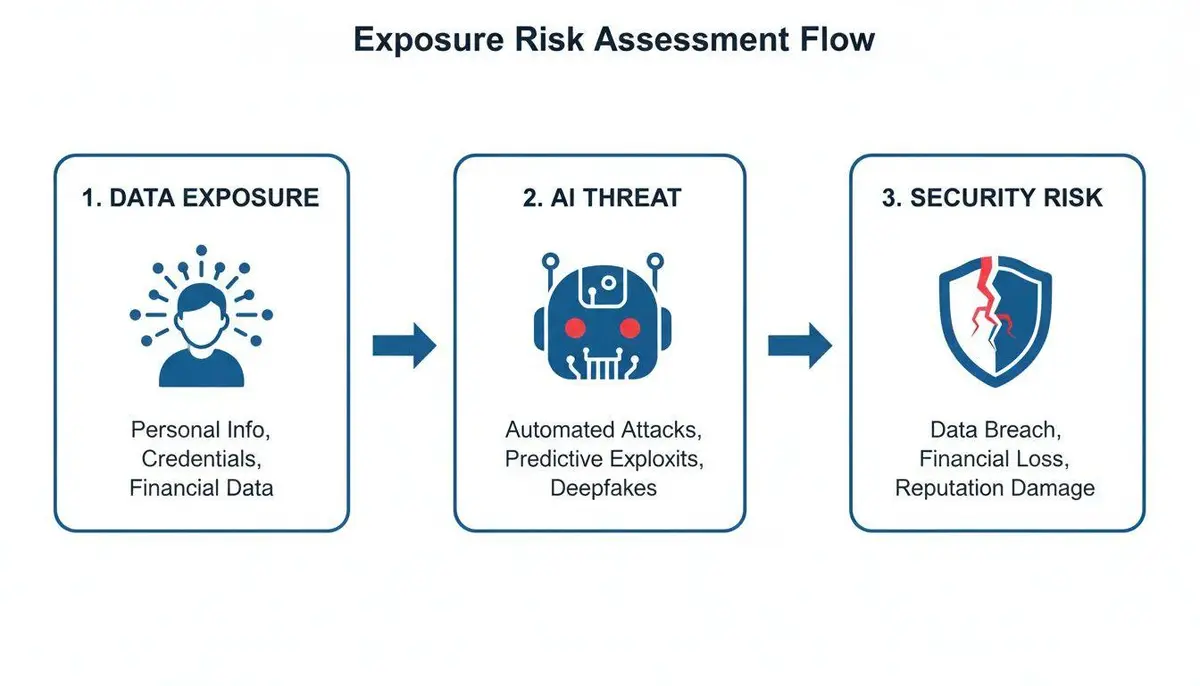
An exposed profile is the starting point for a chain of events that can lead to sophisticated security challenges.
Making the Removal Request
Once you have located a profile for removal, copy its URL from your browser’s address bar. You will need it. Next, navigate to their dedicated removal page. It is not easily found from the homepage, so use this direct link: fastpeoplesearch.com/removal.
You will be asked to provide an email address. This step is required. It is prudent to use a separate, disposable email address created solely for opt-out requests. This practice isolates your primary inbox and adds a layer of security.
Then comes the CAPTCHA. These can be intentionally difficult and may malfunction, forcing you into a loop. If this occurs, do not become discouraged. Clear your browser’s cache or switch to a different browser. It is a common tactic designed to frustrate users into abandonment.
The Critical Verification Step
Submitting the form is only half the battle. The next stage is where most attempts fail. Fast People Search will send a time-sensitive verification link to the email you provided. You must click that link within 24 hours. If you miss this window, the request is canceled, and you must start the entire process again.
The verification email is the most common point of failure in the Fast People Search opt-out process. Many individuals assume the request is complete after the first step, but without this final confirmation, the profile will never be removed.
Consider that click your digital signature on the removal demand. After you have clicked the link, the company states it will take 24 to 72 hours to process the removal. Your task is not complete until you have returned to the site after several days to confirm the record is actually gone.
Why Documentation is Essential
If you are dealing with serious privacy concerns or are a public figure, maintaining a detailed record is essential. It serves as your proof if the listing is not removed or if it reappears later.
Here is what you should record:
- The exact URL of the profile submitted for removal.
- The date and time of your initial submission.
- A screenshot of the on-screen confirmation after submitting the form.
- A saved copy or screenshot of the verification email.
- The date and time you clicked the final verification link.
This meticulous approach is necessary for a successful Fast People Search opt-out. While this handles one site, it is merely the tip of the iceberg. To understand how this fits into a larger privacy protection strategy, you should learn how to remove your personal data from the internet comprehensively.
Confirming Removal and Preventing Data Reappearance
Receiving a confirmation email from Fast People Search does not conclude the process. It begins the verification phase. Assuming your data is gone for good after submitting a request is a novice error that leaves you exposed.
Your responsibility is to verify they have complied. Treat their stated 24 to 72-hour removal window as their deadline, not a guarantee. Once 72 hours have passed, return to the site and search for yourself. Use a private or incognito browser window to ensure you are viewing the live site, not a cached version saved by your browser. Only when your search yields no results can you consider the initial removal successful.

If your listing remains after 72 hours, it is time to escalate. Do not simply resubmit the form. Contact them directly. In your email, reference the exact date and time of your original request and mention the confirmation you received. This demonstrates organization, a documented process, and an unwillingness to be ignored.
The Problem of Data Repopulation
The hard truth is that even after a successful removal, your profile will almost certainly return. This is not a system glitch; it is a function of their business model. The most frustrating aspect of the fast people search opt out process is this constant repopulation.
Fast People Search and other data brokers are perpetually aggregating information from innumerable online sources. Their bots are constantly crawling and scraping data from sources like:
- Public Records Databases: New court records, updated voter rolls, and property deeds are a goldmine for them.
- Third-Party Data Aggregators: These are other companies that do nothing but buy and sell massive packages of personal data.
- Web Scraping: They pull information from your public social media profiles and other websites where your name appears.
Each time Fast People Search refreshes its massive database, which can occur every 30 to 90 days, it ingests all the new data it has found. If the original source of your information still exists, your profile will simply be recreated.
A single successful opt-out is a tactical victory, not a strategic one. Without a system for ongoing monitoring, you are fighting a battle you have already lost. The data will return.
This entire cycle is deliberately obfuscated. Data brokers profit from your information, so they have a vested interest in making permanent deletion difficult. They obscure opt-out pages and reactivate profiles without warning. This ecosystem is precisely what allows fraudsters to build detailed profiles for identity theft and other sophisticated scams, a problem drawing increasing regulatory scrutiny. As can be discovered in more detail, this has led to significant enforcement actions for deceptive practices.
Building a Long-Term Defensive Protocol
An effective privacy strategy requires a system for monitoring and re-engagement. No busy professional has the time to manually check hundreds of these sites monthly. You must build a long-term protocol.
Begin by establishing a verification schedule. After confirming a successful removal, set a calendar reminder to check the site again in 45 days. If your profile is still gone, push the next check to 90 days. If it has reappeared, you must restart the removal process and reset the verification clock.
This proactive approach is essential. Treating data removal as an ongoing security task, rather than a one-time chore, allows you to regain control. For executives and other public-facing individuals, this process must be scaled across the entire data broker landscape. At that point, engaging a professional removal service becomes a necessity for protecting digital privacy and security, not a luxury.
Expanding Your Defense Beyond a Single Site
Successfully completing a fast people search opt out is a victory, but it is only the first battle in the war for your privacy. It is a common miscalculation to believe that removing one profile resolves the problem. This action addresses the most visible threat, not its source.
Fast People Search is just one of hundreds of storefronts in a massive, interconnected data marketplace. These sites do not generate their own information. They acquire it from larger, behind-the-scenes data aggregators that are constantly collecting, packaging, and reselling personal details.

This is why your profile reappears weeks or months after you have removed it. You removed the listing from the storefront but never stopped the supplier. The main aggregators simply resell your data to Fast People Search during their next update cycle, and you are returned to your starting point.
Confronting the Data Broker ‘Whack-a-Mole’ Problem
This dynamic creates a deeply frustrating game of “whack-a-mole.” You remove one profile, only for it to reappear on another site you have never heard of. For anyone managing their digital footprint, particularly executives or high-profile individuals, attempting to handle this manually is not just an inefficient use of time. It is practically impossible.
There are hundreds of data broker sites. Each possesses its own unique and often intentionally convoluted opt-out process. A truly effective privacy strategy requires moving beyond one-off removals to launch a systematic campaign against the entire network.
Targeting only the most visible data brokers is like pulling a few weeds while ignoring the roots. A true privacy defense requires a structured approach that attacks the data supply chain itself, not just the end-user platforms.
The good news is that you can make a significant impact through prioritization. A handful of major players supply the data for countless smaller sites, so focusing your efforts there creates a powerful ripple effect.
Prioritizing Your Next Moves
After addressing Fast People Search, you must target other industry giants. Platforms like Whitepages and Spokeo are critical targets because they function as major hubs in the data ecosystem. Each presents its own removal challenges.
- Whitepages: This process can be difficult. Whitepages often requires you to verify your removal request by phone, a step that makes many individuals understandably uncomfortable. It feels invasive to provide more personal information simply to have existing information removed.
- Spokeo: The process here is more straightforward and similar to that of Fast People Search. You find your profile’s URL and submit it through their removal page. However, like all others, your data is likely to reappear unless you address the sources.
As you begin opting out of more sites, you will notice a consistent theme: these processes are designed with friction. They are just tedious enough to cause most people to abandon the effort.
Data Broker Threat Matrix
This table illustrates why a sustained, multi-front effort is essential. Each platform has a different level of difficulty and a different timeline for data repopulation.
| Data Broker Platform | Primary Data Sources | Removal Process Complexity | Average Repopulation Cycle |
|---|---|---|---|
| Fast People Search | Public Records, Other Brokers | Low to Moderate (Email verification) | 30 to 90 days |
| Whitepages | Public Records, Acxiom, LexisNexis | Moderate to High (Phone verification) | 45 to 120 days |
| Spokeo | Public Records, Social Media, Marketing Databases | Low to Moderate (URL submission) | 60 to 90 days |
As demonstrated, a successful removal is almost always temporary. The only way to meaningfully reduce your exposure over the long term is to maintain a persistent effort across all major platforms. It is a time-consuming task, but it is what is required.
To learn more about building a wider defense, review our guide on how to remove yourself from data collection sites. Without that larger strategy, your initial win with the fast people search opt out will unfortunately be short-lived.
When to Engage Professional Removal Services
While a manual fast people search opt out is feasible, there is a point where DIY efforts become insufficient. This is particularly true for anyone with a public-facing role or those dealing with targeted harassment.
The sheer volume of exposed data can become overwhelming. When that occurs, engaging a professional removal service is not a luxury. It is a necessary strategic investment in your personal security.
The decision reduces to a trade-off between your time, risk tolerance, and need for certainty. For busy executives or public figures, outsourcing the tedious process of data removal provides significant time savings. You may find that a lifestyle management service can assist with this and other logistical challenges, allowing you to focus on critical objectives.
The Scale and Complexity Overwhelm Manual Efforts
The first indicator that you require professional assistance is when your personal information appears not just on Fast People Search, but on dozens, or even hundreds, of other data broker sites. The “whack-a-mole” scenario evolves into an unwinnable war on too many fronts.
Each site has its own idiosyncratic and often deliberately confusing removal process. Managing all those opt-outs manually is more than time-consuming; it is a full-time job requiring meticulous record-keeping and constant follow-up.
This is where a professional firm like ContentRemoval.com has a decisive advantage. We use proprietary software to automate the process, targeting hundreds of data brokers and their sources simultaneously. It is a level of remediation that is practically impossible to achieve independently.
Persistent Data Repopulation
Another major indicator is when your information continues to reappear regardless of your actions. If you find yourself submitting the same opt-out requests every 45 to 90 days, you are trapped in the data broker’s refresh cycle. It is a clear signal that you are only trimming branches, not removing the root.
Professional services are engineered to break this cycle. They combine automated monitoring with a deep understanding of data flows, allowing them to intercept information at a higher level. They move beyond simple profile removal to active data suppression, making it much more difficult for it to reappear.
For individuals under active threat (such as stalking, doxxing, or corporate espionage) relying on a manual, reactive opt-out process is an unacceptable risk. The lag time between data reappearance and your next manual check creates a window of vulnerability that a professional service’s continuous monitoring closes.
Your Information is Linked to Harmful Content
The stakes are significantly higher when public records are weaponized to amplify harmful online content. This occurs in several common ways:
- Defamatory Blog Posts: An attacker links your home address or phone number to false accusations to make them appear more threatening and credible.
- Impersonation Accounts: An adversary creates fake social media profiles using your real information to lend them legitimacy, causing serious reputational damage.
- Doxxing Incidents: Your personal details are compiled and posted with malicious intent, almost invariably resulting in a flood of harassment.
In such situations, a simple fast people search opt out is insufficient. You require a comprehensive strategy that not only removes your data from broker sites but also attacks the defamatory content itself. Specialized firms possess the legal and technical expertise to pursue takedowns on multiple fronts, from de-indexing content in search engines to directly contacting website hosts. This integrated approach addresses both the symptom (exposed data) and the disease (harmful content).
Ultimately, engaging a professional is a calculated decision based on personal risk. When the potential cost of data exposure (to your safety, reputation, or business) outweighs the cost of expert intervention, the choice is clear. You are trading an uncertain, time-consuming manual effort for a decisive, comprehensive, and actively managed defense.
Common Questions (and Frustrations) with Data Broker Removals
The process of data removal often raises more questions than it answers. For executives or anyone with a public profile, such uncertainty is a significant liability. Here are direct answers to the most critical questions that arise during and after a fast people search opt out.
How Long Does a Fast People Search Opt Out Realistically Take?
Fast People Search states it processes removals within 24 to 72 hours. This is misleading.
That timeline only begins after you have clicked their mandatory verification link. While you can locate your profile and submit the initial request in minutes, the substantive work has just begun. You must wait for their system to act and, most importantly, return to verify compliance after the 72-hour window has closed.
Realistically, a single, successful removal from start to finish will require several days of your attention.
Why Does My Information Reappear After I’ve Removed It?
This is the most frustrating aspect of the process and lies at the core of the data broker business model. Your profile reappears because Fast People Search did not originate the information. It merely scraped it from another source. When you opt out, you are only removing their copy, not the original record.
The data originates from several places:
- Public Records: Court filings, voter registration lists, and property deeds are constantly updated and ingested into these systems.
- Third-Party Data Wholesalers: Massive, unseen data giants like LexisNexis and Acxiom package and sell data in bulk to smaller sites like Fast People Search.
- Web Scraping: Their bots are perpetually crawling the internet, extracting information from social media profiles, online business directories, and other public-facing websites.
Every 30 to 90 days, their system executes a database refresh. It ingests the “new” data from its sources, and a new profile with your name on it is created. A one-time removal is only ever a temporary solution.
Does Opting Out of One Site Remove Me from Others?
No. An opt-out request sent to Fast People Search has absolutely no effect on your profile on Whitepages, Spokeo, or the hundreds of other people-search sites.
Each data broker is its own island. Removing your data from one platform is a completely siloed action. To get any real privacy, you have to find and execute a separate, compliant removal for every single site where you appear.
This is the classic “whack-a-mole” problem. For anyone with a significant public footprint, attempting to remove listings one by one is a losing battle. New profiles will appear faster than you can remove them.
Can I Remove My Family Members’ Information Too?
Yes, but it must be done by the book. Most data brokers, including Fast People Search, permit you to act as an “authorized agent.” However, you must be prepared to provide proof of authorization, which typically means a signed document or other formal permission.
Do not attempt to proceed without authorization. Attempting to remove a family member’s data without their explicit consent can result in your request being denied and may even create legal complications. For family offices or executives securing an entire household, this must be a formal, documented process to ensure compliance and success. It is not a matter to be taken lightly.
When manual effort is no longer sufficient to protect your privacy and security, you need a partner with the technology and expertise to deliver a complete solution. ContentRemoval.com specializes in clearing sensitive information for high-profile clients, using proprietary systems to neutralize threats across the entire data broker network. We provide the certainty that manual processes simply cannot.
Start with a confidential assessment at ContentRemoval.com to build your strategic action plan.
Frequently asked questions
Why is my Fast People Search profile back after I removed it?
Because Fast People Search did not create the record; it scraped it from public records, wholesalers such as LexisNexis and Acxiom, and web sources. Each database refresh, roughly every 30 to 90 days, rebuilds a profile from those sources. Removing the copy without addressing the supply chain makes the result temporary.
What should I keep as proof of a Fast People Search removal request?
Record the exact profile URL, the date and time of submission, a screenshot of the on-screen confirmation, a saved copy of the verification email and the time you clicked the link. If the listing is still live after 72 hours, email them referencing those details rather than resubmitting the form.
Can I remove a family member from Fast People Search?
Yes, as an authorized agent, but you must be able to provide proof of authorization such as a signed document. Acting without consent can get the request denied and create legal complications, so for households and family offices treat it as a formal, documented process.