
In the United States you usually cannot defame a dead person, because defamation is a personal tort that dies with the plaintiff in 49 states. Rhode Island allows a narrow claim for statements made within three months of death, and India’s Penal Code protects the deceased’s family. Families can still act through living relatives’ claims, platform takedowns and de-indexing.
Key facts
- A survey cited finds 49 states treat defamation as a personal tort with no posthumous claim by the estate.
- Rhode Island allows statements made up to three months after death to be actionable.
- Section 499, Explanation 1 of the Indian Penal Code extends defamation to imputations about the deceased.
- If the decedent filed suit before dying, some jurisdictions let the estate continue that existing case.
Where ContentRemoval.com comes in. ContentRemoval.com helps families, estates and family offices remove or de-index false content about a deceased relative when a defamation claim is not available, using platform policy routes, source removal and search suppression. The executor, a surviving family member or the estate’s lawyer usually makes contact, often while managing grief and probate at the same time. A free 15-minute Exposure Scan maps what is removable, and the report is yours to keep. Get a Free, Confidential Exposure Scan or read how our defamation removal work is done.
You are staring at a post, a transcript, or a video clip that says something ugly about someone who has already died. The family is furious, the estate is worried, and you need a straight answer before the damage spreads further. The blunt answer is that, in the United States, you usually cannot defame a dead person, but that does not mean the publication is safe, and it certainly does not mean you have no path forward.
The General Rule Defamation Claims Die with the Person
Yes, can you defame a dead person is usually answered with a hard no under U.S. common law. Defamation is treated as a personal tort, which means the right to sue belongs to the living person whose reputation is harmed, not to an estate or grieving relatives acting on their own behalf. A legal survey summarized in the verified record found that 49 states follow this rule, and the practical reason is simple, once death occurs, there is generally no living plaintiff with standing to sue. Recording Law’s summary of U.S. defamation rules captures the prevailing position clearly.
Why the rule exists
Courts frame defamation around injury to reputation, and reputation is legally tied to a living person. Once someone dies, the law generally stops treating the deceased as a person who can suffer that kind of reputational harm in a courtroom sense. That is why an estate normally cannot start a fresh defamation case over a statement published after death. SPLC’s discussion of libel and death makes the same point, a living plaintiff is the starting point.
Practical rule: If the only injury is to the deceased person’s reputation, the case usually stops there in the U.S.
That said, families make a mistake when they stop reading after the first sentence of the rule. The question is not only whether the dead can sue. It is whether the statement creates a different claim, in a different jurisdiction, or against a living person whose own rights were harmed.
What that means in practice
If the statement was made after death, the default response is not to file a standard defamation claim in the name of the decedent. Instead, you look for living plaintiffs, surviving causes of action, or non-defamation theories that fit the facts. In a high-pressure reputation matter, that distinction matters because it saves time and avoids a weak filing that the other side can knock out quickly.
The other consequence is strategic. If you are managing a legacy attack, your first move should be to identify whether the publication targets a living spouse, child, executor, beneficiary, or business partner in a way that creates a separate legal problem. If it does, the case may have legs. If it does not, you move away from direct defamation and into removal, correction, and jurisdiction-specific remedies.
Global Jurisdictions and Notable US Exceptions
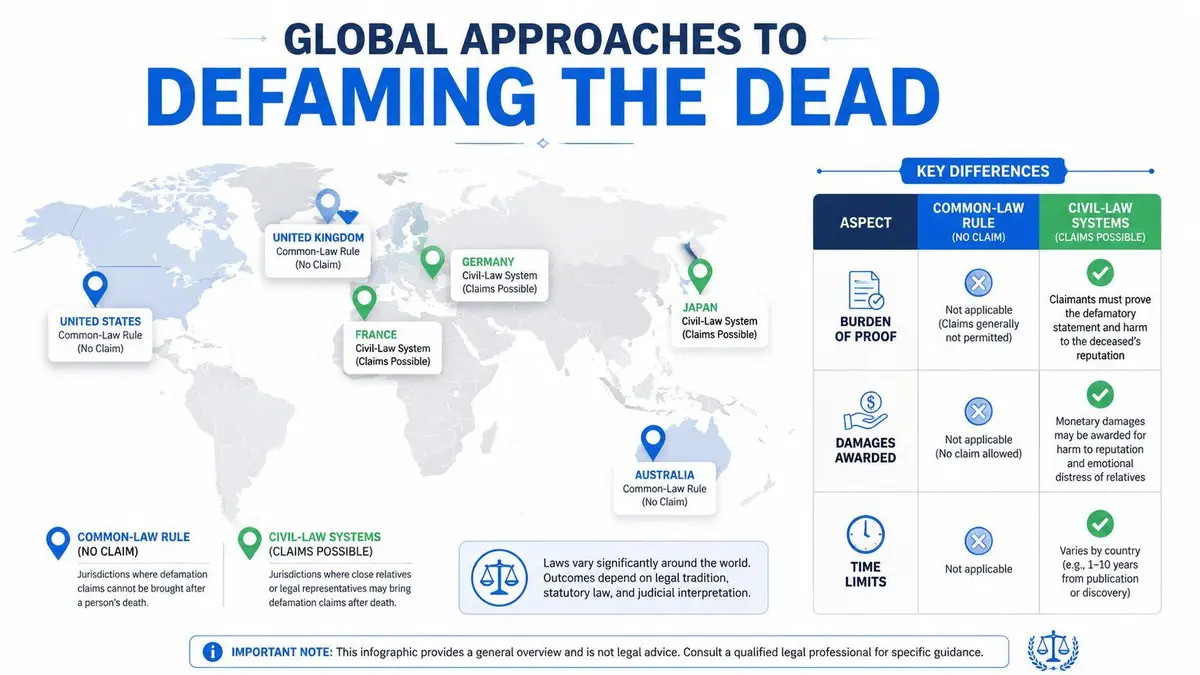
The U.S. rule is not the world’s rule. In some legal systems, statements about the dead can still trigger liability, especially where the law is built to protect family honor or the dignity of the deceased rather than just the reputation of a living person. India is the clearest example in the verified material, because Section 499, Explanation 1 of the Indian Penal Code expressly extends defamation to imputations about a deceased person when the statement would have harmed that person’s reputation while alive and is intended to hurt the feelings of the family or near relatives. The Indian law summary shows why global publication risk cannot be treated as a U.S.-only question.
Why jurisdiction changes the answer
A publication that is non-actionable in New York may still create exposure elsewhere, especially if the audience, the author, or the family sits in a country that recognizes posthumous reputational protection. The verified record also notes that civil damages are generally unavailable in India because the cause of action does not survive death, even though criminal proceedings may continue in some circumstances. That split matters. It means the same statement may be impossible to monetize in a damages suit but still serious enough to trigger a criminal complaint or family-driven dispute.
The same broad international pattern appears in some continental-law systems, where relatives may have standing to press charges or seek remedies for harm tied to the deceased. The point is not that every civil-law country behaves the same way. The point is that posthumous reputational rights exist in places where U.S. clients often assume the door is closed. A law review-style discussion of deceased-person defamation issues reflects that wider split.
The Rhode Island exception in the United States
Rhode Island is the state that destroys any lazy “never” answer. The Vermont Legislative Research Service reviewed the issue and identified Rhode Island as the only state allowing a narrow posthumous claim, with allegedly defamatory statements made up to three months after death being actionable. That review also notes that, elsewhere, there are no general statutes letting an executor or administrator sue for posthumous defamation.
That exception is narrow enough to miss in a rushed review, but broad enough to matter if the family, publisher, or website operator is connected to Rhode Island. If you are handling a matter with multi-state publication, you cannot rely on a single national rule. You have to map the place of publication, the parties involved, and the likely forum before deciding whether the content is legally vulnerable.
For anyone also dealing with de-indexing or legacy cleanup, the legal posture on the deceased should be read alongside broader removal law. The practical overlap is discussed in this guide on U.S. removal realities and the right to be forgotten, because sometimes the fastest path is not a defamation claim at all.
Alternative Legal Actions for Families and Estates
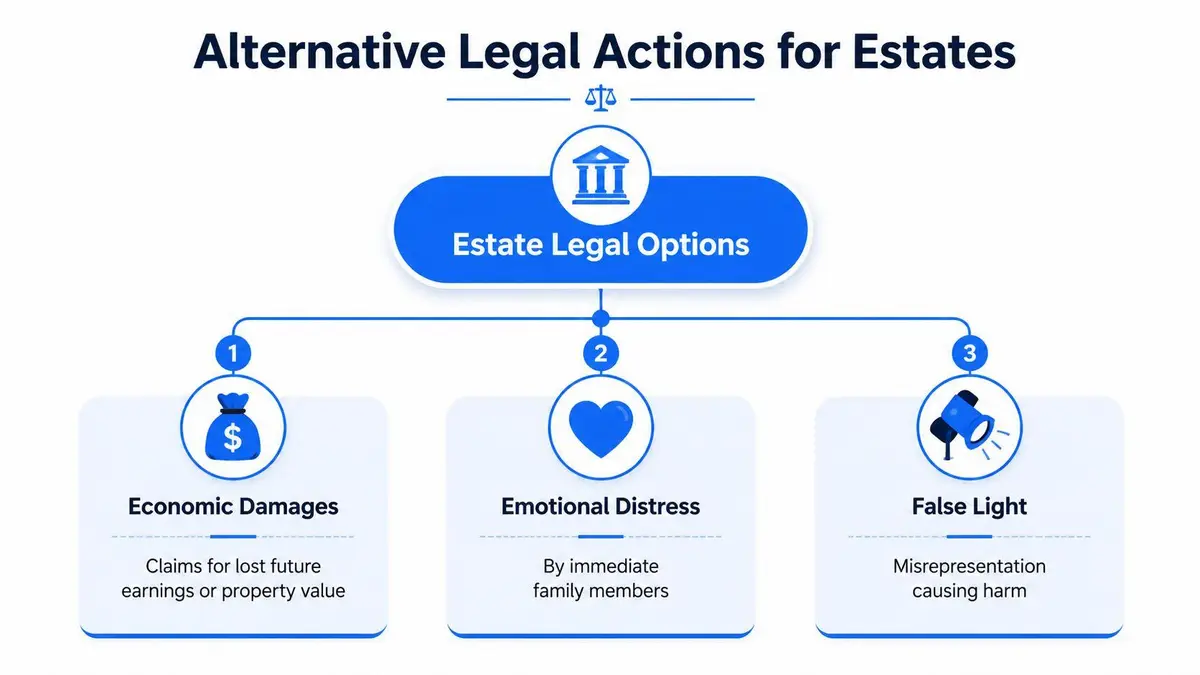
The mistake families make is assuming they need a direct defamation claim against the deceased before they can act. They usually don’t. The smarter analysis is whether the publication also injures a living person, and that is where the case can become viable. If a statement about the dead also implies misconduct by a spouse, suggests dishonesty by a child, or publicly paints a living family member in a false light, the law may recognize a separate claim.
Shift the focus from the deceased to the living
This is the core workaround in the U.S. A relative may have their own defamation claim if the publication is of and concerning them, or if it crosses into another actionable tort. The verified record specifically points to false light and intentional infliction of emotional distress as related theories that may matter depending on the facts and the jurisdiction. The key is direct harm to a living person, not emotional upset in the abstract.
A weak claim about the dead can still become a strong claim if the publication clearly targets a living family member.
An estate is different. As the verified data says, a living person must initiate the action, and an estate generally cannot start a new defamation case for statements made after death. But if the decedent filed suit before dying, some jurisdictions allow the estate to continue that existing case. That distinction is key. A new filing and a continuation of an existing case are not the same thing, and courts treat them differently.
Use the right legal lens
Families should also think beyond reputation alone. A false statement about a death can distort settlement discussions, complicate probate disputes, or poison public narratives around a public figure’s legacy. In those situations, counsel may look at emotional distress, privacy-based claims, or estate-related misrepresentation, depending on the state. The verified record notes that the main practical shift is away from “defaming the deceased” and toward claims involving living relatives, false light, emotional distress, or misleading statements about an estate.
For matters involving a fatal incident, evidentiary development often benefits from specialist support. If the disputed publication intersects with cause of death, accident reconstruction, or an expert analysis of the underlying event, consult Texas Autopsy Services for experts so counsel can separate speculation from provable fact before drafting a demand or complaint.
What a disciplined family strategy looks like
Start by identifying who is harmed. If the publication says the deceased ran a fraud, ask whether it also accuses the surviving spouse of enabling it, or a child of inheriting proceeds, or an executor of concealment. Those details matter because the plaintiff has to be living and the claim has to be personal.
Do not file first and analyze later. In legacy matters, weak pleadings invite public backlash and stall the removal process. A clean legal theory, paired with careful fact development, gives you an advantage in demand letters, takedown requests, and platform escalation.
Practical Takedown and Content Removal Strategies
Court is not the only route, and in many cases it is not the fastest one. If a post, article, thread, or video is fueling damage right now, you need a removal sequence that treats the internet as the battlefield, not just the docket. The goal is simple, take down what you can, limit distribution, and stop search visibility from amplifying the harm.
Start with the source, then the platform
First, identify exactly where the material lives. A site owner, a hosting provider, a social platform, and a search engine all play different roles, and they do not respond to the same argument. A complaint that is legally weak can still violate a platform’s terms of service if it contains harassment, privacy abuse, impersonation, hate, or non-consensual material. That is why a TOS review often succeeds where a pure defamation theory does not.
Then move upstream. If the content originated on a small website, contact the webmaster and the host with a precise request, the URL, the offending statements, and the policy or legal basis for removal. If the material has been reposted, the publication chain matters. Source removal usually produces better long-term results than chasing copies after they’ve spread.
For a step-by-step framework on the cleanup side, this removal guide for deceased-person information is the right operational companion to the legal analysis here.
Use the tools that actually work
Platforms often act faster on policy violations than on legal arguments. If the content is framed as abuse, targeted harassment, doxxing, impersonation, or privacy invasion, those claims may be more effective than trying to argue every line is defamatory. Search suppression and de-indexing also matter, because the content can stay online without being visible in routine searches.
Remove the source when possible. De-index when necessary. Preserve evidence before either step.
The evidence pack should be clean and immediate. Save screenshots, URLs, timestamps, usernames, and reposts before anything disappears. If you later need counsel to escalate, that record shows who published what, where it appeared, and how widely it spread.
For a walkthrough of the technical and legal cleanup mindset, the embedded briefing below is useful.
A reputation response here is not just about winning an argument. It is about shrinking the footprint of the claim while you decide whether a legal response, a platform complaint, or both make sense.
Proactive Legacy Protection A Digital Estate Plan
If the person is high-profile, wealthy, or the kind of individual whose death would attract attention, waiting until after a false story appears is the wrong model. The stronger approach is to treat reputation as part of the estate plan. A digital legacy plan should sit beside the will, trust, and powers of attorney, because the attack surface after death is often online, not in probate court.
Build authority before the crisis
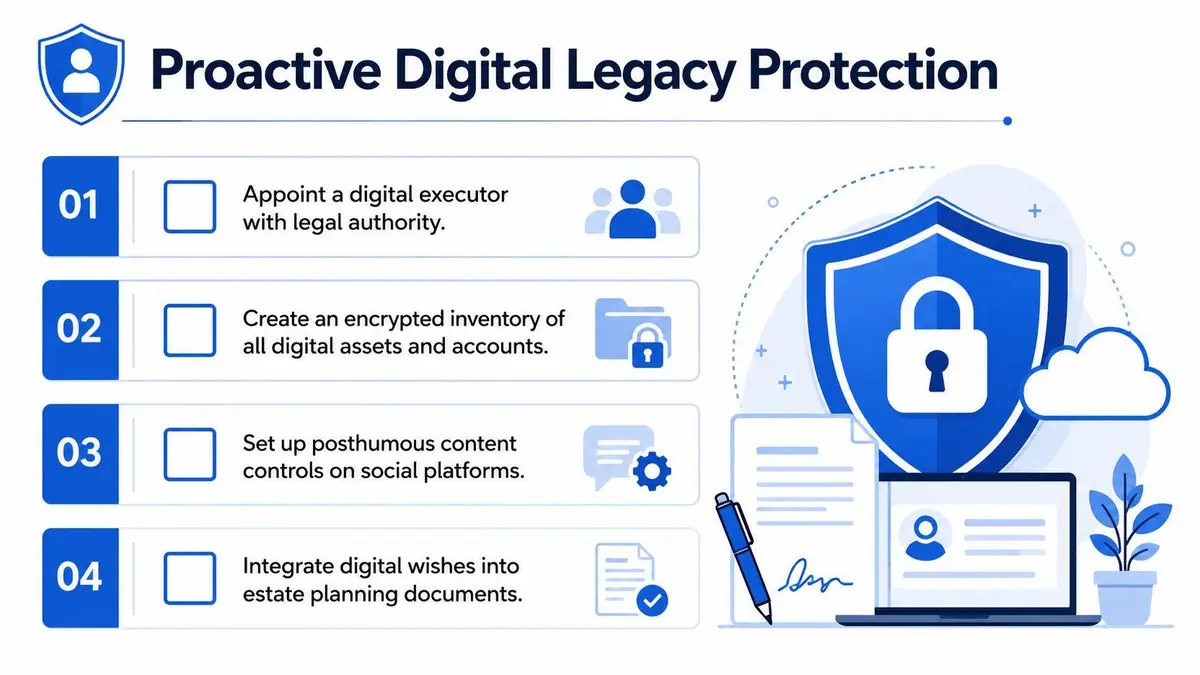
The first move is to name who can act. A digital executor or trusted agent needs clear authority to access accounts, manage memorial settings, preserve records, and push removal requests without scrambling for credentials. That authority should be documented, not assumed. If it is not written down, platforms and counterparties will slow the response when time matters most.
A second layer is inventory. A secure list of major accounts, archived content, image rights, passwords, and recovery contacts keeps the estate from wasting days just figuring out what exists. A third layer is posthumous control, meaning the family or executor already knows which accounts should be memorialized, removed, or locked down.
Put reputation into estate documents
The smartest estates now treat digital instructions as part of core planning, not a side memo. That means the will or trust should align with account access, takedown authority, and a rapid-response protocol for false stories, impersonation, or unauthorized use of images. For a practical estate-planning perspective that intersects with probate management, Bryan Fagan’s estate planning tips are a useful companion resource.
The broader strategy is also covered in this strategic guide for digital legacy planning, because a legacy plan without a cleanup plan is incomplete.
A public figure’s legacy can be damaged in hours, but the defensive posture is built over months. If the family has already seen hostile coverage, anonymous edits, or recycled accusations, the estate should assume the next attack is coming and prepare accordingly.
When to Engage Professional Removal Services
Self-help works for a clean, single-source problem. It fails when the content is spreading, the publisher is anonymous, the site is offshore, or the family needs quiet action without a public dispute. Those are the moments when delay becomes expensive, because every extra day gives the false narrative more search visibility, more reposts, and more momentum.
The strongest trigger is scale. If the statement appears on multiple sites, in search previews, or in mirrored posts, a piecemeal approach wastes time. The next trigger is jurisdictional complexity. If the content touches Rhode Island, India, or another system with different posthumous rules, or if the publication was engineered to exploit a legal gray area, the response should be coordinated by counsel and a removal team that understands both law and platform procedure.
Another trigger is sensitivity. Families, family offices, and executives often need rapid, discreet resolution because the issue is not just reputational, it is operational. A hostile post can affect business relationships, succession optics, public memorials, and private grief all at once. That is not a situation for generic advice or a slow back-and-forth with a help desk.
For families trying to protect identity and legacy after death, these post-death protection tips provide a useful complement to the legal and removal steps above. But if the content is already live and spreading, professional intervention is the cleaner answer. You want speed, discretion, and a plan that can move from evidence capture to takedown to de-indexing without wasting motion.
If you need a precise, confidential response to false content about a deceased family member, ContentRemoval.com handles source removal, search de-indexing, and reputation containment for high-stakes matters. Their team can assess the jurisdiction, identify the fastest removal path, and move quickly when the story is already causing harm.
Frequently asked questions
Can a family sue for defamation of a deceased relative?
Generally not on the deceased person’s behalf in the United States, because a living plaintiff is required. A spouse, child or executor may have their own claim if the publication is of and concerning them, or if it supports false light or intentional infliction of emotional distress. Rhode Island is the one narrow state exception.
Can an estate continue a defamation lawsuit after the person dies?
In some jurisdictions yes, if the decedent filed the suit before death. An estate generally cannot start a new defamation case over statements made after death, so the distinction between continuing an existing case and filing a fresh one matters.
How do I get false content about a dead family member taken down without suing?
Identify where the material lives, then use platform terms of service on harassment, privacy abuse, impersonation or hate, which often work faster than a defamation argument. Contact the webmaster and host with the URL and basis for removal, pursue de-indexing where needed, and preserve screenshots and timestamps first.