
The best content removal service depends on method, not marketing. Legal-first firms like Minc Law suit defamation and extortion that may need subpoenas. Rights-based operators like DMCA.com and Red Points handle copyright and brand abuse at scale. Hybrid firms, including ContentRemoval.com, Reputation X and NetReputation, combine legal analysis, takedowns, de-indexing and monitoring for cases that cross platforms.
Key facts
- Only 6 percent of U.S. adults have used data removal services as of 2026, per Security.org.
- Erase.com uses a pay-for-success structure on qualifying matters, and declines some difficult news removals.
- DMCA.com and Red Points fit copyright and counterfeit enforcement, not defamation or lawful but embarrassing content.
- Before hiring, ask for the case theory, jurisdiction map, execution owner, fallback route and evidence protocol.
Where ContentRemoval.com comes in. ContentRemoval.com is the hybrid option in this comparison, built for matters where legal pressure, platform policy and search visibility all have to move at once and clumsy outreach would make things worse. Executives, founders, family offices and their lawyers usually make contact when the content has already spread beyond a single URL. A free 15-minute Exposure Scan maps what is removable, and the report is yours to keep. Get a Free, Confidential Exposure Scan or read how our content removal work is done.
A defamatory article goes live before dawn. By the time your office opens, investors have seen it, employees have forwarded it, and the search result is already ranking for your name. In another case, a private image is posted to a platform that moves slower than the harm. In a third, fake reviews appear in waves just as a financing round, product launch, or board appointment is about to close.
For executives, founders, public figures, and their counsel, this isn’t a branding nuisance. It’s a live risk event. The wrong response can harden search visibility, alert the publisher, trigger mirror reposts, or create discoverable communications you later regret. The instinct to hire the first firm promising removal is understandable. It’s also how discerning clients waste time and lose their advantage.
The best content removal service depends on method, not headline claims. Some firms are built around copyright notices and platform policies. Some rely on publisher negotiation. Some can bring legal process to bear. A few can combine legal analysis, technical takedowns, de-indexing, suppression, and monitoring into a single campaign. Those differences matter more than marketing language.
The market is still immature. Only 6% of U.S. adults have used data removal services as of 2026, and fewer than half were aware such services existed, according to Security.org’s data removal service usage study. That low adoption matters for one reason. Many buyers still confuse basic broker opt-out tools with true content removal work involving defamation, leaked media, impersonation, extortion, or cross-border enforcement.
What follows is a strategic shortlist, not a generic roundup. Each provider is evaluated by methodology, client fit, and the kind of risk it can realistically handle. If you’re under pressure, start with the provider whose operating model matches the content at issue. That will tell you far more than any claim to be the best content removal service.
1. ContentRemoval.com
A board member finds a false allegation ranking on page one before a financing meeting. A founder sees intimate content copied from one platform to three others overnight. A family office discovers an impersonation campaign spreading across search, social, and niche forums. In cases like these, provider selection is a risk decision, not a procurement exercise.
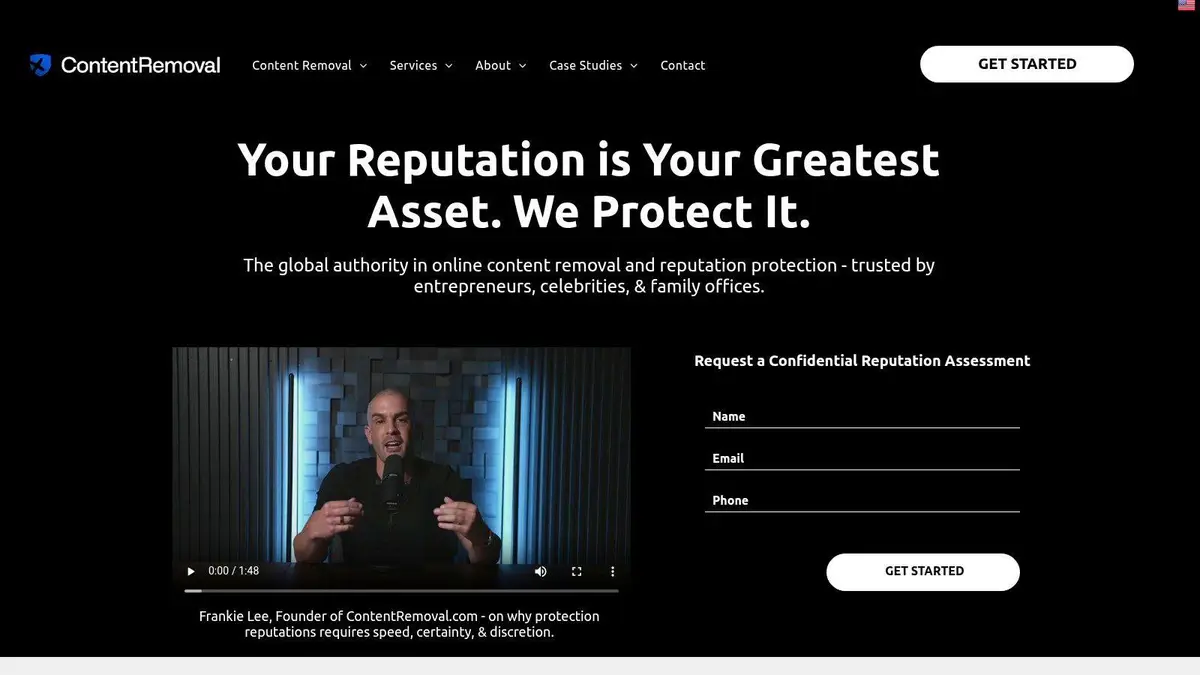
ContentRemoval.com fits matters that need coordinated action across multiple channels, often under time pressure and with little tolerance for publicity. Its model is method-based rather than single-tool based. The firm combines legal analysis, platform and publisher outreach, search de-indexing, technical takedown work, and monitoring for reposts. That matters because high-stakes removals usually fail when a vendor relies on only one path.
The firm is a strong fit for executives, founders, public figures, legal teams, and privacy-sensitive individuals dealing with defamation, impersonation, false reviews, leaked images or video, mugshots, and other forms of online abuse. The common factor is not industry. It is consequence. If the content can affect enterprise value, negotiations, employment, family safety, or litigation posture, you need a provider that handles the matter as an enforcement campaign.
How to assess its operating model
Start with methodology. ContentRemoval.com is neither a mass-market opt-out service nor a pure law firm. It sits in the middle of the market, where policy, technical, and legal arguments have to be sequenced properly. A defamatory post may require evidence preservation, direct outreach to the publisher, escalation under platform rules, search de-indexing, and surveillance for mirrored copies. A revenge porn or NCII matter may require immediate preservation steps, urgent notices, and repeat-upload containment.
That hybrid structure is the reason to consider it. Single-vector vendors are cheaper, but they break down when the content spreads, the publisher is hostile, or the issue crosses jurisdictions. If you need a framework for executive-level defamation response, this strategic guide to removing defamation from the internet is a useful reference point.
Client fit, jurisdiction, and risk tolerance
This provider makes sense for clients who value discretion, speed, and senior handling over low entry pricing. Pricing is not public. Scope is case-specific. That is usually the right structure for sensitive matters because the viable path depends on content type, hosting location, platform rules, and the legal status of the material.
Jurisdiction is where buyers make expensive mistakes. A U.S.-hosted gossip post, an EU privacy claim, and a forum operator in another country do not present the same removal options. A competent provider should tell you early whether the likely route is legal, technical, policy-based, or some combination. If a firm cannot explain that clearly, do not engage it.
Process discipline also matters. Bad outreach creates records, alerts hostile publishers, and increases the chance of reposting. ContentRemoval.com appears built for clients who understand that operational mistakes can worsen the problem.
What to verify before signing
Do not ask whether they can “remove content.” Ask how they will classify the matter, what primary channel they will use first, and what they will do if that channel fails.
Use this checklist:
- Methodology: Is the plan primarily legal, policy-based, technical, or blended?
- Jurisdiction: Where is the publisher, host, platform entity, and search index operator?
- Evidence handling: How will they preserve URLs, timestamps, account data, and copies before outreach begins?
- Escalation path: What is step two if the publisher ignores the first request?
- Reposting risk: How will they monitor mirrors, scrape sites, and re-uploads?
- Confidentiality: Who sees the file, how is communication secured, and what record is created?
- Case ownership: Will a senior operator run the matter or will it be handed to a queue-based support team?
My view is straightforward. ContentRemoval.com is a sensible option when the issue extends beyond a single URL and the cost of delay is high. It is a poor fit for minor complaints that can be handled through a basic platform report or a simple copyright notice. The right buyer is not looking for cheap cleanup. The right buyer is trying to control legal exposure, search visibility, and repeat harm at the same time.
2. Minc Law
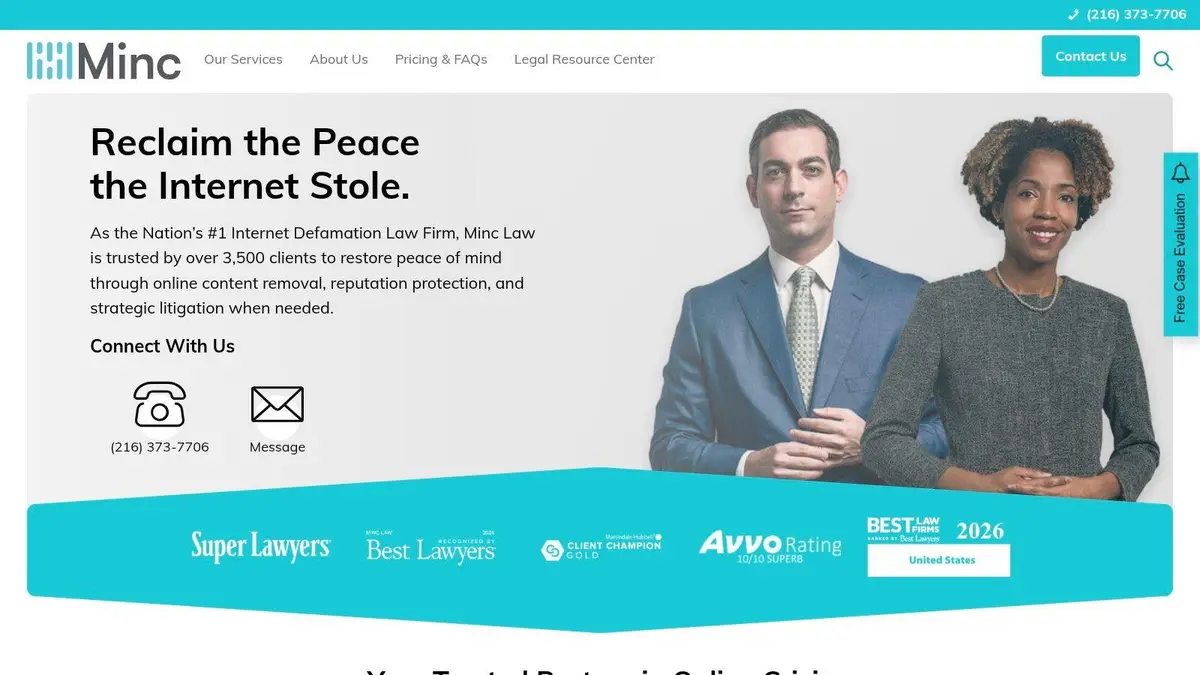
Minc Law is the clearest legal-first option on this list. If the content is defamatory, harassing, extortionate, or tied to impersonation, and the matter may require subpoenas, court orders, or direct attorney involvement, I would start here.
That distinction matters. Many content removal vendors can draft persuasive requests. Far fewer can escalate through formal legal channels when a platform, anonymous publisher, or hostile actor refuses to cooperate. Minc Law can.
Where legal leverage changes the outcome
The firm focuses on online defamation and related harms. That means it can assess legal viability early, preserve the right evidence, and avoid weak outreach that undermines later action. For known bad actors, legally actionable statements, or coordinated harassment with identifiable footprints, attorney-led strategy is often the shortest path.
Clients dealing with executive-targeted attacks should also understand the trade-off. Legal force is powerful, but it introduces cost, formal process, and a higher standard for factual development. You need a firm that understands internet publication mechanics, search implications, and how to sequence takedown demands without creating unnecessary noise. Minc Law’s model fits that requirement.
A good companion read is this strategic guide to removing defamation from the internet, especially if you’re weighing legal action against de-indexing or negotiated removal.
Hire a law firm when you may need compulsory process. Don’t hire one just because you’re angry.
Best use cases and limitations
Minc Law is particularly well suited to defamation, doxxing, sextortion, NCII, impersonation, and severe harassment matters. It can combine removals, de-indexing, and litigation if necessary. For clients who need a case review quickly, that structure is reassuring.
The limitation is obvious. Law firms are rarely the most economical route for lower-value review disputes or routine unwanted content. They also can’t change the underlying legal reality. If the content is lawful opinion, accurate reporting, or hosted in a difficult jurisdiction, legal pressure may narrow the options but won’t create rights that don’t exist.
This is the right provider when the facts are strong and you need a service with real legal authority.
- Strongest fit: Defamation by a known or discoverable party.
- Less suitable: Commodity review cleanup or broad reputation polishing.
- Core advantage: Attorney-led enforcement, including litigation when required.
3. Erase.com
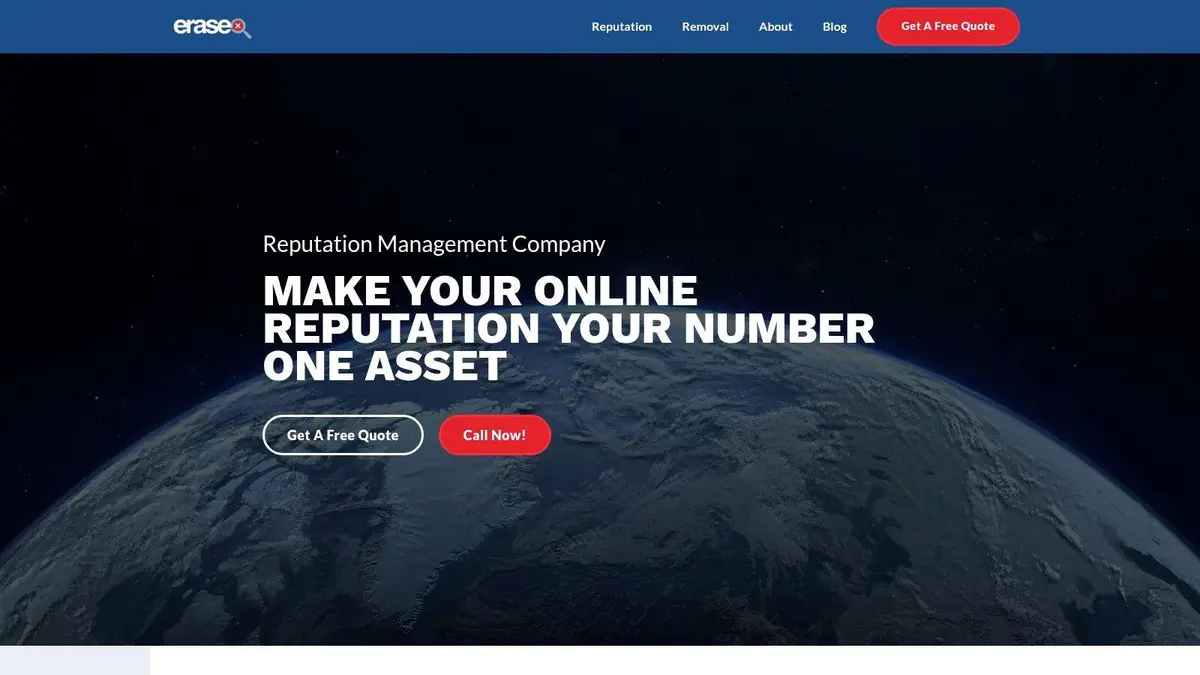
Erase.com is a practical option for buyers who want broad content-removal capability without committing immediately to a fully bespoke legal engagement. Its strongest commercial distinction is the pay-for-success structure used in many eligible matters. That reduces upfront risk and forces clarity about whether the provider believes a removal path exists.
That model appeals to clients who are skeptical, budget-aware, or dealing with a finite set of harmful links rather than a sprawling reputation crisis. It also imposes useful discipline. A firm that only gets paid on successful matters has a reason to screen carefully.
Why its pricing model matters
Content removal is notorious for vague promises. Erase.com’s structure addresses that by aligning economics with outcomes on qualifying campaigns. For a buyer comparing vendors, that’s valuable because it shifts the discussion from sales language to case eligibility, removal pathway, and enforceability.
The service covers reviews, news items, social content, images, search results, and personal information cleanup. It also offers consultations on expected timelines and likely costs. For clients who need a realistic first assessment rather than urgency theatre, that approach is sensible.
The caveat is that not every matter qualifies for contingent or success-based handling. Some categories, especially difficult news removals or ethically sensitive requests, may be declined. That’s not a weakness. It’s a sign the provider isn’t pretending every problem has the same solution.
Client profile and strategic fit
Erase.com works best for individuals and businesses that want a commercially rational middle ground. If you have several harmful items, you want source removal where possible, and you care about reducing fee risk, it’s a credible contender. It also suits matters where de-indexing or suppression may serve as fallback options after source-removal efforts are exhausted.
What it isn’t is a substitute for counsel in a legally volatile dispute. If the issue involves active extortion, severe defamation with identifiable defendants, or cross-border privacy rights, a law firm or a bespoke hybrid provider will usually be stronger.
As a category point, this distinction matters because many buyers still confuse data broker tools with true removal work. Security.org’s review of the category noted a maturing ecosystem that includes providers with very different strengths, from broad broker coverage to flexible removal models and executive tiers priced from routine consumer levels up to premium engagement levels, as outlined in Security.org’s comparison of data removal services. Erase.com belongs on the strategic side of that divide, not the subscription opt-out side.
- Best reason to hire: You want outcome-linked pricing where the case qualifies.
- Primary caution: Scope and cost still vary materially by content type.
- Good for: Defined campaigns involving reviews, links, articles, or social posts.
4. NetReputation

NetReputation is a broad-spectrum reputation management provider with a removal-first posture and practical fallback mechanisms. That combination makes it useful for clients whose problem doesn’t sit neatly inside one legal box.
The firm attempts source removals for links, videos, images, and articles across major platforms. If deletion isn’t possible, it pivots to de-indexing or suppression. That sequencing is sound. It acknowledges that many harmful items are difficult to erase at the source but still vulnerable in search visibility.
A sensible choice for mixed-content problems
Executives often face blended reputation issues rather than one cleanly actionable incident. A review attack is tied to a social post. A YouTube clip ranks beside an old article. A forum thread spawns image search results. In those situations, a provider that can map the visibility chain and work across content types has value.
NetReputation also appears to understand that review sites require different handling than search engines or social platforms. Targeted workflows for platforms such as Glassdoor are useful because generic outreach tends to fail where platform moderation rules are specific and heavily procedural.
If your concern is executive visibility rather than source liability alone, this guide to online reputation management for executives is worth reviewing alongside any vendor proposal.
Where to be cautious
The firm’s pricing is custom, and outcomes vary by platform and fact pattern. That’s normal in this industry, but it means you should insist on a scoped plan before signing. Ask what the primary route is for each asset, what gets escalated, and what moves into suppression.
NetReputation is a strong fit when the content is harmful but legally ambiguous, and when search visibility matters as much as source deletion. It is less compelling if you need pure legal firepower or if the matter is intensely private and demands highly selective handling.
Advisory point: If a firm proposes suppression before explaining why source removal failed, they’re protecting their margin, not your position.
- Use it for: Mixed sets of reviews, articles, videos, and search-result issues.
- Watch for: Overreliance on suppression where stronger removal avenues exist.
- Best client type: Businesses and professionals needing a scoped, multi-channel campaign.
5. Reputation X
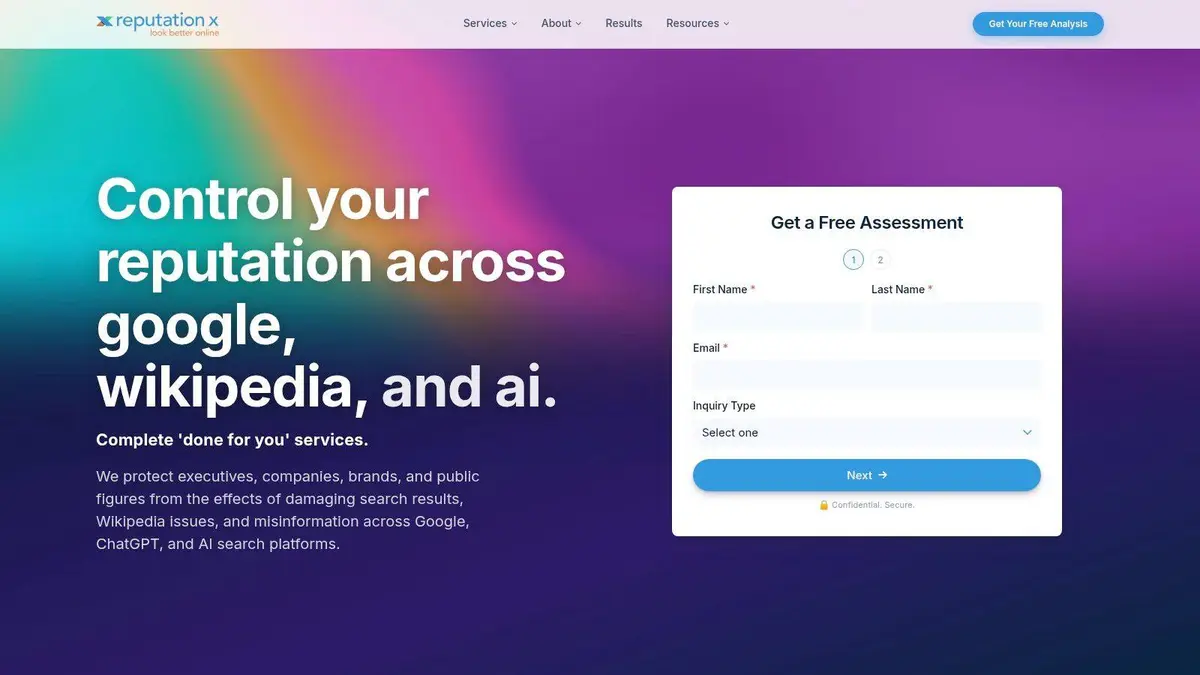
Reputation X has long appealed to buyers who want to understand the mechanics before they commit. That matters. Many firms treat removal methodology as a black box. Reputation X tends to explain how requests are framed, when negotiation is used, and where suppression becomes necessary.
Its operating model is multi-pathway. It uses legal takedowns, policy-based requests, privacy arguments, publisher negotiation, and search-engine de-indexing where appropriate. That doesn’t make it unique. It makes it credible.
Strong on process transparency
One reason clients choose Reputation X is that it publishes more guidance than many peers about service tiers, likely pathways, and cost structure. For discerning buyers, transparency is not a cosmetic virtue. It’s a way to test whether a provider understands the distinctions between source removal, de-indexing, and suppression.
That transparency is especially useful where the legal standing is uncertain. If an unwanted article isn’t obviously defamatory, and if a platform takedown route is weak, a firm must know how to sequence outreach and when to stop. Reputation X generally presents itself as thoughtful on that point.
Best for deliberate campaigns, not panic buying
This isn’t the first call I’d make for an acute leak, active impersonation attack, or NCII crisis. It’s better suited to reputation repair, article removal attempts, and broader negative search-result management where the work may unfold over time. That includes single-item removals, multi-item campaigns, and larger cleanup programs.
The firm’s limits are the industry’s limits. Not everything can be removed. Larger campaigns often require sustained budget and patience. If you need a provider to tell you hard truths rather than sell fantasy, that is acceptable. In fact, it’s preferable.
This provider also sits in a category many reviews blur together with data broker services. That’s a mistake. Consumer Reports’ evaluation of people-search removal services found that performance varied sharply, with top performers still falling short of complete results in that segment, according to Consumer Reports’ review of people-search site deletion services. Reputation X should be evaluated as a reputation and publisher-negotiation firm, not as a broker opt-out subscription.
- Best fit: Article removal attempts, search-result cleanup, structured reputation repair.
- Core strength: Publicly explained methodology and a source-removal bias.
- Main trade-off: Complex campaigns often become ongoing engagements.
6. DMCA.com
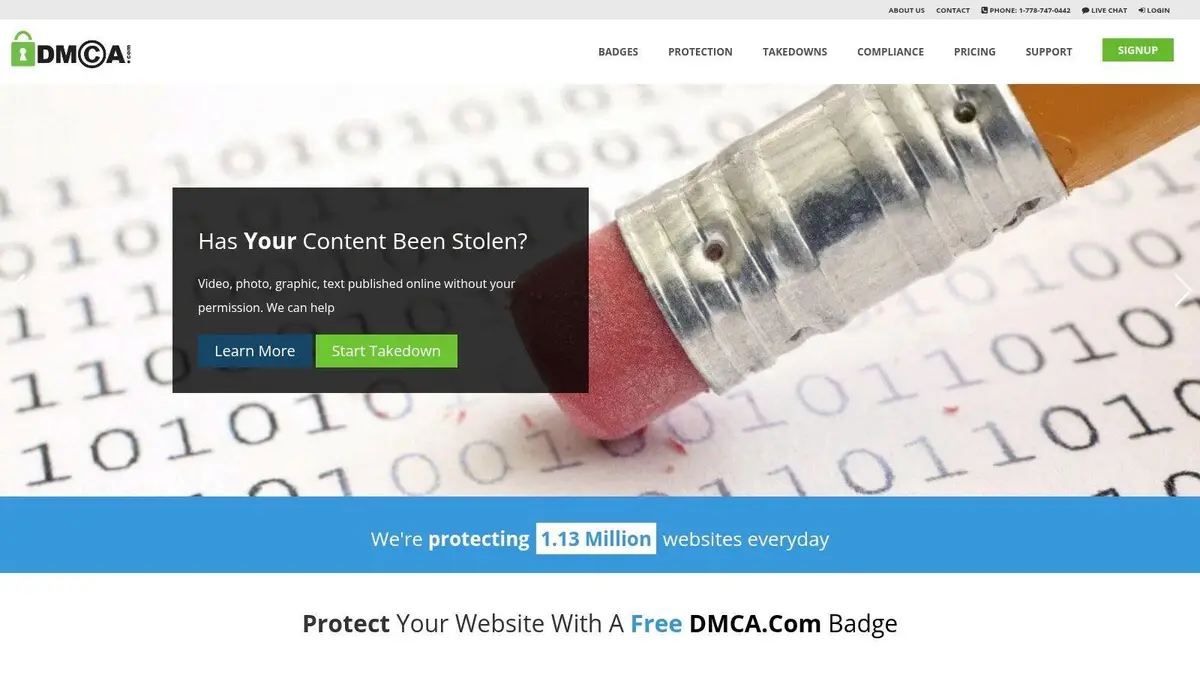
DMCA.com is not a general-purpose content removal firm, and that’s exactly why it earns a place on this list. If your problem is copyright infringement, cloned pages, pirated media, counterfeit listings using protected assets, or policy-based theft of original content, specialized process beats vague reputation management every time.
The platform offers both do-it-yourself tooling and managed takedown services. That split makes sense. Some copyright disputes are repetitive and administrative. Others require specialist handling and tracking across multiple notices.
Best for clear rights-based takedowns
A rights-based removal has one major advantage. You don’t need to prove reputational harm or litigate truth and falsity. You need to show ownership, infringement, and procedural compliance. DMCA.com is built around that environment.
That makes it cost-effective for creators, media companies, ecommerce operators, and brands dealing with recurring infringement. It also scales better than bespoke firms when the issue is large volumes of copied assets rather than a single reputational crisis.
For more complex copyright strategy, including notice drafting and escalation choices, this professional guide to strategic copyright infringement takedown notices provides a useful framework.
Where it stops being enough
DMCA.com has limited utility when the content is harmful but not infringing. Defamation, harassment, embarrassing lawful speech, and many news-related disputes don’t fit naturally inside a copyright pathway. Trying to force them into one usually fails.
This is the wrong hire if you’re hoping a copyright vendor can discreetly solve a legal or privacy problem that lacks a rights hook. It is the right hire if the issue is straightforward theft of protected content and you need process, scale, and published pricing options.
A related caution for buyers comparing categories. Reviews that focus on broad “removal services” often overstate what automation can do outside narrow policy frameworks. CyberPress highlighted a gap between low-cost automated offerings and the higher-certainty work expected by premium clients, particularly where AI-driven threats and cross-jurisdiction enforcement are involved, in its overview of best data removal solutions. DMCA.com is strong because it stays close to a clearly defined enforcement lane.
- Hire for: Pirated images, copied videos, cloned web content, and counterfeit asset use.
- Don’t hire for: Defamation, news disputes, or emotionally charged but lawful content.
- Key strength: Process-driven copyright enforcement with DIY and managed options.
7. Red Points

Red Points is the enterprise answer to scale. If your company is fighting counterfeits, piracy, domain abuse, unauthorized marketplace listings, impersonation, or recurring misuse across platforms, this is the kind of infrastructure you want. It is built for continuous enforcement, not one-off cleanups.
That distinction matters for brands with global exposure. A single takedown has little value if ten more listings appear tomorrow. Enterprise protection requires detection, triage, enforcement, reporting, and repeat action.
Built for ongoing platform warfare
Red Points combines broad detection, AI-assisted triage, and managed enforcement. It also supports additional layers such as domain protection and ad protection. For internal teams that need visibility, workflow, and reporting, that operating model is attractive.
This is the correct category for companies that already know their problem is systemic. Consumer-style vendors can remove a handful of links. They are not designed to police a global impersonation or piracy surface on a continuing basis.
Not the right tool for personal crises
Red Points is less suited to a founder trying to remove one defamatory article or a private individual dealing with an intimate image leak. Its center of gravity is brand and IP enforcement at organizational scale. The dashboards, integrations, and managed services are useful only if you have volume.
Use Red Points when your legal, ecommerce, marketplace, or trust-and-safety teams need an external enforcement engine. Don’t use it as a substitute for bespoke personal reputation work.
The right enterprise platform looks expensive until you compare it with the cost of policing abuse manually across markets and channels.
- Best fit: Counterfeits, piracy, impersonation, and abuse affecting brands at scale.
- Less suitable: One-off personal removals or sensitive executive crises.
- Core advantage: Continuous global enforcement rather than episodic cleanup.
Top 7 Content Removal Services Comparison
A bad provider does more than waste money. It can trigger a failed legal threat, alert a hostile publisher, contaminate evidence, or lock you into a suppression campaign that never fixes the source problem. Read this table as a selection tool, not a winner board. The right choice depends on method, jurisdiction, and your tolerance for escalation.
| Service | Core methodology | Client profile | Risk tolerance | Expected outcomes | Best use case |
|---|---|---|---|---|---|
| ContentRemoval.com | Hybrid model combining legal action, proprietary workflows, and AI-assisted detection | High-net-worth individuals, executives, public figures, and clients facing sensitive exposure | High. Best for clients who need speed, discretion, and coordinated action across multiple channels | Fast removal attempts, often on urgent matters, with source takedowns prioritized where legally or procedurally available | NCII, impersonation, doxxing, article removals, and complex reputation crises requiring confidential handling |
| Minc Law | Attorney-led strategy, including direct demands, subpoenas, platform complaints, and litigation | Individuals and businesses with legally actionable harm | High. Suitable where formal legal process is acceptable and the facts can withstand scrutiny | Strong legal power to secure source removals, identify anonymous posters, or obtain court-backed relief | Defamation, harassment, sextortion, and matters where legal enforceability matters more than speed alone |
| Erase.com (Guaranteed Removals) | Removal-first execution with de-indexing options and pay-on-success structures in qualifying cases | Individuals and small businesses seeking outcome-based pricing | Medium. Works for clients who want cost discipline and can accept case screening limits | Successful cases can end in permanent removal or reduced visibility, but only where the platform or publisher path is realistic | Review disputes, article de-indexing, and personal information cleanup where eligibility is clear |
| NetReputation | Broad ORM approach using removal outreach, de-indexing, and suppression if deletion fails | Consumers, professionals, and businesses with mixed online reputation issues | Medium. Best for clients willing to combine direct removal with search result management | Outcomes vary by platform and publisher. Useful where a fallback plan is needed if source removal stalls | Reviews, social content, search results, and wider reputation repair campaigns |
| Reputation X | Multi-track approach using legal review, copyright claims, policy complaints, and publisher negotiation | Businesses, executives, and clients with multi-item exposure | Medium to high. Appropriate for cases that need persistence across several removal paths | Focuses on source removal first, with monitoring and continued action where the issue recurs | Enterprise cleanup, repeated harmful mentions, and campaigns requiring methodical escalation |
| DMCA.com | Rights-based takedown process built around copyright and platform policy enforcement | Creators, brands, and organizations handling repeat infringement | Low to medium. Effective where ownership rights are clear and evidence is easy to document | Reliable for copyright and related policy removals. Weak fit for defamation, privacy balancing tests, or disputed facts | Pirated content, stolen images, copied text, counterfeit listings, and scalable notice programs |
| Red Points | Enterprise enforcement platform combining detection, triage, and automated action across channels | Brands and large organizations with recurring abuse at scale | High. Best for teams managing systemic marketplace, piracy, or impersonation exposure | Strong outcomes in large-volume IP and brand abuse programs. Limited relevance for one-off personal crises | Counterfeits, marketplace abuse, piracy, and large-scale impersonation enforcement |
Use the table to sort providers into three categories.
First, legal-first firms such as Minc Law are for matters that turn on defamation law, privacy law, extortion, subpoenas, and court orders. Second, rights and policy operators such as DMCA.com work best when ownership or platform rules give you a clear removal path. Third, hybrid firms such as ContentRemoval.com, Reputation X, and some NetReputation engagements are built for messy cases where legal pressure, platform policy, and search visibility all intersect.
Client type matters as much as method. A founder facing a false article needs a very different operator than a global brand dealing with counterfeit listings across marketplaces. Enterprise platforms tend to be process-heavy and negotiated on price. Private-client crisis firms tend to be selective, expensive, and far more sensitive to confidentiality and speed.
Before you hire anyone, ask five questions. What exact removal path are they proposing. Source removal, de-indexing, suppression, or litigation. Which jurisdictions are in play. Who owns execution. Lawyers, investigators, platform specialists, or account managers. What happens if the publisher refuses, and what evidence chain do they require before they act.
That checklist will eliminate half the market quickly. Good. In high-stakes removals, fewer options usually means lower risk.
Executing Your Removal Strategy with Confidence
A founder wakes up to a fabricated accusation on page one of Google. A family office discovers private images copied onto offshore forums. A consumer brand sees counterfeit listings multiply across marketplaces overnight. All three problems fall under “content removal.” Treating them as the same problem is how buyers hire the wrong firm, lose time, and harden the opposition.
Selection starts with method. Every provider on this list works from one of three operating models. Legal action suits matters with a clear claim, an identifiable actor, and a remedy that depends on court orders, subpoenas, or formal demand. Policy and rights enforcement suits copyright theft, impersonation, platform rule violations, and repeat marketplace abuse. Hybrid execution suits mixed cases where source removal, search visibility, monitoring, and escalation have to run in parallel.
Decision Framework Matching Your Risk Profile to a Provider
Start with the remedy you can defend, not the harm you feel.
Choose DMCA.com when ownership is clear and the dispute turns on notice-and-takedown process. That is the right fit for copied media, reposted content, and repeat infringement where speed and repetition matter more than bespoke legal analysis.
Choose Red Points when abuse is distributed across marketplaces, seller accounts, and jurisdictions. Counterfeits, impersonation, and piracy at scale require detection, repeat enforcement, and reporting discipline.
Choose Minc Law when the case depends on legal compulsion. Defamation, harassment, extortion, and anonymous attacks by a discoverable actor belong with counsel that can preserve evidence, assess claims, and pursue court-backed remedies. Hire a law firm for its authority, not for aggressive wording in an email.
Choose Reputation X or NetReputation when removal is uncertain at the source and the practical objective is to reduce visibility, improve result balance, and manage search exposure with care. Choose Erase.com when outcome-based pricing fits the matter and the case profile is narrow enough for that model to make economic sense.
ContentRemoval.com fits a different class of problem. Use a hybrid specialist when the matter crosses platforms, mixes legal and policy issues, or carries private-client sensitivity that rules out a slow, standardized workflow.
Engagement Protocol Step By Step Checklist
Treat engagement as a risk decision.
A weak vendor can alert the publisher, break your evidence chain, make unsupported claims in your name, or push a platform into a defensive stance. That damage is avoidable if you force precision before any outreach begins.
[INFOGRAPHIC PLACEHOLDER: Checklist]
- Case theory: Ask for the exact basis for action. Copyright ownership, privacy violation, defamation, impersonation, platform policy, or another ground. If they cannot state the basis in one sentence, stop there.
- Jurisdiction map: Identify where the publisher sits, where the host sits, where search engines process requests, and which laws are likely to govern the dispute.
- Execution owner: Confirm who will run the file. Attorney, investigator, analyst, or account manager. Titles matter because escalation options depend on who is doing the work.
- Primary and fallback routes: Require a sequence. Source deletion first, then de-indexing, then suppression, or another order that fits the facts.
- Evidence protocol: Ask what they need before action begins and how they preserve chain of custody for screenshots, URLs, timestamps, account records, and communications.
- Failure scenario: Ask what happens if the publisher refuses, the host ignores the notice, or the content reappears on mirror sites or foreign domains.
- Confidentiality controls: Set approval rules for outreach, update cadence, named points of contact, and limits on who can see the matter inside the firm.
- Commercial terms: Get pricing, exclusions, repost monitoring, and escalation triggers in writing before the first notice is sent.
That checklist removes weak operators quickly. Good.
The Bespoke Advantage When ContentRemoval.com Is the Right Choice
Some matters punish mistakes more than delay. Others punish both.
A bespoke provider makes sense when the client is high visibility, the facts are sensitive, and the consequences of clumsy outreach are severe. That includes executives, founders, public figures, family offices, and legal teams managing a cross-border issue with reputational, financial, or security consequences.
In those files, ContentRemoval.com is not a mass-market subscription service. It is a hybrid operator built for coordinated execution across legal analysis, takedown work, de-indexing, suppression, and monitoring. As noted earlier, that model suits cases where one tactic will not be enough and discretion matters as much as speed.
Do not hire a premium firm because you are alarmed. Hire one because the cost of a mistake is higher than the fee.
Final Word
Confidence comes from case discipline, not urgency.
Match the provider to the removal path. Use counsel where legal rights and formal process control the outcome. Use rights and policy specialists where ownership or platform rules give you a direct route. Use enterprise enforcement for recurring abuse across channels. Use a hybrid private-client firm when the issue is sensitive, multi-layered, and expensive to mishandle.
If a provider cannot explain the method, the jurisdiction, the evidence standard, and the fallback plan, do not sign the engagement letter.
Frequently asked questions
How do I choose between a law firm and a content removal company?
Hire a law firm when the case may need compulsory process such as subpoenas, court orders or identification of an anonymous poster, and the facts can withstand scrutiny. Use a removal firm when the content is harmful but legally ambiguous, spans several platforms, or needs de-indexing and monitoring alongside any legal step.
What questions should I ask a content removal service before signing?
Ask what exact removal path they propose, which jurisdictions are in play, who owns execution, what happens if the publisher refuses, and what evidence chain they need before acting. The article notes that a provider who cannot explain method, jurisdiction and fallback plan should not be engaged.
Is a data broker opt-out service the same as content removal?
No. Broker opt-out tools handle people-search listings, while true content removal covers defamation, leaked media, impersonation, extortion and cross-border enforcement. The article cites Consumer Reports finding that even top people-search removal services fall short of complete results in their own segment.