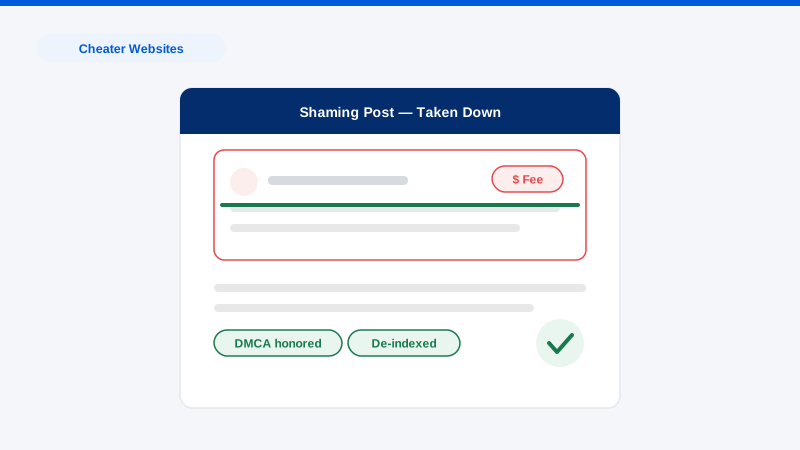
Yes, you can get your name removed from a cheater or shaming website, but almost never by doing what the site wants, which is paying it. Sites like ShesAHomewrecker, CheaterReport, and their many clones exist to monetize exactly your situation: they accept anonymous posts, rank them against your name, and then charge “reputation” or “arbitration” fees of hundreds to thousands of dollars for removal. Paying rarely works, frequently leads to reposting or new demands, and marks you as a paying target across the network of sites many of these operators run. The working routes are copyright takedowns, defamation pressure, host and infrastructure escalation, and de-indexing from Google, in that strategic order.
First rule: never pay the site
This deserves its own section because it’s the mistake that makes everything worse. Removal-for-fee schemes tied to the same operators who host the content function as extortion, and the FTC has acted against exactly this model. Most prominently shutting down a mugshot-style operation and, in the complaint against a major cheater-site network, alleging the site and its “independent” arbitration service were the same enterprise. Paying signals that you’ll pay again: posts reappear under variant spellings, sister sites republish, and the fee climbs. The same never-pay logic applies to third-party “guaranteed removal” outfits that quietly split fees with the sites, a dynamic we document on our Ripoff Report page, where the economics are identical.
What are the legitimate removal routes?
- Copyright (usually the strongest). Most cheater-site posts include photos taken from your social media. If you took the photo (a selfie), you own the copyright, and a DMCA takedown notice to the site’s host and to Google is a legal demand the infrastructure layer actually honors, regardless of how the site itself behaves. Photos taken by a friend can be assigned to you with a signature.
- Defamation. Posts state false facts: the affair that didn’t happen, the fabricated details. False statements of fact support retraction demands to identifiable posters, John Doe litigation to unmask anonymous ones, and court orders that Google honors for de-indexing. Section 230 shields the site from liability for user posts, which is why pressure aims at the poster and the infrastructure, not the site’s editorial judgment. This is core defamation removal work.
- Privacy and NCII laws. Posts that include your phone number, address, workplace, or intimate images violate platform policies up the stack, and intimate images trigger state NCII laws and Google’s dedicated removal process.
- Host and infrastructure escalation. Cheater sites depend on hosting providers, CDNs (often Cloudflare), domain registrars, and ad networks, all of which have abuse policies and legal exposure the site doesn’t respect but they do. Well-constructed abuse complaints at this layer take down content, and occasionally entire sites.
- Google de-indexing. Google’s policies now allow removal of content from sites with exploitative removal practices, sites that charge for removal are explicitly demotable and removable from results. This is often the fastest meaningful win: the post survives on a site nobody visits directly, but vanishes from searches for your name.
The removal sequence, step by step
- Document, then stop engaging. Screenshot the post, URL, date, and any commenter details. Do not comment, do not submit the site’s “dispute” form with your story, and do not email the site emotionally. Everything you send becomes content they control.
- Identify who owns each photo. Selfies are yours; get one-line copyright assignments from friends who took the others. This unlocks the DMCA route.
- File DMCA notices with Google and the host. Use WHOIS and DNS records to identify the hosting provider and CDN; send notices to their designated agents and file Google’s copyright removal form for the search result. Full mechanics in our DMCA takedown service practice.
- Submit Google’s exploitative-removal request. File under Google’s policy covering sites with exploitative removal practices, documenting the site’s paid-removal scheme (screenshot its fee page). This targets the search result for your name directly.
- Escalate to infrastructure. Send abuse reports to the host, CDN, and registrar citing the specific unlawful content (NCII, doxxing, defamation, copyright) under their acceptable-use policies.
- Pressure the poster where identifiable. You usually know who posted. A retraction demand citing defamation exposure resolves many posts at the source; the poster can delete or demand deletion of their own submission.
- Monitor for republication. Cheater-site content migrates across clone networks. Set alerts on your name and re-run the takedown cycle against any reappearance, persistence is what ends it.
Get a Free, Confidential Exposure Scan
Timelines and honest expectations
DMCA removals through hosts and Google typically land in a few days to three weeks. Google’s exploitative-site removals resolve in one to four weeks. Infrastructure escalations vary from days to months depending on the provider. Poster-side retractions, when the person is identifiable, often work within a week; anonymous-poster litigation is a multi-month path most cases never need.
The honest picture: some cheater sites are hardened: offshore hosts, rotating domains, no responsive abuse channel. Against those, complete deletion may not be achievable, and the winning outcome is comprehensive de-indexing plus suppression, so the post is invisible to anyone searching you. That is a real, durable result (searchers, employers, and dates never see it) and it’s the outcome we deliver most often in this category, the same way we did for the client in our defamation case study. Anyone promising guaranteed deletion from every shaming site is either lying or paying the sites.
Frequently asked questions
Should I just pay the removal fee? It’s only a few hundred dollars.
No. Payment routinely leads to reposting, sister-site republication, and escalating demands. The fee model is the site’s business, and paying identifies you as a customer for life. The FTC has pursued these paid-removal schemes as extortionate. Every legitimate route costs you nothing payable to the site.
The post is completely false. Can I sue the website?
Generally not successfully, Section 230 immunizes sites for user-submitted content. You can sue the poster (including as John Doe, with subpoenas to unmask them), and a resulting court order will get the content de-indexed by Google and often removed by hosts. Most cases resolve without litigation through the copyright and infrastructure routes.
How do these sites rank so high for my name?
They’re engineered for it: exact-name page titles, cross-linked clone networks, and little competing content about most private individuals. That’s also their weakness, Google’s policy demotes and removes exploitative-removal sites on request, and modest suppression work outranks them for a typical personal name. See our search result removal practice.
Will the post come back after removal?
Sometimes, on clone sites. That’s why the endgame includes monitoring and rapid re-filing. The second takedown is faster than the first because the evidence file exists. Persistent reappearance across a network is itself evidence that strengthens infrastructure-level complaints.
Can I find out who posted it?
Often. The details in the post usually narrow it to a few people, and litigation subpoenas to the site and its infrastructure can compel identification when it matters. Strategically, though, removal rarely requires unmasking, the copyright and de-indexing routes work without knowing the author.
A shaming-site post feels permanent; it isn’t. Request a free, confidential Exposure Scan and we’ll map every removal route for your specific post (copyright, policy, infrastructure, and de-indexing) and execute them in the right order through our process.