
Reputation management for investors and family offices is the active defense of a financial asset, because due diligence on any deal or capital raise now starts with a Google search. It combines a forensic footprint audit, personal data removal from broker sites, a controlled narrative of owned assets, and a pre-vetted crisis unit of counsel, communications and a removal firm.
Key facts
- Four common threat vectors: data broker exposure, negative search results, social media impersonation and information leaks.
- Removal tools include DMCA notices, court orders for clear defamation, and direct platform terms-of-service complaints.
- Fraudulent profiles that clearly breach platform rules can often be resolved in days; court orders take weeks or months.
- When a publisher will not cooperate, de-indexing removes the page from Google, Bing and DuckDuckGo results.
Where ContentRemoval.com comes in. ContentRemoval.com is the operational arm in an investor’s crisis unit: it does not spin the story, it removes the defamatory post, leaked file or fake profile through legal notices, platform channels and search de-indexing, then monitors for reuploads. Contact usually comes from the principal’s family office, general counsel or chief of staff, often during a live transaction. A free 15-minute Exposure Scan maps what is removable, and the report is yours to keep. Get a Free, Confidential Exposure Scan or read how our reputation management work is done.
For investors and family offices, reputation management is not a discretionary expense; it is the active defense of a core financial asset. Your online footprint functions as a critical line item on your balance sheet, exerting direct, quantifiable impact on deal flow, capital access, and portfolio valuation. To disregard it is to accept unmanaged market risk, a vulnerability no serious principal can afford.
Your Reputation Is A Financial Asset

In high-stakes finance, reputation is a hard asset that dictates wealth preservation and growth. Every significant investment decision, partnership, or capital raise is preceded by rigorous due diligence. That diligence now commences with a Google search.
A single negative article, a misleading public record, or a targeted online smear can terminate a multimillion-dollar transaction before a pitch is ever delivered. The connection between online search results and financial reality is direct and unforgiving.
A compromised digital reputation translates into tangible losses with alarming speed. Eroded investor confidence among limited partners and co-investors creates friction, shrinks your pool of capital, and complicates fundraising. Diminished deal flow results as networks built on trust silently blacklist principals with problematic online profiles from exclusive, off-market opportunities. Increased scrutiny from journalists, regulators, and activist investors diverts focus from portfolio growth. Finally, if you are the face of a fund, your personal brand is welded to its market value; negative press directly impacts both public and private valuations.
The Tangible Cost of a Damaged Reputation
The financial exposure is not theoretical. Data confirms a company’s reputation can account for 30% of its market capitalization. For certain global corporations, that figure is substantially higher.
Consider the downside risk: reputational damage led to a collective £4.6 billion loss for specific FTSE companies in 2026. A single adverse event can evaporate billions in value almost overnight. This reality establishes proactive reputation management as a core function of asset protection, not a discretionary public relations expenditure.
The principles governing strong relationships with financial backers, as detailed in discussions on Investor Relations in Real Estate, underscore the criticality of transparent, trust-based communication. An unblemished digital footprint is a prerequisite for that trust.
A pristine digital footprint is the currency of modern investment. It grants access, builds trust at scale, and provides a defensive moat against the inevitable risks of operating in high-stakes environments. It is a prerequisite for success.
From Defense to Offense
Effective reputation management transcends defensive maneuvers; it involves constructing an authoritative digital presence that actively fuels financial objectives. This strategy creates a “digital fortress”, a controlled narrative ensuring that when potential partners, lenders, or journalists conduct their due diligence, they encounter precisely the profile you have engineered.
This requires a coordinated strategy extending beyond a polished LinkedIn profile. It demands the systematic securing of personal data, the implementation of executive-level privacy controls, and the strategic shaping of search results with high-authority content that cements expertise and credibility. A detailed breakdown can be found in our guide on the financial realities of online reputation management.
This proactive approach transforms your reputation from a potential liability into a powerful asset that generates opportunities and safeguards wealth.
Your Proactive Digital Defense Strategy
For an investor, reputation management initiated after a problem emerges is merely damage control. True reputation management is a discipline, a proactive defense constructed long before a crisis. It is the fortification of your digital perimeter. Your greatest advantage lies in identifying and neutralizing vulnerabilities before they can be weaponized against you.
The process begins with a deep, comprehensive audit of your digital footprint. This is not a simple Google search of one’s name. It is a forensic-level sweep across the global internet, encompassing search results in various jurisdictions, social media platforms, public records databases, obscure industry forums, and dark web marketplaces where stolen data is transacted. The objective is to see what a determined journalist, an activist short-seller, or a competitor would see, and to see it first.
Securing Your Digital Identity
Once your exposure is mapped, we take immediate action to secure your personal information by systematically removing data points that create unnecessary risk. This involves targeting data broker and “people search” sites that aggregate and sell private details such as home addresses, phone numbers, and family member information. We ensure this data is scrubbed.
This action is not about enhancing personal comfort; it is a critical security measure to reduce your attack surface. Every piece of exposed personal information is a potential tool for social engineering, account impersonation, or physical threats. Implementing executive-level privacy settings across all digital accounts is a fundamental and non-negotiable step.
A proactive audit flips the script on potential attackers. By finding and patching your own digital vulnerabilities first, you neutralize threats at the source, transforming what could have been a chaotic, reactive scramble into a controlled, strategic defense.
To put this in perspective, here’s a breakdown of the common threats investors face and the necessary countermeasures.
Digital Reputation Threat Matrix For Investors
This matrix details the most common digital threats targeting investors, family offices, and high-net-worth individuals, outlining their potential financial consequences and the strategies needed to mitigate them effectively.
| Threat Vector | Description | Potential Financial Impact | Mitigation Strategy |
|---|---|---|---|
| Data Broker Exposure | Personal information (address, phone, relatives) is aggregated and sold on “people search” sites. | Facilitates doxxing, harassment, and social engineering attacks on you or your family, creating significant personal and security risks. | Systematic data removal requests through services like DeleteMe and ongoing monitoring to prevent re-publication. |
| Negative Search Results | Old lawsuits, unfavorable news articles, or misleading blog posts rank high for your name. | Can kill deal flow, erode partner trust, and attract unwanted regulatory scrutiny. The financial cost is often immeasurable but substantial. | Strategic content creation and search engine optimization (SEO) campaigns to suppress negative results with positive, authoritative content. |
| Social Media Impersonation | Fake profiles are created on platforms like LinkedIn or X to defraud contacts, spread disinformation, or tarnish your credibility. | Leads to financial loss for your network, direct reputational harm, and potential legal liability for actions taken by the impersonator. | Proactive account verification (securing official badges), trademarking your name for added protection, and having rapid-response takedown protocols in place. |
| Information Leaks | Confidential documents, private emails, or sensitive communications are leaked and published online or on the dark web. | Can jeopardize M&A deals, expose investment strategies, and trigger market volatility or insider trading accusations. | Employing dark web monitoring services, using secure communication protocols like Signal, and preparing legal action against publishers. |
Understanding these vectors is the first step. The next is to build a presence so strong that these threats have minimal impact.
Building Your Controlled Narrative
With the perimeter secured, the final component of your defense is the construction of a “digital fortress.” This is an authoritative online presence that you own and control, specifically designed to dominate the first page of search results for your name and your firm’s.
This is accomplished by strategically creating and promoting high-authority content assets. This includes a personal branding website serving as the central, official hub for your narrative and expertise; meticulously optimized professional profiles on key platforms like LinkedIn, transformed from static résumés into powerful brand assets; thought leadership articles and commentary published on reputable financial or industry-specific news sites to cement your authority; and controlled media appearances, such as podcast interviews or video segments, that reinforce your desired public positioning.
This library of controlled content does more than suppress negative information. It builds a powerful, positive, and consistent narrative that withstands scrutiny. When a potential partner, journalist, or major investor conducts due diligence, they will find the credible, authoritative story you have strategically built. You are no longer leaving a critical financial asset to chance. You are managing it.
Executing A Rapid Crisis Response
When a reputational attack goes live, the clock is running. For an investor, the first 48 hours are decisive. They determine whether you contain the damage or watch it spiral into an unmanageable crisis.
A sudden attack (a defamatory article, a private data leak, or a sophisticated impersonation) can torpedo a nine-figure deal, shatter portfolio confidence, and attract regulatory scrutiny. This moment does not call for carefully worded press statements. It requires a high-pressure playbook designed for one objective: rapid threat neutralization.
The moment a threat surfaces, your response must be instantaneous and systematic. This is a financial and operational emergency, requiring the activation of a pre-vetted crisis team with surgical precision.
Assembling The Crisis Response Unit
Your first action is to convene your core response team. This is a small, specialized unit, and these professional relationships must be established as part of your proactive defense strategy. Attempting to vet experts mid-crisis is a formula for failure.
Your immediate calls are to three key players:
- Specialized Legal Counsel: You require a lawyer who operates exclusively in internet law, defamation, and First Amendment complexities. Your corporate attorney, however capable, lacks the specific experience to navigate platform-specific terms of service or secure emergency takedown orders.
- A Crisis Communications Firm: This firm’s role is to manage the narrative, both externally with journalists and internally with nervous LPs and stakeholders. They build a firewall, allowing the technical and legal teams to work without distraction.
- A Content Removal Specialist: This is your operational arm. A firm like ContentRemoval.com does not spin the story; they dismantle the attack. They execute the technical and procedural work to get the defamatory post, leaked files, or fake social media profile offline. Fast.
The most significant error an investor can make is treating a digital attack as a public relations problem. It is fundamentally a legal and technical problem with PR consequences. Your first priority is not to “respond” to the attack. It is to remove it.
A rapid response of this nature is only feasible if the groundwork has been laid. A solid proactive strategy is the foundation for effective crisis management.
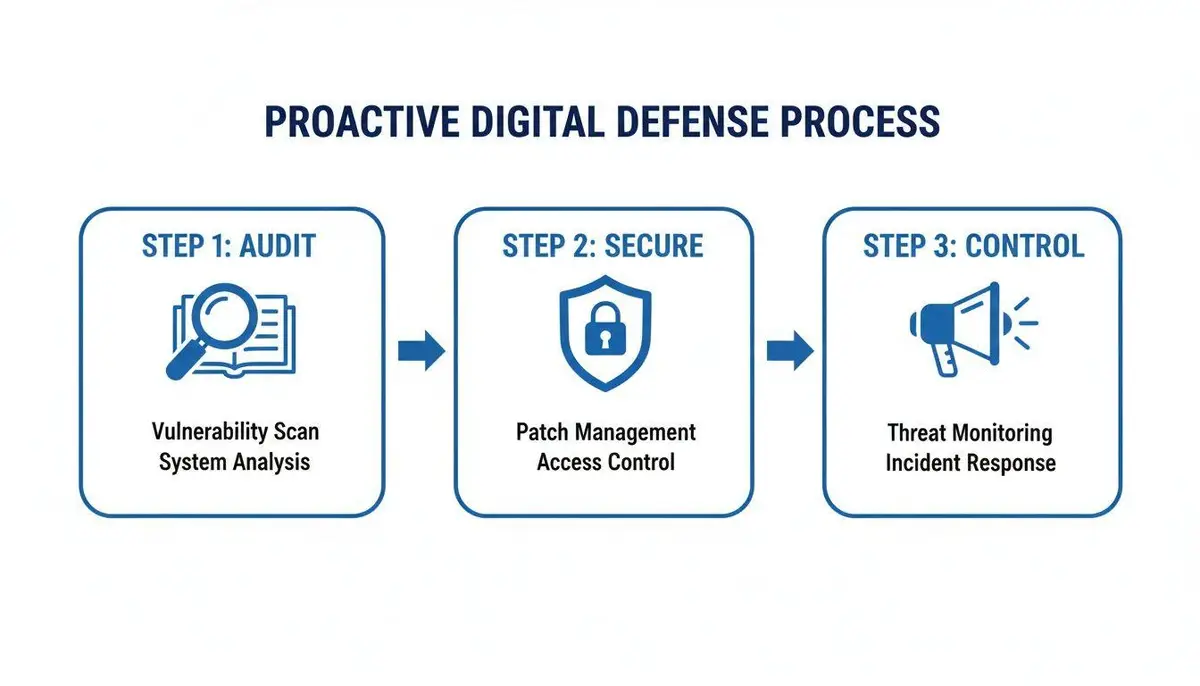
A powerful crisis response does not materialize from nothing. It is built on a foundation of proactively auditing vulnerabilities, securing assets, and controlling your digital footprint long before a problem arises.
The Triage And Action Protocol
Once your team is activated, the next step is triage. The objective is to assess the threat, pinpoint the attack vector, and launch a multi-pronged counterattack within hours, not days.
Consider a common scenario: an anonymous blog post surfaces alleging business misconduct, timed to disrupt the final stages of a major transaction. The content is engineered to be discovered during last-minute due diligence, creating just enough doubt to kill the deal.
In this event, your protocol must be immediate and decisive. The content removal specialist conducts an immediate damage assessment, analyzing the hosting platform, tracing the author’s digital breadcrumbs, and evaluating the risk of viral amplification to identify the fastest takedown method. Concurrently, legal and cyber-forensic teams work on source identification, potentially issuing subpoenas to hosting companies to unmask the attacker.
Based on this analysis, the team initiates takedown procedures. These actions are executed in parallel. While the legal team files court documents, the technical team may execute a suppression campaign, rapidly creating and promoting authoritative content to bury the negative article on the second or third page of Google, rendering it invisible. This dual-pronged attack of source removal and search result suppression is the signature of a professional reputation defense, creating redundancy and ensuring active mitigation of financial fallout.
How Content Removal Actually Works
When damaging content (a leaked document, a false accusation, an impersonation) surfaces online, the objective is its elimination. In the context of online reputation, elimination is achieved through two distinct strategies: source removal and de-indexing. Understanding this distinction is key to a permanent solution.
Source removal is the primary objective: permanent deletion of the content from its hosting website or server. A defamatory article, a misleading blog post, a bad-faith review, gone, as if it never existed.
When a website owner is uncooperative, anonymous, or legally protected, we employ de-indexing. This surgical approach removes the content from search engine results. While the page may technically persist on an obscure server, it becomes undiscoverable via Google, Bing, or DuckDuckGo.
It is a common mistake to view de-indexing as a lesser alternative. In reality, it is an incredibly effective strategy. If an attack cannot be found on a search engine, it is essentially invisible to the 99% of individuals (investors, journalists, partners) who use Google for due diligence.
The Tools of the Trade
Content removal is not a matter of polite email requests. It is a structured, often legalistic process requiring deep knowledge of the web’s technical and legal infrastructure.
Our operational toolkit includes:
- DMCA Takedown Notices: The Digital Millennium Copyright Act is a powerful instrument. If an attacker uses your copyrighted material (photos, proprietary documents, substantial blocks of text) we can file a DMCA notice, which legally compels the hosting provider to remove the infringing content, often rapidly.
- Court Orders: For clear-cut defamation, a court order is the definitive weapon. A judicial order compelling the removal of specific libelous content is something platforms like Google cannot disregard. It provides the legal force needed to compel removal from even the most resistant offenders.
- Direct Platform Engagement: Major platforms operate under their own Terms of Service (TOS). We have mastered these rulebooks. Content involving harassment, impersonation, or privacy violations can often be removed by working directly through a platform’s internal abuse and safety channels. Knowing the correct contact and how to frame the violation is a specialized skill.
Successful deployment of these tools requires nuance. A legal strategy effective in the United States may be insufficient in the European Union, which has its own “right to be forgotten” legal framework. The protocol for engaging a major news publication is entirely different from that for an anonymous offshore forum. This is where experience is critical.
De-Indexing: Making Content Disappear from Google
When source removal is not a viable option, our focus shifts to making the problem invisible. Search engines offer specific channels for requesting URL removal, but their standards for acceptance are exceedingly high.
This is where the detailed work occurs. We present our legal arguments and court orders directly to the search engines through their dedicated legal portals.
A successful request submitted through these portals means the damaging link vanishes from search results, effectively erasing it from public view. Success depends on a flawless presentation of the legal or policy violation.
The process is complex. You can explore our playbook to understand the options to remove online content and see how these strategies are applied in real-world scenarios.
The Final Step: Ensuring It Stays Gone
Removing harmful content is a victory. Preventing its reappearance is a strategy.
A determined adversary may attempt to re-upload the material on a different site or under a new alias. Our work does not conclude with the initial removal.
We deploy continuous, AI-driven monitoring systems that constantly scan the web for new instances of the removed content. The moment a copy is detected, our removal workflow is automatically re-triggered. This relentless vigilance ensures the problem does not recur. It closes the loop, transforming a one-time takedown into a permanent digital shield for your reputation.
Choosing Your Reputation Management Partner

When your reputation is on the line, selecting a management partner is a decision with immediate and severe financial consequences. For an investor or family office under duress, this choice is as critical as selecting legal counsel for a merger or a top-tier auditor for a fund.
The market is saturated with agencies claiming expertise. The majority are traditional PR firms that have adopted digital terminology. They are adept at writing press releases but are out of their depth when confronting the legal and technical challenges of removing damaging content from the internet.
Your primary task is to differentiate a true removal authority from a publicist.
Beyond PR: The Core Competencies That Matter
Disregard glossy presentations and vague promises of “positive buzz.” When vetting a potential partner, focus entirely on their tangible capabilities.
A true specialist in this domain operates less like a marketing agency and more like a discreet law firm or a private intelligence unit. Their value is not in shaping a new narrative, but in the surgical removal and strategic suppression of a damaging one.
Your evaluation must center on four non-negotiable pillars:
- Verifiable Legal and Technical Expertise: The firm must demonstrate a deep, operational knowledge of internet law across multiple jurisdictions. This includes demonstrable experience using DMCA notices, securing court orders for defamation, and navigating the complex terms of service for hundreds of online platforms.
- Proprietary Removal Methodologies: Request a detailed walkthrough of their process. A generic response is a major red flag. A high-caliber firm will possess established, battle-tested workflows and proprietary software for tracking, analyzing, and executing takedowns at scale.
- Global Reach: A reputational attack can originate from any jurisdiction. Your partner must possess the infrastructure and experience to address threats hosted in Europe, Asia, or obscure offshore data havens, each with unique laws and protocols.
- An Ironclad Record of Discretion: Confidentiality is absolute. The firm must operate under strict NDAs and use secure, encrypted communication by default. Their entire operation must be invisible, protecting you from any public association with the removal itself.
Your ideal partner is not another vendor; they are a strategic defender of your financial interests. They must have the authority to compel web hosts to act, the technical skill to neutralize threats, and the discretion to ensure the entire operation remains confidential.
Critical Questions for Your Potential Partner
During the vetting process, you must cut through the sales pitch with questions that reveal a firm’s actual capabilities. Their answers will quickly separate specialists from generalists.
While our guide to the best reputation management companies offers a more detailed checklist, begin with these essential inquiries:
- What is your documented success rate for content removal versus de-indexing, and how do you measure it? A serious firm will possess this data and be able to articulate the strategic rationale for choosing one method over the other in specific scenarios.
- Describe your process for addressing a negative article from a major, reputable news publication. This question is a stress test. It reveals their understanding of the delicate negotiations, legal maneuvers, and suppression tactics required when source removal is not a simple option.
- What are your precise protocols for client confidentiality and data security? Demand specifics on NDAs, secure communication tools, internal data access controls, and post-engagement data handling policies.
- Can you provide anonymized case studies relevant to the investment sector, specifically involving financial defamation or data leaks? While client names are confidential, a true specialist can offer examples that prove their understanding of the unique pressures investors face.
The quality and detail of their responses will reveal their capacity to protect your reputation, and, by extension, your capital. Select a partner whose precision, authority, and discretion mirror the standards you apply to your own financial dealings.
Investor Reputation Management FAQs
In a reputational crisis, there is no time for theoretical discussion. You require direct answers. For investors, family offices, and their legal counsel, the questions are invariably pointed and urgent. These are the most frequent inquiries we address.
How Quickly Can Negative Content Be Removed?
The timeline depends entirely on the nature of the attack. A clear violation of platform rules, such as a fraudulent social media profile, can often be resolved within days, as we maintain direct channels with trust and safety teams at major platforms. Conversely, a complex case involving a defamatory article from a well-resourced news organization or content hosted in an uncooperative jurisdiction requires a legal strategy. Securing a court order can take several weeks or months. Following our initial assessment, we provide a precise, case-specific timeline.
Is Removing A Negative News Article Possible?
Yes, though it is one of the most demanding challenges in reputation management. Simply requesting that a publisher remove an article is almost always ineffective. We must therefore attack the problem from multiple angles simultaneously. Our approach includes legal pressure, where we may secure a court order for demonstrably false and damaging statements; strategic negotiation, where we build a case for an update, editor’s note, or retraction based on outdated or disproportionately harmful information; and digital suppression. When direct removal is not immediately feasible, suppression is our primary weapon, a sophisticated SEO campaign designed to bury the negative article deep in search results, rendering it effectively invisible.
What Distinguishes Your Service From A PR Agency?
The distinction is fundamental. A PR agency manages public perception by using press releases and media relationships to counteract negative press and change the conversation. We specialize in the technical and legal removal of the damaging content itself. We do not merely add to the conversation; we surgically remove the threat at its source. Our expertise lies in internet law, platform policies, and the complex procedures required to compel takedowns and permanently de-index content from search engines.
A PR firm works to change minds. We work to change search results. Our objective is surgical removal and suppression, not just shaping public opinion.
How Is Client Privacy Ensured?
Absolute discretion is the bedrock of our operations. For our clients, the solution must be as invisible as the problem. Every engagement is governed by a strict Non-Disclosure Agreement (NDA) from the initial consultation. All communications are conducted through secure, encrypted channels. Internally, we compartmentalize case details to ensure only the core team assigned to your file has access to sensitive information. Unlike a public-facing PR campaign, our work is engineered to be entirely clandestine. The financial stakes permit no other approach.
Data confirms this necessity. Research shows that 98% of investors research principals online before committing capital, and a single-star increase in online ratings can affect revenue by 5-9%. As this analysis of reputation management statistics clarifies, there is a direct financial link between your online profile and your success. Discreet, effective management is not a luxury; it is an essential component of asset protection.
When your capital and credibility are tied to your digital footprint, you cannot afford to leave it to chance. The team at ContentRemoval.com has the specialized legal and technical experience needed to permanently remove damaging online content and secure your reputation. Schedule your confidential assessment today.
Frequently asked questions
How does online reputation affect an investor’s deal flow?
Limited partners, co-investors and counterparties search a principal’s name before committing, and a negative article, misleading public record or targeted smear can end a transaction before a pitch is delivered. Networks built on trust quietly exclude principals with problematic profiles from off-market opportunities.
Can a negative news article about an investor be removed?
It is one of the hardest matters in the field, and a simple removal request to a publisher rarely works. The article describes attacking it from several angles at once: legal pressure where statements are demonstrably false, negotiation for an update or editor’s note where the piece is outdated, and suppression when direct removal is not feasible.
Who should be on an investor’s crisis response team?
Three pre-vetted relationships: a lawyer who works specifically in internet law and defamation, a crisis communications firm to manage journalists and nervous limited partners, and a content removal specialist to get the material offline. Trying to vet these experts mid-crisis is a formula for failure.