
To remove a damaging article about you, assess its search ranking, publisher authority and severity, build a documented case file, then approach the right editor with a factual correction request rather than a legal threat. If the publisher refuses, legal routes include defamation, privacy and DMCA claims, court-ordered de-indexing, and suppression when removal is not possible.
Key facts
- At major outlets, contact a standards or section editor; reporters are often barred from altering published work.
- Public figures suing for libel in the US must prove actual malice, a high standard.
- GDPR Article 17 lets people with EU ties ask search engines to delist outdated or inaccurate links.
- A suppression campaign to control page one typically runs 6 to 12 months.
Where ContentRemoval.com comes in. ContentRemoval.com approaches news articles in a fixed order: a case file first, then the editor with authority to act, then de-indexing or legal escalation where the publisher refuses, and suppression where the piece cannot come down. Executives and public figures usually reach us through a chief of staff, a publicist or their lawyer. A free 15-minute Exposure Scan maps which articles are removable and which are not, and the report is yours to keep. Get a Free, Confidential Exposure Scan or read how our news article removal work is done.
When a damaging article surfaces online, the impulse is to react emotionally. This is a mistake. A calculated, strategic response is required. Success in removing damaging content depends on a methodical approach: a clear-eyed assessment, meticulous evidence collection, and precise execution of direct publisher outreach or, when necessary, legal and technical campaigns.
Assessing the Damage of Negative Online Articles
Discovering a negative article online is more than a personal slight; for executives, investors, and public figures, it is a direct threat to livelihood and legacy. This is not about a bruised ego. It is a tangible business risk.
A single misleading article can vaporize investment opportunities, sink a board appointment, or disqualify you from an executive search before you are even aware of the opportunity. The core anxiety stems from a loss of control over your own narrative. An article from years past, perhaps concerning a settled lawsuit or a misreported business deal, can dominate the first page of Google, defining you to anyone conducting due diligence. It becomes a digital liability inflicting damage repeatedly.
The Tangible Business Impact
Consider a common scenario: a negative news story from 2015 regarding a resolved business dispute remains the primary search result for your name in 2026. The consequences are significant.
Reputation management data shows that over 85% of recruiters and executives research candidates online before initiating contact. A single piece of negative content on the first page can reduce executive-level prospects by as much as 70%. The reach of such a story is often amplified exponentially across professional and social networks, compounding the damage.
The most significant error is to underestimate the article’s long-term impact. What may appear as a minor annoyance today can become the sole reason a multi-million-dollar deal collapses or a career-defining opportunity vanishes. The question is not if it will cause harm, but how much and for how long.
A Framework for Immediate Triage
To move from anxiety to action, you must perform triage. Is this a five-alarm fire or a slow burn? The answer depends on quantifiable factors: the article’s search ranking, the publisher’s authority, and the nature of the claims. An accusation of financial misconduct from a major news outlet represents an infinitely more urgent threat than a critical post on an obscure blog.
A structured evaluation is necessary to categorize the risk and determine the appropriate level of response. This initial assessment dictates whether an aggressive, immediate action is warranted or if a more measured approach will suffice.
Initial Damage Assessment Framework
| Risk Factor | Low Impact Scenario | High Impact Scenario | Recommended Urgency |
|---|---|---|---|
| Search Ranking | Article appears on page 3+ of Google for your name. | Article is in the top 5 results on page 1 of Google. | High |
| Publisher Authority | Published on a small, unknown blog or personal site. | Published by a major news outlet (e.g., Forbes, NYT) or industry journal. | High |
| Content Severity | A negative opinion or a minor, factual inaccuracy. | Allegations of illegal activity, fraud, or personal misconduct. | Critical |
| Social Media Reach | The article has few or no shares/comments. | The article is being actively shared on LinkedIn, X (Twitter), or Facebook. | High |
| Business Impact | Unlikely to be seen by key stakeholders. | Directly impacts current deals, hiring, or investor relations. | Critical |
Understanding the scale of the problem is the foundation of a proactive strategy. Our reputation monitoring services provide the critical intelligence required for this crucial first step.
Building Your Case for Content Removal
When a damaging article appears, the instinct is to fire off angry emails. Resist this urge. The most effective removal strategy begins with quiet, methodical preparation.
Before contacting any publisher or legal counsel, you must build an unimpeachable case file. This process mirrors a legal team preparing for a high-stakes trial, every piece of evidence is gathered, organized, and cataloged. This is a matter of precision, not emotion. A disorganized approach signals to the opposing party a lack of serious intent.
Documenting the Digital Footprint
First, capture every instance of the harmful content. It is insufficient to merely bookmark the primary article. You must trace its dissemination across the web, from the original source to every blog, social media post, or forum that has republished or quoted it.
For each URL, you must collect:
- The exact URL where the content is published.
- Time-stamped, full-page screenshots of the page. Do not crop; the full context, including the date and time from your computer’s toolbar, is essential.
- PDF copies of each webpage to archive and preserve the page’s original format.
This level of detail creates an undeniable record, protecting you against any future claims that the content was altered or never existed. This evidence is your foundation, even if the publisher quietly modifies the page later.
Isolating and Analyzing Specific Claims
With a complete inventory, you must dissect the article’s content. Shift from a general sense of being wronged to a specific, itemized list of false or misleading statements. Create a spreadsheet. In one column, list the specific claim. In the adjacent column, detail the evidence that proves its falsehood.
For example, if an article claims a business deal failed due to your “incompetence,” your evidence column might include board meeting minutes showing a unanimous decision to pivot or emails confirming a partner withdrew for independent financial reasons.
A well-documented case file transforms you from a frustrated individual into a credible plaintiff with a provable case. It forces the publisher to contend with facts, not your anger, thereby altering the power dynamic of any negotiation.
This entire process, from quantifying the spread to evaluating the claims, is about preparing a strategic response.
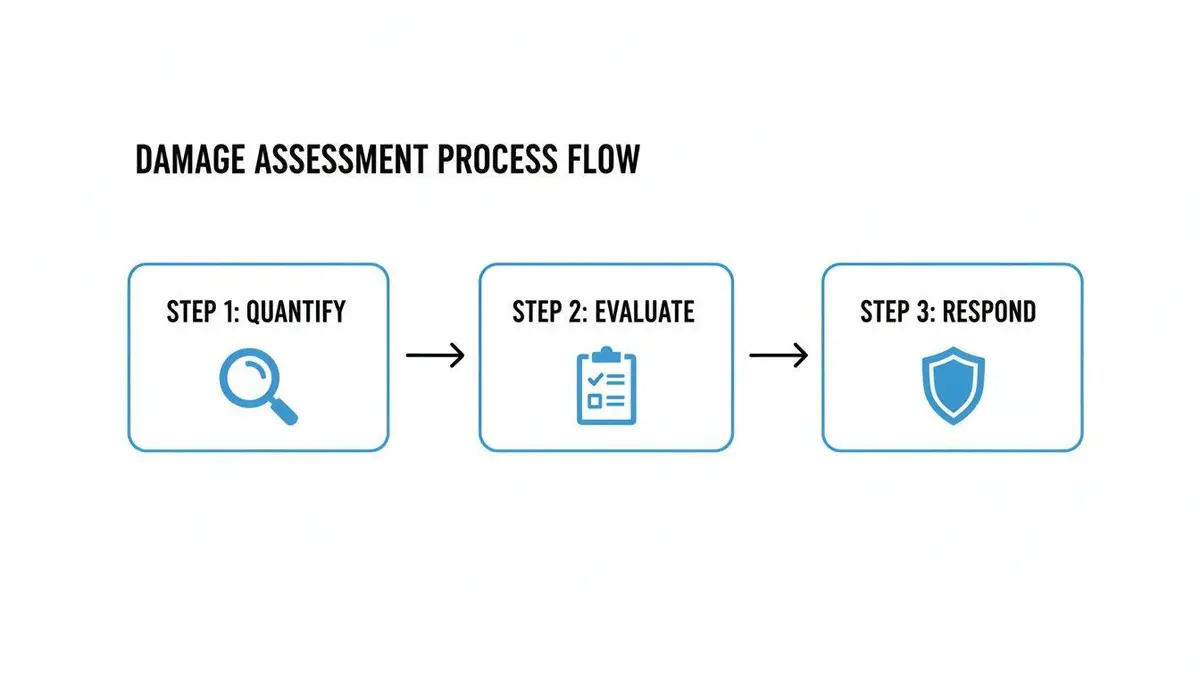
This methodical approach is critical, particularly when claims may constitute defamation. Knowing the distinction between a negative opinion and an actionable falsehood is key. If you are uncertain about this distinction, you can learn more about what constitutes online defamation in our guide for executives.
Building this case file is the single most important action you can take to secure removal. It strengthens your position for every subsequent step, whether direct negotiation, a platform takedown request, or a legal challenge. Only with this consolidated, irrefutable evidence are you prepared to engage.
Executing Direct Publisher and Platform Takedowns

With your evidence organized, the delicate phase of direct contact begins. The initial outreach can determine the outcome of the entire effort. A clumsy first email may be ignored or, worse, cause the publisher to become defensive, forcing you into more expensive and protracted battles.
The key is to frame your request as a matter of factual accuracy, not a personal complaint. You are assisting the publisher in correcting the public record, an objective any credible source should support.
Who to Contact: Finding the Right Person
Submitting your request to a generic “contact us” form is an ineffective strategy. You must identify the individual with the authority to enact change.
- Major News Organizations: Do not email the journalist directly. At institutions like The Wall Street Journal or Bloomberg, reporters are often contractually barred from altering published work. You must escalate. Identify a public editor, a standards editor, or the editor responsible for the specific section (e.g., the business desk). Their role is to protect the publication’s integrity, making them the appropriate audience for a well-supported correction request.
- Smaller Blogs and Digital Publications: The protocol differs for smaller, independent sites. Here, the author may also be the editor and publisher. A direct, professional email to the author can often yield a swift resolution.
Your approach must be tailored to the organization. A large media conglomerate has formal processes, whereas a small blog may be more responsive to a direct appeal.
A successful request is never emotional. It is a business communication. Present the facts, support them with evidence, and provide the publisher with a clear, logical reason to act. The objective is to make correcting or removing the article the path of least resistance for them.
Communicating with these gatekeepers is a specialized skill. We detail the specifics in our professional guide on how to ask a journalist to remove an article.
How to Frame Your Request
Your initial email must be professional, concise, and devoid of threats. State your purpose directly: introduce yourself, provide the article’s URL, and identify the specific statements that are factually incorrect.
This is where your evidence file is deployed. For every false claim, attach or link to the corresponding proof that debunks it. Make the factual errors impossible to dispute or ignore.
Do not open with legal threats. Mentioning “defamation” or “lawsuit” in a first communication is a tactical error. It immediately puts the publisher on the defensive and escalates the matter to their legal team, foreclosing the possibility of a simple, voluntary resolution. Adhere strictly to the principles of journalistic ethics and factual accuracy.
Tackling Automated Platform Systems
When content spreads on platforms like Google or social media, you are engaging with an algorithm, not a person. Your initial report will be processed by an automated system designed to handle thousands of complaints per hour.
Success requires speaking the platform’s language. You must identify the specific rule or term of service the content violates. A generic complaint that a post is “harmful” will be dismissed.
- Google De-indexing: Google provides distinct forms for different violations, such as outdated information, privacy violations, or content ruled defamatory by a court. Selecting the correct form is critical. For instance, a request based on outdated personal information has a higher probability of success for a factually true but now irrelevant and harmful article than a defamation claim would.
- Social Media Takedowns: Platforms like X (formerly Twitter) and LinkedIn maintain detailed policies on harassment, privacy, and misinformation. When filing a report, you must quote the exact policy that has been violated and explain precisely how the content breaches it.
Navigating these automated systems demands patience. An initial rejection is standard. The key is to analyze the reason for denial, refine your argument to better align with the platform’s rules, and resubmit. A methodical approach is the only way to remove damaging articles about me from the search results and feeds where they cause the most harm.
If direct outreach stalls or is rejected, it is not a final defeat. It is a signal to escalate to more powerful legal and technical strategies.
Leveraging Legal Frameworks for Forced Removal
Polite requests have been sent. The publisher has either ignored you or refused to act. This is the point where the strategy shifts. The case file you have meticulously built is no longer merely a tool for negotiation; it is the foundation of your legal posture.
This is not capitulation. It is a strategic escalation. For high-net-worth individuals and executives, legal action is often the only viable path when a publisher is intransigent or the reputational damage is too severe to ignore. You are asserting your legal rights to defend your career, reputation, and financial well-being from false and damaging content.
The Grounds for Compelled Removal
Before engaging legal counsel, you must identify the specific legal violation. A general sense of being wronged is insufficient in a legal setting; a specific cause of action is required. The most common and effective legal avenues are defamation, privacy violations, and copyright infringement.
- Defamation (Libel): This is the most direct legal weapon against a damaging article. To succeed in a libel case, you must prove the article contains a false statement of fact (not opinion), was published to a third party, and caused quantifiable damage to your reputation. The standard is high, particularly for public figures, who must also prove “actual malice”: that the publisher knew the statement was false or acted with reckless disregard for the truth.
- Invasion of Privacy: This cause of action applies when an article exposes private, embarrassing facts that have no legitimate public interest, such as confidential health records or a private family matter. The viability of this claim is highly dependent on the jurisdiction and the specific nature of the disclosure.
- Copyright Infringement (DMCA): This is a powerful and frequently overlooked strategy. If the article uses your copyrighted material without permission (such as a professional headshot, a proprietary company photograph, or text you authored) you can file a DMCA (Digital Millennium Copyright Act) takedown notice. This notice legally compels the website’s hosting provider to remove the infringing content to avoid their own liability. It is crucial to understand copyright policies as they can provide a firm legal basis for removal when your intellectual property is used against you.
Each of these legal paths requires a distinct strategy and specific evidence.
Jurisdictional Realities: The US vs. The EU
The jurisdiction where the article is published and where you reside fundamentally alters your legal options. The regulations for content removal in the United States and the European Union are vastly different, a reality every global executive must understand.
In the U.S., the First Amendment provides robust protection for free speech, making it exceedingly difficult to force a publisher to remove content, even if it is false and damaging. American courts are reluctant to issue orders that could be interpreted as prior restraint on speech. A more common objective is to obtain a court order for de-indexing, which directs search engines like Google to remove the article from their results, rendering it effectively invisible to the public.
In the United States, obtaining a court order for de-indexing is often the most pragmatic and achievable legal victory. It neutralizes the threat by cutting off public access via search, even if the source article technically remains online.
The EU, by contrast, provides a more powerful tool through its General Data Protection Regulation (GDPR). Specifically, Article 17, the “Right to be Forgotten,” allows individuals to request that search engines remove links to personal information that is outdated, irrelevant, or inaccurate. While not an absolute right, it shifts the burden to the search engine to justify the continued publication of the link. This dramatically alters the power dynamic and can be a potent mechanism for anyone with ties to Europe to remove damaging articles about me from public view.
The Role of a Court Order
When a publisher refuses to cooperate, a court order becomes the ultimate instrument of enforcement. It is a legally binding directive from a judge that can compel a party (be it the original publisher, a search engine, or a web host) to take specific action.
Obtaining a court order is a serious undertaking. It requires filing a lawsuit, presenting all gathered evidence, and convincing a judge that the content meets the strict legal standard for removal or de-indexing. While it can be a costly and lengthy process, a court order offers a definitive resolution that negotiation cannot. It transforms your request into a legal mandate. For executives and public figures facing persistent reputational attacks from false information, pursuing a court order is often the only path to truly reclaiming their public narrative.
Mastering Suppression When Removal Is Impossible

You have exhausted all avenues for removal, but the article remains online. Perhaps it is from a major news outlet shielded by the First Amendment, or a court has determined the story does not legally constitute libel. This is not a dead end. It is a pivot point.
When removal is not an option, you must suppress the content. Digital suppression is the strategic process of taking control of what appears in search results for your name. It is an offensive campaign designed to build a firewall of positive, authoritative content that displaces the damaging material from the first page of Google into obscurity.
The Principles of Digital Suppression
Suppression is fundamentally a contest for search engine real estate, a targeted Search Engine Optimization (SEO) campaign. The objective is to create and promote a network of positive web properties that search engines deem more credible and relevant than the negative article. This is not a matter of simply updating a LinkedIn profile; it is a dedicated, ongoing, and engineered effort.
The strategy involves building a digital fortress around your name, one that you own and control. It requires a strategic mix of content creation, media outreach, and profile development designed to dominate search results.
A robust suppression campaign is built on several pillars:
- A High-Authority Personal Website: A professionally designed personal website serves as the cornerstone of your new narrative and the central hub for all controlled information about you.
- Optimized Social & Professional Profiles: Every profile, from LinkedIn and industry-specific directories to personal social accounts, must be meticulously curated to project the desired professional image.
- Third-Party Thought Leadership: Publishing articles under your name on respected industry platforms or participating in media interviews establishes you as an expert and, more importantly, creates powerful, positive search results that you do not own but that work to your benefit.
This is not a quick fix but a long-term project to construct a resilient and accurate public profile.
Executing a Strategic Content Campaign
The first step is to inventory all existing digital assets under your control. This typically includes your LinkedIn page, your company website biography, and any social media accounts. These are immediate targets for optimization: update them with professional headshots, detailed and positive information, and content that showcases your expertise.
The next phase is creating new digital assets. Securing the .com domain for a client’s full name and building a personal website is a standard and critical starting point. This site becomes the definitive source of truth, highlighting career achievements, professional philosophy, and philanthropic work.
Simultaneously, we identify opportunities for features on other high-authority websites. This may involve authoring a bylined article for an industry journal, appearing as a guest on a relevant podcast, or being quoted in a news story. Each placement is another positive asset that competes directly with the damaging article for first-page ranking.
Suppression is not about creating noise; it is about creating authority. A single well-placed article on a top-tier publication can have more suppressive power than dozens of low-quality blog posts. The strategy is to build a wall so high and so credible that the negative content cannot scale it.
While building this firewall, remain vigilant for legal opportunities. A firm grasp of understanding copyright policies can sometimes reveal a path to removal if your intellectual property was used without permission. Even within a suppression campaign, the objective is to remain alert for any chance to directly remove the negative content.
Ultimately, the goal is to render the negative article irrelevant by surrounding it with so much positive, authoritative, and more recent information that it loses all influence. You may never be able to fully remove damaging articles about me, but you can absolutely ensure they no longer define you. This is not merely cleaning up a problem; it is about constructing the public narrative you deserve.
Frequently Asked Questions on Article Removal
When dealing with a damaging article online, clients need direct answers, not vague assurances. Here, we address the most critical questions we receive, providing a realistic assessment of the process.
How Long Does It Take to Remove a Damaging Article?
There is no standard timeline. The duration required to remove damaging articles about me is entirely dependent on the strategy employed.
In cases involving smaller blogs or cooperative publishers where the facts are unequivocally on our side, direct negotiation can sometimes secure removal within a few weeks. This represents the best-case scenario.
For more resistant situations, the timeline extends. A formal legal approach involving cease-and-desist letters can take several months. If removal is not feasible and the strategy pivots to a suppression campaign, you should anticipate a 6 to 12-month project to achieve dominance on the first page of search results. The publisher’s disposition, the legal jurisdiction, and the article’s existing authority are the primary variables.
Is It Possible to Permanently Remove an Article?
Permanent deletion from the source website is the primary objective and is often achievable, particularly if the content is factually incorrect, defamatory, or violates a platform’s terms of service. Once the article is removed from the server, the URL is defunct.
The challenge is that damaging articles are rarely confined to a single location. They are copied, quoted on other blogs, shared on social media, and discussed in forums. In these instances, achieving 100% eradication from the internet is unrealistic. The strategy then becomes a two-front campaign: secure the removal of the original, high-authority article, then aggressively suppress the lower-authority copies to render them practically invisible.
Complete removal from every corner of the web is a myth. The effective goal is to remove the article from the source and from search engine results. This neutralizes its power to do harm. Leftover scraps on obscure, unindexed sites have virtually zero impact.
What Is the Difference Between Removal and De-indexing?
This is a critical distinction. Both are powerful tools, but they operate differently.
- Removal is a complete deletion. The article is expunged from the website’s server, and the URL leads to an error page. It is gone. This is the ideal outcome.
- De-indexing is a more subtle but equally effective solution. The article technically remains on the site but is hidden from search engines like Google. It will not appear in search results for your name; a person would need the exact direct link to find it.
When a major news organization will not remove an article due to journalistic policies, they can often be persuaded to de-index it. For most clients, this constitutes a significant victory. It achieves the primary objective: ensuring the damaging story is not discovered by clients, employers, and other key stakeholders.
When your reputation is on the line, you require a team that operates with precision, discretion, and speed. At ContentRemoval.com, we specialize in delivering definitive solutions for high-stakes reputational threats. Begin with a confidential assessment to receive your strategic action plan today.