
Your personal online reputation is the picture of your character and credibility that forms when anyone searches your name: social posts, news coverage, reviews, public records and images combined. Protecting it means auditing what appears, building positive content you control, tightening privacy settings, opting out of people-search sites, monitoring new mentions and removing or suppressing damaging material when it appears.
Key facts
- Audit by searching your full name in quotes on Google, Bing, DuckDuckGo and Yahoo, including name variations.
- Negative content splits into defamation, outdated information, privacy violations and unfair reviews, each needing different tactics.
- People-search opt-outs typically take 7 to 30 days to process and often need resubmitting.
- Defamation generally requires a false statement of fact, publication, fault and provable damages.
Where ContentRemoval.com comes in. ContentRemoval.com steps in when the damaging material is beyond what you can fix with privacy settings and new content: defamatory articles, privacy violations, leaked images and search results that keep resurfacing. Clients, their assistants and their lawyers all make contact. A free, confidential 15-minute Exposure Scan maps what is removable and what would need suppression instead, and the report is yours to keep. Get a Free, Confidential Exposure Scan or read how our reputation management work is done.
Your personal online reputation represents the digital reflection of your character, accomplishments, and credibility in the eyes of anyone who searches for you online. Every social media post, news article, review, comment, and mention collectively shapes how employers, clients, investors, and even potential romantic partners perceive you. In 2026, with artificial intelligence powering search engines and social platforms, the importance of actively managing what appears when someone searches your name has never been more critical. A single negative article or damaging piece of content can resurface repeatedly, influencing opportunities and relationships for years to come.
Understanding Your Digital Footprint
Your digital footprint consists of every trace of your online activity, both content you’ve created and information others have published about you. This includes social media profiles, professional networking sites, blog posts, comments on forums, news articles, court records, images, videos, and countless other data points scattered across the internet.
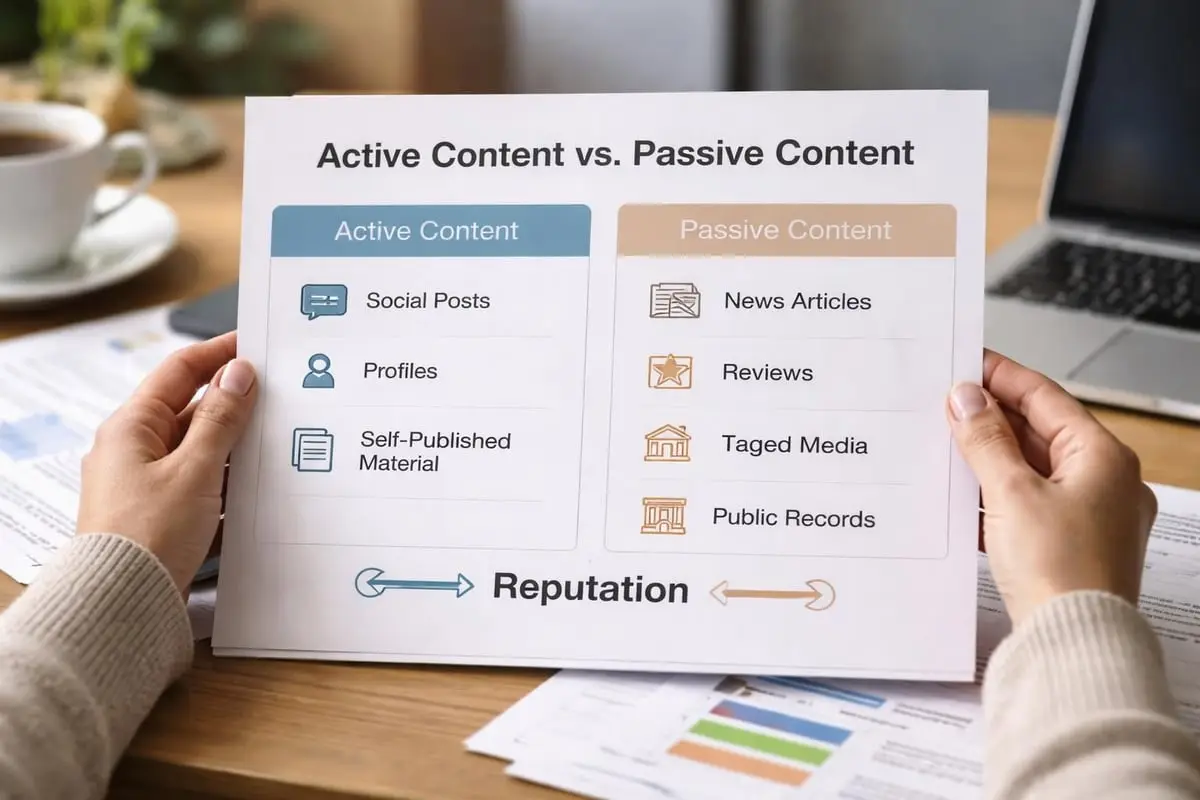
Active vs. Passive Digital Presence
Active contributions represent content you intentionally create and publish. These include LinkedIn posts, Twitter threads, Instagram photos, blog articles, YouTube videos, and professional portfolios. You control these elements directly and can typically edit or remove them at will.
Passive mentions encompass everything published about you without your direct involvement. News coverage, reviews from clients or customers, tagged photos, third-party blog mentions, public records, and comments from others fall into this category. These prove significantly more challenging to manage or remove.
The interplay between active and passive content determines your overall personal online reputation. Strategic management requires addressing both components simultaneously.
Why Personal Online Reputation Matters in 2026
According to recent research on online identity management, 95% of employers conduct online research on candidates before making hiring decisions. Your personal online reputation directly impacts career advancement, business opportunities, personal relationships, and financial prospects.
Professional Opportunities
Recruiters and hiring managers spend an average of 37 seconds reviewing online profiles before deciding whether to pursue a candidate. Negative search results can eliminate you from consideration before you ever submit an application. Conversely, a strong personal online reputation positions you as an industry authority, attracting opportunities rather than requiring you to chase them.
Business Development
For entrepreneurs, consultants, and executives, your personal online reputation functions as a trust signal for potential clients and partners. Buyers research individuals behind companies, especially for high-value services or long-term partnerships. Damaging content about you can derail million-dollar deals regardless of your company’s quality.
Investment and Funding
Venture capitalists and angel investors routinely conduct deep background research on founders. Your personal online reputation influences their confidence in backing your venture. A single controversial article or lawsuit mention can raise concerns that prevent funding rounds from closing.
Personal Relationships
Beyond professional contexts, your digital presence affects personal relationships. Potential romantic partners often search for you online before first dates. Community organizations, schools, and social groups review online information when considering new members or volunteers.
Conducting a Personal Online Reputation Audit
The practice of egosurfing, or searching for your own name online, represents the essential first step in reputation management. However, a thorough audit requires systematic methodology beyond simple name searches.
Search Engine Assessment
Begin by searching your full name in quotation marks across multiple search engines:
- Google (standard and incognito mode)
- Bing
- DuckDuckGo
- Yahoo
Use variations of your name, including maiden names, nicknames, and middle names. Record the first 50 results for each search, noting both positive and negative content.
Social Media Review
Audit all social media platforms where you maintain profiles:
| Platform | Content to Review | Privacy Settings |
|---|---|---|
| Posts, endorsements, recommendations | Public visibility | |
| Posts, photos, comments, tags | Friend permissions | |
| Twitter/X | Tweets, retweets, replies, likes | Account protection |
| Posts, stories, tagged content | Account privacy | |
| TikTok | Videos, comments, duets | Profile visibility |
Review content going back several years. What seemed harmless in 2020 may appear differently in today’s context.
Image and Video Search
Conduct reverse image searches using Google Images and specialized tools. Videos often persist on platforms long after you’ve forgotten about them. Check YouTube, Vimeo, TikTok, and other video platforms for content featuring you.
Public Records and Data Brokers
Numerous websites aggregate public records, including:
- Court documents and legal filings
- Property records
- Business registrations
- Professional licenses
- Voter registration data
Data broker sites collect and sell this information. Identifying which sites list your personal data enables targeted removal efforts through digital footprint cleanup services.

Building a Positive Personal Online Reputation
Strategic reputation building requires consistent effort across multiple channels. The most effective approach combines creating positive content with actively managing your digital presence.
Professional Content Development
Establish yourself as a credible voice in your industry through regular content creation:
- Publish thought leadership articles on LinkedIn, Medium, or industry publications
- Maintain an updated professional website showcasing your expertise and accomplishments
- Contribute guest posts to reputable blogs and online magazines
- Participate in podcast interviews discussing your area of expertise
- Create educational videos sharing valuable insights with your target audience
Each piece of positive content you create pushes negative or irrelevant results further down in search rankings.
Social Media Optimization
Optimize your social media profiles to reinforce your professional brand:
- Use consistent professional headshots across all platforms
- Write compelling bio descriptions with relevant keywords
- Share valuable content regularly to maintain active engagement
- Engage authentically with industry peers and thought leaders
- Curate content that aligns with your personal brand values
Professional Networking Platforms
LinkedIn serves as the cornerstone of professional personal online reputation. Strategies for LinkedIn optimization include:
- Request recommendations from colleagues, clients, and supervisors
- Publish long-form articles demonstrating expertise
- Engage with others’ content through thoughtful comments
- Join and participate in relevant industry groups
- Showcase certifications, awards, and accomplishments
Personal reputation management extends beyond LinkedIn to industry-specific platforms relevant to your field.
Managing Negative Content
Even with proactive reputation building, negative content may appear online. The approach to managing damaging material depends on its nature, location, and legal standing.
Content Categorization
Different types of negative content require distinct strategies:
Defamatory Content: False statements presented as fact that damage your reputation may qualify for legal removal. Reputation management specialists can evaluate whether content meets legal thresholds for defamation and pursue appropriate removal strategies.
Outdated Information: Accurate content that no longer represents current circumstances, such as old mugshots, bankruptcy filings from years past, or employment terminations, may be removable depending on jurisdiction and platform policies.
Privacy Violations: Content exposing personal information, including addresses, phone numbers, financial data, or intimate images shared without consent, often violates platform terms of service or privacy laws.
Negative Reviews: Unfair or fake reviews damage professional reputations but prove challenging to remove unless they violate platform guidelines or contain demonstrably false claims.
Removal vs. Suppression Strategies
Two primary approaches exist for addressing negative content:
Direct removal involves having content taken down from its source through legal requests, platform policy violations, or copyright claims. This represents the most effective solution when feasible.
Suppression pushes negative content beyond the first page of search results through creating and promoting positive content. While the negative material remains accessible, most searchers never look past page one.
Services specializing in content removal can evaluate which approach suits your specific situation and execute appropriate strategies with discretion.
Platform-Specific Removal Tactics
Different platforms require different approaches:
- Google Search Results: Request removal of specific URLs through Google’s legal removal request form or de-indexing processes
- Social Media Platforms: Report content violating community guidelines or terms of service
- News Websites: Contact editorial teams or legal departments with documented inaccuracies
- Review Sites: File disputes through official channels when reviews violate platform policies
- Image Hosting Sites: Submit DMCA takedown notices for copyright violations
Privacy Protection and Data Removal
Protecting personal information represents a critical component of personal online reputation management. Data brokers and people search websites aggregate and sell personal details without your explicit consent.
People Search Site Opt-Outs
Dozens of people search websites expose personal information including:
- Current and previous addresses
- Phone numbers and email addresses
- Age and birth dates
- Relatives and associates
- Property ownership records
- Court records and judgments
Each site maintains its own opt-out process, typically requiring you to:
- Locate your profile on the website
- Submit an opt-out request with verification
- Wait for processing (typically 7-30 days)
- Monitor for reappearance and resubmit requests
Given the time-intensive nature of this process, many individuals utilize online privacy services that handle opt-outs across dozens of data broker sites simultaneously.
Social Media Privacy Settings
Review and adjust privacy settings across all platforms:
- Limit who can see past posts and tagged content
- Disable location tracking and geotagging
- Restrict who can tag you in photos and posts
- Control search engine indexing of your profile
- Manage app permissions and third-party access
Regular privacy audits ensure settings remain current as platforms frequently update their privacy options and default settings.
Monitoring Your Personal Online Reputation
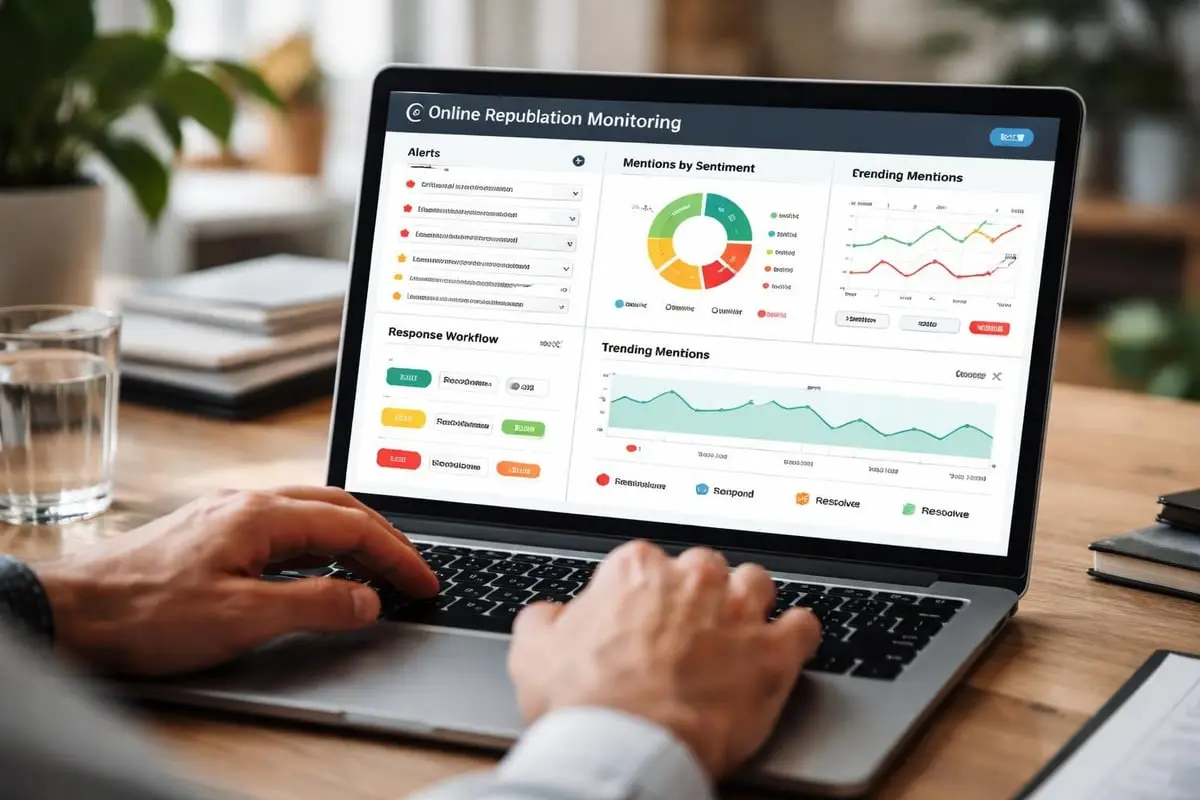
Continuous monitoring enables you to identify new mentions, respond to emerging threats, and measure the effectiveness of your reputation management efforts. According to reputation management experts, proactive monitoring proves more cost-effective than reactive damage control.
Automated Monitoring Tools
Several tools automate the process of tracking online mentions:
| Tool Type | Functionality | Best For |
|---|---|---|
| Google Alerts | Email notifications for name mentions | Basic monitoring |
| Brand24 | Real-time social media monitoring | Active social presence |
| Mention | Cross-platform mention tracking | Comprehensive coverage |
| Talkwalker | Advanced analytics and sentiment analysis | Data-driven insights |
Set up alerts for your name, common misspellings, professional titles, company names, and associated keywords.
Manual Check Procedures
Supplement automated monitoring with monthly manual reviews:
- Conduct fresh search engine queries using various name combinations
- Review the first three pages of results for new content
- Check social media platforms for new tags or mentions
- Monitor industry-specific forums and discussion boards
- Review professional review sites relevant to your field
Document findings in a tracking spreadsheet to identify patterns and trends over time.
Response Protocols
Establish clear protocols for responding to different scenarios:
Positive Mentions: Engage, thank, and share to amplify positive coverage
Neutral Mentions: Monitor without immediate action; evaluate for engagement opportunities
Negative Mentions: Assess severity, determine appropriate response, and act decisively based on threat level
Crisis Situations: Implement emergency response procedures, including professional assistance when necessary
Crisis Management and Reputation Repair
Despite preventive measures, reputation crises occur. Swift, strategic action minimizes damage and accelerates recovery.
Crisis Identification Thresholds
Not every negative mention constitutes a crisis. Factors indicating crisis-level situations include:
- Negative content appearing in the top three search results
- Viral spread across social media platforms
- Mainstream media coverage of negative incidents
- Direct threats to employment or business opportunities
- Content involving legal matters or criminal allegations
Immediate Response Actions
When facing a reputation crisis, take immediate steps:
- Document everything: Screenshot all negative content, comments, and shares before material changes or disappears
- Assess factual accuracy: Determine whether content contains false, misleading, or defamatory statements
- Pause public communication: Avoid reactive social media posts or public statements without strategy
- Consult legal counsel: Determine potential legal remedies for defamatory or privacy-violating content
- Engage professionals: Consider specialists in reputation repair who manage sensitive situations discreetly
Strategic Response Options
Different situations require different response strategies:
Public acknowledgment and apology: When you’ve genuinely made a mistake, sincere acknowledgment and corrective action often prove most effective
Factual correction: For inaccurate information, provide evidence-based corrections through appropriate channels
Legal action: When content is clearly defamatory, privacy-violating, or otherwise illegal, legal remedies may be necessary
Strategic silence: Sometimes ignoring minor negative mentions prevents amplifying issues that would otherwise fade quickly
Professional guidance from specialists in managing online reputation helps determine which approach best suits your specific circumstances.
Long-Term Reputation Maintenance
Personal online reputation management requires ongoing commitment rather than one-time fixes. Establishing sustainable practices ensures long-term protection and growth.
Content Creation Schedule
Maintain consistent visibility through regular content publication:
- Publish at least one substantive article or blog post monthly
- Share curated content on social media 3-5 times weekly
- Engage with industry conversations and trending topics
- Update professional profiles quarterly with new accomplishments
- Refresh website content and portfolio examples regularly
Relationship Building
Your network significantly influences your personal online reputation. Cultivate relationships that generate positive mentions and endorsements:
- Request LinkedIn recommendations from satisfied clients and colleagues
- Participate in industry events and conferences (generating positive mentions)
- Collaborate with respected peers on projects and content
- Support others’ work through shares, comments, and endorsements
- Build genuine relationships rather than transactional networking
Periodic Comprehensive Audits
Conduct thorough reputation audits quarterly or biannually:
- Complete fresh search engine assessments across multiple platforms
- Review all social media profiles for outdated or problematic content
- Update privacy settings across all digital properties
- Assess whether current content aligns with professional goals
- Identify gaps in positive content coverage
Professional Development Documentation
Actively document achievements and milestones:
- Awards and recognition in your industry
- Speaking engagements and media appearances
- Published articles, research, or creative work
- Professional certifications and continuing education
- Successful projects and client testimonials
This documentation provides material for positive content creation and verifiable accomplishments when questioned.
Legal Considerations and Rights
Understanding your legal rights regarding online content empowers more effective reputation management decisions.
Defamation Law Basics
Defamation occurs when someone publishes false statements presented as fact that damage your reputation. Standards vary by jurisdiction, but generally require:
- False statement: The content must be demonstrably untrue
- Publication: The statement must be communicated to third parties
- Fault: Depending on your public figure status, varying levels of intent or negligence
- Damages: You must demonstrate harm to reputation, career, or relationships
Understanding these elements helps evaluate whether negative content qualifies for legal removal actions.
Right to Be Forgotten
European Union residents benefit from GDPR’s “right to erasure,” allowing individuals to request removal of personal data from search engines and websites under specific circumstances. Similar legislation exists in California (CCPA) and other jurisdictions, though with varying scopes and protections.
Copyright and Intellectual Property
Content you create remains your intellectual property. Unauthorized use of your photos, videos, or written work violates copyright law, providing grounds for removal through DMCA takedown notices. Services specializing in copyright infringement removal can assist with systematic enforcement.
Platform Terms of Service
Most platforms prohibit specific content types including:
- Harassment and bullying
- Hate speech and discrimination
- Privacy violations and doxxing
- Impersonation and identity theft
- Sexually explicit content shared without consent
Familiarizing yourself with platform policies enables strategic reporting of violating content.
Industry-Specific Reputation Challenges
Different professions face unique personal online reputation challenges requiring tailored approaches.
Healthcare Professionals
Physicians, therapists, and healthcare providers navigate strict privacy regulations while managing patient reviews and maintaining professional credibility. Challenges include:
- Responding to negative reviews without violating HIPAA
- Managing inaccurate medical information attributed to you
- Balancing personal social media presence with professional standards
- Addressing malpractice claims or legal disputes in search results
Legal Professionals
Attorneys face heightened scrutiny regarding ethical violations, case outcomes, and client disputes. Reputation management must address:
- Bar complaints and disciplinary actions in public records
- Negative reviews from dissatisfied clients
- Case-related media coverage and public perception
- Professional credibility across legal directories
Financial Services Professionals
Advisors, brokers, and financial planners manage highly regulated professional reputations where trust proves paramount:
- Regulatory disclosures and disciplinary history
- Client complaint records on public databases
- Professional certification verification
- Investment performance and client testimonials
Executives and Entrepreneurs
Business leaders face reputation challenges that extend beyond personal concerns to impact their organizations:
- News coverage of business failures or controversies
- Social media scrutiny of statements and positions
- Public perception during mergers, layoffs, or restructuring
- Association with controversial partners or investors
International Reputation Management Considerations
Personal online reputation operates globally, but management strategies must account for jurisdictional differences in laws, platforms, and cultural norms. Services offering reputation management strategies often emphasize the importance of understanding regional variations.
Regional Legal Frameworks
Privacy laws, defamation standards, and content removal rights vary significantly:
- European Union: Strong privacy protections under GDPR with established right to erasure
- United States: First Amendment protections favor free speech over privacy in many contexts
- Asia-Pacific: Varying approaches from strict content control to emerging privacy frameworks
- Latin America: Developing privacy legislation with increasing recognition of digital rights
Cultural Context and Perception
Content considered damaging in one culture may carry different implications elsewhere. International professionals must consider:
- Cultural attitudes toward privacy and public information
- Professional norms and expectations across regions
- Language barriers affecting content discovery and monitoring
- Platform popularity varying by region (WeChat in China, VK in Russia)
Managing your personal online reputation requires vigilance, strategy, and decisive action when challenges arise. By conducting regular audits, building positive content, protecting your privacy, and addressing negative material promptly, you establish and maintain a digital presence that supports your professional and personal goals. When you encounter damaging content beyond your ability to manage independently, Content Removal provides specialized expertise in removing defamatory articles, privacy violations, and harmful search results with discretion and proven results.
Frequently asked questions
How do I check my own online reputation?
Search your full name in quotation marks across several search engines, including in incognito mode, and record the first 50 results. Then review every social profile going back several years, run reverse image searches, and check which people-search and public record sites list your details.
What is the difference between removing and suppressing negative content?
Removal takes the content down at its source through legal requests, platform policy violations or copyright claims, which is the most effective outcome when available. Suppression pushes the content off the first page of search results by creating and promoting positive content, since most searchers never look past page one.
When does a negative mention become a reputation crisis?
Warning signs include negative content in the top three search results, viral spread on social media, mainstream media coverage, direct threats to employment or deals, and content involving legal or criminal allegations. At that point document everything, pause public communication and consult counsel and reputation specialists.