
A personal crisis management service stops harmful online material spreading at the technical layer while legal and communications decisions are still being made. It maps what is live, cached and syndicated, then works asset by asset through source removal, search de-indexing, platform enforcement and reupload monitoring, rather than relying on one legal letter or a public statement.
Key facts
- The first 48 hours matter most before harmful material becomes permanently indexed in search and social.
- Source removal takes content down at the host; de-indexing only stops search engines surfacing it.
- Copied posts, scrape pages and summary blogs are often easier to clear than the original publication.
- Removal without monitoring is temporary relief; reuploads, clones and screenshots need continued watching.
Where ContentRemoval.com comes in. ContentRemoval.com is brought in for the technical layer of a live personal crisis: de-indexing, source removal, impersonation takedowns, leaked image remediation and monitoring, while your counsel or communications team handles their own lanes. The first contact often comes from a chief of staff, a family office or the client’s lawyer. A free, confidential 15-minute Exposure Scan maps what is removable and what can only be reduced, and the report is yours to keep. Get a Free, Confidential Exposure Scan or read how our reputation management work is done.
A personal reputation crisis rarely begins with a formal warning. It starts with a call from a board member, a text from your spouse, or a search result that wasn’t there the night before. A defamatory post has been copied onto multiple domains. An impersonation account is messaging your contacts. Private material is circulating in closed channels and starting to surface in search.
At that point, most clients assume they need a lawyer, a publicist, or both. Sometimes they do. But the immediate problem is usually neither legal nor editorial. It’s infrastructural. Harmful material is being crawled, cached, reposted, screenshotted, and socially validated faster than conventional advisors can respond. A personal crisis management service exists to stop that spread at the technical layer while legal and communications decisions are still being made.
Navigating the Digital Assault on Reputation
If you woke up this morning to find your name attached to false allegations, leaked material, or a coordinated harassment campaign, the instinct to “wait for the facts” is understandable. It’s also risky. In a digital crisis, silence doesn’t preserve optionality. It creates a vacuum.
The operational reality is blunt. A digital reputation crisis operates within a competitive information vacuum where “no response is a response.” That vacuum fills with speculation and harmful narratives, and the damage intensifies through algorithmic amplification and social proof. The first 48 hours are operationally critical for preventing the crisis from becoming permanently indexed across major search engines and social platforms, as noted in this crisis management analysis.
Why conventional advice often fails
Traditional PR firms usually begin with message control. Traditional legal counsel usually begins with rights, liability, and evidence. Both matter. Neither is designed to deal with a post that is being mirrored across sites, indexed by search engines, and weaponized through platform mechanics.
That’s why a serious digital crisis has to be treated like an emergency response problem. Someone needs to identify what is live, what is cached, what has been syndicated, which accounts are driving reach, which hosts are vulnerable to policy-based notice, and which search results are likely to harden if left untouched.
Practical rule: If harmful material is spreading online, your first objective isn’t to win the argument. It’s to contain the surface area.
Clients often lose valuable time by assuming one stern legal letter will solve the issue. It rarely does. A single publication can become ten indexed references. A single fake profile can trigger screenshots and reposts that outlive the original account.
What a real response looks like
A credible response starts with containment. That means parallel action across search, platform reporting, hosting escalation, documentation, and reupload monitoring. It also means resisting the urge to make broad public statements before you know exactly what exists online.
If your situation includes public humiliation, pile-on commentary, or viral mischaracterization, the immediate priorities are similar to those outlined in this executive recovery guide for public shaming online. The key distinction is that the work has to happen behind the scenes, quickly, and with discipline.
A personal crisis management service isn’t a luxury wrapper around PR. It’s a specialist intervention for people who can’t afford digital drift.
Defining the Modern Personal Crisis Management Service
A real personal crisis management service sits closer to a surgical team than a general advisory practice. The purpose isn’t to “improve your image” in the abstract. The purpose is to assess digital injury, isolate the threat vectors, and remove or suppress the material through the channels most likely to work.
That distinction matters because clients often hire the wrong first responder. They retain a communications consultant to handle a platform abuse problem, or general counsel to handle a search indexing problem. Those advisors may be excellent in their own lanes, but the work of crisis remediation requires fluency in platform policy, host escalation, search behavior, evidence preservation, and cross-jurisdiction execution.
What the service actually does
At the start of an engagement, the work is usually invisible to the public. There’s no press release, no dramatic statement, and often no immediate litigation filing. Instead, specialists map the digital footprint of the crisis and determine where intervention has the highest chance of reducing spread.
That can include:
- Source-level removal: targeting the original page, post, account, file host, or forum thread.
- Search-level de-indexing: reducing the visibility of harmful URLs when source removal isn’t immediately available.
- Platform enforcement: using terms of service violations, impersonation rules, privacy complaints, and image-based abuse policies.
- Persistence control: monitoring for reposts, clones, mirrors, and recycled screenshots.
Each of those tasks calls for different evidence, different notice formats, and different sequencing. A legal team may support the process. A PR team may support the process. But neither substitutes for technical remediation.
What it is not
This service is not spin. It isn’t the practice of flooding the internet with upbeat content and hoping the problem disappears beneath it. Search suppression can be part of a broader strategy, but in acute cases the first order of business is direct intervention against the harmful asset itself.
It also isn’t a promise that every item can be erased. Some content is removable. Some is de-indexable. Some can only be contained, displaced, or monitored while parallel legal action proceeds. Leading firms tell clients that early, because false certainty is one of the costliest mistakes in this field.
The most expensive response is usually the one that starts late, with the wrong team, and on the wrong layer of the problem.
The operational difference
Think of traditional advisors as the conventional army. They establish position, prepare arguments, and shape public interpretation. A specialist personal crisis management service operates more like a digital special operations unit. It operates discreetly, moves on multiple fronts at once, and targets the infrastructure that allows reputational harm to spread.
That’s why executives, family offices, and public figures often need an integrated response rather than a single discipline. The legal question may be whether content is defamatory. The PR question may be whether to comment. The technical question is more urgent: where is the material hosted, how is it propagating, and what can be shut down now?
If you don’t answer that third question quickly, the first two become harder and more expensive.
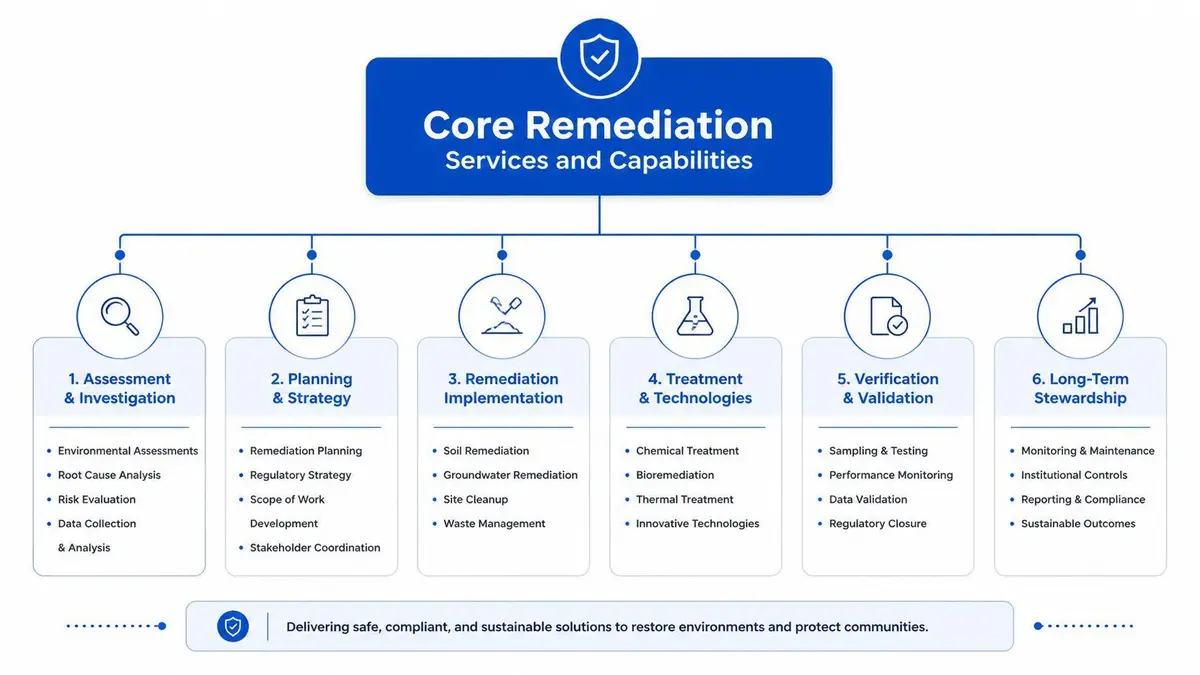
Core Remediation Services and Capabilities
When clients hear “reputation management,” they often think of articles, press strategy, and branded search cleanup. In a live crisis, the work is more exacting than that. The service breaks down into specific remediation tracks, each tied to a different form of digital harm.
Content removal and de-indexing
Clients often use these terms interchangeably. They shouldn’t.
Source removal means the material is taken down from the website, platform, or file host where it appears. That is the cleaner outcome because the asset itself is gone. De-indexing means the material may still exist at the source, but search engines stop surfacing it under relevant queries.
Those are separate processes with separate standards. Source removal usually turns on platform policy, host terms, privacy grounds, intellectual property, impersonation rules, or legal pressure. De-indexing usually turns on search engine policy, jurisdictional privacy rights, or other review mechanisms.
A competent firm knows when to pursue both at once and when one route will undermine the other. For example, a premature legal threat can make a cooperative platform less cooperative if the notice ignores its reporting framework. By contrast, a well-built technical file can often get faster attention because it presents the violation in the language the platform uses internally.
For a practical overview of this distinction, online content removal options for executives are often best understood as layered, not singular.
Defamation response
Defamation is one of the most misunderstood categories in digital crisis work. Clients assume that if a statement is false, it will be removed quickly. In reality, many platforms won’t adjudicate nuanced truth disputes unless the content also violates a clear policy or arrives with enforceable legal backing.
That creates a tactical split.
Some matters are best approached through policy-based removal, especially when the post also includes harassment, impersonation, doxxing, manipulated media, or coordinated abuse. Others require court-supported escalation because the host or platform won’t act without a judicial finding. The mistake is treating every defamation matter as if it belongs exclusively to one path.
A skilled team also distinguishes between high-authority publications and low-credibility republishers. The flagship post may be difficult to remove quickly, but the copied versions, summary blogs, and auto-generated scrape pages are often more vulnerable. Clearing those secondary assets can materially reduce visibility while the primary dispute proceeds.
NCII and leaked intimate material
Cases involving non-consensual intimate imagery require a different tempo and different safeguards. Here, speed and privacy discipline are inseparable. Every additional view, download, and repost increases both the emotional harm and the technical burden of cleanup.
The work typically includes emergency platform reporting, file-host escalation, duplicate detection, image matching, and reupload surveillance. The goal isn’t just to remove the first visible copy. It’s to identify where the file is being propagated and cut off its common distribution points.
These matters also require careful client handling. A rushed intake can create fresh exposure if sensitive files are circulated unnecessarily among advisors. The right process limits who sees what, preserves evidence where needed, and prioritizes channels that reduce additional dissemination.
Impersonation and account abuse
Impersonation attacks often look trivial from the outside. They aren’t. A fake account can reach colleagues, investors, journalists, clients, and family members before it attracts platform enforcement.
The remedy depends on the architecture of the impersonation. A cloned social profile is one problem. A fake website, spoofed email campaign, or misleading knowledge panel issue is another. Each requires separate evidence and a different escalation map.
A useful response usually includes:
- Identity verification packages: proving the account is unauthorized and tied to a known individual or entity.
- Platform-specific notices: adjusted for impersonation, fraud, harassment, or trademark misuse depending on the facts.
- Collateral cleanup: addressing reposts, cached profile previews, and search snippets that may outlive the account.
- Stakeholder shielding: warning internal teams or close contacts when active outreach from the fake asset is underway.
Dark web and pre-publication monitoring
Some crises begin before the public sees anything. Leaked material may circulate in closed communities, broker channels, or criminal marketplaces before it surfaces in mainstream search or social environments. Monitoring those environments can provide an early window to prepare containment measures.
This doesn’t mean every mention can be neutralized upstream. It means a strategic response watches for signs that private material is moving toward public exposure and acts before mainstream indexing locks the problem into place.
Hybrid execution
The strongest interventions are rarely purely technical or purely legal. They are sequenced hybrids. A technical team may begin with platform and host action while counsel prepares narrower legal instruments for the assets that won’t move voluntarily. In some engagements, firms such as ContentRemoval.com are brought in specifically for that technical layer: de-indexing, source removal, impersonation takedowns, leaked image remediation, and monitoring while the client’s counsel handles litigation posture.
Good crisis work doesn’t treat every harmful URL the same. It separates what can be removed now, what can be reduced, and what must be fought on a longer track.
Clients benefit most when they understand that a personal crisis management service is not one tactic. It is a coordinated stack of tactics, chosen asset by asset.
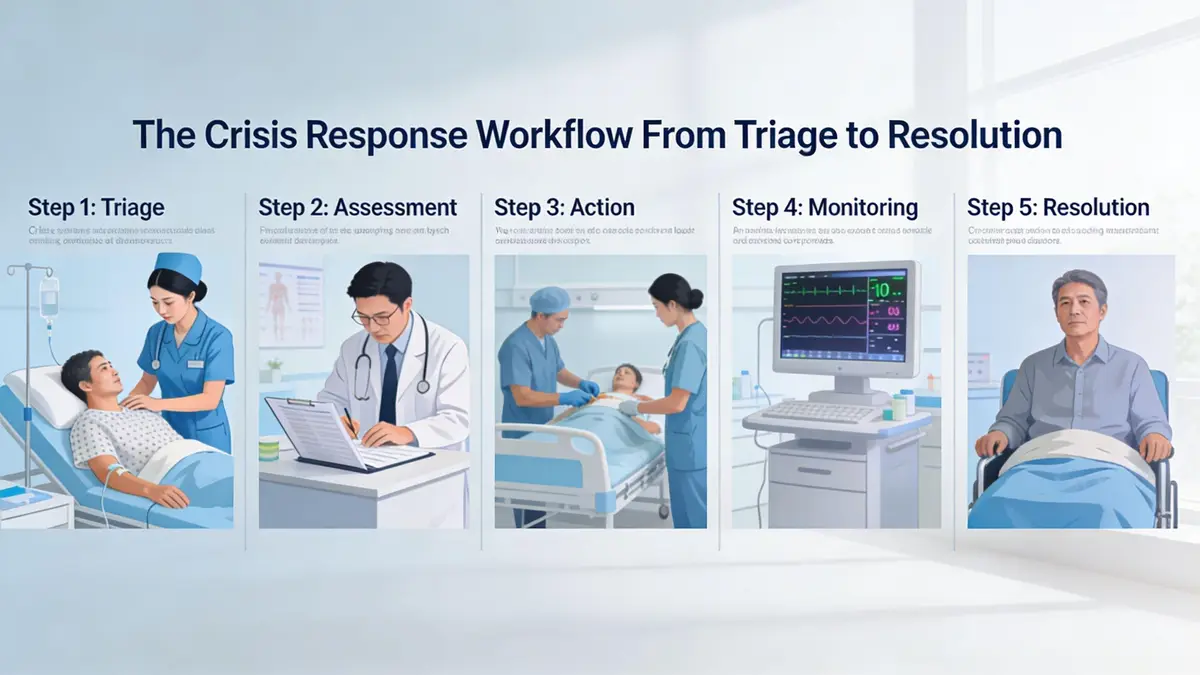
The Crisis Response Workflow From Triage to Resolution
A serious digital crisis should be run like a medical intake, not a brainstorming session. The first hours matter because they determine whether the response will be structured or reactive.
Clinical crisis models offer a useful analogy here. Effective crisis intervention mirrors clinical models, where immediate assessment and rapport-building within the first 24-48 hours are critical to prevent escalation. Roberts’ Seven-Stage Crisis Intervention Model begins with identifying lethality and protection resources, which translates to digital reputation work as threat severity categorization and asset vulnerability mapping. The gap between successful and failed crisis response is compressed, which makes swift, structured action paramount, as described in this overview of Roberts’ crisis intervention framework.
Triage and threat classification
The first question isn’t “How upset are we?” It’s “What exactly is live?”
A disciplined triage separates:
- High-severity threats such as leaked intimate material, impersonation, extortion-linked posts, and doxxing.
- Medium-severity threats such as false allegations on indexed pages, coordinated review abuse, or copied defamatory posts.
- Low-severity but persistent threats such as forum mentions or low-visibility pages that could become more damaging if amplified.
At the same time, the team maps vulnerable assets. Which search results are already ranking. Which social platforms are carrying screenshots. Which business or personal relationships are most exposed if the material keeps moving.
Strategy selection
Once the situation is clear, the matter moves to treatment planning. Many non-specialist advisors often err at this stage. They choose one tool and apply it everywhere.
A better approach is selective. One asset may call for immediate platform reporting. Another may require host escalation. Another may be better handled through de-indexing while evidence is preserved. Another may need counsel to step in because a mistaken takedown theory could create liability or entrench the content.
Fast action works when it is organized. Panic reporting across every channel often creates conflicting records and weakens later escalation.
Rapid execution
The execution phase is where a personal crisis management service earns its value. Notices go out in the right order. Evidence is preserved before removals occur. Search and social surfaces are monitored while requests are pending. If a platform rejects an initial filing, the next escalation is prepared with a stronger factual and policy basis rather than emotional repetition.
Clients under pressure often want constant movement, which is understandable. What they need is binding decisions, prioritization, anticipation of problems, and clear assignment of responsibility. Those are the behavioral markers associated with effective crisis teams in the verified material, and they translate directly to digital remediation.
A good operator also manages expectations. Some actions produce immediate visible change. Others take time to propagate across caches, search displays, and copied references. Resolution is rarely one moment. It is a sequence of reductions.
Monitoring and relapse prevention
The final stage is the one most firms underserve. Removal without monitoring is temporary relief.
Once a harmful asset has been reduced, someone has to watch for reuploads, screenshots on secondary platforms, new domains carrying recycled text, and renewed attempts to attach the issue to your name. That’s where long-tail protection becomes practical rather than theoretical.
A completed case should leave the client with three things: a cleaner public surface, a monitoring posture that detects recurrence, and a record of what worked so the next incident can be addressed faster.
Selecting a Capable Personal Crisis Management Vendor
Most buyers don’t have trouble finding vendors. They have trouble distinguishing specialists from firms that added “reputation management” to a broader menu.
That distinction matters because digital crisis work is unforgiving. If a provider can’t explain the difference between host removal and search de-indexing, or can’t describe how impersonation enforcement differs from defamation escalation, you’re probably looking at a referral broker, not an operator.
What to listen for in the first conversation
The first call tells you a lot. Strong vendors ask exacting questions about where the content lives, how it’s spreading, what has already been submitted, whether anyone has contacted the publisher, and which assets matter most if the issue becomes more visible.
Weak vendors stay abstract. They talk about brand narrative, generic “suppression,” or broad legal rights without addressing the mechanics of removal.
Use this executive guide to evaluating professional content removal services as a practical reference point, then press further. Ask who handles platform notices. Ask how evidence is preserved. Ask what they do when a post is copied to multiple domains.
Vendor Capability Comparison
| Attribute | Specialist Crisis Management Firm | Traditional PR / Legal Firm |
|---|---|---|
| Primary objective | Remove, de-index, contain, and monitor harmful digital assets | Shape public perception or pursue legal remedies |
| Working knowledge | Platform policy, search behavior, hosting pathways, account abuse workflows | Media relations, litigation, negotiation, general advisory work |
| Speed of first action | Built around rapid intake and immediate technical steps | Often slower because action depends on approvals, pleadings, or messaging review |
| Asset-by-asset strategy | Yes. Different tactics for different URLs, accounts, and hosts | Often one dominant method applied broadly |
| Reupload prevention | Usually part of the service through continuous monitoring | Often outside scope |
| Confidential operational handling | Central to the engagement | Varies widely by firm type and team size |
| Best use case | Live digital harm spreading across search, social, and websites | Court disputes, public statements, stakeholder relations |
Questions that separate operators from sales teams
A capable provider should answer these directly:
- What can you attempt at the source level versus only at the search level?
- How do you handle mirrored content and repost chains?
- Do you coordinate with outside counsel without turning every issue into a lawsuit?
- What are your confidentiality controls during intake and execution?
- How do you monitor for recurrence after an apparent removal?
If the answers are vague, move on.
Fee structure and alignment
The pricing model also reveals the operating model. Some matters fit project fees because the target set is clear. Others require a retainer because new assets may surface during the response. In some engagements, phased billing makes sense because the problem begins with emergency takedowns and later shifts into monitoring and maintenance.
What matters is clarity. You should know what the initial scope covers, what counts as a new asset, and what the vendor considers resolution. Ambiguity on those points often leads to frustration precisely when discretion and speed matter most.
A serious personal crisis management service won’t promise that everything disappears. It will tell you which assets are actionable, which are resistant, and where technical effort is likely to produce meaningful risk reduction.
Confidentiality Compliance and Ethical Guardrails
For high-net-worth clients, discretion isn’t a preference. It is part of the deliverable. A vendor who handles a sensitive crisis casually can create a second crisis through careless intake, loose file sharing, or unnecessary circulation of evidence.
That is why confidentiality protocols need to be built into operations from the start. Sensitive material should move through restricted channels. Access should be limited to the people who need it. The firm should know when not to duplicate harmful files and when to preserve a record without expanding exposure.

Privacy and client welfare
This area has an ethical dimension that many vendors ignore. Research into digital mental health and crisis text interventions has highlighted privacy concerns around data sharing and user safety. That creates a clear expectation for professional crisis firms: they need robust policies for handling sensitive information, especially when vulnerable individuals are dealing with online abuse, and they need to understand how the matter may intersect with broader behavioral health support, as discussed in this analysis of privacy concerns in digital crisis interventions.
That doesn’t mean a reputation firm becomes a clinical provider. It means competent operators recognize when a client’s crisis includes safety, coercion, or acute distress, and they coordinate responsibly rather than pretending the issue is purely technical.
Confidentiality is more than secrecy. It is disciplined handling that reduces harm while preserving the client’s legal and personal options.
Compliance across jurisdictions
The legal framework also shifts by region. Privacy rights, defamation standards, platform practices, and takedown expectations vary meaningfully across jurisdictions. A vendor handling a global family, executive, or public figure needs to account for those differences before sending notices that may be ineffective or counterproductive.
That same practical mindset applies when the crisis touches the criminal process. If an arrest, booking image, or related allegation is part of the reputational event, advisors often need a grounded explanation of adjacent procedures. For families and counsel dealing with that side of the problem, this overview of the bail process for Colorado defendants is a useful operational reference.
Ethical guardrails matter because clients in crisis are vulnerable to overpromising. Any firm worth hiring should be explicit about what it can lawfully request, what it can’t, and how it protects both your data and your position.
Frequently Asked Questions for Executives and Advisors
Can harmful content actually be removed, or is this mostly suppression
Both outcomes exist, and they are not the same. Some content can be removed at the source because it violates platform rules, host terms, privacy standards, or other actionable policies. Some content won’t come down quickly, but its visibility can still be reduced through de-indexing or targeted secondary cleanup. A candid provider will distinguish between those tracks early.
Should we start with legal counsel or a specialist crisis team
That depends on the threat. If the issue is actively spreading across search and social surfaces, specialist technical action usually needs to start immediately while counsel is briefed in parallel. If the matter turns on a narrow legal dispute with limited digital spread, counsel may lead. In many executive cases, the right answer is coordinated work rather than a single gatekeeper.
What if the content has already been copied to other sites
That’s common. The response has to address the ecosystem, not just the original post. Secondary copies, scrape sites, forum reposts, profile previews, and search traces all require review. Clients get into trouble when they celebrate the removal of one URL while ten lower-quality duplicates remain live.
Do public statements help
Sometimes. Often they don’t. A public statement can calm stakeholders, but it can also validate the story, generate fresh coverage, or create wording that conflicts with removal efforts. The decision should follow asset mapping, not precede it.
How do you handle reuploads
Reuploads are a monitoring problem as much as a removal problem. Once an item has been taken down or reduced, the case needs continued observation so that recycled files, screenshots, cloned posts, and new accounts are identified quickly. Without that layer, the same crisis can recur under a different wrapper.
Is this service legal and ethical
It should be. The work should stay within platform policy, lawful notice procedures, privacy rights, and coordinated legal strategy where required. If a vendor talks loosely about “making things disappear” without explaining the grounds, the process, or the limits, that’s a warning sign.
What should I do in the first hours
Keep the circle tight. Preserve evidence. Don’t contact every platform impulsively. Don’t publish a reactive statement before you know the asset map. Don’t assume one advisor can handle every layer of the problem.
Start with a confidential assessment that identifies what is live, what is spreading, which assets are most exposed, and which remedies are realistically available.
If your name, family, or business is facing a live digital threat, ContentRemoval.com can begin with a confidential assessment and outline the technical, legal, and monitoring actions appropriate to the case. The objective is straightforward: contain the spread, remove what can be removed, reduce what can’t, and do it with the discretion the situation requires.