
Managing corporate reputation means defending a balance sheet asset with legal and technical tools rather than press releases. The work combines a task force of legal, communications, and IT, continuous monitoring that includes the dark web, proactive claiming of executive profiles and domains, and remediation through defamation notices, DMCA takedowns, and search engine de-indexing when a publisher will not cooperate.
Key facts
- The threat matrix ranks executive impersonation as critical, ahead of review-bombing and dark web leaks
- Claim executive profiles on platforms they do not use, and register misspelled and negative domain variants
- Defamation notices, DMCA takedowns, and de-indexing are the primary removal instruments described
- De-indexing a URL from Google can show results within 24 to 48 hours; source deletion takes longer
Where ContentRemoval.com comes in. When a false article, fraudulent executive profile, or leaked document is sitting on page one for the company or its leadership, ContentRemoval.com handles the removal and de-indexing work that a PR firm or general law firm is not built for. The general counsel, the chief of staff, or an outside crisis adviser usually makes contact. A free 15-minute Exposure Scan maps what is removable, and the report is yours to keep. Get a Free, Confidential Exposure Scan or read how our reputation management work is done.
Corporate reputation is no longer a soft metric managed by a communications department; it is a hard, quantifiable asset with a direct and often brutal impact on enterprise value. Managing this asset demands a structured, legal-technical approach, not traditional public relations tactics. A compromised reputation is a direct liability, impacting share price, access to capital, and competitive standing.
Why Corporate Reputation Is a Balance Sheet Asset

In the boardroom and on Wall Street, reputation has moved from an abstract concept to a concrete factor in valuation. It directly influences market capitalization, shareholder returns, and the ability to attract top-tier talent. A robust reputation serves as a buffer against market volatility, while a damaged one invites shareholder litigation and sustained financial erosion.
The perception held by customers, partners, and the public is now a primary driver of a company’s valuation. Those who proactively defend their reputation secure a clear, measurable financial advantage.
Quantifying the Financial Impact of Reputation
The value of corporate reputation is estimated to be a $7 trillion asset class by 2026. Data shows companies that prioritize reputation management realize an additional 4.78% in annual shareholder returns compared to their peers.
Neglecting this asset is tantamount to allowing a multi-billion-dollar division to fail. The fallout from such neglect manifests in several critical areas:
- Shareholder Value Erosion: A single adverse event or coordinated disinformation campaign can erase billions from a market cap within hours.
- Impaired Access to Capital: Lenders and institutional investors treat reputational risk as a material threat, making financing more difficult and expensive to secure.
- Talent Acquisition Deficits: Top-tier executives and engineers will not associate with an organization facing perpetual public scrutiny.
- Competitive Disadvantage: A reputation crisis signals instability, providing competitors with a decisive opening to capture market share.
The Obsolescence of Traditional PR
The old playbook of press releases and reactive media relations is outmatched by the velocity and complexity of digital threats. Misinformation propagates algorithmically, rendering carefully worded corporate statements ineffective and, frequently, counterproductive.
A reputation crisis unfolds in minutes, not days. The legacy model of drafting a statement and seeking spokesperson approval is a blueprint for failure. Decisive, specialist action is the only viable defense.
This reality necessitates a paradigm shift. Corporate reputation requires the same level of professional oversight and rigorous defense as legal, financial, and cybersecurity functions. It is a discipline built on proactive protection and swift, aggressive remediation. You can explore the financial realities of online reputation management in our strategic cost analysis. This is about protecting the long-term value of the entire enterprise.
Understanding the Modern Corporate Threat Landscape
The threats that can destroy a corporate reputation have evolved. They are faster, more sophisticated, and originate from asymmetric vectors. A generic risk assessment is insufficient; a defense is only effective if it is designed to counter the specific attack methodologies being deployed.
The modern adversary is not a lone disgruntled customer; it is a coordinated network armed with weaponized narratives, moving at the speed of social media algorithms.
Coordinated Disinformation and Weaponized Narratives
The most destructive reputational attacks are rarely spontaneous. They are calculated campaigns executed by organized actors (competitors, activist groups, or even state-sponsored entities) with a specific objective. Their method is to weaponize information, manipulating facts to poison public perception and incite outrage.
A typical attack begins with a fabricated “scandal” seeded across a network of seemingly independent blogs and social media profiles. This manufactured narrative is then amplified by botnets and paid influencers until it achieves sufficient velocity to attract mainstream media coverage. By the time the targeted company can issue a factual correction, the false narrative has taken root.
A single, well-executed disinformation campaign can crater a stock price, terminate a strategic partnership, or trigger a regulatory investigation before the target understands the attack’s origin. The damage is immediate and often severe.
This methodology is optimized for speed, rendering reactive PR strategies entirely obsolete. The objective is not mere criticism; it is the fundamental redefinition of the company’s identity in the public record.
The Rise of Executive Impersonation and Digital Forgery
An executive’s personal reputation is a corporate asset, and a significant vulnerability. Adversaries are now highly proficient at creating fraudulent social media profiles or entire websites that convincingly impersonate key leadership. These platforms are then used to disseminate offensive content, promote financial scams, or “leak” forged internal documents.
The objective is to induce chaos by shattering leadership credibility and sowing internal confusion. This extends beyond reputational harm; it can mislead the market, create an HR crisis, and lead to direct financial losses via sophisticated wire fraud. It is a direct assault on the organization’s command structure. The proliferation of deepfake technology means it is no longer a question of if a manipulated video or audio of an executive will surface, but when.
The Latent Threat of Dark Web Data Leaks
While cybersecurity teams focus on breach prevention, they often neglect the reputational time bomb that activates the moment proprietary data is exfiltrated and leaked. Once sensitive information (customer lists, strategic plans, internal executive communications) appears on the dark web, it becomes a permanent and searchable liability.
This stolen data is an arsenal for multiple threat actors:
- Journalists and Activists: Can assemble damaging narratives from fragmented internal communications.
- Competitors: Gain frictionless access to proprietary research and development.
- Short-Sellers: Can use leaked financial data to orchestrate bets against the company’s stock.
- Extortionists: Will threaten to release the most damaging information unless a ransom is paid.
The exfiltration of this data creates a perpetual threat. To effectively manage corporate reputation, one must understand these attack vectors with technical and legal precision. It is the only way to build a defense that is targeted, practical, and effective.
Building Proactive Governance and Digital Defenses
The most effective method for managing a reputational crisis is to prevent its occurrence. While rapid response is critical post-incident, the most resilient enterprises operate in a state of perpetual readiness. This requires building a continuous, active defense designed to protect enterprise value daily.
A reactive posture is a failed strategy. A proactive approach establishes structured governance and fortifies the corporate digital perimeter, enabling the neutralization of threats before they escalate into public-facing crises. This is a strategy of control, not damage control.
Assembling a Cross-Functional Task Force
The foundational step is the establishment of a dedicated reputation task force. A reputational threat is not merely a PR or legal problem; it is an enterprise-level risk. This core unit must be empowered with the authority to act decisively and must include senior leadership from key functions.
This group operates not as a committee but as a rapid-response unit. The essential members are:
- Legal Counsel: The front line for assessing defamation, trademark infringement, and other legal violations. Their analysis provides the legal authority for takedown actions.
- Communications Leadership: This function manages the narrative, ensuring all internal and external messaging is controlled, consistent, and strategic.
- Cybersecurity & IT: The technical operators responsible for securing digital assets, tracing impersonators, and identifying the source of data leaks.
Integrating these three functions closes the dangerous seams that exist between siloed departments, seams that threat actors are adept at exploiting. An integrated team ensures a coordinated, immediate response that blends legal authority, technical skill, and strategic messaging.
Establishing a Robust Digital Monitoring Framework
You cannot defend against threats you cannot see. The foundation of any proactive defense is a powerful digital monitoring system that provides a comprehensive view of the threat environment. This is far more sophisticated than simple keyword alerts.
A modern framework, often an Enterprise AI Governance Framework, is required to achieve pre-emptive threat detection. Best-in-class monitoring tools use AI to scan not only the surface web (news sites, social media, and blogs) but also the dark web. This is essential for identifying leaked credentials, hostile chatter from threat actors, or the nascent stages of a disinformation campaign.
A proactive monitoring system functions as an early-warning radar. Identifying a coordinated negative review campaign or an executive impersonation account within hours of its creation, rather than days later, is the difference between a minor cleanup and a full-blown crisis that erodes millions in market value.
This system must track more than mere mentions; it must analyze sentiment velocity, the propagation speed of narratives, and the emergence of new thematic risks concerning the company, its products, and its leadership. Our guide on advanced reputation monitoring details how to build this capability. The objective is to shift from a reactive to an intelligence-led posture.
Reputation Threat Matrix and Mitigation Priorities
To operationalize intelligence, a clear framework for threat prioritization is necessary. Not all risks are equal. The following matrix categorizes threats by potential impact and assigns a clear priority level, directing resources to the most critical vulnerabilities first.
| Threat Vector | Potential Impact (Financial, Operational) | Mitigation Priority | Primary Mitigation Strategy |
|---|---|---|---|
| Executive Impersonation | High: Fraud, stock manipulation, phishing. | Critical | Proactive profile claiming, verification, and monitoring. |
| Negative SEO / Review-Bombing | High: Revenue loss, brand erosion. | High | Content removal, SEO counter-messaging, review management. |
| Data Leaks (Dark Web) | High: Fines, operational disruption, IP theft. | High | Continuous dark web monitoring, internal security protocols. |
| Brandjacking / Cybersquatting | Medium: Customer confusion, traffic diversion. | Medium | Proactive domain registration, trademark enforcement. |
| Disgruntled Employee Posts | Low-Medium: Morale issues, minor PR headaches. | Low | Internal communication policies, social media monitoring. |
This matrix is a decision-making instrument. It enables a move from a state of high alert to one of strategic response, ensuring the most dangerous threats are addressed with priority.
Fortifying Digital Assets Against Impersonation
One of the most potent, and frequently overlooked, defensive measures is the proactive fortification of digital assets. This involves systematically securing every digital touchpoint associated with the brand and its leadership to foreclose the possibility of impersonation and brandjacking.
This is the digital equivalent of securing real estate before a squatter can occupy it. Key actions include:
- Executive Profile Lockdown: Secure and actively monitor the social media profiles of key executives. Utilize all available verification features and, critically, claim profiles on platforms they do not use to prevent impersonators from seizing them.
- Domain and Trademark Security: Proactively register variations of corporate domains and trademarks, including common misspellings and negative formulations (e.g., “yourcompanynamesucks.com”), to deny them to cybersquatters.
- Brand Name Registration: Claim brand and executive names across all relevant social media and digital platforms, even if there are no plans for their active use. A secured, inactive profile is infinitely preferable to a fraudulent one operated by an adversary.
This strategy establishes a “digital moat” around your most valuable assets. By occupying the territory first, you deny attackers the very platforms required to launch credible attacks. It is a simple, high-impact tactic fundamental to any serious corporate reputation defense.
The Crisis Response and Remediation Playbook
When a reputational crisis ignites, hesitation is the accelerant that turns a spark into an inferno. A slow, disorganized, or uncertain response guarantees failure. In these moments, a precise, actionable playbook engineered for speed and executed with absolute clarity is required.
The first hour following threat discovery is decisive. It is the window in which control is either established or irrevocably lost. A pre-designated crisis team (your key principals from legal, communications, and IT) must be activated instantly. Their first action is not to draft a press release; it is to implement a complete communications lockdown, both internally and externally.
This blackout is non-negotiable. It prevents the dissemination of panicked, inaccurate, or conflicting messages before the facts are known. It secures time for initial fact-finding. The team’s sole initial objective is to answer three questions: What do we know for certain? What do we not know? And what is the precise origin of the attack?
Advanced Remediation and Content Removal
Once the immediate threat is contained and the situation is assessed, the focus shifts to remediation. This is where specialist work diverges sharply from traditional public relations. The goal is not to “manage the narrative” but to methodically excise the damaging content from the internet, neutralizing the threat at its source.
This is a technical and legal engagement that leverages specific, often obscure, platform terms of service and legal frameworks. It is about actively dismantling an attack, not attempting to shout over it.
An effective response does not merely add positive content to search results; it actively removes the negative. De-indexing a defamatory article or taking down a fraudulent profile is a permanent solution. Attempting to suppress it with PR is a constant, expensive, and often futile effort.
This proactive defense model illustrates how to protect a digital footprint before a crisis, which remains the optimal strategy.
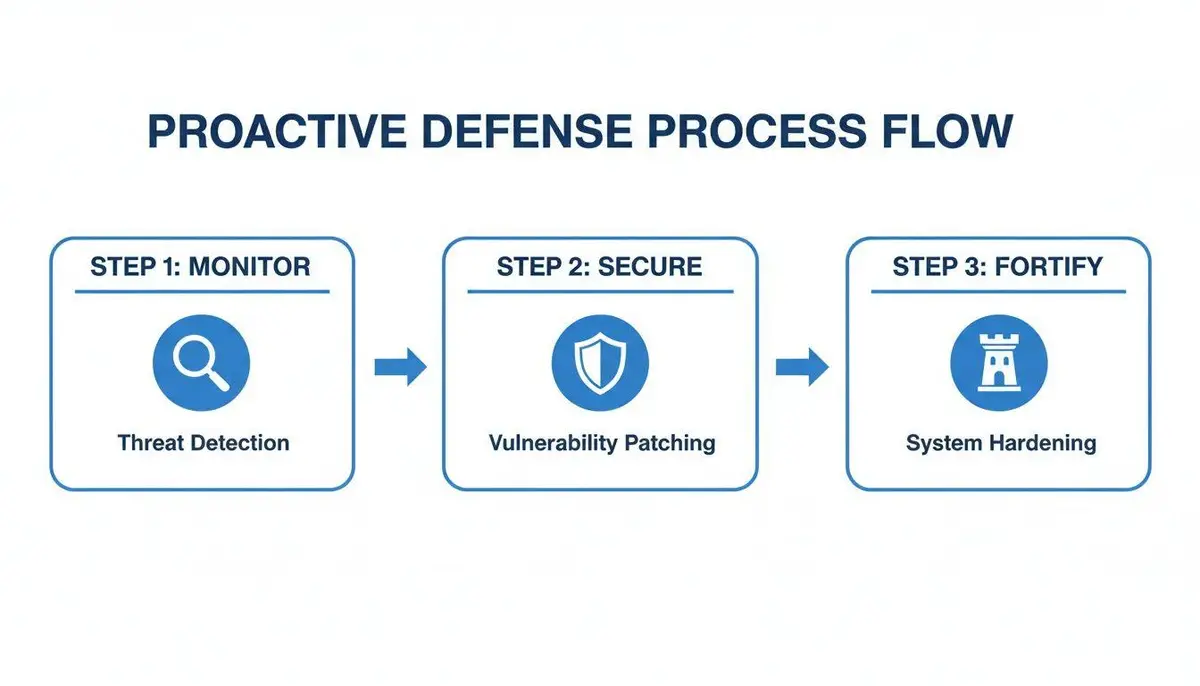
As shown, security is not a singular action but a continuous cycle of monitoring, vulnerability patching, and asset reinforcement.
Legal and Technical Takedown Mechanisms
Removing harmful online content requires a specialized toolkit. A specialist firm possesses an operational understanding of these mechanisms, enabling rapid and discreet removals. The primary instruments in this arsenal include:
- Defamation and Libel Takedowns: When content is demonstrably false and causing material harm, a legal case for defamation can be made directly to the website’s hosting provider or publisher. This involves a precisely constructed legal notice proving the content meets the legal standard for libel, which compels the platform to act to limit its own liability. This is highly effective against false articles, malicious blog posts, and slanderous reviews.
- DMCA Notices for Stolen IP: The Digital Millennium Copyright Act (DMCA) is a powerful instrument when adversaries misuse a company’s copyrighted material. If an attacker uses corporate logos, executive headshots, or internal documents to construct a fraudulent website or social media profile, a DMCA takedown notice can force the hosting service to remove the infringing content rapidly.
- De-Indexing from Search Engines: In cases where the publisher is uncooperative or anonymous, the most effective action is often to remove the harmful URL from search engine results. This process, known as de-indexing, renders the content effectively invisible to the public. While the page may still exist, its inability to be found via Google neutralizes 99% of its potential impact.
These are not PR tactics; they are technical and legal procedures executed with precision and discretion. They target the root of the problem, the existence of the harmful content itself, and deliver the decisive action required in a high-stakes reputational crisis.
Managing Online Reviews and Public Sentiment

Public sentiment is no longer a soft metric; it is a hard number that directly drives revenue. For a corporation, this sentiment is most powerfully broadcast on review platforms like Google, Glassdoor, and industry-specific sites. These are not feedback channels; they are financial battlegrounds where brand trust is determined.
A company’s star rating is the new digital storefront for both customers and prospective employees. A poor rating functions as a gatekeeper, turning away high-value prospects before they ever engage. Failure to strategically manage this public profile is an active threat to the bottom line, impacting everything from sales to talent acquisition. It is time to move beyond generic advice and adopt a surgical, legally-informed approach.
The Financial Gravity of Star Ratings
The correlation between online ratings and financial performance is direct and unforgiving. Online reviews are the primary filter for the majority of consumers. A stark 68% of consumers will not even consider a business with less than a four-star rating. This is not a preference; it is a threshold with a direct mathematical link to profitability.
For every single-star increase in average rating, a business can see a 5-9% increase in revenue. Conversely, a one-star drop can reduce sales by up to 10%. This data elevates review management from a customer service task to a critical financial discipline.
These figures prove that protecting a review profile is synonymous with protecting revenue. The public’s perception, distilled into a star rating, is a powerful signal that influences both human decision-making and search engine algorithms, which heavily favor businesses with strong social proof. More on this can be found in a study showing how new reputation data uncovers execution failures and what this means for growth.
A Strategic Framework for Review Management
A purely defensive posture is insufficient. An effective strategy for managing corporate reputation requires both proactive cultivation and, when necessary, decisive remediation. This is not about engaging in public disputes with dissatisfied customers; it is about controlling the digital narrative with precision.
A professional strategy is built on three core pillars:
- Identify and Challenge Illegitimate Content: Not every negative review is genuine. A specialist can dissect negative feedback to identify content that violates a platform’s terms of service or crosses legal lines into defamation, libel, or harassment. This includes fraudulent reviews from non-customers, coordinated attacks from competitors, or posts from disgruntled former employees disclosing confidential information.
- Execute Legally-Grounded Takedown Actions: Once a fraudulent or defamatory review is identified, a targeted removal action is initiated. This is a technical-legal process that involves constructing a structured case and presenting it to the platform’s legal department to prove a terms-of-service violation and compel removal. Our guide on how to remove bad reviews from Google details this process.
- Implement a Leadership-Driven Response Protocol: For legitimate negative feedback, the response must demonstrate accountability from senior leadership. Generic, templated apologies are counterproductive. An appropriate response from leadership acknowledges the specific issue, moves the conversation to a private channel for resolution, and signals to the market that the company is actively engaged in quality control.
This strategic oversight is especially critical on platforms like Glassdoor, where a single negative narrative can cripple recruitment of senior talent. An organization’s ability to attract elite leaders is directly tied to its reputation as an employer, a perception now forged almost entirely online. Professional oversight ensures that fraudulent attacks are neutralized and that public sentiment accurately reflects corporate reality.
When to Engage Professional Reputation Counsel
Most internal teams and general-purpose agencies are not equipped to handle a significant reputation attack. While a proactive internal strategy is a necessary foundation, certain situations escalate beyond routine management and require immediate, specialized intervention.
Recognizing this inflection point is critical. It is the first step toward neutralizing a threat before it inflicts permanent damage to the brand, its executives, and the company’s valuation.
The primary indicator for engagement is the appearance of negative, false, or defamatory content on the first page of Google search results for the company or key leadership names. At this point, the problem has exceeded the scope of traditional PR and requires a team focused exclusively on removal or de-indexing.
Differentiating Specialist Counsel from Traditional Firms
It is crucial to distinguish between a specialist reputation firm and a standard public relations or law firm. The analogy is medical: a general practitioner is suitable for a routine check-up, but a critical operation requires a surgeon.
A PR firm’s function is to shape perception through positive narrative generation. A general law firm addresses broad legal matters. Neither possesses the unique synthesis of technical skill, legal expertise, and platform-specific knowledge required for rapid online takedowns.
A specialist firm executes a single function: the surgical and discreet removal of damaging online content. Its value is measured by its speed, technical execution, and deep, operational knowledge of platform policies and legal escalation paths.
When facing a coordinated disinformation campaign or a sensitive data leak, the required solution is not a new communications plan. It is a technical and legal team capable of dismantling the attack and excising the damaging material from the digital ecosystem.
This is the dispositive difference between containing a threat and merely reacting to its symptoms.
The Decision Criteria for Engagement
Engaging professional counsel is not an admission of failure; it is a strategic decision to protect a critical asset. A corporate reputation must be defended with the same urgency as a major financial or legal crisis. It is time to engage specialists when dealing with:
- An Active Disinformation Campaign: Coordinated attacks designed to manipulate stock price or public opinion.
- Sensitive Data Leaks: Internal documents, client lists, or private executive communications appearing on the public or dark web.
- High-Stakes Defamation: Damaging articles, fraudulent reviews, or social media attacks that threaten key business relationships.
- Executive Impersonation: Fraudulent social media profiles or websites used to defraud partners or disseminate false information.
In these scenarios, every hour is critical. The objective is not to “manage the narrative”. It is to dismantle the threat. Investing in a dedicated reputation defense partner provides the certainty and control to act decisively when it matters most.
Frequently Asked Questions About Corporate Reputation
When a company’s reputation is under threat, clear, direct answers are required, not vague assurances. The following are common executive-level inquiries and our straightforward responses.
How Quickly Can Negative Content Be Removed?
A definitive timeline depends on the specific content, its location, and the applicable legal jurisdiction.
Certain tactics, such as the de-indexing of a URL from Google, can yield results rapidly, often within 24-48 hours. This action renders the content effectively invisible to the public.
However, securing the complete deletion of content from its source, such as a defamatory article or a coordinated series of fake reviews, is a more complex engagement. This process involves direct negotiation with platforms and often requires formal legal notices, which extends the timeline. An expert can only provide a precise estimate following a full analysis of the situation.
Reputation Management vs. SEO
These two disciplines are often confused but serve fundamentally different functions. Search Engine Optimization (SEO) is a promotional activity. It is the practice of increasing the visibility of positive or neutral content in search results.
Reputation management is a defensive strategy. It is a synthesis of threat monitoring, crisis response, and the active removal of damaging material from the internet.
Think of the distinction this way: SEO is about winning a popularity contest. Reputation management is about having false, defamatory, or illegal content disqualified from the contest entirely. This often requires legal and technical capabilities far beyond the scope of a traditional SEO agency.
Is It Possible to Permanently Remove a News Article?
Compelling a news organization to delete a published article is exceptionally difficult due to strong legal protections for journalistic content. However, removal at the source is not always the only, or even the most effective, solution.
The most potent strategy is often to have the article de-indexed from search results. Once it no longer appears on Google for relevant search queries, its capacity to inflict harm is neutralized for the vast majority of the public.
If an article contains provable factual inaccuracies or clear defamation, legal channels can be pursued to compel a retraction or correction. The correct approach is for a specialist to evaluate the specifics and determine the most efficient path to mitigating the damage, which is frequently de-indexing.
When facing a reputational threat that public relations alone cannot resolve, you need a team with the technical and legal capabilities to act decisively. ContentRemoval.com provides discreet, swift, and conclusive removal of harmful online content for high-profile clients. If your reputation is at stake, the first step is a confidential assessment of your situation at ContentRemoval.com.