
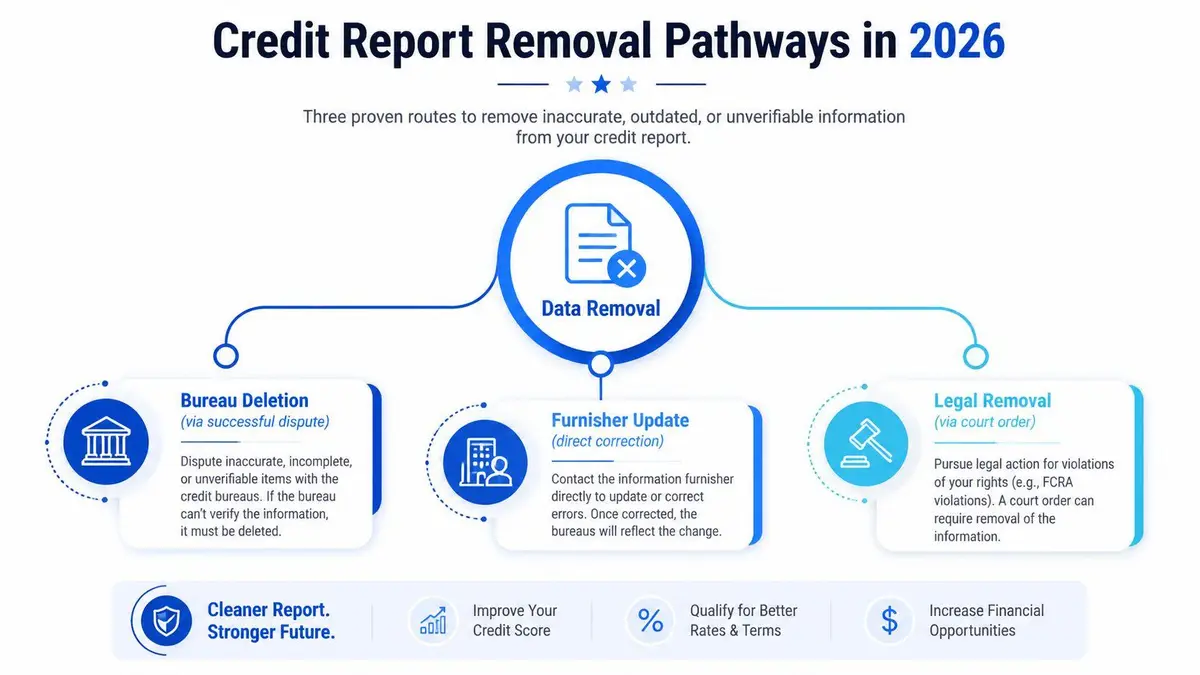
Credit report removal means getting an item deleted from your file, not just nudging a score upward. Only a few paths end in deletion: a successful bureau dispute, a furnisher correction or retraction, or the item passing its FCRA reporting window. Accurate negative items usually stay, so the targets are inaccurate, incomplete, unverified, obsolete or legally barred entries.
Key facts
- The FCRA generally limits most negative items to 7 years and bankruptcies to 10 years.
- Dispute each item separately with each bureau that reports it, and with the furnisher in parallel.
- Bureaus have about 30 days to investigate; send by certified mail with return receipt for proof.
- A debt validation letter under the FDCPA forces a collector to prove the debt within the 30-day window.
Where ContentRemoval.com comes in. ContentRemoval.com does not give credit advice, but it does coordinate credit file cleanup with the reputational exposure that often sits beside it: public record pages, background screening residue and search results that keep the same derogatory story alive. Founders, mortgage brokers acting for a client and family offices tend to make the approach. A free 15-minute Exposure Scan maps what is visible and removable, and the report is yours to keep. Get a Free, Confidential Exposure Scan or read how our content removal work is done.
You’re staring at a denial clock that hasn’t rung yet, but you can already hear it. The mortgage file is thin, the underwriter has a problem with your credit report, and the item that’s dragging the file down may be wrong, stale, unverifiable, or just damaging enough to trigger a harder look. In that moment, credit report removal stops being a consumer chore and becomes reputational defense, because what gets deleted from the file can matter as much as what gets explained to a lender.
What Credit Report Removal Actually Means in 2026
Credit report removal means getting an item deleted from the file, not just getting a score to drift upward. That distinction matters because lenders do not underwrite a number in isolation. They read the tradeline, the dates, the status codes, and the narrative of risk that sits behind them.
There are only a few paths that end with deletion. A bureau can remove an item after a dispute succeeds. A furnisher can retract or correct the information it supplied. The law can force removal when the data has outlived its reporting window under the Fair Credit Reporting Act, which generally limits most negative items to 7 years and bankruptcies to 10 years, with the start date tied to the delinquency, charge-off, or filing date depending on the item type, as summarized in this overview of FCRA obsolescence rules (FCRA obsolete item rules).
For a founder, executive, or public-facing borrower, the reputational stakes are bigger than the score. A tradeline can spill into mortgage underwriting, lease approval, vendor onboarding, and background screening. A file that still shows a disputed collection is not clean, even if the score looks better on a dashboard.
The legal point is simple. If the line is still present, the exposure is still active.
That is why removal and repair are different jobs. Repair changes how the data reads. Removal deletes the data or forces it off the report. Accurate negative items usually stay, because accuracy and timeliness protect the furnisher. The items worth attacking are the ones that are inaccurate, incomplete, unverified, obsolete, or barred by law. The CFPB’s work on medical collections shows how fast reporting rules can change what stays visible, and its review of public records removal shows the same pattern at a larger scale (medical collections analysis).
Use that lens before you spend a dispute. If the data is wrong, challenge the data. If the reporting basis is wrong, challenge the basis. If the item is past its legal life, force it off the file. If it is none of those things, you are not looking at removal. You are looking at a complaint with no deletion outcome.
For the broader privacy doctrine that sits next to this problem, see this strategic guide to the right to be forgotten and digital privacy.
Building the Evidence File Before You Dispute Anything
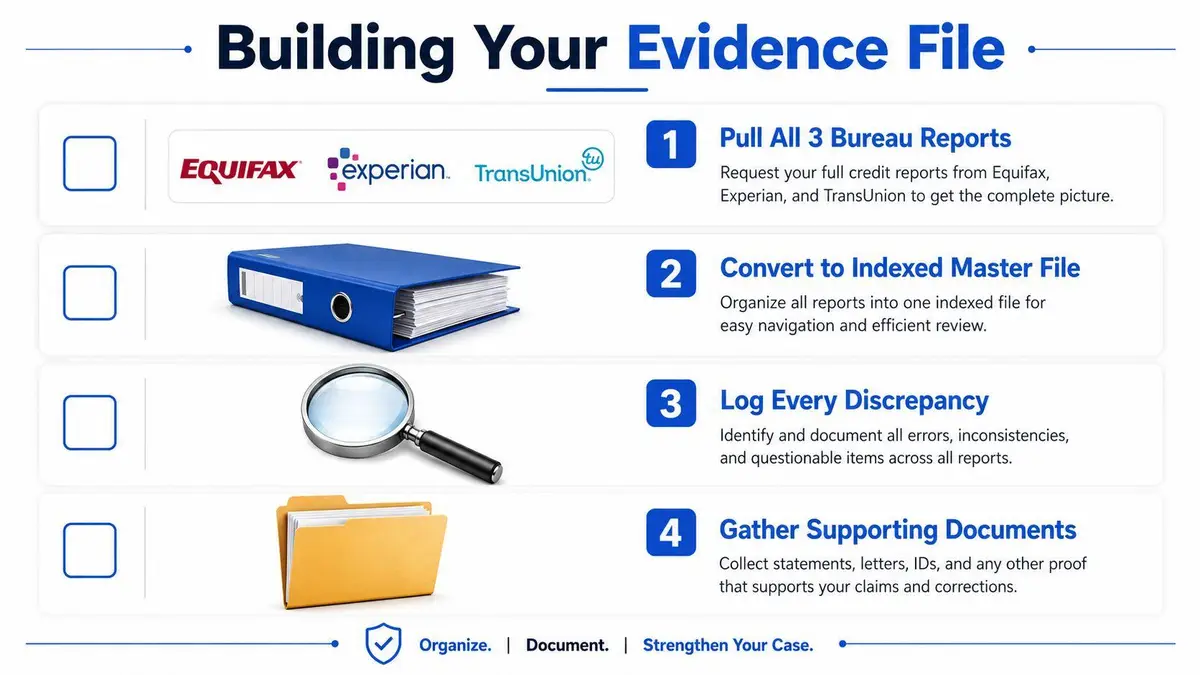
The first mistake is emotional, not procedural. People fire off disputes with a stack of half-sorted statements and hope the bureaus do the cleanup. That rarely works. Build the file first, then dispute only the lines you can prove are wrong, incomplete, obsolete, or attached to the wrong person. Pull all three bureau reports on the same day, merge them into one master packet, and mark every challenged field at line-item level, account number, balance, delinquency date, status, and furnisher. If you cannot point to the exact defect, you do not have a removal case yet.
Public-record deletions show why the evidence file has to be exact. After the nationwide bureaus changed their public-record reporting rules, civil judgments disappeared entirely, tax liens were largely removed, and the CFPB later reported that about 6% of consumers had a civil judgment or tax lien in June 2017, while about 83% of those consumers lost one or more of those items in July 2017 (CFPB retrospective analysis). That was not persuasion. It was a rule change. The same principle applies here. If the legal basis is wrong, the line can come off. If the basis is right, a dispute packet just documents your grievance.
Recheck the legal basis of every negative line
Start with the questions that matter in a denial review. Is the item obsolete. Was it re-aged. Does it belong to the wrong consumer. Is the furnisher still reporting it with a defensible basis. Mixed-file errors are common when names, addresses, spouses, business entities, or prior residences overlap, and those errors usually sit until a lender pulls the file.
A clean evidence file should be small and disciplined. Keep the bureau reports with the disputed items highlighted, the original letters or statements that triggered the challenge, and the documents that prove the defect. Do not dump in irrelevant paperwork. A thick file with no structure slows the investigator and gives the furnisher room to answer with boilerplate.
If the item touches a public-record problem, use the same source-control mindset you would use in broader online reputation work. The logic in this executive guide to removing public records online is the same logic here, source by source, record by record. Separate fact from assertion before you ask anyone to delete anything.
The filing itself also has to be clean. Use the credit dispute filing guide to keep the packet organized, but do not confuse organization with strategy. The goal is not to tell a story. The goal is to hand the bureau a narrow record that makes it harder to ignore the defect.
Before anything leaves your desk, the packet should contain the bureau printouts, the supporting account documents, the correspondence trail, and a short written explanation for each challenged line. That is the file that forces a serious review. Without it, you are just sending noise.
The Dispute Workflow With Bureaus and Furnishers
Once the evidence file is clean, the dispute has to be surgical. You dispute each item separately, and you dispute it with each bureau that reports it. The FTC says to identify each challenged item, explain why it’s wrong, include copies, not originals, of supporting documents, and keep a copy of the report with the disputed items circled or highlighted. The CFPB says mailed disputes should include the bureau confirmation number if you have one, a precise explanation, and supporting documents. The FTC also recommends certified mail with return receipt requested so you can prove receipt (FTC credit report dispute guidance, CFPB dispute instructions).
The operating clock matters. Consumer guidance gives the bureau about 30 days to investigate, so the practical move is to send a complete packet on day 0 and track deadlines tightly. If the bureau doesn’t respond on time, that becomes part of the record. You’re not begging for a favor. You’re building an enforceable paper trail.
Bureau channels and parallel furnisher disputes
Dispute the furnisher too. The FTC says to contact the credit bureau and the business that reported the inaccurate information, and the CFPB says disputes can go directly to the furnisher in writing. That parallel track matters because the bureau often forwards the dispute, and the furnisher’s response can decide whether the line item survives.
| Bureau | Online Dispute Portal | Mailing Address for Written Dispute |
|---|---|---|
| Equifax | Available on the bureau’s dispute page | Use the bureau’s written-dispute mailing address shown on its report or website |
| Experian | Available on the bureau’s dispute page | Use the bureau’s written-dispute mailing address shown on its report or website |
| TransUnion | Available on the bureau’s dispute page | Use the bureau’s written-dispute mailing address shown on its report or website |
If you want a clean walkthrough of the filing mechanics, this credit dispute filing guide is a useful reference because it reinforces the same core practice, itemized challenges, direct documentation, and separate bureau submissions.
The point is not to write one dramatic letter. The point is to create three clean records, one at each bureau, plus a direct furnisher record. If one channel fails, the other may still force correction.
Collections, Charge-Offs, and the Validation Option
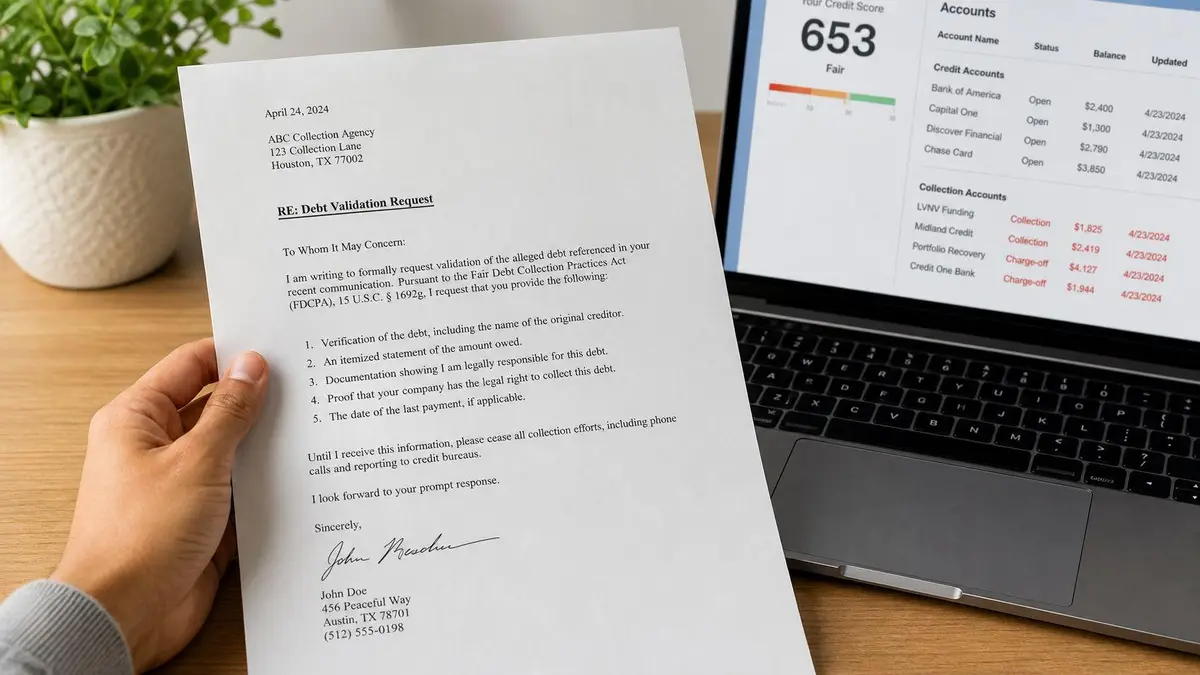
Collections and charge-offs need a different approach because the power doesn’t come from broad denial, it comes from forcing the collector to prove what it owns. A debt validation letter under the FDCPA is not the same thing as a bureau dispute. The validation letter asks for substantiation of the debt itself, and the practical trigger is the 30-day window from initial collector contact. Send it with the debtor’s name, address, account number, amount claimed, original creditor, and a written demand for documentation.
That is where the underused power lives. If the collector can’t substantiate the account, removal can follow. If the collector does produce documents, you’ve learned something valuable before you waste time on repeated bureau disputes. For people who only want the item gone, this is often the more efficient route because it attacks the debt’s legal support, not just its appearance on the report.
A validation letter is a proof demand, not a plea.
Goodwill and pay-for-delete belong in the conditional category, not the guaranteed category. A goodwill request only makes sense when the account is otherwise real and the borrower has a story worth hearing, usually after a clean history and a one-off problem. Pay-for-delete is more transactional, but neutral guidance treats it as optional rather than reliable, and it should never be the primary plan if the reporting itself is inaccurate or unverified. Repeating the same dispute without new facts just burns time and can be treated as frivolous.
For a practical view of how collectors respond after the first letter lands, this guide on what to do after a collector responds is worth reading because the response path matters as much as the initial request.
Use validation to separate leverage from noise
Treat collection removal like litigation triage. If the collector cannot prove the debt, you press for deletion. If the collector can prove it, you decide whether the file still has a reporting defect, whether a furnisher dispute is stronger, or whether the item is accurate but strategically harmful.
That distinction is why this category gets mishandled. People think they’re fighting the bureau when they should be forcing the collector to prove the paper.
Identity Theft, Fraud Alerts, and Creditor Block Requests
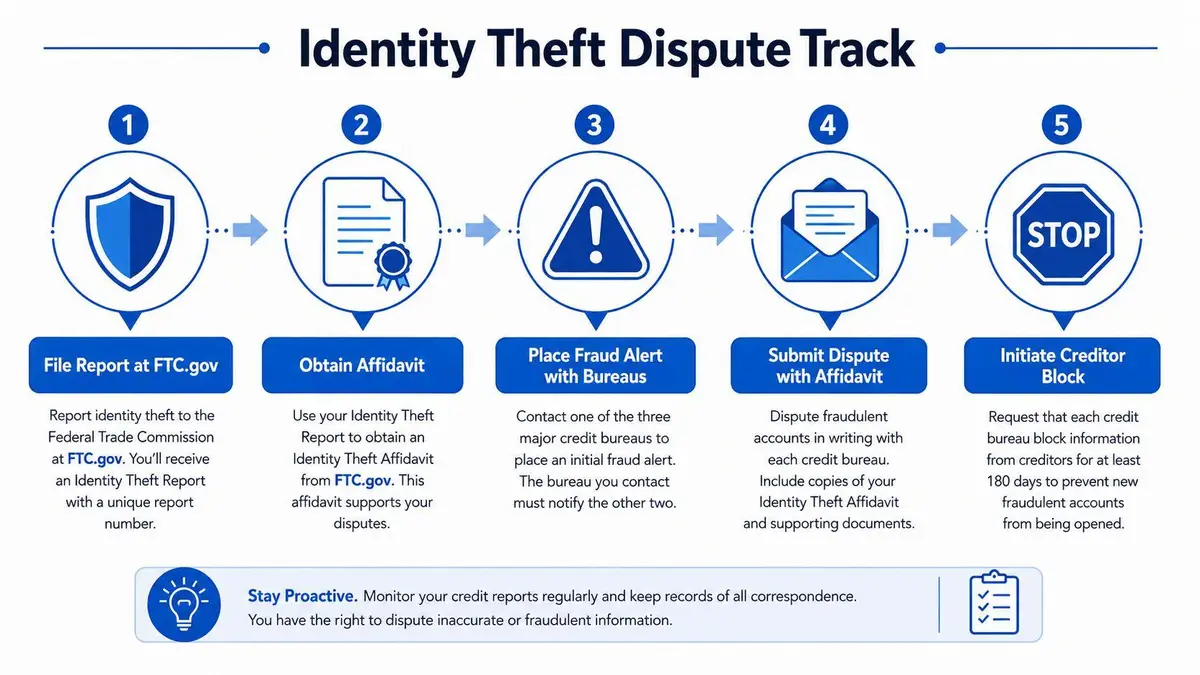
A real identity theft file starts with proof, not a story. Pull an FTC IdentityTheft.gov report, then use the affidavit it generates in your bureau disputes. Add a fraud alert, or a credit freeze if the facts support it. Fraud disputes live on a different track from ordinary accuracy disputes, because the point is to show the tradeline never belonged to you.
The creditor block request is where many victims leave money on the table. It tells the bureau or creditor that a fraudulent account number cannot be re-aged, recycled, or pushed back into a new collection cycle. That matters because thieves and some collectors can keep the same damage alive by changing the label while the underlying file stays compromised. If you do not demand a block, the account can reappear under a fresh wrapper.
The rulebook also shifts while you are fighting. The CFPB extended the nationwide medical-debt reporting rule’s compliance date to March 30, 2025, which is a reminder that category rules change and need to be checked before any medical collection dispute goes out (medical debt reporting compliance extension context). A borrower who files under an outdated rule set gives the other side an easy way to stall or reject the dispute.
Document the fraud like you expect to litigate later
Keep the police report, the FTC affidavit, bureau correspondence, and every rejection or acknowledgment from the furnisher. If you later need to challenge the furnisher directly or force a block, that paper trail is what shows the account was flagged as fraudulent early and consistently. The files should line up from the first notice through the last response.
Fraud disputes fail when people send narrative. They succeed when the file proves identity, timing, and mismatch.
For a practical overview of the recovery steps, the FTC identity theft recovery guide and the companion visual guide A five-step infographic guide explaining the process of resolving identity theft and disputing fraudulent credit activity. show the sequence victims should follow after the fraud is confirmed.
For cases where the reporting turns into collection pressure, Lein Law Offices on debt collection abuse is a useful reference point for the conduct that often sits around fraudulent accounts.
When the Item Is Accurate but Unfairly Harmful
Accurate negative information usually stays on the report. That is the hard rule, and founders, executives, and mortgage applicants need to respect it before they waste time on a bad theory. Credit report removal still has room to work in narrow fact patterns, but the goal shifts from denial to cleanup, file correction, or a limited narrative response when the item is true yet still causing outsized harm.
A goodwill request has a place when the account belongs to you, the history is otherwise clean, and the damage came from a one-off mistake. Mixed-file problems are different. If another person’s account data has been attached to your file, the issue is not fairness, it is identity integrity, and the fix should target the bureaus’ records. Re-aging is another separate problem, because a furnisher cannot restart the clock by changing the way an old debt is dated. Those arguments work because they attack the accuracy of the file, not because they ask for mercy.
The CFPB’s medical-collections analysis shows why deletion matters in the real world, not just on paper. When a negative item comes off the file, the score effect can be immediate, and the downstream access to credit can improve with it. That is the point of removal in reputational-defense terms. It is not a moral victory, it is a file outcome that changes how lenders read the borrower.
For unfair collection conduct, Lein Law Offices on debt collection abuse is useful context because harassment, misrepresentation, and bad-faith collection tactics often sit beside reporting defects in the same account trail.
Know which tactic is worth your time
A consumer statement is the weakest move. It documents the borrower’s position, but it does not erase the derogatory line, and it rarely changes a lender’s underwriting view on its own. For an executive or founder under a hard deadline, that makes it a backup tool, not the main play.
Use the tactics that can change the file. Mixed-file cleanup can produce deletion. Re-aging challenges can force a furnisher to correct the timeline. Goodwill only makes sense when the lender has a reason to grant it and the relationship gives them a reason to care. If the item is accurate, the strategy is not to argue it out of existence. The strategy is to use the narrow channels that can still move it.
For a practical way to compare outside help, this guide to evaluating professional content removal services is useful because the right provider should understand both file correction and the reputational exposure that sits around it.
Bottom line: if the item is accurate, stop chasing fantasy deletions. Use the tools that can still change the file, and push hardest where the record is wrong, incomplete, or dated improperly.
Knowing When to Bring in a Specialist
DIY works when the file is simple and the timeline is loose. It breaks when the exposure is real. Bring in a specialist if a commercial transaction is imminent, a regulated-industry license renewal is on the line, a counterparty background check is coming, an active furnisher has already ignored two dispute cycles, or a CFPB complaint has stalled. That’s where the cost of a wrong move starts to exceed the cost of getting expert help.
Not every service is built for the same problem. Subscription credit-repair services usually focus on repetitive dispute handling. Consumer-rights attorneys are the right lane when the matter needs legal pressure or possible contingency work. Specialist reputation firms are different again, because they can coordinate file cleanup with parallel content removal, search suppression, and discrete narrative control when the credit issue overlaps with public visibility.
For executives comparing providers, this guide to evaluating professional content removal services is worth a read because the right operator has to understand both paper records and reputational exposure.
Quick answers executives usually ask
If the item is real, can it still be taken off. Sometimes, but only through legal aging, furnisher withdrawal, goodwill, or a disclosure error, not wishful thinking.
Will one dispute with one bureau fix all three reports. No. You need each bureau that carries the mistake.
Does a statement help with underwriting. It can explain context, but it rarely beats a clean deletion.
Is it worth paying a collector just to make the file go away? Only if the reporting strategy is sound and the collector has agreed to the terms in writing.
Credit report removal is litigation-adjacent work. The moment the financial exposure of the unresolved item is greater than the cost of expert intervention, the math has already changed.
If you’re facing a denial, a tightening lending timeline, or a file that keeps resurfacing with the same derogatory entries, ContentRemoval.com can help coordinate credit-report cleanup with the broader reputational issues that often sit beside it. Their team works with founders, executives, family offices, and legal professionals who need discreet, high-stakes removal strategy, not generic credit advice.
Frequently asked questions
Can accurate negative items be removed from a credit report?
Usually not, because accuracy and timeliness protect the furnisher. Narrow exceptions exist: the item has aged out under the FCRA, the furnisher withdraws it, a goodwill request succeeds after a one-off problem, or a disclosure error, re-aging or mixed-file defect makes the entry inaccurate.
Do I need to dispute with all three credit bureaus?
Yes. One dispute with one bureau does not fix the other two reports. Create a separate record at each bureau that carries the mistake, plus a direct written dispute to the furnisher, so that if one channel fails another may still force correction.
What should I do if a fraudulent account appears on my credit report?
File an FTC IdentityTheft.gov report and use the affidavit in your bureau disputes, add a fraud alert or freeze, and request a creditor block so the account number cannot be re-aged or recycled into a new collection cycle. Keep the police report and every response.